Tag: Film Score

  • John Williams Scores Spielberg UFO Film!

    John Williams Scores Spielberg UFO Film!

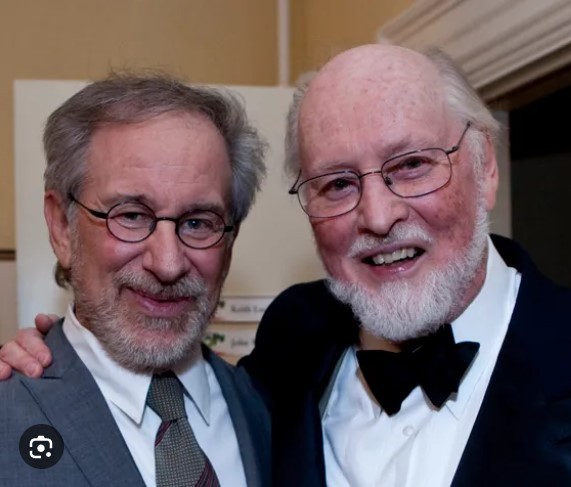
    John Williams, who again teased his retirement from film scoring following the execrable “Indiana Jones and the Dial of Destiny,” has agreed to write the music for an upcoming Steven Spielberg UFO opus projected to open on June 12.

    Not a lot is known about the project – not even the title – beyond the facts that regular Spielberg collaborator, David Koepp, wrote the screenplay (on an original story by Spielberg) and that the cast includes Colman Domingo, Emily Blunt, and Colin Firth. Maybe some of the other actors will be familiar to you, but I don’t recognize them, as I tend not to see a lot of newer movies.

    Williams’ birthday is on February 8. He will likely be 94 years old at the time of the recording sessions. I have a ticket to hear his new piano concerto, with Emanuel Ax and the New York Philharmonic in March, so I expect the creative energy is still churning, if only he can hang on to his good health.

    Spielberg’s had a history with this sort of thing (“Close Encounters of the Third Kind,” “E.T. The Extra-Terrestrial,” and “War of the Worlds,” along with a few TV series he executive produced that I wasn’t particularly interested in seeing). I don’t have high expectations for a return of the old Spielberg magic, since we are living in a post-Douglas Trumbull, Carlo Rambaldi age, but hopefully the CGI won’t be too contemptible.

    A big plus is that Disney won’t be involved, which means the soundtrack might actually get wide distribution. For “Dial of Destiny,” the Mouse House pulled some kind of pre-order, limited edition bait-and-switch, meaning that millions of John Williams fans were shut out from obtaining the score on physical media and copies on the collectors’ market were priced in the hundreds. I finally managed to get a hold of a copy for $50 from Screen Archives Entertainment. Beyond “Helena’s Theme,” which is ravishing (and has no bearing whatsoever on the character in the film), the score is not top-drawer Williams.

    I do wish he had said no to all these recent “Star Wars” and “Indiana Jones” films and poured his energies and creativity into more interesting projects. Let’s hope Spielberg’s film is not a retread and gives the composer something interesting to work with. It would also be nice if it’s not an alien invasion movie. There’s enough unpleasantness in the world right now. I know I’m hopelessly corny and old-fashioned, but I’m yearning for a little hope and uplift in my entertainment.

    The film will mark Spielberg and Williams’ 30th collaboration. Their creative partnership dates all the way back to “The Sugarland Express” in 1974. Williams won three of his five Academy Awards writing for Spielberg films (“Jaws,” “E.T.,” and “Schindler’s List”). There’s no way he’ll win for this one, but it could bring him his 55th nomination. He is the most nominated person alive and the second most-nominated person in Oscar history, behind only Walt Disney (with 59).

    At the very least, we can expect that the score will be “musical” and not simply a piece of electronically-manipulated sound design. That alone would be cause for celebration.

    Best wishes to the Maestro on his latest screen endeavor. Whether or not it’s out of this world remains to be seen.

    https://variety.com/2025/film/news/john-williams-steven-spielberg-ufo-movie-1236563896/
  • Bernstein’s Waterfront A Hollywood Contender

    Bernstein’s Waterfront A Hollywood Contender

    “I coulda had class. I coulda been a contender. I coulda been somebody – instead of a bum, which is what I am.”

    We’ve all had those kinds of days, haven’t we?

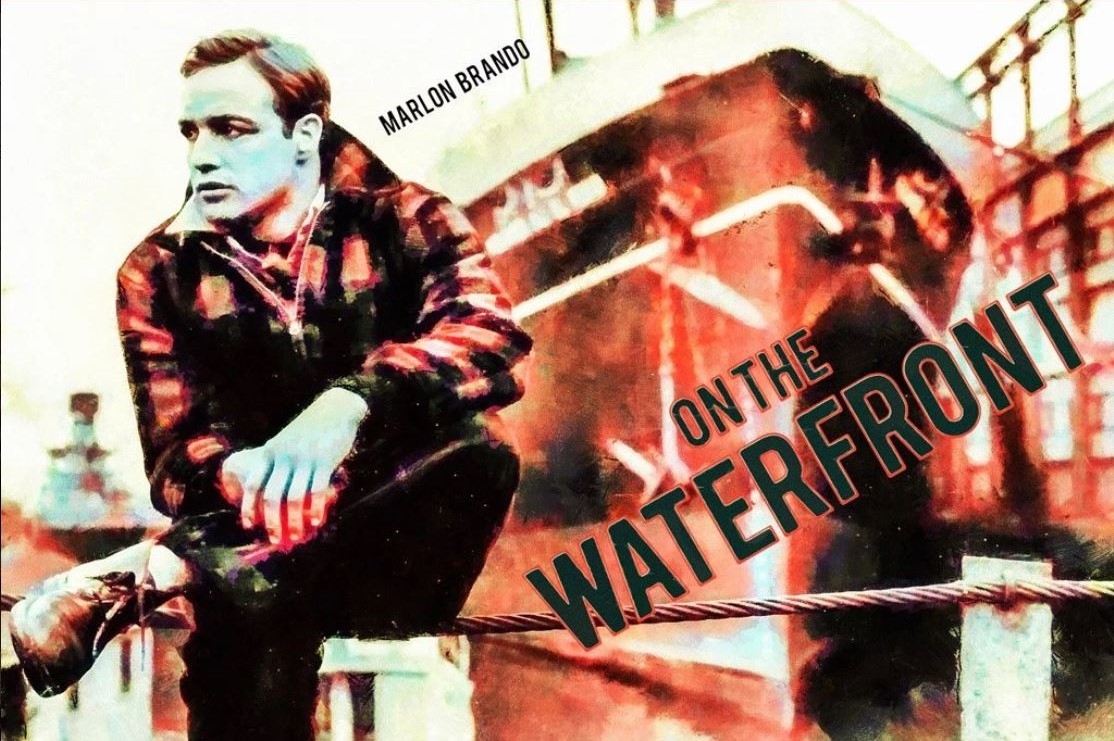
    Yet Leonard Bernstein’s score for “On the Waterfront” (1954) was always a contender, even if at times the composer found himself on the ropes.

    “On the Waterfront” was the only original film score composed by Bernstein (the screen adaptations of his stage musicals were adapted by other hands). Narrative film, of course, is a collaborative effort, in which music is usually the last to the table and the first to go. Bernstein’s score was edited and dialed down to suit the overall needs of the film.

    Unused to such rough treatment, Bernstein found his brush with Hollywood to be dispiriting, to say the least. He arranged his music into a concert suite, over which he had complete control, and the work has gone on to become one of his better-known pieces. That said, what can be heard in the film remains a powerful statement, and one of the great film scores.

    The original recordings, as they appear in the film, were long believed to have been lost. However, in the course of restoration of “On the Waterfront” for release on BluRay, it was discovered that audio had been preserved on acetate discs used for playback during the original recording sessions. Material from these were issued for the first time in 2014, on the Intrada label.

    Bernstein’s music would be nominated for an Academy Award, one of twelve total nominations for the film. “On the Waterfront” would win in eight categories, including Best Picture, Best Actor (Marlon Brando), and Best Director (Elia Kazan). Bernstein may have lost out to Dimitri Tiomkin for his work on “The High and the Mighty.” However, like Brando’s Terry Malloy, his score to “On the Waterfront” proves itself a champion.

    We’ll hear selections, alongside some of Aaron Copland’s music for “The Red Pony” (1949), once again, from the film’s original elements; dances from the only film score ever to be awarded the Pulitzer Prize for Music, “Louisiana Story” (1948), by Virgil Thomson; and the music that lends “Picture Perfect” its signature tune, “They Came to Cordura” (1959), by Elie Siegmeister.

    It’s an hour of New York composers in Hollywood this week, on “Picture Perfect,” music for the movies, now in syndication on KWAX, the radio station of the University of Oregon!


    Clip and save the start times for all three of my recorded shows:

    PICTURE PERFECT, the movie music show – Friday at 8:00 PM EDT/5:00 PM PDT

    SWEETNESS AND LIGHT, the light music program – Saturday at 11:00 AM EDT/8:00 AM PDT

    THE LOST CHORD, unusual and neglected rep – Saturday at 7:00 PM EDT/4:00 PM PDT

    Stream them, wherever you are, at the link!

    https://kwax.uoregon.edu/

  • Villa-Lobos’s Amazonian Hollywood Tale

    Villa-Lobos’s Amazonian Hollywood Tale

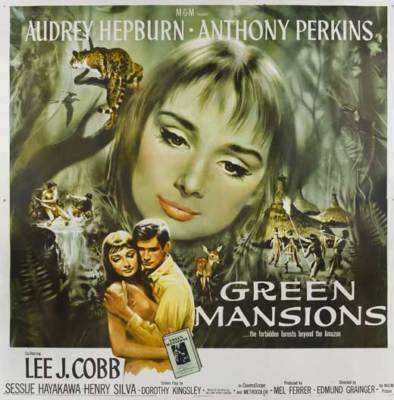
    When Heitor Villa-Lobos was contracted by M-G-M to write music for a big screen adaptation of W.H. Hudson’s novel “Green Mansions” (1959), expectations ran high on both sides. The Brazilian master began immediately, diving into the project with characteristic gusto. After all, he had been writing music inspired by the rain forest for his entire career.

    Unfortunately, he had very little affinity for the practicality of the filmmaking process, turning in musical impressions of scenes from the book. The studio was befuddled. Since Villa-Lobos was unable to adapt to the customary way of doing things, he was replaced by M-G-M house composer Branislau Kaper, who used the Villa-Lobos material as a springboard for his own dramatic conception. The result is part Villa-Lobos, part Kaper, and all M-G-M gloss.

    Villa-Lobos was a little embittered by his Hollywood experience. He promptly assembled a multi-movement symphonic poem, “Forest of the Amazon” (1958), some 75 minutes in length, which employed his rejected sketches. He made a recording of 45 minutes of the music in 1959, for which the soprano Bidu Sayão came out of retirement.

    This week on “Picture Perfect,” we’ll have selections from both versions of “Green Mansions,” as well as from the Mayan adventure “Kings of the Sun” (1963), composed by Elmer Bernstein, and “The Night of the Mayas” (1939), by Mexican composer Silvestre Revueltas.

    I hope you’ll join me for cinematic evocations of the indigenous peoples of Latin America, on “Picture Perfect,” music for the movies, now in syndication on KWAX, the radio station of the University of Oregon!


    Clip and save the start times for all three of my recorded shows:

    PICTURE PERFECT, the movie music show – Friday at 8:00 PM EDT/5:00 PM PDT

    SWEETNESS AND LIGHT, the light music program – Saturday at 11:00 AM EDT/8:00 AM PDT

    THE LOST CHORD, unusual and neglected rep – Saturday at 7:00 PM EDT/4:00 PM PDT

    Stream them, wherever you are, at the link!

    https://kwax.uoregon.edu/


    PHOTO: The project that left Villa-Lobos feeling green around the gills

  • Big Country Jerome Moross Picture Perfect

    Big Country Jerome Moross Picture Perfect

    August starts BIG this week, on “Picture Perfect,” as we hit the sundrenched plains and wide-open spaces, with music from outsized movies set in the American West.

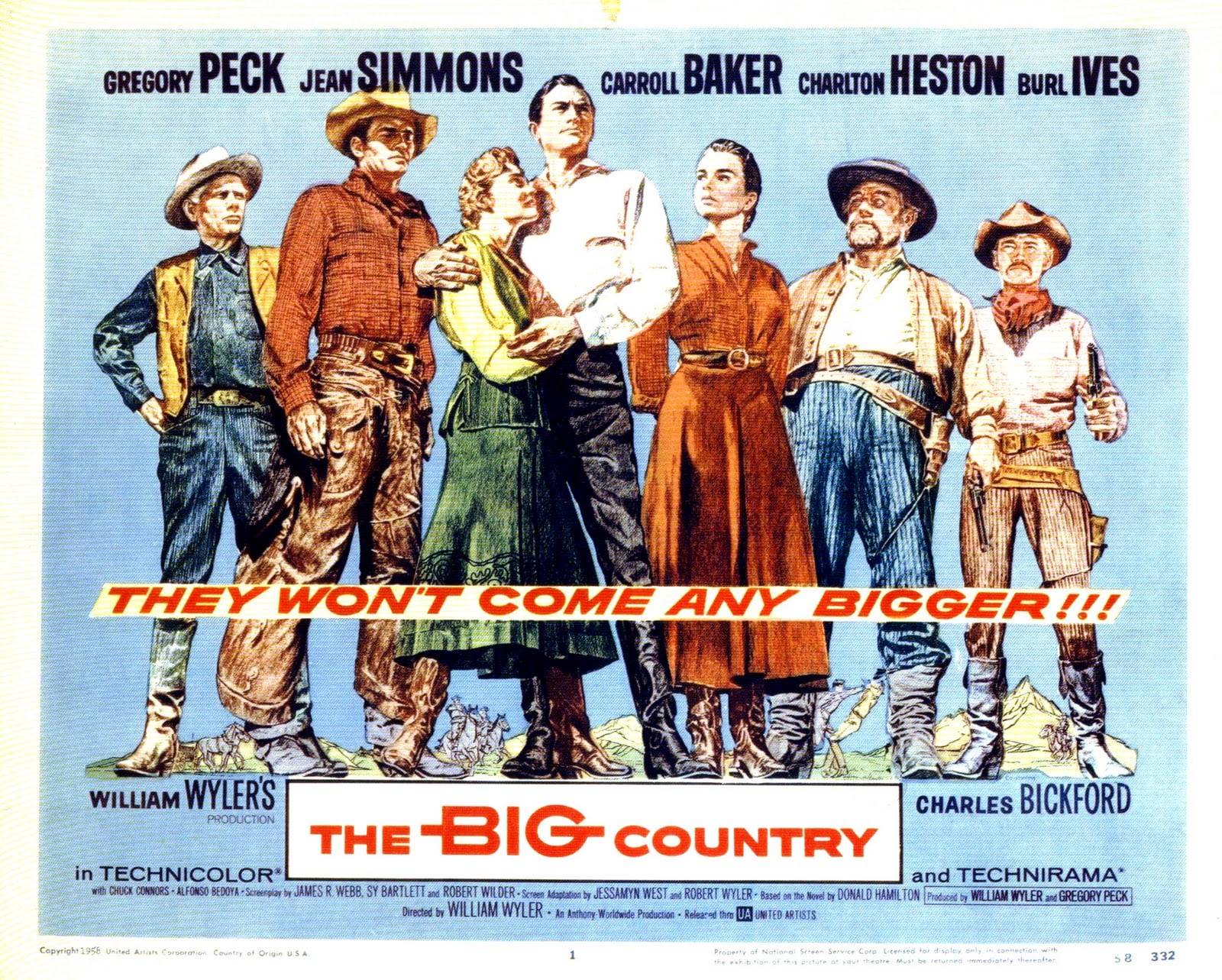
    On the birthday of Jerome Moross, we’ll begin with the composer’s most famous score, that for “The Big Country” (1958).

    Directed by William Wyler, the film’s cast includes Gregory Peck, Jean Simmons, Carroll Baker, Charlton Heston, Charles Bickford, Chuck Connors, and Burl Ives (who won an Oscar). Some big personalities! So it’s hardly surprising that not all the drama was limited to what we see on screen. The actors bristled against constant rewrites and Wyler’s ambiguous directing style. Some of them refused to talk about it, and a few of them refused to talk to each other. Ives, the exception, seemed to be above it all. He maintained he really enjoyed making the picture. In the end, Wyler had to delegate the film’s climax to his assistant, also the film’s editor, Robert Swink, as he had to leave for Rome to prepare for “Ben-Hur.”

    Fortunately, the entire technical crew was first-rate and brought its A-game. It’s a Hollywood miracle that all the pieces of “The Big Country” fit together as well as they do. It really says something that, alongside the awesome scenery, more than anything, it is the music that really solidified the film’s enduring popularity. Moross’ score is right up there, alongside Elmer Bernstein’s music for “The Magnificent Seven,” at the top of the genre.

    Though Moross was adept at writing music in many forms – including concert pieces (a symphony for Beecham), musical theater (the cult classic “The Golden Apple,” including the evergreen “Lazy Afternoon”), and opera (“Sorry, Wrong Number”) – unquestionably he is best known for his work in film. He spent much of his career ping-ponging back and forth between New York and Hollywood.

    When “Porgy and Bess” concluded its New York run in 1935, George Gershwin invited Moross to join the show, on tour, as a pianist. It was while on a bus trip to Los Angeles to participate in “Porgy’s” west coast premiere that the 23-year-old made a stop in Albuquerque.

    “[A]s we hit the Plains I got so excited,” Moross recollected. “. . . [T]he next day I got to the edge of town and then walked out onto the flat land with a marvelous feeling of being alone in the vastness, with the mountains cutting off the horizon. The whole thing was just too much for me . . . it was marvelous, and I just fell in love with it.”

    This communion with the American West stayed with him. It would be 23 years before he composed his big screen magnum opus. The vitality, invention, and lyricism of “The Big Country” was recognized with an Academy Award nomination. The “Western” sound would color Moross’ subsequent film and concert works, with the energetic syncopations of his native New York City bolstering an easy lyrical gift that could easily pass for genuine American folk music.

    Rounding out today’s program will be selections from “The Big Sky” (Dimitri Tiomkin), “Big Jake” (Elmer Bernstein), and “Silverado” (Bruce Broughton).

    It’s all BIG. Saddle up for music by Jerome Moross and friends on “Picture Perfect,” music for the movies, now in syndication on KWAX the radio station of the University of Oregon!


    Clip and save the start times for all three of my recorded shows:

    PICTURE PERFECT, the movie music show – Friday at 8:00 PM EDT/5:00 PM PDT

    SWEETNESS AND LIGHT, the light music program – Saturday at 11:00 AM EDT/8:00 AM PDT

    THE LOST CHORD, unusual and neglected rep – Saturday at 7:00 PM EDT/4:00 PM PDT

    Stream them, wherever you are, at the link!

    https://kwax.uoregon.edu/

  • Lalo Schifrin, ‘Mission: Impossible’ Composer, Dies

    Lalo Schifrin, ‘Mission: Impossible’ Composer, Dies

    Only five days after his 93rd birthday, I’m sorry to have to say adios to Lalo Schifrin.

    Schifrin, the composer of perhaps the most indelible of all television themes – that for “Mission: Impossible” – was born Boris Claudio Schifrin (Lalo was a childhood nickname) in Buenos Aires on June 21, 1932.

    At university, he studied sociology and law, but by then a life in music had been seemingly preordained. His father was concertmaster of the Buenos Aires Philharmonic, and by the age of 6, Lalo was studying piano with Enrique Barenboim, father of Daniel Barenboim. He took further lessons with Andreas Karalis, one-time head of the Kyiv Conservatory (then living in Argentina), and studied harmony with Juan Carlos Paz.

    Schifrin entered the Paris Conservatory at the age of 20 (Olivier Messiaen was among his teachers) and indulged his love of jazz while moonlighting in the city’s clubs. At home, American jazz had been strictly forbidden under the nationalist regime of Juan Perón, but a friend serving in the U.S. Merchant Marine was able to smuggle some in some records from New Orleans. Schifrin described his jazz conversion, at a live performance of Louis Armstrong, to “a religious awakening.” He was also taken with the Gershwin biopic “Rhapsody in Blue.”

    When Lalo returned to Argentina – Perón was deposed in 1955 – it wasn’t long before he formed his own 16-piece jazz orchestra, which received national exposure on a weekly variety show on Buenos Aires television. In 1956, he came to the attention of Dizzy Gillespie, for whom he composed an extended work for big band, “Gillespiana,” in 1958. That same year, he found work as an arranger for Xaver Cugat’s Latin dance orchestra.

    After Gillespie was forced to disband his own orchestra for financial reasons, Schifrin was hired as a pianist in his new quintet, allowing him to move to New York City. He became a U.S. resident and moved to Los Angeles in 1963. His naturalization would follow in 1969.

    In Hollywood, screen composers such as Alex North, Elmer Bernstein, and Henry Mancini had already been experimenting with jazz in their music, beginning in the 1950s, but, after Duke Ellington’s “Anatomy of a Murder,” Schifrin took jazz-symphonic fusion in film to new heights.

    In all, Schifrin was the composer of over 100 film and television scores, including those for “Cool Hand Luke,” “Bullitt,” “Dirty Harry,” “Enter the Dragon,” “Mannix,” “Starsky and Hutch,” “Rush Hour,” and of course “Mission: Impossible.”

    Not everyone was a fan. Director William Friedkin was so displeased with Schifrin’s music for “The Exorcist” that he hurled the master tape out into the parking lot, in the presence of the composer. Schifrin had written music for the trailer, which had reportedly scared the pants off preview audiences, so the executives at Warner Bros. told Friedkin they wanted him to tone it down. Friedkin being Friedkin – this is, after all, the guy who fired guns on set to unnerve his actors and filmed the chase scene in “The French Connection” without a permit – he didn’t convey the message. Instead, he fired Schifrin and crammed his soundtrack with equally disturbing music by avant-garde masters Krzysztof Penderecki, George Crumb, Anton Webern, and Hans Werner Henze, not to mention Mike Oldfield.

    Happily, most of Schifrin’s other collaborators were more genial. He worked frequently with Clint Eastwood and scored George Lucas’ first feature, “THX-1138.” In all, he earned 22 Grammy nominations (winning five), four Primetime Emmy nominations, and six Academy Award nominations. He received an honorary Oscar in 2018.

    Schifrin made a very healthy living arranging and composing across genres, including bossa nova, jazz, bebop, rock, and classical, all the while cashing those lucrative Hollywood paychecks. Alongside the theme to “Mission: Impossible,” the music he composed for the road-tarring sequence in “Cool Hand Luke,” picked up as the theme for ABC “Eyewitness News,” kept those sweet royalties rolling in.

    If anything, when “Mission: Impossible” made the leap to the big screen in 1996, the theme gained renewed vigor in a franchise that has spanned nearly 20 years.

    The four-note motto that propels Schifrin’s most memorable music sprang from Morse code for “M” (dash dash) “I” (dot dot). The composer claimed he wrote it in only a matter of minutes, spurred by the idea of a lighted fuse and a desire to keep the tone light and fun, with the promise of adventure and excitement, but with a sense of humor. Further, he employed 5/4 rhythm to lend it a sense of unpredictability.

    For Lalo Schifrin, a multifaceted talent in so many fields, even the impossible was effortlessly, elegantly possible. R.I.P.


    “Concierto Caribeño” for flute and orchestra

    Lalo Schifrin and Dizzy Gillespie

    “Cool Hand Luke”

    Rejected score from “The Exorcist”

    The disturbing trailer

    Lalo receives his honorary Academy Award from Eastwood

    Schifrin’s greatest hit

Tag Cloud

Aaron Copland (92) Beethoven (94) Composer (114) Conductor (84) Film Music (106) Film Score (143) Film Scores (255) Halloween (94) John Williams (179) KWAX (227) Leonard Bernstein (98) Marlboro Music Festival (125) Movie Music (121) Mozart (84) Opera (194) Picture Perfect (174) Princeton Symphony Orchestra (102) Radio (86) Ross Amico (244) Roy's Tie-Dye Sci-Fi Corner (290) The Classical Network (101) The Lost Chord (268) Vaughan Williams (97) WPRB (396) WWFM (881)

DON’T MISS A BEAT

Receive a weekly digest every Sunday at noon by signing up here


RECENT POSTS