Tag: Film Score

  • Harpsichords & Hitchcock Mystery Soundtracks

    Harpsichords & Hitchcock Mystery Soundtracks

    The harpsichord has frequently been employed on soundtracks to mysteries and thrillers, when it has been appropriate to lend a film somewhat of a “wry” tone. This week on “Picture Perfect,” we’ll hear selections from four scores that keep tongue embedded firmly in cheek, even as the corpses begin to pile up.

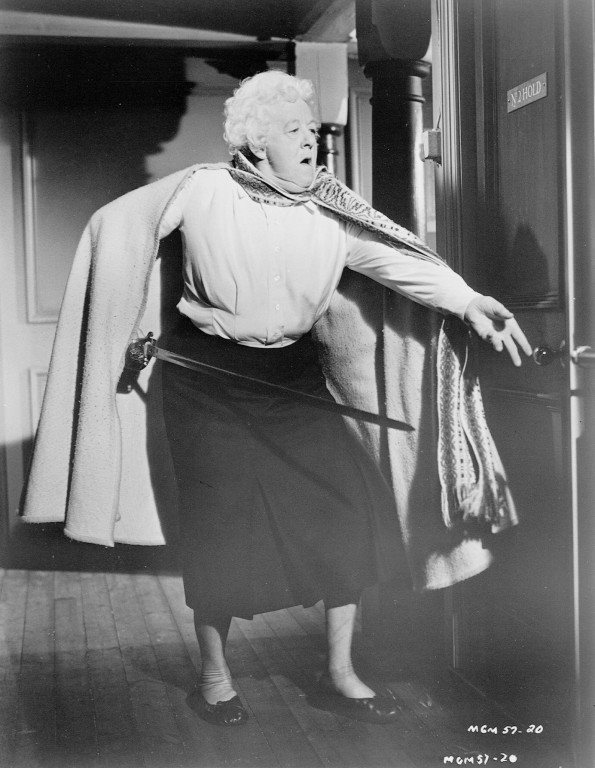
    Ron Goodwin wrote the music for a series of Agatha Christie adaptations that starred Margaret Rutherford as Miss Marple. In the first of these, “Murder She Said” (1961), Marple goes undercover as a domestic servant. The Miss Marple theme became a popular hit, which you may still recognize.

    Bette Davis enjoyed something of a comeback following her turn in “Whatever Happened to Baby Jane?,” opposite Joan Crawford. The film singlehandedly defined a subgenre which has been variously described as “psycho-biddy,” “hag horror,” “hagsploitation” and “grande dame guignol.” Camp and black comedy are essential elements. “Dead Ringer” (1964) was yet another “bad twin” film, with Davis’ delicious performance underscored by André Previn.

    Sir Laurence Olivier and Michael Caine play a deadly game of cat and mouse, as a mystery writer plans to exact revenge on his wife’s lover, in a big screen adaptation of Anthony Shaffer’s play, “Sleuth” (1972). John Addison, who had previously harpsichorded his way to an Academy Award with his score for “Tom Jones,” wrote the impish music.

    Finally, Barbara Harris plays a fake psychic and Bruce Dern her cab-driving, private investigator boyfriend, who become embroiled with serial kidnappers, in Alfred Hitchcock’s final film, “Family Plot” (1976). The composer was none other than John Williams, poised between his breakout success, “Jaws,” and “Star Wars,” which was to make him a household name. (Both “Jaws” and “Star Wars” were Academy Award winners for Best Original Score),

    Hitchcock was full of suggestions as to the music and how it should be conducted. The composer recollects that on one occasion, when trying to convey the tone he was seeking, Hitch remarked, “Mr. Williams, murder can be fun.”

    I hope you’ll join me for an hour of “arch harpsichords” this week on “Picture Perfect,” this Friday evening at 6 ET, with a repeat Saturday morning at 6, or that you’ll listen to it later as a webcast at http://www.wwfm.org.
  • Philly Music Greats: Kay & Amram Birthdays

    Philly Music Greats: Kay & Amram Birthdays

    Today is the birthday of two notable Philadelphians.

    Hershy Kay (1919-1981) is known mainly for his arrangements for George Balanchine’s New York City Ballet and for his work on Broadway. He studied at the Curtis Institute of Music, where Randall Thompson was his composition teacher and Leonard Bernstein a classmate. He started making arrangements to get out of playing the cello in pit bands. Along the way, he taught himself how to orchestrate.

    The success of Kay’s orchestrations for Bernstein’s “On the Town” put him much in demand. He would later collaborate with Bernstein on “Peter Pan” and “Candide.” His work as an orchestrator can also be heard in such varied projects as Marc Blitzstein’s “Juno,” Cy Coleman’s “Barnum” and Andrew Lloyd Webber’s “Evita.”

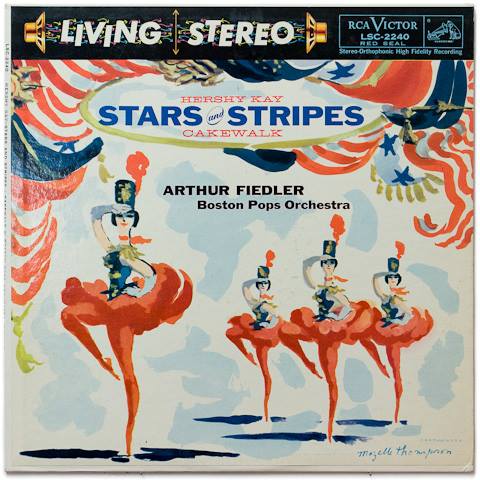
    For Balanchine he wrote the sub-Copland “Western Symphony” and the splashy “Stars and Stripes Ballet,” after Sousa. He also reconstructed and orchestrated works of Louis Moreau Gottschalk, resulting in the “Grande Tarantelle,” for piano and orchestra, and the ballet “Cakewalk.”

    David Amram (b. 1930) has always been equally at home in classical music, jazz, folk and world music. He’s composed over 100 orchestral and chamber works, music for Broadway and film (including scores for “Splendor in the Grass” and “The Manchurian Candidate”), and two operas. He’s also written three books, with a fourth in the works.

    He was raised on a farm in Bucks County, where he was introduced to classical, jazz and cantorial music by his father and uncle. He took piano lessons and experimented with instruments of the brass family, finally settling on the French horn. Following a year at Oberlin, he lit out for George Washington University, where he studied history. While there, he performed as an extra hornist with the National Symphony. He also studied privately with two musicians in the orchestra.

    Amram became a pioneer of the jazz French horn, as well as the New York Philharmonic’s first composer-in-residence (named in 1966). He’s worked with artists ranging from Dizzy Gillespie to Bob Dylan, from Jack Kerouac to Arthur Miller, from Christopher Plummer to Johnny Depp. He’s a musician without boundaries, who has always been open to new experiences.

    Happy Birthday, Hershy Kay and David Amram!

    Kay’s arrangement of the “Grande Tarantelle”:

    Some of Amram’s music for “The Manchurian Candidate”:

    https://www.youtube.com/watch?v=u4V0uQE-nRY

    An octogenarian Amram at the Philadelphia Folk Festival in 2011:

  • Ennio Morricone Navajo Joe Birthday Tribute

    Ennio Morricone Navajo Joe Birthday Tribute

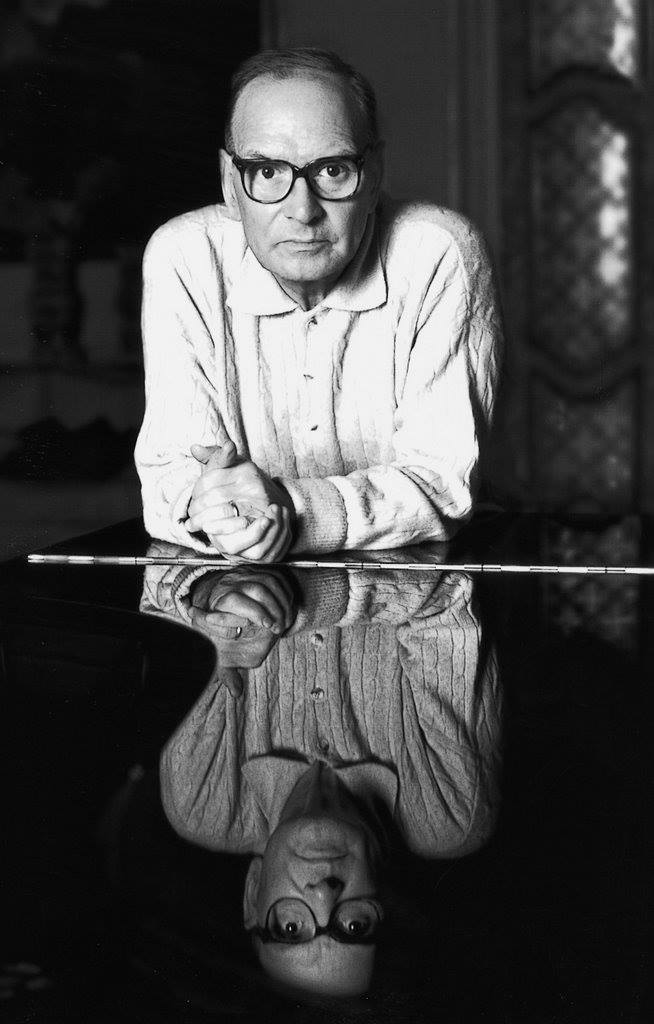
    Ennio Morricone’s birthday (b. 1928). Give it up for “Navajo Joe.”

  • Sir Malcolm Arnold: A Genius of Light and Darkness

    Sir Malcolm Arnold: A Genius of Light and Darkness

    Funny, I was just thinking of Sir Malcolm Arnold yesterday, when his “Four Scottish Dances” came to me in the shower (a dangerous place to reel). Arnold was born on this date in 1921.

    He began his career as a trumpeter with the London Philharmonic Orchestra, becoming principal in 1943.

    At the outbreak of World War II, Arnold registered as a conscientious objector. However, after the death of his brother, a pilot in the RAF, he was moved to enlist. He never saw action beyond a military band, and eventually he quite literally shot himself in the foot in order to get back to civilian life.

    In 1948, he left behind orchestral playing to become a full-time composer. He had an attractive melodic gift, which served him well in the writing of light music and film scores. (He won an Academy Award in 1957 for his work on “The Bridge on the River Kwai.”)

    However, he also had his dark side, as passages of his symphonies can attest. He was frequently cantankerous, inebriated and highly promiscuous. He tried to kill himself twice. He was treated for depression and alcoholism, overcoming both, but in the early 1980s he was given a year to live. He actually wound up living another 22 years, during which he completed his Symphony No. 9, among other works.

    He died in 2006, one month shy of his 85th birthday. He was a brilliant composer of great facility. (When Malcolm Williamson was named Master of the Queen’s Music, Sir William Walton remarked that the “wrong Malcolm” had been given the job.) For a man with so many personal demons, he wrote reams of perfectly delightful music.

    Happy birthday, Sir Malcolm Arnold.

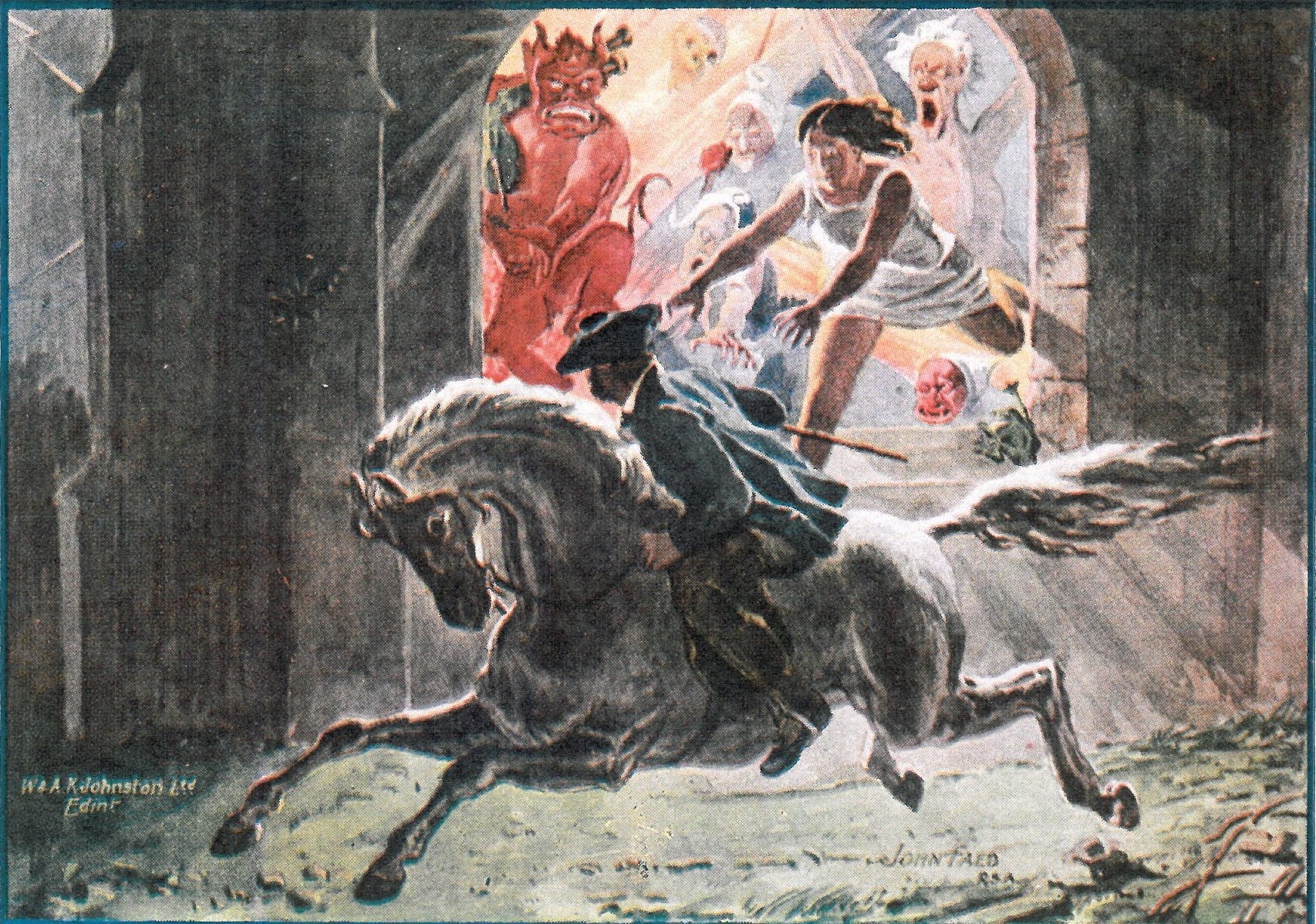
    Just in time for Hallowe’en, here’s his “Tam O’Shanter Overture,” after Robert Burns:

    And his “Four Scottish Dances”:

    Burns’ annotated text here:

    http://loki.stockton.edu/~kinsellt/litresources/ayr/tam.html

    PHOTO: “Weel done, Cutty-sark!”

  • Planet of the Apes Music Jerry Goldsmith

    Planet of the Apes Music Jerry Goldsmith

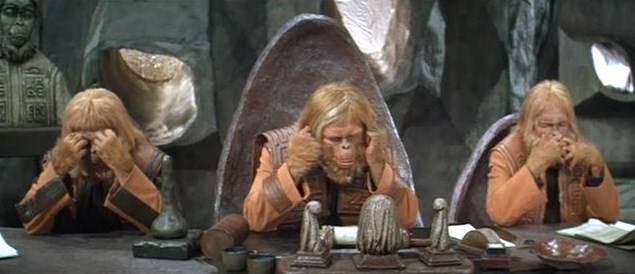
    With the publicity machine going full-throttle for the new “Planet of the Apes” movie, I thought we’d take the opportunity this week on “Picture Perfect” to look back to Jerry Goldsmith’s music for the original 1968 classic.

    Goldsmith incorporated all sorts of unusual effects into his groundbreaking score. He employed such instruments as tuned mixing bowls, a bass slide-whistle, and the cuika, a Brazilian wind instrument used to mimic the hooting of excited apes. He instructed his hornists to play without mouthpieces, and he manipulated percussion through the use of an Echoplex.

    Barbaric and unnerving, with little in the way of lyricism, I can’t imagine anything like it being used in a major Hollywood film today. Well, from my description, I guess I can, but Goldsmith was the real deal – a talented composer with real tools (not just a laptop) at his disposal.

    While my initial impulse had been to fill out the hour with music from some of the other films in the “Apes” franchise, after listening for a while, the grimness and brutality became a bit too unremitting, so instead we’ll swing with the gorilla theme.

    Among the other selections will be an extended passage from the Dian Fossey biopic, “Gorillas in the Mist,” which starred Sigourney Weaver and featured music by Maurice Jarre, of “Lawrence of Arabia” and “Doctor Zhivago” fame, though from his later, lamentable “electronic” period.

    We’ll also hear a bit from the “Mighty Joe Young” remake (since I couldn’t get a hold of Roy Webb’s score for the original). The music is pretty much standard James Horner (eg. “Titanic”), though he does incorporate a Swahili choir.

    Finally, we’ll sample from Max Steiner’s landmark score to the 800-pound gorilla of all monkey movies, 1933’s “King Kong.”

    I hope you’ll join me this week as we go ape, on “Picture Perfect,” music for the movies, tomorrow evening at 6 ET. Remember, you can always listen to the show later as a webcast at http://www.wwfm.org.
    “Take your stinkin’ paws off me…!” (with Goldsmith’s music, including cuika effects):

    https://www.youtube.com/watch?v=pBMvR_RnKu4

Tag Cloud

Aaron Copland (92) Beethoven (94) Composer (114) Film Music (116) Film Score (143) Film Scores (255) Halloween (94) John Williams (185) KWAX (228) Leonard Bernstein (99) Marlboro Music Festival (125) Movie Music (131) Opera (197) Philadelphia Orchestra (86) Picture Perfect (174) Princeton Symphony Orchestra (106) Radio (86) Ralph Vaughan Williams (85) Ross Amico (244) Roy's Tie-Dye Sci-Fi Corner (290) The Classical Network (101) The Lost Chord (268) Vaughan Williams (99) WPRB (396) WWFM (881)

DON’T MISS A BEAT

Receive a weekly digest every Sunday at noon by signing up here


RECENT POSTS