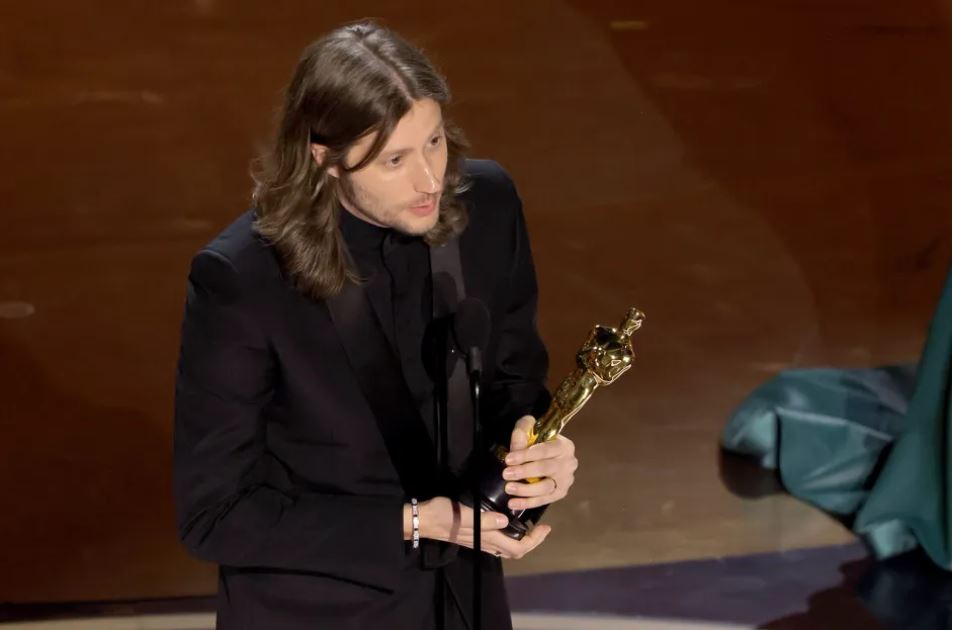
Ludwig Görannson wins his second Academy Award for Best Original Score, for his music for “Oppenheimer.” You can certainly hear it in the movie! Görannson acknowledges his wife, violinist Serena McKinney, who is featured on the film’s soundtrack. Görannson’s previous win was for “Black Panther” in 2019. Congratulations.
Tag: Film Score
-
Semi-Documentary Film Scores Copland Thomson Kay
A “semi-documentary” is documentary-like, but allows staged or fictional elements, sometimes recreations or reenactments, sometimes flat-out embellishments, often with non-actors playing most of the roles. This week on “Picture Perfect,” enjoy music from four acclaimed examples.
Aaron Copland, one of America’s most respected composers, was more active in film than most people realize. He even won an Academy Award in 1950, for his score to “The Heiress.”
During World War II, Copland was approached by the Office of War Information to score a brief film about the resettlement of European refugees in a rural Massachusetts town. The film was called “The Cummington Story” (1945). The music is rather interesting in that, having been written at the height of Copland’s “populist” phase, he employs melodies which were later fleshed out into more familiar concert works, such as the Clarinet Concerto and “Down a Country Lane.”
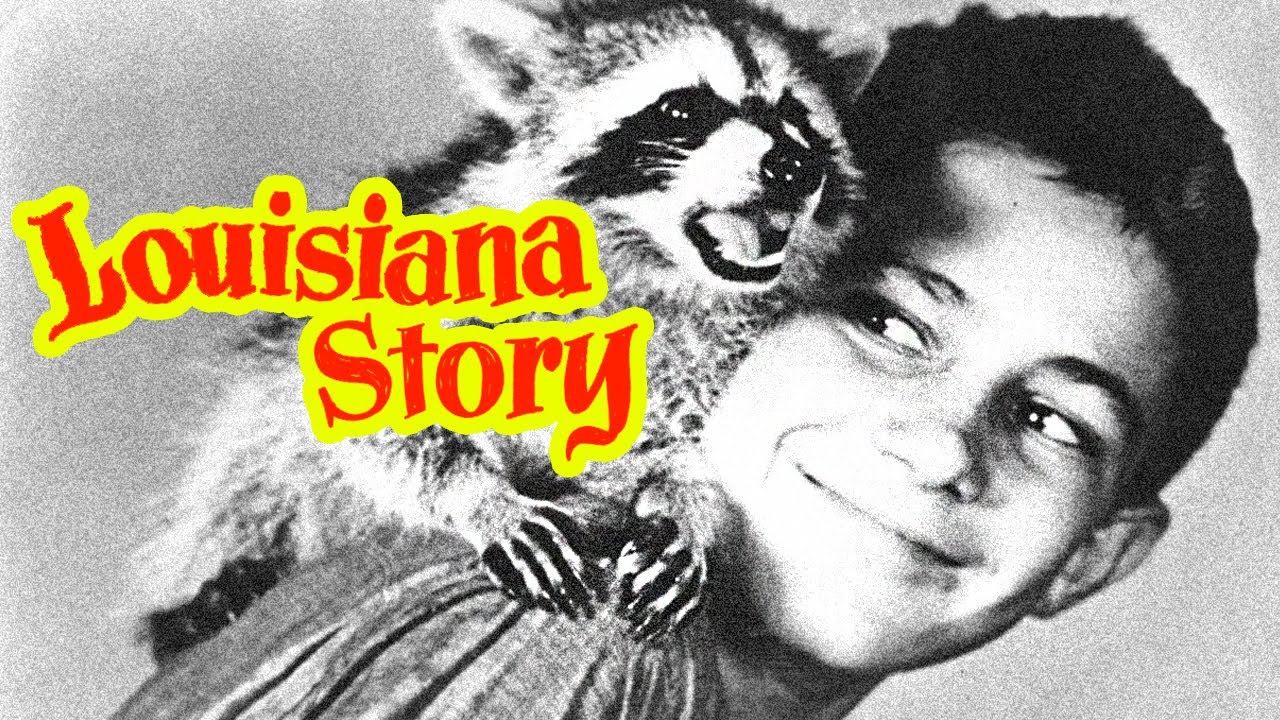
Director Robert Flaherty’s “Louisiana Story” (1948) is often misidentified as a straight documentary. (Flaherty made the first commercially-successfully, feature-length documentary, “Nanook of the North,” in 1922 – itself later revealed to have been more of a docudrama.) However, the plot is entirely fictional, an idealized story of a Cajun family that reaps the rewards of oil drilling that takes place in an inlet behind its house. The film was shot on location in bayou country, using Cajun locals as actors, giving it a certain verisimilitude.
Although it was selected for preservation in the United States film registry by the Library of Congress as being “culturally, historically or aesthetically significant,” and its script was nominated for an Academy Award, “Louisiana Story” acts as a kind of time capsule in its naiveté. Perhaps the most interesting aspect of the entire project is the film’s score, by American composer and revered critic of the New York Herald Tribune, Virgil Thomson. So far, it is the only film score ever to be awarded the Pulitzer Prize for Music.
Like Copland and Thomson, Ulysses Kay is associated more with his works for the concert hall. Nevertheless, he wrote music for numerous television shows and documentaries in the late 1950s and early ‘60s. His first scoring assignment was for an experimental quasi-documentary called “The Quiet One” (1948), a film about an abused African American child and his subsequent coming of age. The film received an Oscar nomination for Best Story and Screenplay, and was listed as one of the ten best movies of the year by the New York Times and the National Board of Review. Kay, a long-time resident of Teaneck, NJ, was a rarity in the world film scoring, a composer of color.
Finally, we’ll turn to Morton Gould and “Windjammer” (1958), the only film ever to be shot in the widescreen “Cinemiracle” format. “Windjammer” depicts the training cruise of a fully-rigged sailing ship, from Oslo, across the Atlantic, to the Caribbean, New York, and back home again. Its dreamy theme music is full of the romance of the high seas.
Artistic truth is based on fact this week. I hope you’ll join me for an hour of selections from semi-documentaries on “Picture Perfect,” music for the movies, now in syndication on KWAX, the radio station of the University of Oregon!
Remember, KWAX is on the West Coast, so there’s a three-hour difference for those of you listening in the East. Here are the respective air-times for all three of my recorded shows (with East Coast conversions in parentheses):
PICTURE PERFECT, the movie music show – Friday on KWAX at 5:00 PM PACIFIC TIME (8:00 PM EST)
SWEETNESS AND LIGHT, the light music program – ALL NEW! – Saturday on KWAX at 8:00 AM PACIFIC TIME (11:00 AM EST)
THE LOST CHORD, unusual and neglected rep – Saturday on KWAX at 4:00 PM PACIFIC TIME (7:00 PM EST)
Stream all three, at the times indicated, by following the link!
-
Alex North Remembered Williams Interview
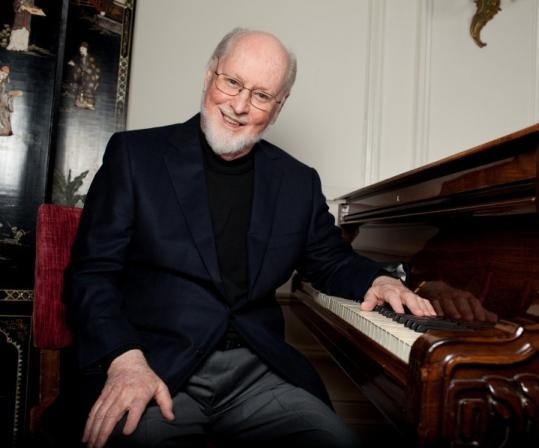
I posted earlier about film composer Alex North (“A Streetcar Named Desire,” “Death of a Salesman,” “Spartacus,” “Cleopatra,” “Who’s Afraid of Virginia Woolf?”) on his birthday. Now here’s a two-part interview about North with John Williams!
-
Alex North The Uncrowned King of Film Scores
Alex North was born in Chester, Pennsylvania (just outside of Philadelphia), on this date in 1910. His journey took him from a working-class background, to the Curtis Institute of Music, the Juilliard School, and the Moscow Conservatory. He also studied with Aaron Copland and Ernst Toch.
He became involved with the Federal Theatre Project. He worked in ballet, especially with Martha Graham and Anna Sokolow. He accompanied the latter to Mexico, where he had an opportunity to study with Silvestre Revueltas. Perhaps not coincidentally, his three North American teachers, Copland, Toch, and Revueltas, had all worked in film.
North wrote his first film score as far back as the 1930s, around the time he met up with director Elia Kazan. North was drafted during the war, and put his talent to use writing music for the Office of War Information documentaries.
With the cessation of hostilities, he returned to the theater. He also composed some concert pieces. It was his incidental music for plays like “A Streetcar Named Desire” that earned him an invitation to Hollywood, where he wrote the score for Kazan’s classic film adaptation. It would be the first time jazz would be fully integrated into the drama, forming the basis for the film’s underscore, as opposed to being simply diegetic, or “source music,” played by a band or on a turntable in the background of a given scene. Its success opened the door to a new film score sensibility, paving the way for composers like Elmer Bernstein, Henry Mancini, and North’s beloved Duke Ellington.
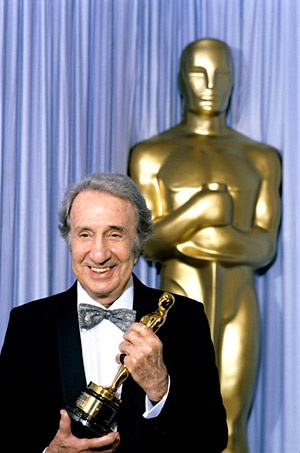
In all, North wrote 50 film scores, racking up 15 Academy Award nominations, yet never taking home the prize. In 1986, he received lifetime achievement recognition from the Academy, the first composer to be so honored.
There were times, during the course of his career, when his music took on an independent life, distinct from the films for which it was written. He scored major hits with “Unchained Melody” (originally written for the film “Unchained” and recorded some 500 times) and the love theme from “Spartacus.” The original soundtrack to “A Streetcar Named Desire” also sold extremely well.
His acclaimed contribution to “Spartacus” didn’t keep the film’s director, Stanley Kubrick, from rejecting North’s score for “2001: A Space Odyssey” – without bothering to tell him. North found out only after the lights went down at the film’s premiere. Director John Huston was more appreciative. Later in his career, North became Huston’s composer of choice, for films like “The Misfits,” “Under the Volcano,” “Prizzi’s Honor,” and “The Dead.”
It’s especially poignant, in 2023, to view North’s acceptance speech for his honorary Oscar. (You’ll find a link to the clip below.) At around the 4:50 mark, he says: “I would like to make a humble plea to all of us involved in the movies, and that is to encourage and convey hope, humor, compassion, and adventure, and love… as opposed to despair, synthetic theatrics, and blatant, bloody violence. And sex, sex, sex, by all means, indeed… but with a bit of mystery, a touch of charm and elegance, and lots of imagination.”
Amen to that. It’s a shame that it’s a plea that’s been almost wholly ignored. We would be in a better place today, psychologically, as morale colors everything, were we not buffeted by an aggressively crass and downbeat popular culture. Had filmmakers only heeded his advice.
Happy birthday, Alex North.
The Righteous Brothers sing “Unchained Melody”
In the movie “Ghost”
Love theme from “Spartacus”
https://www.youtube.com/watch?v=ChYyW_IhINo
Cover by Yusef Lateef
“A Streetcar Named Desire”
Rejected score for “2001: A Space Odyssey”
Honorary Academy Award, presented by Quincy Jones, with an intro by Robin Williams
-

Ennio Morricone Maestro of the Spaghetti Western
It often frustrated Ennio Morricone that he was so identified with the spaghetti western. After all, he composed music for some 500 film and television productions, of which only a few dozen were set in a highly stylized American west – more often than not recreated in Spain. It’s the price to pay for having brilliantly revitalized an exhausted genre.
Primarily for budgetary reasons (the Italians didn’t have the luxury of Hollywood’s overflowing coffers), but also, in part, as a reaction to the ballad scores of Dimitri Tiomkin and the neo-Coplandisms of Elmer Bernstein, Morricone brought his own quirky sensibility to bear on the classic western iconography. His music is offbeat, ear-catching, and almost absurdly cool.
This week on “Picture Perfect,” we’ll celebrate Morricone’s birthday (he was born on this date in 1928) with a heaping helping of spaghetti and selections from his scores for “A Fistful of Dollars” (1964), “For a Few Dollars More” (1965), “Once Upon a Time in the West” (1968), “Navajo Joe” (1966), and “The Good, the Bad and the Ugly” (1966).
His striking music for Sergio Leone’s “Dollars” trilogy, especially that for “The Good, the Bad and the Ugly,” became some of the most iconic of all time, frequently parodied, and as much a part of our collective cultural consciousness as that for “Jaws” and “Psycho.”
Morricone died in 2020 at the age of 91. His only competitive Oscar was for the Quentin Tarantino’s “The Hateful Eight” (allegedly a spaghetti western homage) in 2016. Previously, he was nominated for “Days of Heaven” (1978), “The Mission” (1986), “The Untouchables” (1987), “Bugsy” (1991), and “Malena” (2000). He received an honorary award from the Academy in 2007.
Get ready for a serenade of clangy surfer guitars, whistles, harmonicas, whips, gunshots, jaw harps, preening trumpets, coyote howls, shrieks, wails, and barking male choruses.
Happy birthday, Ennio Morricone. Grazie, Maestro, for all the Colts and carbs. We’ll be ladling out the spicy marinara on “Picture Perfect,” music for the movies, now in syndication on KWAX, the radio station of the University of Oregon!
Remember, KWAX is on the West Coast, so there’s a three-hour difference for the Trenton-Princeton area. Here are the respective air-times of my recorded shows (with East Coast conversions in parentheses):
PICTURE PERFECT, the movie music show – Friday on KWAX at 5:00 PACIFIC TIME (8:00 PM EST)
THE LOST CHORD, unusual and neglected rep – Saturday on KWAX at 4:00 PACIFIC TIME (7:00 PM EST)
Stream them here!
The Spaghetti Western Database – SWDb
Tag Cloud
Aaron Copland (92) Beethoven (94) Composer (114) Film Music (116) Film Score (143) Film Scores (255) Halloween (94) John Williams (185) KWAX (228) Leonard Bernstein (99) Marlboro Music Festival (125) Movie Music (131) Opera (197) Philadelphia Orchestra (86) Picture Perfect (174) Princeton Symphony Orchestra (106) Radio (86) Ralph Vaughan Williams (85) Ross Amico (244) Roy's Tie-Dye Sci-Fi Corner (290) The Classical Network (101) The Lost Chord (268) Vaughan Williams (99) WPRB (396) WWFM (881)