Tag: Finnish Composer

  • Bernhard Crusell 250th Anniversary

    Bernhard Crusell 250th Anniversary

    With America on the verge of its 250th birthday next year, it’s time to get our heads around “semiquincentennial.” That’s a 20-dollar word for “250th anniversary.” Cumbersome, yes, and likely to be reduced in the media and by harried events promoters to something like “America 250.”

    Sound it out: semi (half) quin (from “quinque,” or 5) centennial (from “centum,” 100, and “annus,” year). Bicentennial is 200 years. Quincentennial, 500 years. Semiquincentennial, 250. Thank you, Romans.

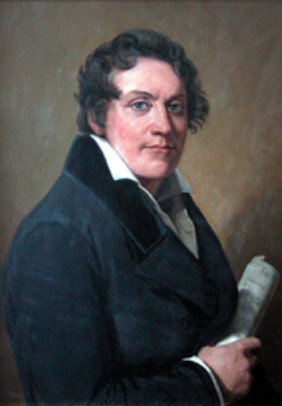
    In the way of a practice run, today is the semiquincentennial of Bernhard Crusell, who lived from 1775 to 1838. The most prominent achievements on Crusell’s resume, the things you will find in the most concise entries in any of the standard music references, is that he was an outstanding clarinetist and that he was the most important Finnish composer before Sibelius.

    Of course, Finland at the time did not exist as a country. Rather it was part of the kingdom of Sweden. Stockholm was where all the action was, so young Crusell arrived in his teens and hung his shingle, announcing himself to the world as a teacher and a composer. Soon, he was principal clarinetist at the Royal Court.

    His reputation rests mostly on three clarinet concertos and three clarinet quintets, all published in 1822 and all agreeable enough music for morning air play (which is how I first encountered them). He also wrote some variations on a Swedish air, at ten minutes in length, again, for a broadcaster, very handy filler.

    His opera, “The Little Slave Girl,” based on a tale from the Arabian Nights, is a brief, three-acter of about an hour’s length. (Add to his other accomplishments that Crusell was the first Finnish composer to write an opera.) Crusell was at work on incidental music for “Ali Baba and the Forty Thieves” by French playwright René-Charles Guilbert Pixerécourt, when he discovered the germ for what would become his only opera. In the meantime, he translated many important operas of Italian, French, and German origin for performance in Sweden, including Mozart’s “The Marriage of Figaro.”

    “The Little Slave Girl” was given its premiere in Stockholm in 1824 and was revived 34 more times in the next 14 years. Sadly, it was the end result of great personal heartache. Crusell’s daughter, Maria, had been engaged to be married at the time she caught cold and died in 1823 at the age of 17. Crusell himself had been in ill-health. Compounded by despondency at her loss, much time was to pass during which he composed nothing.

    The prospect of the Ali Baba opera restored Crusell’s creative impulse and allowed him to work through his grief. Through the character of the resourceful slave girl Marjana, he was able to realize his daughter’s wishes to marry and live happily ever after.

    I confess, although I own this recording, made for Finnish Radio, with Osmo Vänskä conducting, I am not overly familiar with the work, but at 42 minutes in, there is an aria with clarinet obbligato – perhaps a symbolic reunion of sorts between father and daughter.

    Don’t approach Crusell’s music expecting anything remotely “Finnish” sounding, as we’ve come to expect from the works of Sibelius and his followers, beeginning some 70 years later. Crusell wrote in the international style of early, conservative, Germanic “Romanticism.” You would be forgiven for identifying him more with the musical language of the 18th, as opposed to the 19th, century. His output is no less the enjoyable for it.

    Happy semiquincentennial, Bernhard Crusell!

  • Sibelius’s Name: Jean or Janne?

    Sibelius’s Name: Jean or Janne?

    EIGHT DAYS OF SIBELIUS – DAY 5

    Did you ever wonder why Finland’s foremost composer had a first name that would seem more at home in Paris than Helsinki?

    Jean Sibelius was born into a Swedish-speaking family in a provincial town in Finland, then a duchy of the Russian Empire. He was christened Johan and his parents called him Janne. It was when he was a student that he adopted Jean, a name he lifted from the calling card of a late, seafaring uncle (also named Johan, but for whatever reason assumed the French form in doing business). This is pronounced in the French fashion, or close to it, with the “J” said like “zh,” as opposed to the “y” sound of the “J” in “Janne.”

    If you’re curious to know how to pronounce the composer’s surname, well, here’s an interesting post. Just be sure to scan the comments, because there are some helpful responses and sensible modifications that go some way to tempering the writer’s caste-heavy thesis.

    If you’re uneducated you say it right


    PHOTOS: Sibelius: the child is the father of the man

  • Remembering Finnish Composer Rautavaara

    Remembering Finnish Composer Rautavaara

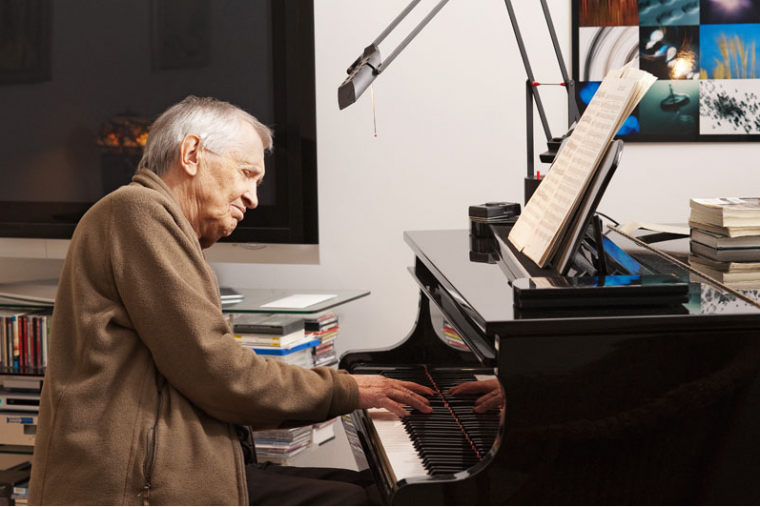
    The great Finnish composer Einojuhani Rautavaara was born on this date in 1928. In his later years, he was rightly regarded as one of the world’s great composers, the grand old man of Finnish music and the spiritual heir of Jean Sibelius. As a young man, he had actually worked as Sibelius’ chauffeur! In all, he composed eight symphonies, nine operas, 14 concertos, and dozens of other orchestral and vocal compositions. After he died in 2017 at the age of 87, I presented a five-hour marathon of his music on WPRB Princeton.

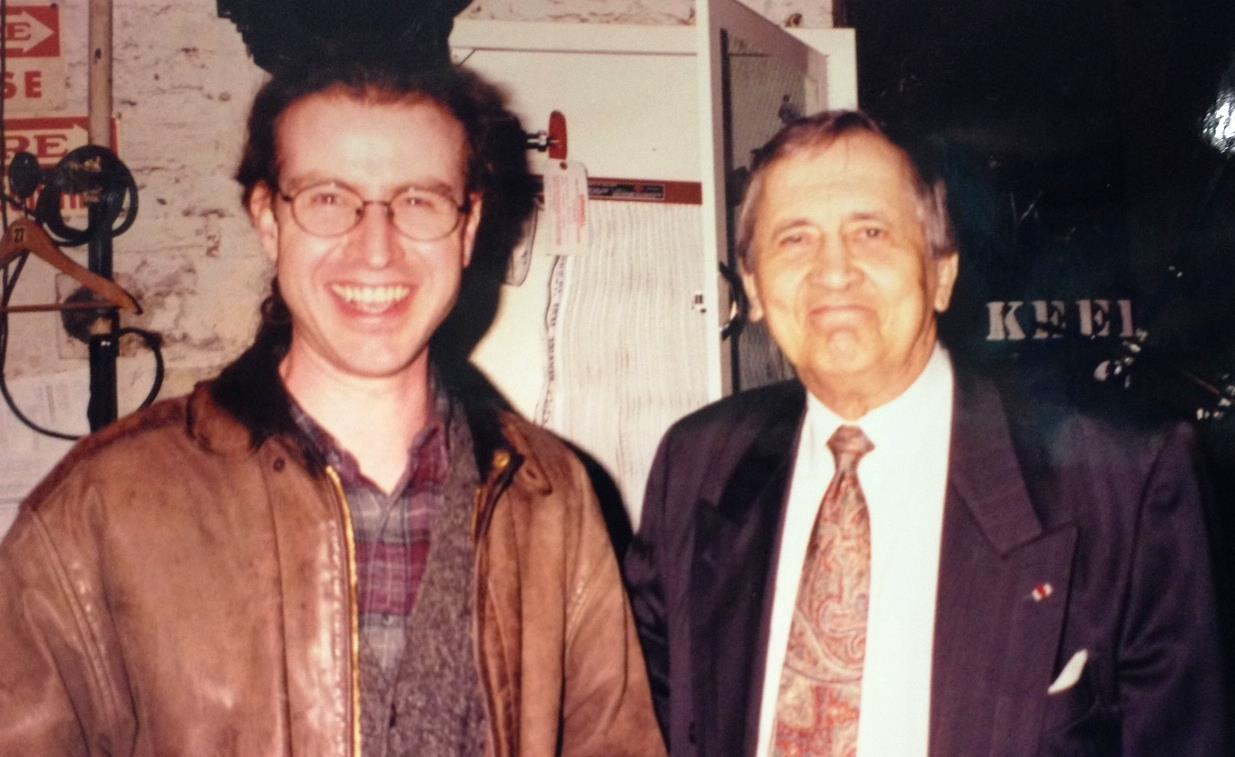
    I was lucky to meet him once, in 2000, backstage at Philadelphia’s Academy of Music, prior to the first performance of his Symphony No. 8. He was kind enough to sign my Naxos CD of his Symphony No. 3, the Piano Concerto No. 1, and the so-called concerto for birds and orchestra “Cantus Arcticus.” I wonder what he thought of this peculiar, 33-year-old, American fan?

    Here’s a performance of the Piano Concerto No. 1, with my recent acquaintance, Yifei Xu of the New Jersey Festival Orchestra, as the soloist.

    The Philadelphia Orchestra touring Rautavaara’s Symphony No. 8, “The Journey.” I didn’t even know this video existed!

    https://www.youtube.com/watch?v=llL8YGvVkkc

    “Cantus Arcticus,” with bird songs recorded by the composer in the bogs of Liminka, near the Arctic Circle:


    PHOTO: Ross and Rautavaara. Holding the camera: Sibelius’ grandson, the filmmaker Anssi Blomstedt!

    A more complete account here:

  • Kaija Saariaho Dies at 70

    Kaija Saariaho Dies at 70

    Kaija Saariaho, the first woman to have a work staged at New York’s Metropolitan Opera in over 100 years – since Ethel Smyth’s “Der Wald” in 1903! – has died. Saariaho was one of Finland’s foremost composers.

    Saariaho’s “L’Amour de loin” (“Love from Afar”) was performed at the Met in 2016. Originally presented in Salzburg 16 years earlier, the opera is a meditation on the idealized love between a French troubadour and a countess of Tripoli. The two are separated by the Mediterranean Sea.

    Saariaho’s most recent opera, “Innocence,” composed in 2018, examines the aftermath of a school shooting in Helsinki. “Innocence” is projected to be heard at the Met in the 2025-26 season.

    In February 2021, Saariaho was diagnosed with glioblastoma, an aggressive form of brain cancer, but was able to carry on successfully until fairly recently, when she entered the terminal phase of her illness. Her last completed work was a trumpet concerto, “Hush,” completed in March and scheduled for performance in Helsinki in August.

    Saariaho was born in Helsinki in 1952. She studied at the Sibelius Academy with Paavo Heininen. Following summer courses in Darmstadt, she attended the Hochschule für Musik Freiburg, where she studied with Brian Ferneyhough and Klaus Huber. In Darmstadt, she was influenced by a concert of spectral music by Tristan Murail and Gérard Grisey. This led her to Paris to study electronic music at the avant-garde institute IRCAM.

    Saariaho claimed to experience a kind of synesthesia, in which all of her senses were engaged in composition. She once commented that “the visual and the musical world are all one to me.”

    She was married to composer, computer scientist, and sometimes collaborator Jean-Baptiste Barrière. The two were separated for a time, as the COVID-19 pandemic intensified while she was away, visiting Helsinki, and they were forced to live apart. “L’Amour de loin,” indeed!

    Even in the years she lived abroad in Germany and France, she always held Finland very dear. Like Sibelius, she found inspiration in the country’s ample natural world, citing specifically the big forests she knew during the summers of her childhood; also the sounds of wind, waves, and footsteps in the snow.

    In April, Saariaho endowed the construction of a new organ at the Helsinki Music Center with one million euros (US $1,072,450) . She was also the chair of the International Kaija Saariaho Organ Composition Competition.

    During her career, she was the recipient of many awards. In 2011, “L’Amour de loin” was recognized with a Grammy for Best Opera Recording.

    This morning, she died peacefully at her home in Paris. At the time of her death, she was counted among the world’s leading composers. Saariaho was 70 years-old.


    “L’Amour de loin” at the Met

    “Graal théâtre” for violin and orchestra

    “Orion”

    “Nymphéa (Jardin Secret III) for string quartet and electronics

    “Six Japanese Gardens” for percussion

    “Sept Papillons” for solo cello

    A brief interview with the composer

  • Einojuhani Rautavaara Obituary A Loss for Music

    Einojuhani Rautavaara Obituary A Loss for Music

    Okay, this one hurts.

    I learn with dismay of the passing of the great Finnish composer Einojuhani Rautavaara, who died last night at the age of 87. Rautavaara, widely regarded as one of the world’s great composers, the grand old man of Finnish music, and the spiritual heir of Jean Sibelius, wrote eight symphonies, nine operas, 14 concertos, and dozens of other orchestral and vocal compositions.

    By coincidence, I just played his Symphony No. 7, “Angel of Light,” on WWFM – The Classical Network on Tuesday. (Well, perhaps it’s not so much of a coincidence, since I played his “Cantus Arcticus” last week.)

    I met Rautavaara once, backstage at the Academy of Music in Philadelphia in 2000, after the premiere of his Symphony No. 8. Somewhere, I’ve got a pre-digital photo of the two of us, me smiling like a Tyrannosaurus Rex. If I can find it, I will post it soon.

    R.I.P. Einojuhani Rautavaara. You were one of the best we had.

    https://www.theguardian.com/music/2016/jul/28/einojuhani-rautavaara-obituary

    The final movement of “Angel of Light”:

Tag Cloud

Aaron Copland (92) Beethoven (95) Composer (114) Film Music (120) Film Score (143) Film Scores (255) Halloween (94) John Williams (185) KWAX (229) Leonard Bernstein (100) Marlboro Music Festival (125) Movie Music (135) Opera (198) Philadelphia Orchestra (88) Picture Perfect (174) Princeton Symphony Orchestra (106) Radio (87) Ralph Vaughan Williams (85) Ross Amico (244) Roy's Tie-Dye Sci-Fi Corner (290) The Classical Network (101) The Lost Chord (268) Vaughan Williams (103) WPRB (396) WWFM (881)

DON’T MISS A BEAT

Receive a weekly digest every Sunday at noon by signing up here


RECENT POSTS