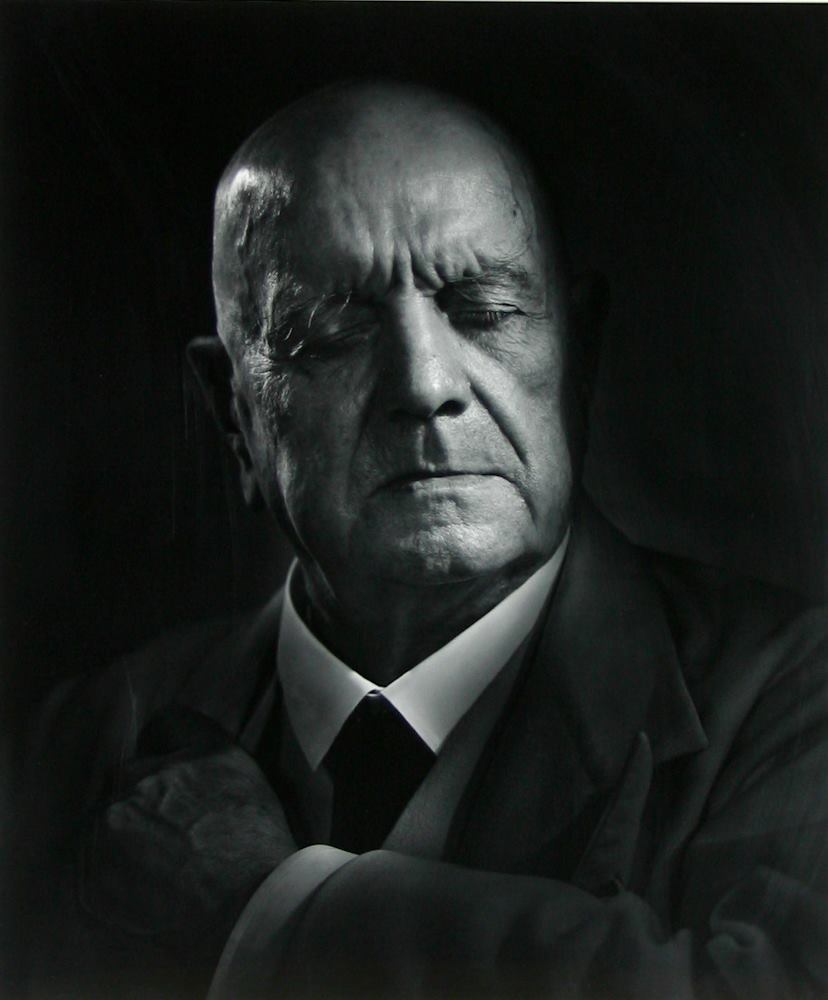
December 8th marks the 150th anniversary of the birth of Finnish master Jean Sibelius. Since he may very well be my favorite composer (or at any rate, he’s right up there), I will be devoting the entire playlist tomorrow morning on WPRB to his magnificent music, in outstanding performances from the 1930s to the present.
Featured conductors will include Sir John Barbirolli, Sir Thomas Beecham, Sir Colin Davis, Neeme Järvi, Robert Kajanus, Herbert von Karajan, Serge Koussevitzky, Eugene Ormandy, Leopold Stokowski and Osmo Vänskä. I’ll also include a lovingly-performed rarity from a new CD with JoAnn Falletta and the Buffalo Philharmonic Orchestra.
The influence of Sibelius on the establishment of a Finnish national identity cannot be underestimated. He is venerated in Finland as we in the United States venerate the Founding Fathers, though with considerably more passion and a sense of personal connection. Monuments to Sibelius abound, and his name is on public buildings. Why should this be so?
After seven centuries under Swedish rule, Finland was “liberated” by the Russians in 1809. In its new role, Finland served as an autonomous Grand Duchy of the Russian Empire. At times, relations between the two could become palpably tense.
It was the emergence of the Kalevala, compiled in the mid-19th century by Elias Lönnrot from oral traditions, that lit a spark in the frozen north. Here were heroic tales of Finland’s distant past. It brought to a head the issue of Swedish yet being the dominant language of Finland and contributed to a snowballing sense of nationalism that resulted in Finnish independence from Russia in 1917.
Along the way, Sibelius had become the movement’s most dangerous torch-bearer. Like other Finnish artists of the time, he turned to the Kalevala for inspiration, bringing a number of the tales vibrantly to life in his music. But it was “Finlandia” that proved the true firebrand. So directly did it speak to the Finnish heart that performances of the work were banned by the Russian authorities, so that the piece could only be programmed covertly under alternative names like “Happy Feelings at the Awakening of Finnish Spring.”
However, his importance to music transcends the provincial concerns of a small northern country. Sibelius offered a fresh and original path from Romanticism into the 20th century. While Stravinsky and Schoenberg duked it out on the world stage, Sibelius crept quietly like a frost from the north to invigorate the hearts of listeners and stimulate the creativity of (some) composers.
The perception at first, with the rise of rhythmic complexity and the breakdown of tonality, was that Sibelius was a conservative throwback, and not to be taken seriously, but time has proven otherwise. His music took root mainly in the Nordic countries, England, and the United States, went underground somewhat at mid-century, then emerged as an essential part of the repertoire of virtually every major conductor and orchestra.
Even so, he is easily misunderstood. His music is organic, bold, enigmatic and idiosyncratic, often rugged and austere on the surface, but with a soft, warm glow emanating from deep within. I find it irresistible.
I hope you’ll join me tomorrow morning from 6 to 11 ET, on WPRB 103.3 FM or at wprb.com, when it will be all-Sibelius. We’ll be conjuring heroes and magicians, and brooding with migratory birds amidst the snow-capped pines, on Classic Ross Amico.