Tag: Folk Music

  • Discover Lajtha Hungarian Music’s Lost Voice

    Discover Lajtha Hungarian Music’s Lost Voice

    Hungry for Hungarian music? Give László Lajtha a shot.

    A forgotten colleague of Béla Bartók and Zoltán Kodály, Lajtha (pronounced “Loy-tah”) too busily collected and transcribed folk music from the Hungarian countryside prior to World War I.

    Later, he was appointed Director of Music for Hungarian Radio, Director of the Museum of Ethnography, and Director of the Budapest National Conservatory. He was summarily removed from all three posts and his passport confiscated by the Communist regime after remaining in the West too long while at work on the film score to a British screen adaptation of T.S. Eliot’s “Murder in the Cathedral” (which went on to win the Grand Prix at the Venice Film Festival in 1951). He hadn’t even provided a film score in the truest sense, instead composing three concert works (the Symphony No. 3, the Orchestral Variations, and the Harp Quintet No.2), which were excerpted in the film.

    Anyway, he was awarded the Kossuth Prize in 1951 for his achievements as a folk researcher. At least that’s something. I devoted my life to Hungarian music, and all I got was this lousy t-shirt.

    Happy birthday, László Lajtha (1892-1963)!

    An interesting assessment of Lajtha’s music:
    http://www.crisismagazine.com/2001/music-laszlo-lajtha-music-from-a-secret-room

    Lajtha’s Symphony No. 4 “Le printemps”:


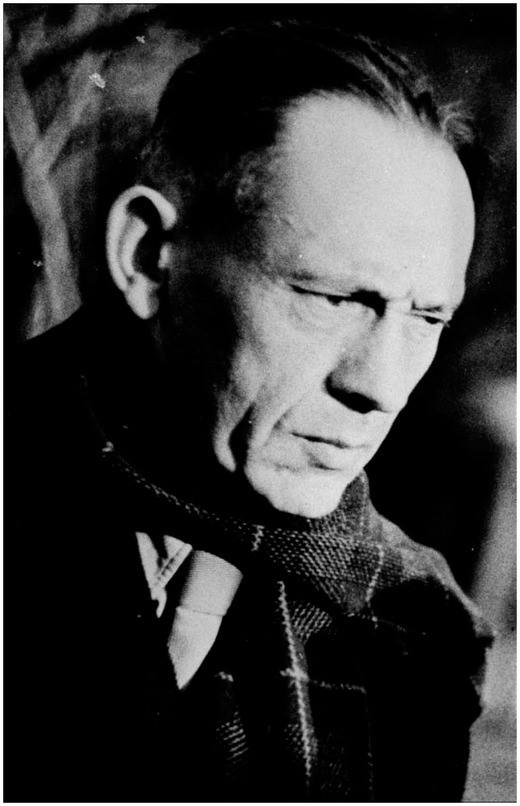
    PHOTO: Not even that scarf could insulate him from the Cold War

  • Béla Bartók Hungarian Master Composer

    Béla Bartók Hungarian Master Composer

    Today is the birthday of Béla Bartók (1881-1945), considered, alongside Franz Liszt, to be the greatest composer Hungary ever produced. In fact, he was one of the most important composers of the 20th century.

    Bartók had a gift for absorbing the music of the villages and the countryside of Central and Eastern Europe and filtering it through his own distinctive sensibility. His was a musical nationalism very much of his time and far removed from the 19th century model as exemplified by composers like Mikhail Glinka and Bedřich Smetana.

    He was one of the first to take a scientific approach to the collection and classification of folk music. His absorption of indigenous techniques led to the breakdown of diatonic harmony, which had dominated western art music for centuries, and opened up a world of possibility for those who followed. He also loved eerie dissonances, which he often employed as a backdrop to nature sounds and desolate melodies.

    Bartók wrote music of varying degrees of difficulty, from a listener perspective, ranging from the opulence of his early Richard Strauss-influenced orchestral works, to the primitive savagery of his percussive piano writing, to the edgy dissonance of his six landmark string quartets, to the sweeping synthesis of Western art music and European folk music in mature masterworks like his “Concerto for Orchestra.”

    Happy birthday, Béla Bartók.

    Bartók speaks (in Bela Lugosi-accented English):

    Bartók performs one of his most popular (and accessible) works:
    https://www.youtube.com/watch?v=cW4AHmTzyMo

    PHOTO: The composer among Turkish tribesmen in Anatolia

  • Ralph Vaughan Williams Birthday Folk Music Legend

    Ralph Vaughan Williams Birthday Folk Music Legend

    Today is the birthday of one of my favorite composers, Ralph Vaughan Williams. What does that say about me? I don’t care. I love his stuff.

    Vaughan Williams, of course, cultivated a musical language with its roots in English folk melody and the great Tudor traditions. Like Bartók and Kodály in Hungary, he helped rescue England’s rich rural musical heritage from extinction.

    Vaughan Williams was a musical democrat, who believed the works of the world’s greatest composers were a birthright of the common man. He bicycled around the countryside, not only notating songs of agricultural workers, but rehearsing village choirs for his beloved Leith Hill Festival, which he directed from 1905 to 1953.

    He adored the “St. Matthew Passion.” Since many of the singers could not read music, he would go through the work with them page by page.

    In middle age, my eyebrows seem to aspire to Ralph Vaughan Williams’ stature. I wonder if his compositional strength, Samson-like, was contained in those unruly tufts?

    Celebrate Vaughan Williams by listening to “The Running Set”:

    https://www.youtube.com/watch?v=SMPUYo1A_BU

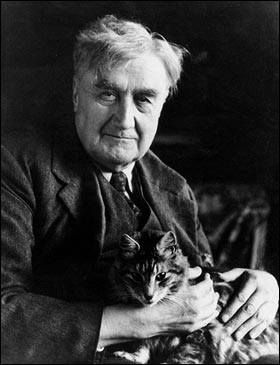
    PHOTO: Vaughan Williams and Foxy, engaged in a shedding contest

Tag Cloud

Aaron Copland (93) Beethoven (95) Composer (114) Film Music (126) Film Score (143) Film Scores (255) Halloween (94) John Williams (189) KWAX (229) Leonard Bernstein (101) Marlboro Music Festival (125) Movie Music (141) Mozart (87) Opera (203) Philadelphia Orchestra (89) Picture Perfect (174) Princeton Symphony Orchestra (107) Radio (87) Ross Amico (244) Roy's Tie-Dye Sci-Fi Corner (290) The Classical Network (101) The Lost Chord (268) Vaughan Williams (103) WPRB (396) WWFM (881)

DON’T MISS A BEAT

Receive a weekly digest every Sunday at noon by signing up here


RECENT POSTS