Tag: Football

  • On His 94th Birthday, John Williams Continues to Inspire

    On His 94th Birthday, John Williams Continues to Inspire

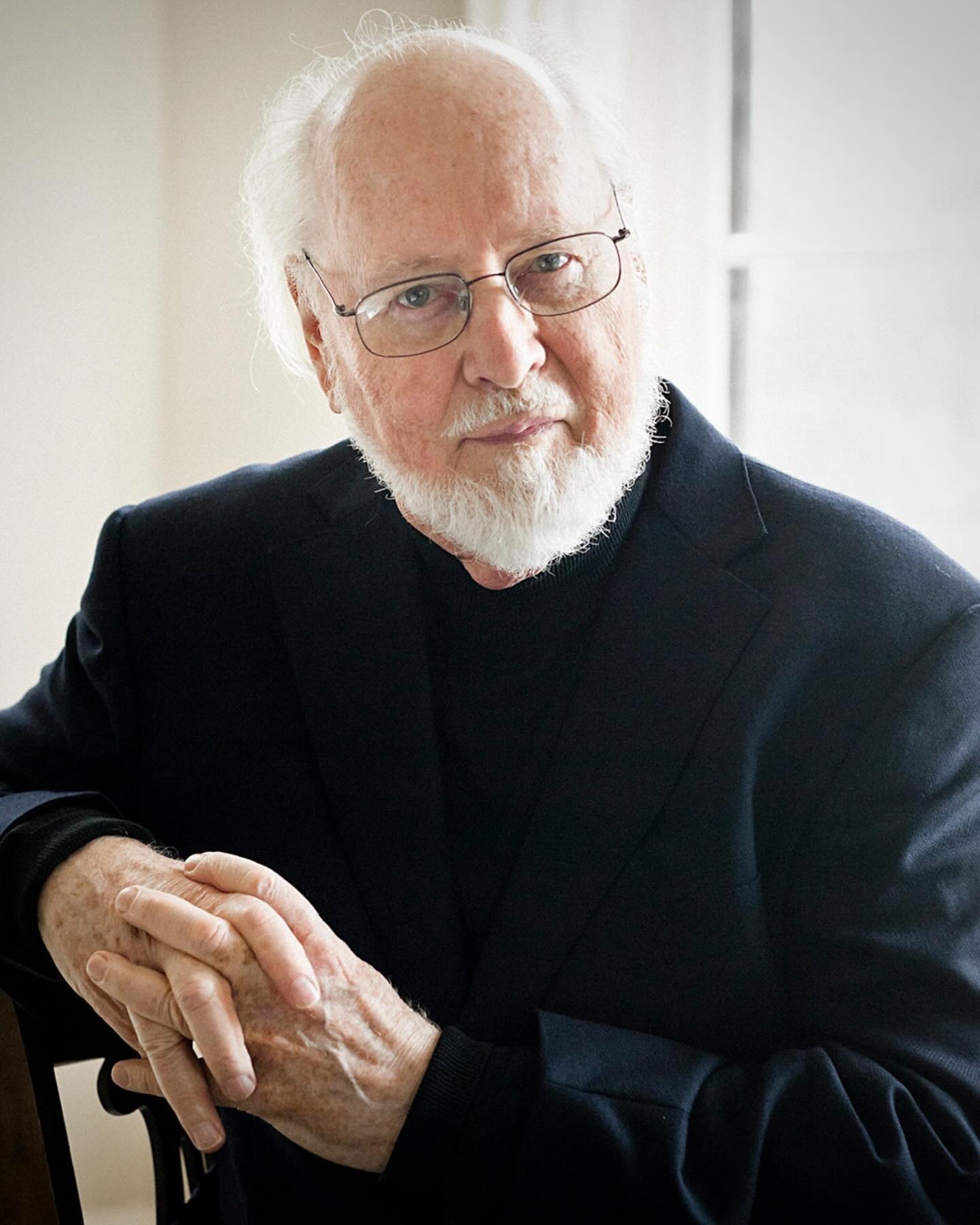
    Who cares about the Super Bowl, when it’s John Williams’ birthday? Williams is 94 years-old today.

    John Williams is everywhere right now. His Piano Concerto, written for Emanuel Ax – and given its world premiere with the Boston Symphony Orchestra at Tanglewood this past summer – is making the rounds, with performances by the New York Philharmonic later this month and the Philadelphia Orchestra next season. His score for the film “Disclosure Day” – his 30th collaboration with director Steven Spielberg –will arrive in theaters on June 12th. (Allegedly, he just recorded it.) And right now, selections from his Olympic fanfares are being played as segues and bumpers throughout broadcasts of the games from Milano Cortina.

    Williams hasn’t written anything new for this year’s Olympics, nor for that matter, for tonight’s Super Bowl (unless there’s a new trailer for “Disclosure Day”). However, on at least one occasion, possibly more, his “NBC Sunday Night Football Theme” has opened the broadcast.


    In 2023, Williams composed music for the telecast of ESPN’s College Football Playoff Championship. Set the athletic mood with “Of Grit and Glory.”


    I just remembered: Williams also wrote the score for the 1977 thriller “Black Sunday,” in which Robert Shaw races to prevent Bruce Dern from blowing up the Super Bowl – with the Goodyear blimp!


    The indelible “Olympic Fanfare and Theme,” composed for the 1984 summer games in Los Angeles and part of Olympic broadcasts ever since


    Also frequently heard: the fanfare from “Summon the Heroes,” written for the 1996 Atlanta games


    When we listen to John Williams, we can imagine a better, more inspiring world.

    Thank you, and happy birthday, John Williams!

    ——-

    BONUS: Ten-minute Williams interview with Variety, filmed when the composer was 92

  • Shostakovich Football Fan Composer

    Shostakovich Football Fan Composer

    Super Sunday! Of the great composers, none enjoyed football more than Dmitri Shostakovich. Russian football, that is (basically soccer). Shostakovich attended games whenever and wherever he could. He kept meticulous records of statistics and wrote articles for sports publications. He even became qualified as a referee. On one occasion he invited the entire Leningrad Dynamo over to his apartment for dinner.

    In 1930, he composed a football ballet, “The Golden Age.” The scenario follows a Soviet team that falls victim to match rigging in the decadent West. The players are harassed by police and imprisoned by the evil bourgeoisie. Fortunately, the local workers overthrow their capitalist overlords and everyone lives happily ever after.

    Shostakovich is said to have coined the phrase, “Football is the ballet of the masses.”

    “The Golden Age” (1930) – fast-forward to the 55-minute mark for “Tea for Two.”

    “Football” from “Russian River” (1945), composed for the NKVD Song and Dance Ensemble (the entertainment corps of the secret police!)

    In America, everyone play football. In Soviet Russia, football play you!


    PHOTOS: Shostakovich at the stadium, actually enjoying himself for a change

  • Shostakovich: Football, Stalin & Piano

    Shostakovich: Football, Stalin & Piano

    Of the great composers, none enjoyed football more than Dmitri Shostakovich. Russian football, that is. On one occasion he even invited the entire Leningrad Dynamo over to his apartment for dinner.

    This Sunday night on “The Lost Chord,” following the Super Bowl, tune in for selections from a 5-CD boxed set, on the Melodiya label, of Russian state recordings of Shostakovich performing his own music.

    Admittedly, emphasizing Shostakovich’s rabid enthusiasm for football is something of a bait-and-switch. The show just happens to air on Super Sunday and has nothing at all to do with the sport. However, Shostakovich really did love football (i.e. soccer) and all kinds of sports and games of chance. You can read more about it by following this link.

    https://www.themoscowtimes.com/2019/08/18/dmitri-shostakovich-football-fanatic-a66908

    Concerning the show itself, Shostakovich was a fabulous pianist, who, early on, eked out a living with his improvisations at a local cinema. He began serious studies at the age of 9, and continued, formally, at the Petrograd Conservatory, upon his acceptance there, at the age of 13. Once he began to receive international attention for his original compositions, for works such as his Symphony No. 1, written when he was only 19, his principal focus began to shift. He did, however, continue to perform and record his own music.

    The documents in this Melodiya set, “Shostakovich Plays Shostakovich,” are riveting, not only for the musicianship they enshrine, but also on account of their biographical fascination and their sense of history.

    Perhaps no Shostakovich recording is imbued with a greater sense of time and place than a 1954 performance of his Symphony No. 10. An arrangement, for piano four-hands, was played by the composer at his apartment with his close friend and neighbor Mieczyslaw Weinberg.

    Weinberg found himself in a very precarious situation only the year before. He was arrested on a charge of “Jewish bourgeois nationalism,” in connection with the so-called Doctor’s Plot, at the command of Stalin himself, on the pretense that Jewish doctors were planning to assassinate Soviet officials. Weinberg’s father-in-law had been implicated, and killed. Shostakovich attempted to intercede on his friend’s behalf, but it was only with the sudden and fortuitous death of Stalin in 1953 that Weinberg was officially rehabilitated, and released.

    In a piece of living history, these two artists sit down to perform on Shostakovich’s home piano. This is music that was claimed, in Solomon Volkov’s “Testimony,” Shostakovich’s alleged memoir, to be about Stalin and the Stalin years.

    The pianos used in some of these recordings may be a little rough around the edges, but they only lend to the neurotic intensity of the music-making. It’s also a kind of window into what it must have been like to have been a musician in Soviet Russia, between 1946 and 1958, commandeering whatever means of expression you could lay your hands on.

    I hope you’ll join me for “Black and White and Red All Over.” Shostakovich tickles the keys, this Sunday night at 10:00 EST, on WWFM – The Classical Network and wwfm.org.


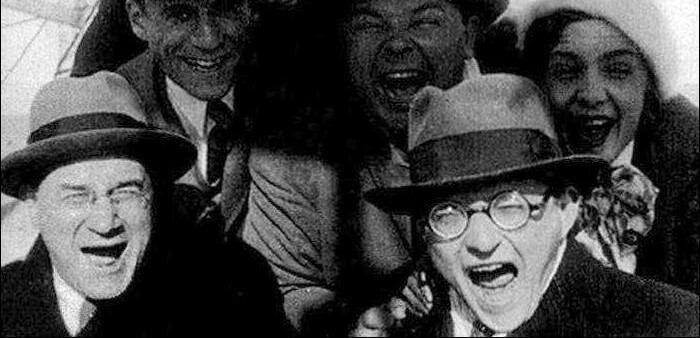
    PHOTO: Shostakovich (lower right), with fellow Soviet football fans

Tag Cloud

Aaron Copland (92) Beethoven (95) Composer (114) Film Music (120) Film Score (143) Film Scores (255) Halloween (94) John Williams (185) KWAX (229) Leonard Bernstein (100) Marlboro Music Festival (125) Movie Music (135) Opera (198) Philadelphia Orchestra (88) Picture Perfect (174) Princeton Symphony Orchestra (106) Radio (87) Ralph Vaughan Williams (85) Ross Amico (244) Roy's Tie-Dye Sci-Fi Corner (290) The Classical Network (101) The Lost Chord (268) Vaughan Williams (103) WPRB (396) WWFM (881)

DON’T MISS A BEAT

Receive a weekly digest every Sunday at noon by signing up here


RECENT POSTS