Tag: Frederick Delius

  • Delius Rediscovered Rare Works & Great Champions

    Delius Rediscovered Rare Works & Great Champions

    There’s a scene in Preston Sturges’ 1948 comedy “Unfaithfully Yours” in which a detective, played by Edgar Kennedy, waxes enthusiastically during a meeting with conductor Sir Alfred de Carter, played by Rex Harrison.

    “Nobody handles Handel like you handle Handel!” he exclaims. “And your Delius? Delirious!”

    This week on “The Lost Chord,” we’ll echo that appreciation of the great English composer – who lived most of his last four decades in the picturesque village of Grez-sur-Loing, outside Paris – with an hour of recordings of some of his lesser-heard works, made by some of his greatest champions.

    More than any other, Sir Thomas Beecham was responsible for establishing Delius’ reputation as one of the UK’s greatest composers. Delius was inspired by a poem of Henrik Ibsen to write a melodrama (a piece in which a speaker recites over an orchestra), called “Paa Vidderne” – Norwegian for “On the Mountain.” This work would remain unperformed during Delius’ lifetime. However, two years later, in 1894, he composed a purely orchestral work on the same theme. If you’re a Delius fanatic, you may recognize a horn motif toward the end of the piece. It was to reappear in Delius’ fantasy overture “Over the Hills and Far Away.” We’ll hear “Paa Vidderne,” the purely orchestral work, in Beecham’s 1946 recording.

    Another great champion of Delius’ music is the violinist Tasmin Little – recently retired, at the top of her game, at the age of only 55! Little made two recordings of Delius’ violin concerto. She also recorded a highly-regarded set of the violin sonatas. For a release on the Chandos label that includes Delius’ violin and cello concertos, she was one of the soloists for the rarely-heard Double Concerto – a work for violin, cello and orchestra – dating from 1920. David Watkins is the cellist, and the late Sir Andrew Davis conducted.

    Finally, Eric Fenby was very closely associated with Delius during the final years of the composer’s life, when he acted as his amanuensis, taking down music by way of dictation, at a time when Delius was blind and paralyzed (the result of a syphilitic infection he contracted as a young man).

    Fenby later made some authoritative recordings of the composer’s work. We’ll hear one of the pieces he helped Delius to complete – “Songs of Farewell,” from 1930, after texts of Walt Whitman, from the poet’s collection “Leaves of Grass” – with Fenby conducting the Royal Philharmonic Orchestra and Ambrosian Singers.

    Bid farewell to astronomical summer with “Delirious for Delius” on “The Lost Chord,” now in syndication on KWAX, the radio station of the University of Oregon!


    Clip and save the start times for all three of my recorded shows:

    PICTURE PERFECT, the movie music show – Friday at 8:00 PM EDT/5:00 PM PDT

    SWEETNESS AND LIGHT, the light music program – Saturday at 11:00 AM EDT/8:00 AM PDT

    THE LOST CHORD, unusual and neglected rep – Saturday at 7:00 PM EDT/4:00 PM PDT

    Stream them, wherever you are, at the link!

    https://kwax.uoregon.edu/


    PHOTO: Fenby with Frederick Delius (in chair)
  • Herrmann’s Mentor: Percy Grainger

    Herrmann’s Mentor: Percy Grainger

    Bernard Herrmann may be best-recognized as the greatest film composer the United States ever produced, but he was also a passionate Anglophile. I’ve written a lot about Herrmann over the years, from many different perspectives, but in light of my recent visit to the Percy Grainger Home & Studio in White Plains, NY (where Grainger lived for 40 years), I thought I’d share a little bit about the relationship of these two artists today, for the anniversary of Herrmann’s birth.

    Herrmann studied composition with Grainger at New York University in the early 1930s. Even in untested youth, his extensive knowledge and passion for English music (and music in general) endeared him to his mentor – they also shared an ear for unusual orchestration – and a genuine affection sprang up between them. In particular, they both adored Frederick Delius, whom Grainger got to know fairly well in the early years of the 20th century. (Grainger, born in Melbourne, lived in England from 1901-14.)

    For Herrmann, Grainger was like a magic fountain of information about many of the living composers he so admired. Herrmann himself would later get to know some of them himself during guest conducting engagements with the BBC Symphony, the Halle Orchestra, and the London Symphony Orchestra.

    Here’s a little more about Grainger and Herrmann, largely drawn from Steven C. Smith’s Herrmann biography, “A Heart at Fire’s Center.” I’ve read Smith’s book, of course, but for convenience’s sake, I am cutting and pasting this excerpt from an article about Herrmann’s Anglophilia compiled by Ian Lace for the MusicWeb International website. To access the complete article, which would certainly be worth your while, if it’s a topic that interests you, look for the link below.


    From Lace’s piece:

    Also in 1932 Herrmann attended a bi-weekly course in advanced composition and orchestration led by the brilliant but wildly unorthodox Percy Grainger.

    ‘Percy Grainger was Australia’s most innovative advocate of music past and present, from his childhood days as “the flaxen-haired phenomenon” of Melbourne to his years of international fame as folk song collector, composer, and recitalist. At the heart of Grainger’s unstable, erratic character was a fixation on truth, contempt for tradition and a passion for the outrageous.

    ‘Since becoming head of NYU’s music department in 1931, Grainger had offered a syllabus of musical eccentricity and frequent brilliance that left many students puzzled and unimpressed. The class of 1932, however, had one exception. In Grainger, Herrmann saw qualities he himself was cultivating: individualism and dedication to one’s craft and beliefs, however unpopular and unfashionable.

    ‘The relationship between the fifty-year-old teacher and the twenty-one year old student was one of mutual respect. “Grainger did not place orchestration examples before [his students],” Grainger biographer John Bird wrote, “Instead, he allowed them to choose their pieces and gave them advice when and where needed. Herrmann for instance, decided to orchestrate MacDowell’s Celtic Sonata and felt the need to employ the sonorities of a tenor tuba. The Australian knew little of this unusual piece of plumbing, so together, they familiarised themselves with the instrument and found suitable moments to include it.”

    ‘Herrmann and Grainger also discovered a shared love of Whitman and the music of Delius. One of Herrmann’s favourite NYU memories peripherally involved the latter: one morning the gaunt, sprightly Grainger leapt onto the lecture stage and announced, “The three greatest composers who ever lived are Bach, Delius and Duke Ellington. Unfortunately Bach is dead, Delius is very ill – but we are happy to have with us today the Duke!” Ellington and his band then mounted the stage and played for the next two hours.

    ‘If other Grainger lectures were less dramatic, they were no less influential to Herrmann: ancient monophony, folk music, atonality, polyphony, the indigenous rhythms of Africa, Asia, and the South Seas – each was examined by Grainger with alternating lucidity and jumbled mysticism. When the scholastic year ended in mid-August 1933, Grainger considered his work a failure, as few students had been as responsive as Herrmann; but it cemented a friendship between him and his intense young pupil that affected Herrmann for the rest of his life.’

    https://www.musicweb-international.com/classrev/2003/oct03/herrmann_anglophile.htm?fbclid=IwY2xjawLOBDtleHRuA2FlbQIxMABicmlkETFPTEczaGdzU1B4S0kzTWU3AR62TG3w1_v7tT4klupSLkdpPpTqX4vX0pwpvI3BPd3MVjNKSI3Mr_xsxg77Qg_aem_mH_vuFF2bUoZiXE-rhwFJw


    For more about Grainger and Herrmann (and Herrmann’s chum Jerome Moross), there’s also this entry on the Percy Grainger Society website.

    https://percygrainger.org/blog/8103609

    Happy birthday, Bernard Herrmann!


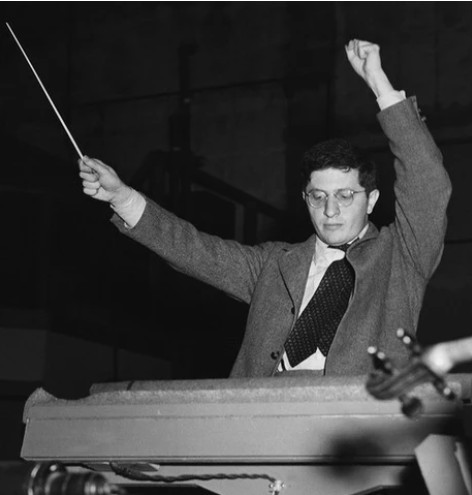
    PHOTOS (clockwise from upper left): Herrmann conducting at CBS radio in the 1930s; Grainger conducting the National High School Orchestra at Interlochen in 1937; Grainger with Duke Ellington at New York University in 1932; Herrmann and Orson Welles at CBS

  • Lazy Summer Music Sleepy Lagoon Sweetness and Light

    Lazy Summer Music Sleepy Lagoon Sweetness and Light

    This week on “Sweetness and Light,” I invite you to join me by the sleepy lagoon, for an hour of languid music for a lazy summer day.

    We’ll hear easygoing works by Eric Coates, Cyril Scott, Frederick Delius, Jerome Moross, Leroy Anderson, Sergei Prokofiev, and Claude Debussy.

    Kick back with a cool drink and no cares. It’s summertime, and the living is easy. We’ll be drowsing in a musical hammock, on “Sweetness and Light,” this Saturday morning at 11:00 EDT/8:00 PDT, exclusively on KWAX, the radio station of the University of Oregon!

    Stream it, wherever you are, at the link:

    https://kwax.uoregon.edu/

  • Classical Music Birthdays & Butterflies Today

    Classical Music Birthdays & Butterflies Today

    Purely by chance (well, also because I happen to like the music), our first hour on The Classical Network this afternoon will be all-English, as we celebrate the birthdays today of Frederick Delius and Havergal Brian. Along the way, we’ll also take a trip to a butterfly’s ball and enjoy a grasshopper’s dance.

    In Hour No. 2, we’ll celebrate the anniversaries of the births of Danish composer Ludolf Nielsen, French operatic master Daniel-François-Esprit Auber, and Chinese-American violinist Cho-Liang Lin.

    It will be an all-French program, avec piano, on “Music from Marlboro,” with chamber music by Francis Poulenc and Gabriel Fauré, from the legendary Marlboro Music Festival, tonight at 6.

    Pull up a chair or cut a rug. It’s not just be the butterflies and grasshoppers who’ll be having a ball, from 4 to 6 p.m. EST, on WWFM – The Classical Network and wwfm.org.

  • Whitman’s British Isles Influence

    Whitman’s British Isles Influence

    While Walt Whitman has attained a venerable status here in the United States, as essentially America’s national poet, more surprising, perhaps, was his impact on composers of the British Isles.

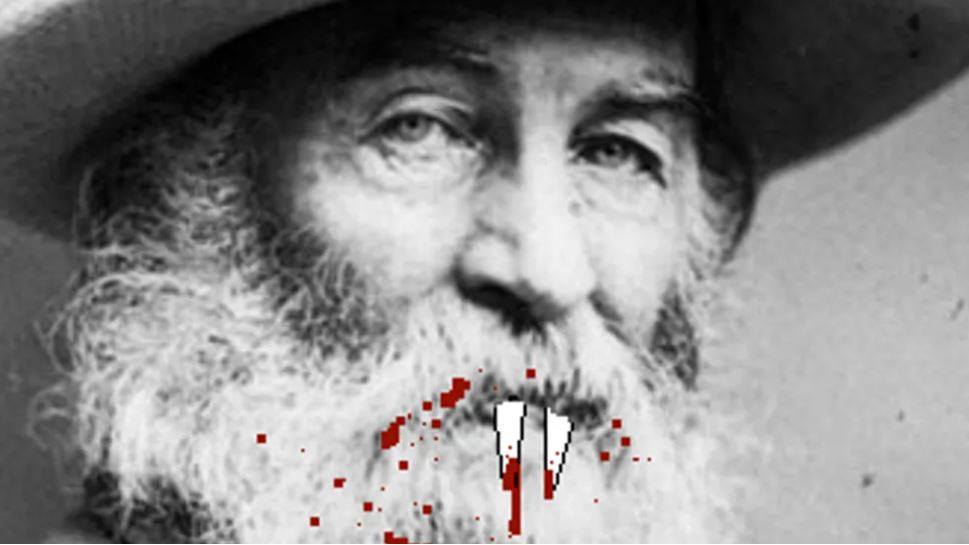
    Whitman was beloved by artists in the U.K. Interestingly, I learned in doing some reading in preparation for these shows that writer Bram Stoker was so taken with Whitman, the man, that allegedly he modeled his characterization of Dracula upon him (for more, follow the links below). And he meant it as a compliment! Stoker viewed Whitman as the quintessential man and kept up a correspondence with him until the poet’s death.

    More to our purposes, this Sunday night on “The Lost Chord,” we’ll hear two works by Gustav Holst, composer of “The Planets:” the “Walt Whitman Overture,” written in 1899, when Holst was about 25 years-old, and “The Mystic Trumpeter” from 1904.

    Holst first encountered Whitman’s poetry while still a student at the Royal College of Music. He would go on to set a number of Whitman texts. “The Mystic Trumpeter” made a particularly strong impression on him. His musical response was an important stepping stone in the composer’s artistic development, emerging as he was from a decade of Wagner worship and not yet giving himself over to the absorption of folk English material. Still, there are certainly glimpses of the mature artist to come.

    Holst’s good friend and colleague, Ralph Vaughan Williams, was also influenced by Whitman, not only in the writing of his frequently recorded “A Sea Symphony,” portions of his cantata “Dona nobis pacem,” and his work for chorus and orchestra, “Toward the Unknown Region,” but also in the less frequently encountered mini song cycle, “Three Poems by Walt Whitman.” The set consists of “Nocturne,” “A Clear Midnight,” and “Joy, Shipmate, Joy!” Written in 1925, the songs are products of Vaughan Williams’ maturity. The composer was around 53 years-old.

    Frederick Delius was yet another English composer deeply influenced by Whitman. Delius’ settings for baritone, chorus, and orchestra, titled “Sea Drift,” from 1903-04, are collectively regarded as one of the composer’s finest achievements. “Sea Drift” was composed at the peak of Delius’ vitality.

    His “Songs of Farewell,” however, were produced under quite different circumstances. Delius was both blind and paralyzed, suffering from the effects of advanced syphilis, when he received an unexpected gift in the arrival of a young musician by the name of Eric Fenby, who offered his services as an amanuensis. The result was a rekindling of Delius’ creativity.

    “Songs of Farewell,” a cycle of dreamy choral settings after Whitman, was dictated to Fenby by Delius in 1929-30. There are five songs: “How sweet the silent backward tracings;” “I stand as on some mighty eagle’s beak;” “Passage to you;” “Joy, shipmate, joy!;” and “Now finale to the shore.”

    We continue our celebration of “the good gray poet,” all month long, for the occasion of the bicentennial of his birth. Whitman was born in Huntingdon, NY, on Long Island, on May 31, 1819, and he died in Camden, NJ, on March 26, 1892.

    “Walk out with me toward the unknown region…” Join me for “The Mystic Trumpeter,” the second of four programs, this Sunday night at 10:00 EDT, on WWFM – The Classical Network and wwfm.org.


    Read Bram Stoker’s effusive letter to Whitman here:

    https://www.brainpickings.org/2019/01/09/bram-stoker-walt-whitman-letter/

    Walt Whitman’s influence on “Dracula” and (possibly) the 1931 “Frankenstein:”

    https://bigthink.com/book-think/walt-whitman-frankenstein-dracula-and-the-afterlife

Tag Cloud

Aaron Copland (92) Beethoven (95) Composer (114) Film Music (120) Film Score (143) Film Scores (255) Halloween (94) John Williams (185) KWAX (229) Leonard Bernstein (100) Marlboro Music Festival (125) Movie Music (135) Opera (198) Philadelphia Orchestra (88) Picture Perfect (174) Princeton Symphony Orchestra (106) Radio (87) Ralph Vaughan Williams (85) Ross Amico (244) Roy's Tie-Dye Sci-Fi Corner (290) The Classical Network (101) The Lost Chord (268) Vaughan Williams (103) WPRB (396) WWFM (881)

DON’T MISS A BEAT

Receive a weekly digest every Sunday at noon by signing up here


RECENT POSTS