Tag: French Music

  • French Halloween Music the Lost Chord

    French Halloween Music the Lost Chord

    On the whole the French don’t really celebrate Halloween (too American), but if you find one who does, don’t say “trick or treat.” Rather, demand “Des bonbons ou un sort!” – candy or a spell.

    While France might not be down with the whole Halloween thing, many of the country’s great artists, writers, and composers could totally conjure a Halloween vibe. Think Odilon Redon’s “The Smiling Spider,” Charles Baudelaire’s “Les Fleurs du mal,” or Camille Saint-Saëns’ “Danse macabre.”

    This week on “The Lost Chord,” we’ll have three pieces of French music totally suitable for the season.

    Maurice Ravel’s “Gaspard de la Nuit” (“Gaspard of the Night”) – musical responses to the weird and sinister poetry of Aloysius Bertrand – is a suite of creepy impressions of (1) a flirtatious water spirit, (2) a hanged man at sunset against the backdrop of a tolling bell, and (3) a vampiric dwarf named Scarbo. Gina Bachauer will be the pianist, and Sir John Gielgud will preface each of the movements with recitations of the Bertrand poems.

    Claude Debussy was enthralled by the writings of Edgar Allan Poe, which he knew through Baudelaire’s translations. At the time of his death, he left incomplete sketches for two operas after Poe stories – “The Fall of the House of Usher” and “The Devil in the Belfry.” We’ll hear fragments of the former, conducted by Georges Prêtre.

    Finally, we’ll listen to the third of the “Etudes in Minor Keys,” subtitled “Scherzo Diabolico,” by Charles-Valentin Alkan. Alkan, a sometimes neighbor of Chopin and Georges Sand, shared a home with his illegitimate son, two apes, and a hundred cockatoos. Franz Liszt is alleged to have commented, “Alkan had the finest technique I had ever known, but preferred the life of a recluse.”

    Best known is the story surrounding the circumstances of his death: while reaching for a copy of the Talmud, situated on a high shelf of a heavy bookcase, the case let go and crushed Alkan beneath it. It’s been suggested that the composer actually collapsed while in the kitchen – but when the legend becomes fact, print the legend. We’ll hear his etude in a recording by the late Michael Ponti.

    I hope you’ll join me for “Jacques o’ Lanterns” – lurid music by French composers for Halloween on “The Lost Chord,” now in syndication on KWAX, the radio station of the University of Oregon!


    Clip and save the start times for all three of my recorded shows:

    PICTURE PERFECT, the movie music show – Friday at 8:00 PM EDT/5:00 PM PDT

    SWEETNESS AND LIGHT, the light music program – Saturday at 11:00 AM EDT/8:00 AM PDT

    THE LOST CHORD, unusual and neglected rep – Saturday at 7:00 PM EDT/4:00 PM PDT

    Stream them, wherever you are, at the link!
    https://kwax.uoregon.edu/

  • Halloween Radio Special on KWAX

    Halloween Radio Special on KWAX

    Since Halloween falls on a Friday this year – one week from today – I hope you’ll indulge me this weekend as all three of my radio shows will tie in to my favorite holiday.

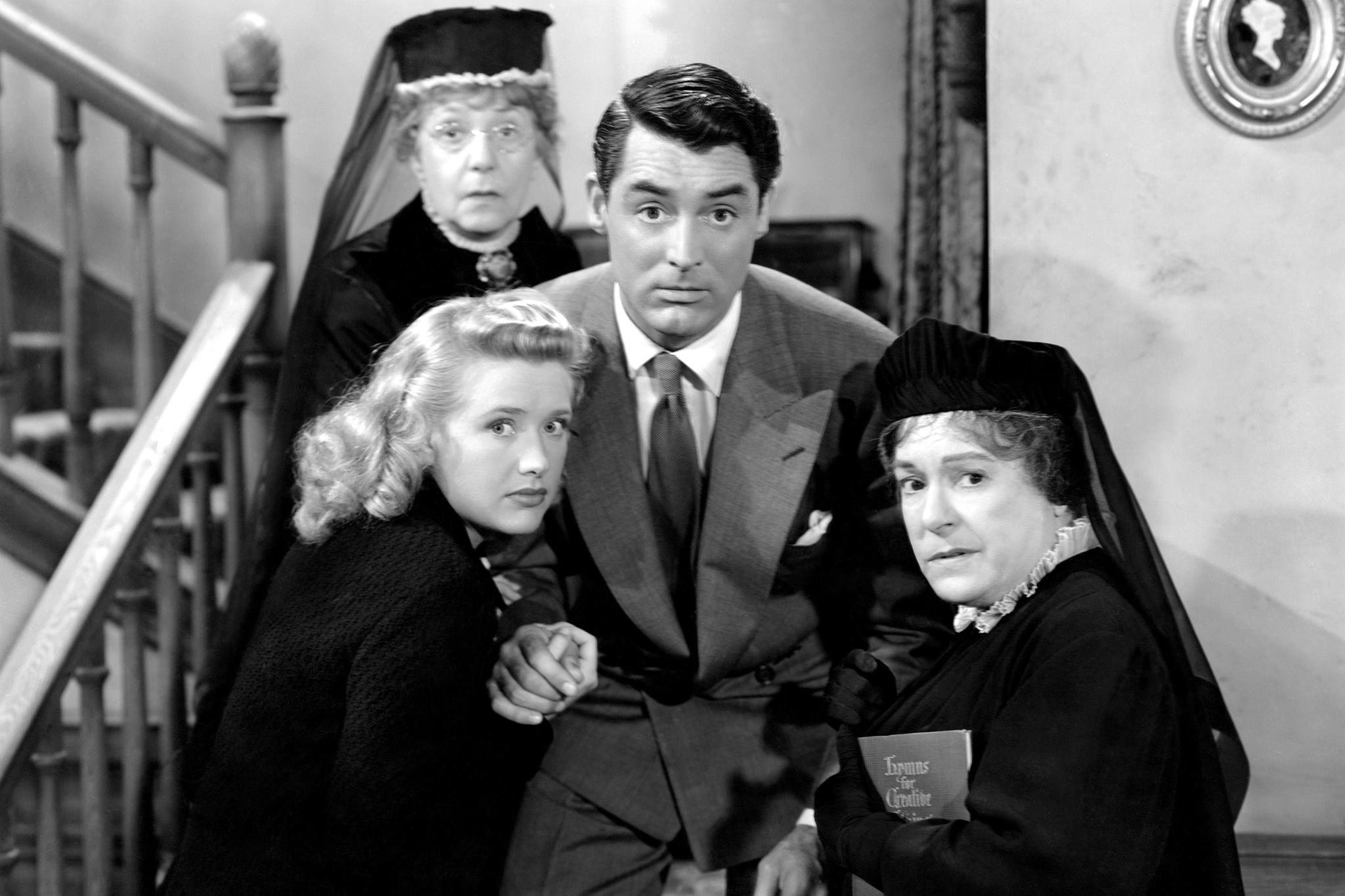
    First, on “Picture Perfect,” music for the movies (Friday at 8:00 p.m. EDT/5:00 p.m. PDT), we’ll enjoy scores from spooky or macabre comedies, including “Arsenic and Old Lace” (Max Steiner), “The Trouble with Harry” (Bernard Herrmann), “The Ghost and Mr. Chicken” (Vic Mizzy), and “Beetlejuice” (Danny Elfman).

    Then, tomorrow on “Sweetness and Light” (Saturday morning at 11:00 EDT/8:00 PDT), it will be a light music Halloween, with spooktacular selections associated with haunted ballrooms, ostracized imps, reanimated skeletons, nimble witches, adept sorcerers, ghost removal specialists, consumerist zombies, dancing lunatics, boogey men, headless horsemen, boy wizards, and galloping devils.

    Finally, on “The Lost Chord” (Saturday at 7:00 p.m. EDT/4:00 p.m. PDT), écoutez to French music for the season, including Maurice Ravel’s “Gaspard de la nuit,” after grotesque poetry of Aloysius Bertrand (with pianist Gina Bachauer and narrator Sir John Gielgud), a fragment of an unfinished opera inspired by Edgar Allan Poe’s “The Fall of the House of Usher” by Claude Debussy, and an etude subtitled “Scherzo diabolico” by the misanthropic and reclusive Charles-Valentin Alkan.

    But wait! There’s more!

    Since “Picture Perfect” falls on a Friday, I’ll have one more chance next week, on Halloween proper, when I’ll offer a playlist of evocative and ear-catching vintage horror and science fiction scores from the 1950s, with enough narration and gaudy sound effects to provide the perfect soundtrack for your Trick-or-Treat.

    All air times for the above shows are reiterated below. Stream them wherever you are from KWAX, the radio station of the University of Oregon!

    https://kwax.uoregon.edu/


    PICTURE PERFECT, the movie music show – Friday at 8:00 PM EDT/5:00 PM PDT

    SWEETNESS AND LIGHT, the light music program – Saturday at 11:00 AM EDT/8:00 AM PDT

    THE LOST CHORD, unusual and neglected rep – Saturday at 7:00 PM EDT/4:00 PM PDT

  • Josephine Baker in Paris J’ai deux amours

    Josephine Baker in Paris J’ai deux amours

    One selection I regret not including in this morning’s “April in Paris” playlist on “Sweetness and Light” is Josephine Baker’s “J’ai deux amours” (“I have two loves, my country and Paris”). Baker died 50 years ago today. Learn more about her remarkable life at the link, which includes access to an hour-long documentary.

    Ruth Leon recommends… Josephine Baker: the Story of an Awakening

    “J’ai deux amours”

  • Reynaldo Hahn A Musical Bon Vivant at 150

    Reynaldo Hahn A Musical Bon Vivant at 150

    Born 150 years ago today: bon vivant Reynaldo Hahn.

    Hahn was born in Caracas, Venezuela, in 1874, the youngest of twelve children. His father was a German-Jewish businessman, a convert to Catholicism, who arrived in Venezuela in 1845 at the age of 22 and married a Venezuelan woman of Basque origin. Political instability drove the family to resettle in Paris, where young Reynaldo was given a cosmopolitan education.

    He studied composition at the Paris Conservatory (which he entered at the age of 11) with Charles Gounod and Jules Massenet, among others. He took private lessons with Camille Saint-Saëns.

    Hahn met Marcel Proust at the age of 19, and the two essentially combusted. Their affair lasted for two years and is thought to have been Proust’s only real relationship. The romance may have fizzled, but the friendship was lifelong. Hahn’s influence permeates Proust’s “Remembrance of Things Past” (a.k.a. “In Search of Lost Time”), often cited as one of the greatest novels of the 20th century. It’s certainly one of the longest. It was Hahn who suggested the “petite phrase” that recurs symbolically throughout Proust’s magnum opus, really a theme from Saint-Saëns’ Violin Sonata in D minor.

    Hahn composed operas, tone poems, concertos, chamber music, a successful operetta (“Ciboulette”), and a musical comedy (“Mozart”). But far and away he is best remembered for his elegant art songs – or mélodies – of which he composed over 100.

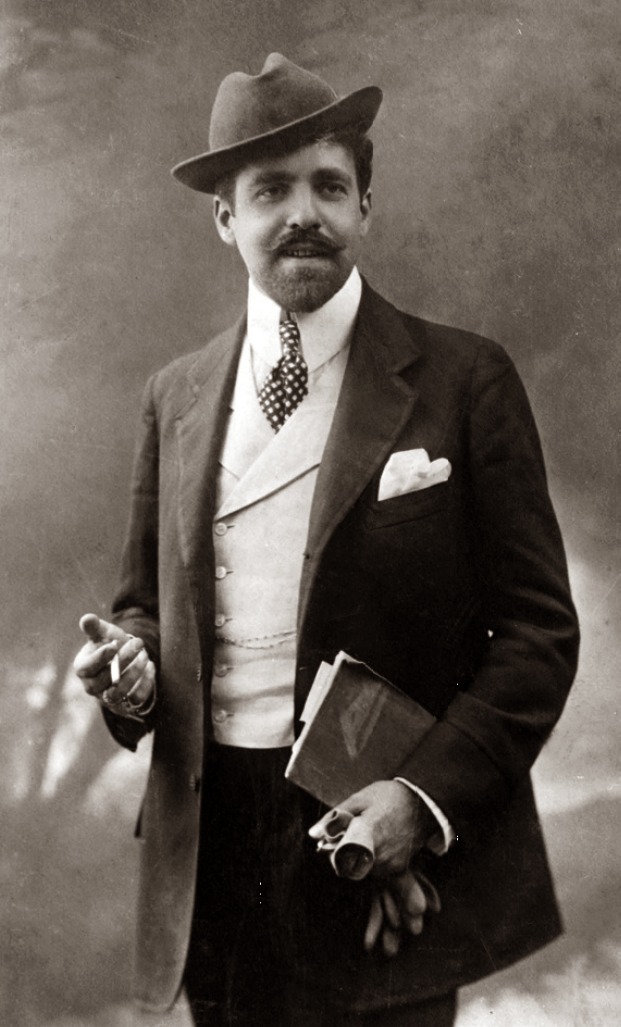
    He certainly enjoyed the good life, nattily attired, living in a lavishly appointed flat, and always with fine cigarettes at hand. He also gained a considerable reputation as a most charming performer. His delightfully informal presentations at musical evenings of the Belle Epoque would involve him leaning far back at the piano, cigarette dangling from a corner of his mouth, and casting languid glances at the audience through long lashes. Sample his artistry below.

    Happy 150, Reynaldo Hahn!


    Hahn conducts one of his most frequently heard works, “Le bal de Béatrice d’Este” for winds, percussion, two harps, and piano

    One of his most famous songs, “À Cloris”

    Another, “L’heure exquise” (“The Exquisite Moment”)

    Hahn sings in 1909. (Great photos too!)

    Always fond of this one

    Hahn’s Piano Concerto

  • French Sea Music Beyond Debussy on The Lost Chord

    French Sea Music Beyond Debussy on The Lost Chord

    Claude Debussy wasn’t the only French composer to write music inspired by the sea. This week on “The Lost Chord,” we’ll find refreshment in an hour of “musique de l’eau.”

    Jacques Ibert served as a naval officer during World War I. One of his most frequently performed pieces, “Escales” (“Ports of Call”), conjures impressions of three Mediterranean locales: Palermo, Tunis-Nefti, and Valencia. Considerably less well known is his “Symphonie marine,” composed nine years later, in 1931. Ibert refused to allow the work to be performed in his lifetime, though exactly why is unclear.

    The music actually derives from a film score (for a short film titled “S.O.S. Foch”). Ibert was the first European composer to write music for a talking picture. He certainly wasn’t ashamed of his output for the cinema. In all, he wrote some 30 film scores.

    For whatever reason, the “Symphonie marine” was given its belated premiere shortly after the composer’s death, in 1963, with Charles Munch conducting. We’ll hear the City of Birmingham Symphony Orchestra conducted by Louis Frémaux.

    Joseph-Guy Ropartz (1864-1955) was a student of Théodore Dubois, Jules Massenet, and César Franck. He composed five symphonies, chamber music, and a number of choral works. When his friend, Albéric Magnard, was killed defending his home from German soldiers during the First World War – in retribution Magnard’s house was burned to the ground and his unpublished manuscripts destroyed – Ropartz was able to reconstruct the orchestration of Magnard’s opera, “Guercœur,” from memory, since he had conducted a performance of its third act.

    Ropartz was associated with the Breton Cultural Renaissance and an ardent supporter of Breton regional autonomy. He joined the Breton Regionalist Union in 1898.

    The central movement of his “Prélude, marine et chansons,” composed in 1928 – actually a quintet for flute, violin, viola, cello and harp – is clearly a seascape. The finale is based on an old Breton folk song, “What noise there is upon the earth.” We’ll hear a performance by the Linos Ensemble.

    Another composer with a connection to Brittany was Jean Cras (1879-1932). Cras, who was born and died in Brest, wrote a ravishing opera, “Polyphème” (“Polyphemus”), about a forlorn cyclops, unlucky in love, who wanders off into the sea. Not only was he a productive composer of meltingly lovely music, he was also a career naval officer. And one of distinction. He commanded a torpedo boat in the Adriatic, during the First World War. On one occasion, he sank an enemy submarine, then rescued one of his sailors who had fallen overboard. Clearly he would have written a lot more music if not for the demands of his day job.

    Cras’ “Journal de bord” (“Ship’s Log”) was composed in 1927. Like Debussy’s “La mer,” composed in 1903-05, the work suggests the sea at different times of the day and under various conditions.

    First: Eight to midnight quarter – swell on the open sea, the sky is overcast, clearing at sunset, nothing in sight.

    Second: Midnight to four quarter – beautiful weather, beautiful sea, nothing unusual, moonlight.

    Third: Four to midnight quarter: Land ahoy!

    We’ll hear the Luxembourg Philharmonic Orchestra, conducted by Jean-Francois Antonioli.

    I hope you’ll get yourself a crusty bread, then join me for “Fruits de mer,” a nourishing repast of French music for the sea, this week on “The Lost Chord,” now in syndication on KWAX, the radio station of the University of Oregon!


    Clip and save the start times for all three of my recorded shows:

    PICTURE PERFECT, the movie music show – Friday at 8:00 PM EDT/5:00 PM PDT

    SWEETNESS AND LIGHT, the light music program – ALL NEW! – Saturday at 11:00 AM EDT/8:00 AM PDT

    THE LOST CHORD, unusual and neglected rep – Saturday at 7:00 PM EDT/4:00 PM PDT

    Stream them, wherever you are, at the link!

    https://kwax.uoregon.edu/

Tag Cloud

Aaron Copland (92) Beethoven (95) Composer (114) Film Music (119) Film Score (143) Film Scores (255) Halloween (94) John Williams (185) KWAX (229) Leonard Bernstein (99) Marlboro Music Festival (125) Movie Music (134) Opera (198) Philadelphia Orchestra (86) Picture Perfect (174) Princeton Symphony Orchestra (106) Radio (87) Ralph Vaughan Williams (85) Ross Amico (244) Roy's Tie-Dye Sci-Fi Corner (290) The Classical Network (101) The Lost Chord (268) Vaughan Williams (102) WPRB (396) WWFM (881)

DON’T MISS A BEAT

Receive a weekly digest every Sunday at noon by signing up here


RECENT POSTS