Tag: French Music

  • Debussy, Ravel & Mallarmé at Marlboro

    Debussy, Ravel & Mallarmé at Marlboro

    It’s a Mallarmé marmalade, served up on French toast, on the next “Music from Marlboro.”

    While, for the most part, Claude Debussy and Maurice Ravel maintained a certain degree of respect for one another, both men were very possessive of Stéphane Mallarmé.

    Debussy had changed the course of music history with his dreamy translation into sound of Mallarmé’s poem, “L’après-midi d’un faune.” Musicians at the fin de siècle all sat up and took notice – aligning themselves into factions pro and con – but reportedly Mallarmé himself was not all that thrilled, believing the music inherent in his verse to be sufficient. Once he actually attended a performance of the work, however, you might say he changed his tune.

    It’s understandable, then, that Debussy would feel a certain sense of ownership when it came to setting Mallarmé to music.

    Debussy’s “Prélude à l’après-midi d’un faune” appeared in 1894. Mallarmé died in 1898. The first complete edition of Mallarmé’s poems did not appear until 1913. 1913, you’ll recall, was a revolutionary year in the arts, with controversies stirred by the Armory Show in New York City, Schoenberg’s Skandalkonzert in Vienna, and the premiere of “The Rite of Spring” in Paris.

    It was against this backdrop that the Debussy-Ravel rivalry would intensify. Ravel, proclaiming that Mallarmé was the greatest of all French poets, determined to secure the rights to set two of his poems, beating Debussy, who had applied for the same, to the punch. Though publicly Ravel remained good-humored about the coincidence, Stravinsky observed that the two composers did not speak to one another for a year.

    In the event, both set Mallarmé’s “Soupir” (“Sigh”) and “Placet futile” (“Futile Petition”). Opinion was divided as to their success. Stravinsky thought Ravel’s settings his favorites among all the composer’s works. (Of course, Ravel had dedicated the first of the songs to him.) Stravinsky even referenced “Placet futile” when he came to write “A Soldier’s Tale.” On the debit side, Charles Koechlin complained that if you didn’t already know Mallarmé’s poems, you couldn’t possibly understand the texts.

    The two songs had originally been planned as a balanced set, but then Ravel decided to add a third, “Surgi de la croupe et du bond” (“Rising from the Crupper and Leap”), which he described as the strangest and most hermetic. That, he dedicated to Erik Satie.

    Though Ravel had not heard Schoenberg’s “Pierrot Lunaire,” composed the previous year, there must have been something in the air. Ravel was eager to explore the coloristic possibilities of a chamber ensemble in supporting Mallarmé’s symbolist texts. For the final song, he would stretch his harmonic syntax beyond the bounds of tonality.

    Graciously, Debussy ended their estrangement by complimenting Ravel for possessing “the most refined [musical ear] there ever has been.”

    We’ll hear Ravel’s “Trois poèmes de Mallarmé,” performed by mezzo-soprano Mary Westbrook-Geha and an ensemble of eleven instrumentalists at the 1989 Marlboro Music Festival. Then we’ll give Debussy his due, with a performance of his revolutionary String Quartet in G minor, performed by violinists Joseph Lin and Judy Kang, violist Richard O’Neill, and cellist David Soyer, on tour at the Isabella Stewart Gardner Museum in Boston in 2002.

    I hope you’ll pardon my French, on this week’s “Music from Marlboro,” Wednesday evening at 6:00 EDT, on WWFM – The Classical Network and wwfm.org.

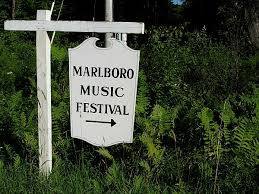
    Marlboro School of Music and Festival: Official Page


    PHOTOS: Gentlemen, choose your weapons!

  • Chausson’s Death and Debussy’s Music

    Chausson’s Death and Debussy’s Music

    Suicide by bicycle?

    That’s the theory put forth by Debussy biographer Edward Lockspeiser concerning the untimely death of Ernest Chausson. In 1899, Chausson hurtled downhill into a brick wall at the age of 44. While Chausson was certainly prone to depression, the theory of slamming into a wall with intent was emphatically refuted by Chausson’s own biographer, Ralph Scott Grover.

    Chausson left behind a comparatively small, but meticulous output, a mere 39 opus numbers – Chausson got a late start, abandoning law at 25 to devote himself to composition – among them are the ravishing “Poème” for violin and orchestra, the song cycle “Poème de l’amour et de la mer,” and the Concert for Piano, Violin and String Quartet.

    Chausson’s “Concert” of 1891 is especially noteworthy, its title recalling chamber music of the French baroque by composers such as Couperin and Rameau, but also suggesting more of a concerto than a sextet, with solo violin and piano playing against the backdrop of a standard string quartet. It’s a creative gamble with its own unique challenges, and Chausson acquits himself marvelously.

    On this week’s “Music from Marlboro,” we’ll hear a 1968 performance, featuring solo violinist Jaime Laredo and pianist Ruth Laredo, with violinists Michael Tree and Hidetaro Suzuki, violist Nobuko Imai, and cellist Robert Sylvester. That’s a starry line-up by anyone’s standards. You’ll note that Tree is best known as a violist from his 45-year tenure with the Guarneri String Quartet.

    Chausson and Claude Debussy were like brothers. Chausson invited his friend for a long stay in the summer of 1893 at a rented house in Luzancy. To make the visit even more agreeable, Chausson sent away for the score to Mussorgsky’s “Boris Godunov,” knowing Debussy’s fondness for it, and the they passed many enjoyable hours together at the piano, with Debussy playing through the opera while Chausson acted as page-turner.

    The two were close enough that Chausson felt he could speak frankly of his disapproval of Debussy’s profligate lifestyle. Whether or not he overstepped his bounds, their friendship did cool somewhat after that, though they continued to find much to admire in one another’s music.

    Chausson did not live to hear Debussy’s Sonata for Flute, Viola and Harp, a late work composed in 1915. We’ll hear it performed at the 1978 Marlboro Music Festival by flutist Carol Wincenc, violist Samuel Rhodes, and harpist Moya Wright.

    Incidentally, Chausson biographer Ralph Scott Grover lived next store to my grandparents. Grover was the head of the music department at Lafayette College and also a great Anglophile – so much so that he spoke with a Mid-Atlantic accent. Even as a boy, I found this puzzling. It turns out he was a world authority on the music of Edmund Rubbra and a personal friend of the composer. In fact, he wrote a book on Rubbra in 1993 and his encapsulated biography for “The New Grove Dictionary of Music and Musicians.” Grover died in 2002. Though I regret not comprehending who he was, as a child, well before I developed my passion for music, we did get to know one another a little toward the end of his life, by which time he was already listening to me on the radio. We nearly missed one another completely, but I am thankful for the conversations we enjoyed. If only the timing had been better, I might have benefited from more of a master-disciple relationship.

    But let us not speak of regrets! Rather, join me for works of Debussy and Chausson on the next “Music from Marlboro,” this Wednesday evening at 6:00 EST, on WWFM – The Classical Network and wwfm.org.

    Marlboro School of Music and Festival: Official Page


    PHOTO: Chausson turning pages for Debussy

  • Fauré, Gounod: Ageless French Music

    Fauré, Gounod: Ageless French Music

    When Gabriel Fauré, then 76, unveiled his Piano Quintet No. 2 in C minor in 1921, he surprised just about everyone. For one thing, no one except his wife knew he was even working on anything. For another, he was supposed to be retired, having stepped down from the directorship of the Paris Conservatory only the year before.

    Though the composer’s health in his later years was far from the best, thanks in part to decades of heavy smoking, the Quintet conveys a surprisingly youthful spirit, full of tenderness and ardor. Paradoxically, a knowing serenity hangs over the piece, lending it a kind of wisdom and balance. I am reminded of Wordsworth’s assessment that poetry is the spontaneous overflow of powerful feelings recollected in tranquility.

    It’s one of two works by seasoned French composers that we’ll enjoy on this week’s “Music from Marlboro.”

    We’ll also hear Charles Gounod’s classically proportioned and wholly delightful “Petite symphonie.” Gounod, who is best known for his opera “Faust” and for his setting of “Ave Maria,” was 66 at the time of the work’s premiere in 1885. Though the structure is well-worn, based on the standard symphonic form developed a hundred years earlier by composers like Haydn and Mozart, its long-limbed melodies and occasional harmonic surprises mark it as a product of its time. In spite of its evident nostalgia, it’s another work in which the spirit of youth seems ever-green.

    Gounod’s “Petite symphonie” will be performed by Marlboro wind players, including “the Heifetz of the flute” (Gramophone) Marina Piccinini, principal oboist of the Metropolitan Opera Nathan Hughes, principal oboist of the Minnesota Orchestra Joseph Peters, principal clarinetist of the New York Philharmonic Anthony McGill, New York-based freelance clarinetist Alicia Lee (Orpheus Chamber Orchestra, The Knights, NOVUS and ACME), principal bassoonist of the Princeton Symphony Orchestra Brad Balliett, San Francisco Symphony bassoonist Steven Dibner, newly appointed principal hornist of the Berlin Philharmonic David Cooper, and former principal horn of the Berlin Radio Symphony Orchestra (and now concert soloist) Radovan Vlatković, from a concert given in 2013.

    Fauré’s Quintet in C minor will be performed by pianist Roman Rabinovich (top prizewinner at the 2008 Arthur Rubinstein International Piano Master Competition), violinists YooJin Jang (winner of the 2017 Concert Artists Guild Competition) and Scott St. John (formerly of the St. Lawrence String Quartet), violist Shuangshuang Liu (associate principal violist with the Guangzhou Symphony Orchestra), and cellist Will Chow (of the Pittsburgh Symphony Orchestra), from a concert given in 2015.

    I hope you’ll join me for a program of French music that belies and defies the passage of time, in performances from the archives of the legendary Marlboro Music Festival, this Wednesday evening at 6:00 EST, on WWFM – The Classical Network.

    Marlboro School of Music and Festival: Official Page


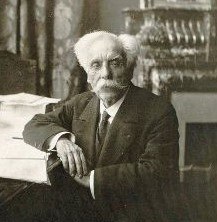
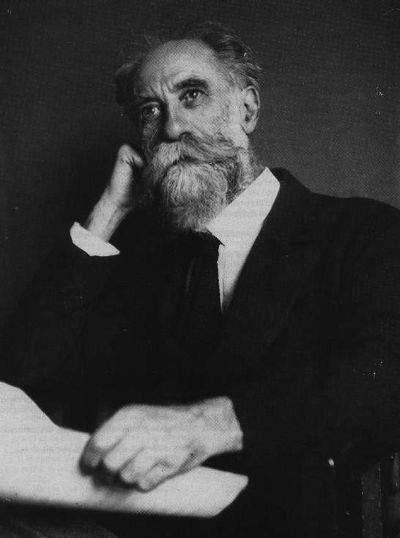
    FOREVER YOUNG: Gabriel Fauré (left) and Charles Gounod

  • Charles Koechlin: Impossible Dreamer

    Charles Koechlin: Impossible Dreamer

    Music is a quixotic profession, but few of its practitioners were as quixotic as Charles Koechlin. This Thursday morning on WPRB, we’ll play Sancho Panza to the impossible dreamer of French music.

    Here was an idealist of passionate enthusiasms. A pantheist and a communist, Koechlin’s sophisticated naïveté carried over into works like the mostly stagnant piano cycle “Les Heures persanes,” a dreamy sojourn across Persia, which in performance spans well over an hour. He staked out the home of (much younger) movie actress Lilian Harvey, hoping to propose. Prior to that, he had attempted to court her with reams of music, including alternate scores to scenes in her movies. It’s fascinating to contemplate that this footnote of world cinema (Harvey) has been kept alive for music-lovers by a footnote of classical music.

    Koechlin wrote whatever he pleased. His music is difficult to pigeon-hole. Some of his works are kind of impressionist, some are polytonal. He loved Bach, and even wrote a 50-minute meditation on the composer’s name, which stands as a kind of 20th century “Art of Fugue” (employing the ondes martenot!). In some of his works, he crosses over into serialism. He didn’t seem to care for boundaries, whether in his personal relationships, his religious and political convictions, or his music. What he did care for was following his muse, wherever it happened to lead him. Of course, he paid the price – beyond his work as an orchestrator for famous composers such as Gabriel Fauré, Claude Debussy, and Cole Porter (!), he is almost wholly forgotten.

    I hope you’ll join me as we tilt at windmills with Charles Koechlin, on the occasion of the 150th anniversary of his birth (November 27, 1867), this Thursday morning from 6 to 11 EST, on WPRB 103.3 FM and wprb.com. The ideal becomes real, on Classic Ross Amico.

  • French Music at Marlboro Festival WWFM

    French Music at Marlboro Festival WWFM

    On this week’s “Music from Marlboro,” it’s an all-French affair.

    Charles Gounod’s classically proportioned and wholly delightful “Petite symphonie” will be performed by Marlboro wind players, including “the Heifetz of the flute” (Gramophone) Marina Piccinini, principal oboist of the Metropolitan Opera Nathan Hughes, principal oboist of the Minnesota Orchestra Joseph Peters, principal clarinetist of the New York Philharmonic Anthony McGill, New York-based freelance clarinetist Alicia Lee (Orpheus Chamber Orchestra, The Knights, NOVUS and ACME), principal bassoonist of the Princeton Symphony Orchestra Brad Balliett, San Francisco Symphony bassoonist Steven Dibner, newly appointed principal hornist of the Berlin Philharmonic David Cooper, and former principal horn of the Berlin Radio Symphony Orchestra (and now concert soloist) Radovan Vlatković, from a concert given in 2013.

    Then veteran pianist Gilbert Kalish will be joined by violinist Catherine Cho (Juilliard School faculty), violist Melissa Reardon (Enso String Quartet), and cellist Raman Ramakrishnan (Horszowski Trio, formerly of the Daedalus Quartet) to perform Gabriel Fauré’s passionate and personal Piano Quartet No. 2 in G minor, Op. 45, from a concert given in 2001.

    I hope you’ll join me for more great music-making from the archives of the legendary Marlboro Music Festival, this Wednesday at 6 p.m. EDT, on WWFM – The Classical Network and wwfm.org.

    Marlboro School of Music and Festival: Official Page

Tag Cloud

Aaron Copland (92) Beethoven (95) Composer (114) Film Music (119) Film Score (143) Film Scores (255) Halloween (94) John Williams (185) KWAX (229) Leonard Bernstein (99) Marlboro Music Festival (125) Movie Music (134) Opera (198) Philadelphia Orchestra (86) Picture Perfect (174) Princeton Symphony Orchestra (106) Radio (87) Ralph Vaughan Williams (85) Ross Amico (244) Roy's Tie-Dye Sci-Fi Corner (290) The Classical Network (101) The Lost Chord (268) Vaughan Williams (102) WPRB (396) WWFM (881)

DON’T MISS A BEAT

Receive a weekly digest every Sunday at noon by signing up here


RECENT POSTS