Tag: French Opera

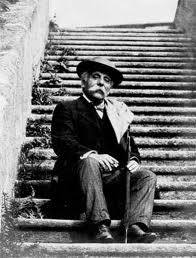
  • Ernest Reyer Wagner’s French Rival

    Ernest Reyer Wagner’s French Rival

    While Debussy and the French Impressionists led a revolt against Wagnerism in music, there were others among their countrymen who were enthralled by the power of Wagner’s vision.

    One of these was Ernest Reyer, whose family name was Rey, but he added the “er” to appear more Germanic! Reyer, born 200 years ago today, set his own version of the Siegfried story, as related in the Scandinavian Volsunga Saga, which, by way of the “Nibelungenlied,” also provided the basis for Wagner’s “Ring.” But Reyer’s approach to the tale was in the tradition of French grand opera.

    The resultant “Sigurd,” composed between 1862 and 1867, was very popular with the French during its initial production at the Paris Opera in 1885. Earlier plans to present it there had fallen through, so that the work received its world premiere in Brussels in 1884. It was also heard in Covent Garden, Lyon, Monte Carlo and, before the end of the century, the French Opera House in New Orleans and La Scala Milan.

    What’s interesting is that in the end Reyer’s music seems to bear more resemblance to Berlioz than it does to Wagner. Unable to live on the proceeds from his operas, he actually succeeded Berlioz as music critic at the Journal des débats.

    Reyer’s early musical studies were overseen by his aunt, Louise Farrenc, the only woman on the faculty of the Paris Conservatory (beginning in 1842!). He rubbed shoulders with Gustave Flaubert and Théophile Gautier (writing operas on texts of both), but he felt equally at home playing dominoes with the peasantry of Provençal. He claimed that the best source of inspiration was his pipe.

    Happy 200, Ernest Reyer (1823-1909)!


    Overture to “Sigurd”:

    Sigurd’s entrance:
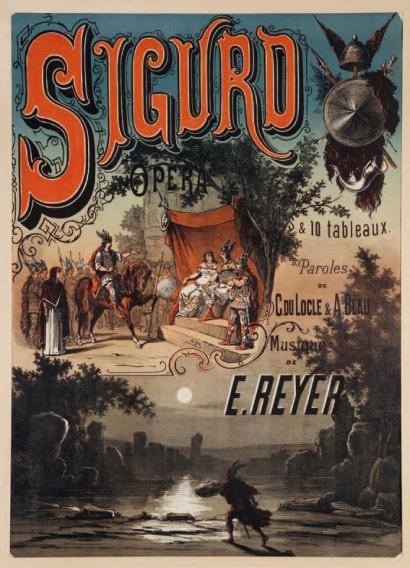
  • Ernest Reyer Forgotten Wagner Rival

    Ernest Reyer Forgotten Wagner Rival

    While Debussy and the French Impressionists led a revolt against Wagnerism in music, there were others among their countrymen who were enthralled by the power of Wagner’s vision.

    One of these was Ernest Reyer (who was born Rey, but added the “er” to appear more Germanic). Reyer set his own version of the Siegfried story, as related in the Scandinavian Volsunga Saga, which, by way of the “Nibelungenlied,” also provided the basis for Wagner’s “Ring.” But Reyer’s approach to the tale was in the tradition of French grand opera.

    The resultant “Sigurd,” composed between 1862 and 1867, was very popular with the French during its initial production at the Paris Opera in 1885. Earlier plans to present it there had fallen through, so that the work received its world premiere in Brussels in 1884. It was also heard in Covent Garden, Lyon, Monte Carlo and, before the end of the century, the French Opera House in New Orleans and La Scala Milan.

    What’s interesting is that in the end Reyer’s music seems to bear more resemblance to Berlioz than it does to Wagner. Unable to live on the proceeds from his operas, he actually succeeded Berlioz as music ciritic at the Journal des débats.

    Reyer’s early musical studies were overseen by his aunt, Louise Farrenc, the only woman on the faculty of the Paris Conservatory (beginning in 1842!). He rubbed shoulders with Gustave Flaubert and Théophile Gautier (writing operas on texts of both), but he felt equally at home playing dominoes with the peasantry of Provencal. He claimed that the best source of inspiration was his pipe.

    Happy birthday Ernest Reyer (1823-1909).


    Overture to “Sigurd”:

    Sigurd’s entrance:
  • Ambroise Thomas’s Birthday and Mignon’s Titania Aria

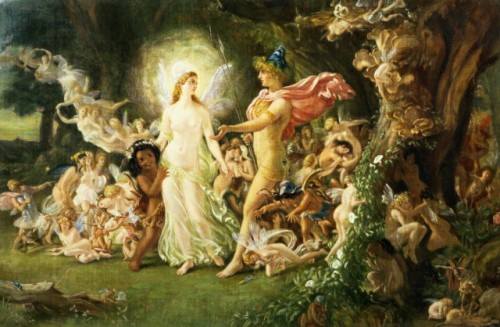
    Ambroise Thomas’s Birthday and Mignon’s Titania Aria

    I’m up against deadline, so today I merely recognize the birthday of Ambroise Thomas (1811-1897), director of the Paris Conservatory from 1871 until his death, with the aria “Je suis Titania la blonde” from “Mignon.”

    “There is good music, there is bad music, and then there is Ambroise Thomas.” – Emmanuel Chabrier

  • Massenet & Fauré Birthday: French Opera & Reform

    Massenet & Fauré Birthday: French Opera & Reform

    Today is the birthday of two outstanding French composers: Jules Massenet (born 1842) and Gabriel Fauré (born 1845). Massenet’s fluency and emotionally direct style made him the most successful French opera composer of his generation. Fauré was the radical who blew the dust off the Paris Conservatory and ushered in an era of unprecedented reform.

    Here are two absorbing recordings by these very different French masters:

    Soprano Emma Calvé sings “Pendant un an je fus ta femme” from Massenet’s “Sapho,” a role she created (be advised, the recording doesn’t start until about 15 seconds in):

    https://www.youtube.com/watch?v=Dhs88jKmT08

    The elegant Samson François performs Fauré’s Nocturne in B Major, Op. 33, No. 2:

    Joyeux anniversaire, mes amis!

    PHOTOS: Fauré (left) and Massenet getting a little fresh air

Tag Cloud

Aaron Copland (92) Beethoven (95) Composer (114) Film Music (119) Film Score (143) Film Scores (255) Halloween (94) John Williams (185) KWAX (229) Leonard Bernstein (99) Marlboro Music Festival (125) Movie Music (134) Opera (198) Philadelphia Orchestra (86) Picture Perfect (174) Princeton Symphony Orchestra (106) Radio (87) Ralph Vaughan Williams (85) Ross Amico (244) Roy's Tie-Dye Sci-Fi Corner (290) The Classical Network (101) The Lost Chord (268) Vaughan Williams (102) WPRB (396) WWFM (881)

DON’T MISS A BEAT

Receive a weekly digest every Sunday at noon by signing up here


RECENT POSTS