Tag: Fritz Kreisler

  • Fritz Kreisler & Jascha Heifetz: Fiddling Legends

    Fritz Kreisler & Jascha Heifetz: Fiddling Legends

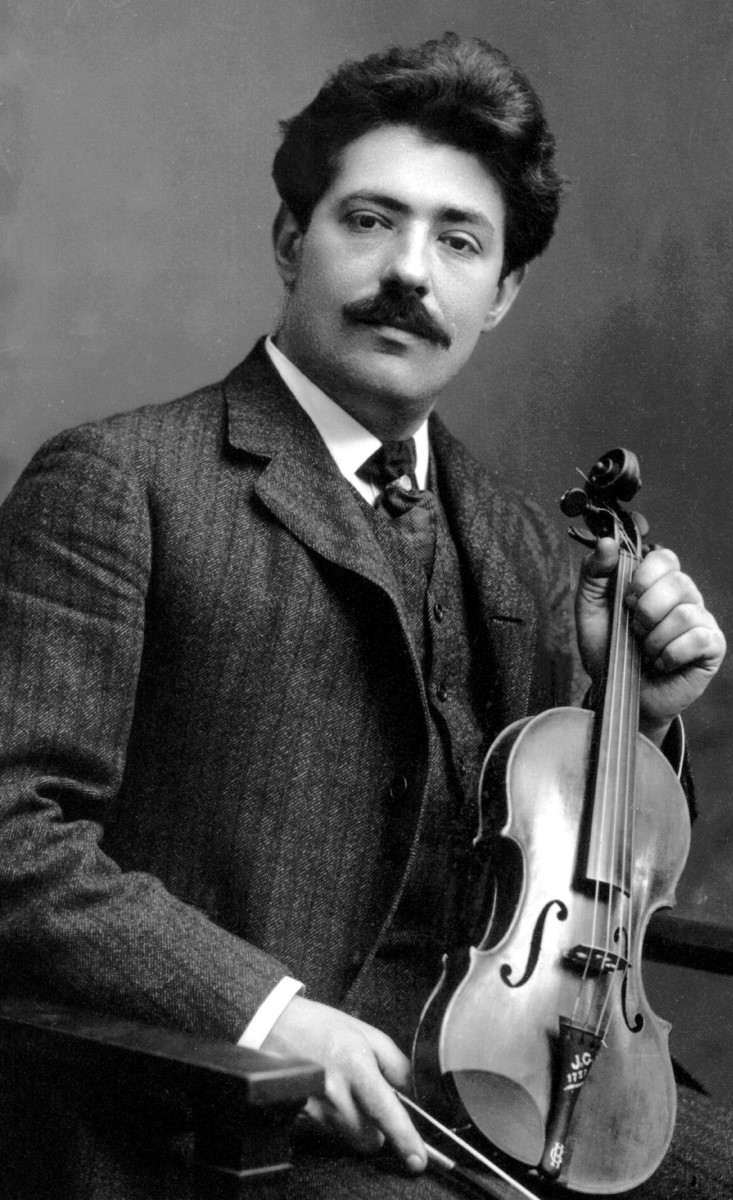
    February 2 is not just a day for groundhogs. It also marks the anniversaries of the births of two of the world’s greatest fiddlers.

    Fritz Kreisler, the sweet-toned confectioner and purveyor of violin bonbons, was born in Vienna on this date in 1875. Jascha Heifetz, the superhuman technician, who imbued perfection with tonal beauty, was born in Vilnius in 1901. Kreisler was warm, gregarious and easygoing. Heifetz acquired a reputation for a certain cool intensity.

    At a point, Kreisler ruffled feathers, not with his playing, but because he casually let slip that many of the 18th century “rediscoveries” he had used to charm audiences, critics, and musicologists were not in fact rediscoveries at all. Nor did they date from the 18th century. Rather they were composed by Kreisler himself. When the professionals complained, Kreisler shrugged.

    It would be futile to argue against his serious musical credentials. He gave the world premiere of the Elgar concerto and became a favorite recital partner of Sergei Rachmaninoff. A famous anecdote relates that Kreisler and Rachmaninoff were giving a concert in New York. In the middle of a performance, Kreisler suffered a memory lapse, and as he noodled around on his violin, trying to find his way back, he inched closer to his pianist. “Where are we?” Kreisler whispered. To which Rachmaninoff replied, “Carnegie Hall.”

    In 1941, Kreisler was crossing the street, when he was hit by a milk truck. The accident fractured his skull and put him in a coma. Like something out of an early Woody Allen comedy, when he awoke, he could communicate only in Latin and Greek. Thankfully, the effect was only temporary.

    Kreisler met Heifetz for the first time at a private press party in 1912. After listening to the boy play through the Mendelssohn concerto, he declared, “We can all just break our fiddles over our knees.” Arthur Nikisch, conductor of the Berlin Philharmonic, said he had never heard such an excellent violinist. The year before, Heifetz had played before a crowd of 25,000, and police had to be summoned to prevent the young virtuoso from being mobbed.

    A little more collected was Groucho Marx. When Heifetz met Groucho, he mentioned that he had been earning his living as a violinist since the age of seven. Groucho responded, “Before that, I suppose, you were just a bum.”

    Aside from his astounding accomplishments on the concert stage, Heifetz appeared as a mess hall jazz musician in Allied camps across Europe during the Second World War. Under a pseudonym, he wrote “When You Make Love to Me (Don’t Make Believe)” for Bing Crosby. In addition, Heifetz and Bing recorded the “Lullaby” from Benjamin Godard’s opera “Jocelyn.”

    Heifetz was an advocate for certain socio-political and environmental causes. Decades before it was a thing, he had his Renault converted into an electric vehicle, and he lobbied for the acceptance of 911 as an emergency number.

    Once, after a performance in Israel, he was attacked by a man wielding a crowbar for programming a violin sonata by Richard Strauss. Strauss had remained in Germany during World War II and maintained a fraught relationship with the Nazis. Heifetz, by the way, was Jewish.

    Composers who wrote music for him, or whose music he premiered, include Mario Castelnuovo-Tedesco, Erich Wolfgang Korngold, and Sir William Walton. Heifetz commissioned Arnold Schoenberg’s Violin Concerto, but he never played it.

    His standard of performance was stratospheric, and he subjected himself to a punishing, though strictly secret, regimen of self-discipline. He delivered until he felt he no longer could, retiring from the concert stage in 1972.

    Itzhak Perlman reflected, “The goals he set still remain, and for violinists today, it’s rather depressing that they may never really be attained again.”

    Here’s a French film about Heifetz. Interestingly, it opens with him playing one of Kreisler’s forgeries, the “Praeludium and Allegro in the Style of Pugnani”

    Kreisler plays the “Meditation” from Massenet’s “Thaïs”

    Kreisler plays the Mendelssohn concerto

    Kreisler, master of the miniature

    Two-part radio interview on the occasion of Kreisler’s 80th birthday, with spoken tributes from Elman, Menuhin, Milstein, Stern, Szigeti and others:

    Footage of Heifetz performing Grigoras Dinicu’s “Hora Staccato.” The conductor is Donald Vorhees, longtime music director of the Allentown Symphony Orchestra in Allentown, PA.

    Heifetz plays the first movement of the Tchaikovsky Violin Concerto in the 1947 film “Carnegie Hall.” That’s Fritz Reiner on the podium.

    From back in the day when classical music was still popular entertainment, Heifetz playing Schubert and Mendelssohn in a short film, with Piatigorsky and Rubinstein. The three of them actually get to act (albeit badly).

    Heifetz and Jack Benny

    Heifetz and Bing Crosby with the “Lullaby” from Godard’s “Jocelyn”

    Heifetz’s popular hit (as Jim Hoyle), sung by Bing

    Heifetz plays it – on the piano!
  • Heifetz & Kreisler Violin Legends Fiddle Around

    Heifetz & Kreisler Violin Legends Fiddle Around

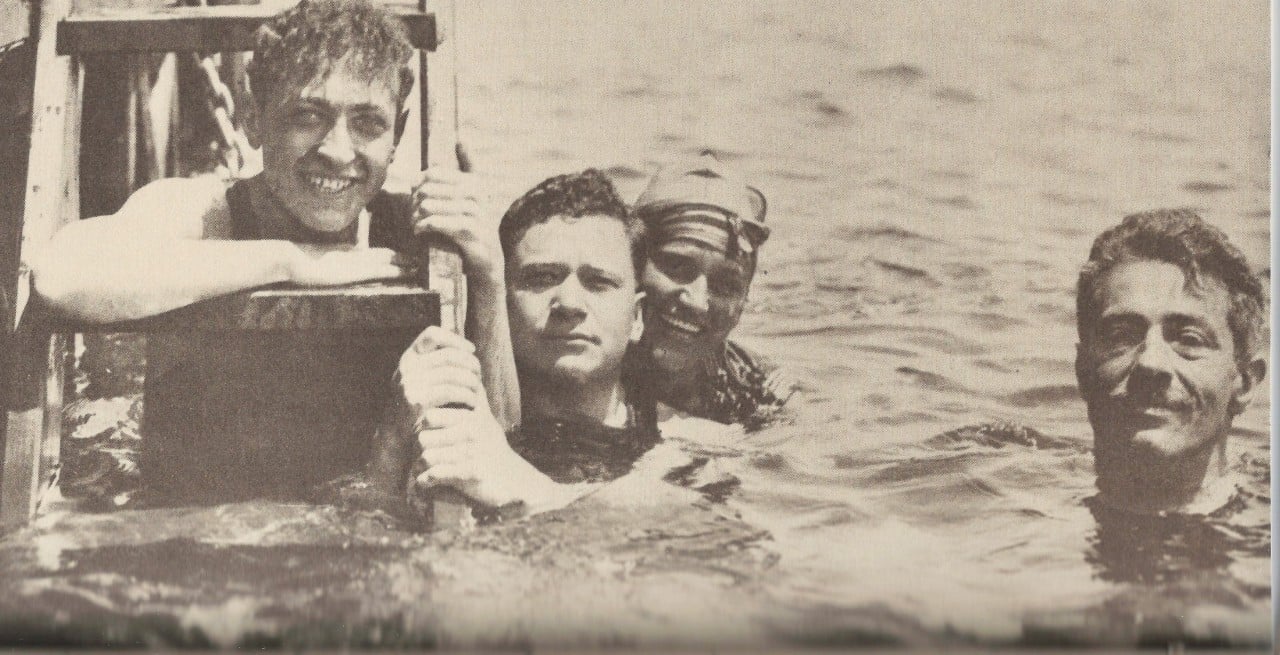
    For those of you who are still reeling at the Groundhog’s forecast of six more weeks of winter, here’s a glimpse of two of the greatest violinists of their day – perhaps ever – fiddling around in their bathing suits: Jascha Heifetz, left, and Fritz Kreisler, right, convene at the old swimming hole with their colleague, Efrem Zimbalist, and his wife, soprano Alma Gluck.

    It wasn’t just a refreshing summertime dip that the two shared. Kreisler and Heifetz were both born on February 2.

    Kreisler, the sweet-toned confectioner and purveyor of violin bonbons, was born in Vienna on this date in 1875. Heifetz, the superhuman technician, who imbued perfection with tonal beauty, was born in Vilnius in 1901. Kreisler was warm, gregarious and easygoing. Heifetz acquired a reputation for a certain cool intensity.

    At a point, Kreisler ruffled feathers, not with his playing, but because he casually let slip that many of the 18th century “rediscoveries” he had used to charm audiences, critics, and musicologists were in fact not rediscoveries at all. Nor did they date from the 18th century. Rather they were composed by Kreisler himself. When the professionals complained, Kreisler shrugged.

    It would be futile to argue against his serious musical credentials. He gave the world premiere of the Elgar concerto and became a favorite recital partner of Sergei Rachmaninoff. A famous anecdote relates that Kreisler and Rachmaninoff were giving a concert in New York. In the middle of a performance, Kreisler suffered a memory lapse, and as he noodled around on his violin, trying to find his way back, he inched closer to his pianist. “Where are we?” Kreisler whispered. To which Rachmaninoff replied, dryly, “Carnegie Hall.”

    In 1941, Kreisler was crossing the street, when he was hit by a milk truck. The accident fractured his skull and put him in a coma. Like something out of an early Woody Allen comedy, when he awoke, he could communicate only in Latin and Greek. Thankfully, the effect was only temporary.

    Kreisler met Heifetz for the first time at a private press party in 1912. After listening to the boy play through the Mendelssohn concerto, he declared, “We can all just break our fiddles over our knees.” Arthur Nikisch, conductor of the Berlin Philharmonic, said he had never heard such an excellent violinist. The year before, Heifetz had played before a crowd of 25,000, and police had to be summoned to prevent the young virtuoso from being mobbed.

    A little more collected was Groucho Marx. When Heifetz met Groucho, he mentioned that he had been earning his living as a violinist since the age of seven. Groucho responded, “Before that, I suppose, you were just a bum.”

    Aside from his astounding accomplishments on the concert stage, Heifetz appeared as a mess hall jazz musician in Allied camps across Europe during the Second World War. Under a pseudonym, he wrote “When You Make Love to Me (Don’t Make Believe)” for Bing Crosby. In addition, Heifetz and Bing recorded the “Lullaby” from Benjamin Godard’s opera “Jocelyn.”

    Heifetz was an advocate for certain socio-political and environmental causes. Decades before it was a thing, he had his Renault converted into an electric vehicle, and he lobbied for the acceptance of 911 as an emergency number.

    Once, after a performance in Israel, he was attacked by a man wielding a crowbar for programming a violin sonata by Richard Strauss. Strauss had remained in Germany during World War II and maintained a fraught relationship with the Nazis. Heifetz, by the way, was Jewish.

    Composers who wrote music for him, or whose music he premiered, include Mario Castelnuovo-Tedesco, Erich Wolfgang Korngold, and Sir William Walton. Heifetz commissioned Arnold Schoenberg’s Violin Concerto, but he never played it.

    His standard of performance was stratospheric, and he subjected himself to a punishing, though strictly secret, regimen of self-discipline. He delivered until he felt he no longer could, retiring from the concert stage in 1972.

    Itzhak Perlman reflected, “The goals he set still remain, and for violinists today, it’s rather depressing that they may never really be attained again.”

    Here’s a French film about Heifetz. Interestingly, it opens with him playing one of Kreisler’s forgeries, the “Praeludium and Allegro in the Style of Pugnani”

    Kreisler plays the “Meditation” from Massenet’s “Thaïs”

    Kreisler plays the Mendelssohn concerto

    Kreisler, master of the miniature

    Two-part radio interview on the occasion of Kreisler’s 80th birthday, with spoken tributes from Elman, Menuhin, Milstein, Stern, Szigeti and others:

    Footage of Heifetz performing Grigoras Dinicu’s “Hora Staccato.” The conductor is Donald Vorhees, longtime music director of the Allentown Symphony Orchestra in Allentown, PA.

    Heifetz plays the first movement of the Tchaikovsky Violin Concerto in the 1947 film “Carnegie Hall.” That’s Fritz Reiner on the podium.

    From back in the day when classical music was still popular entertainment, Heifetz playing Schubert and Mendelssohn in a short film, with Piatigorsky and Rubinstein. The three of them actually get to act (albeit badly).

    Heifetz and Jack Benny

    Heifetz and Bing Crosby with the “Lullaby” from Godard’s “Jocelyn”

    Heifetz’s popular hit (as Jim Hoyle), sung by Bing

    Heifetz plays it – on the piano!
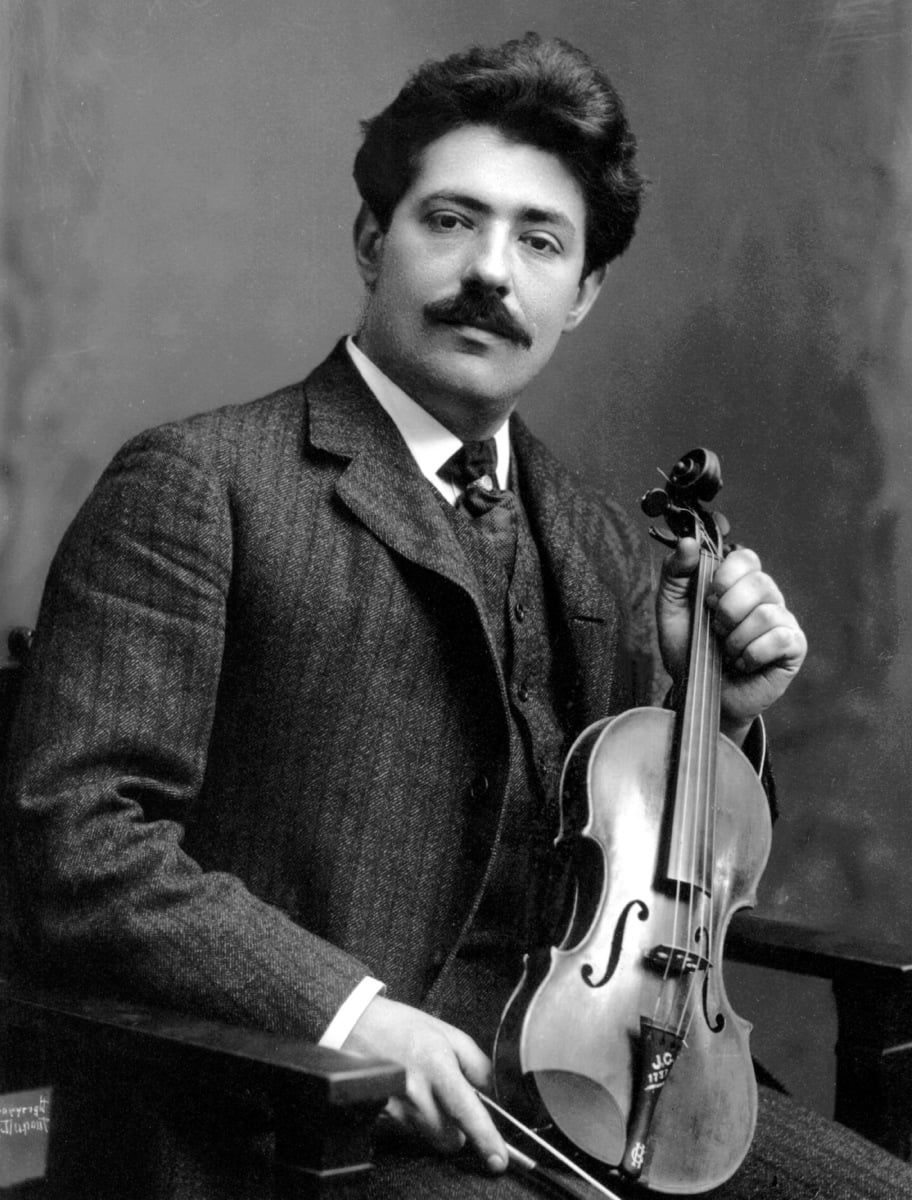
    If any of this seems oddly familiar, it’s because I used much of it in a post last year. But when I went back and reread it, I realized the Ross of 2022 couldn’t do it any better! At least I modified the opening to tie it in with the new photo.

  • Kreisler & Heifetz: Violin Legends Remembered

    Kreisler & Heifetz: Violin Legends Remembered

    Today encompasses the anniversaries of the births of two of the greatest fiddlers who ever lived.

    Fritz Kreisler, the sweet-toned confectioner and purveyor of violin bonbons, was born in Vienna on this date in 1875. Jascha Heifetz, the superhuman technician, who imbued perfection with tonal beauty, was born in Vilnius in 1901. Kreisler was warm, gregarious and easygoing. Heifetz acquired a reputation for a certain cool intensity.

    At a point, Kreisler ruffled feathers, not with his playing, but because he casually let slip that many of the 18th century “rediscoveries” he had used to charm audiences, critics, and musicologists were not in fact rediscoveries at all. Nor did they date from the 18th century. Rather they were composed by Kreisler himself. When the professionals complained, Kreisler shrugged.

    It would be futile to argue against his serious musical credentials. He gave the world premiere of the Elgar concerto and became a favorite recital partner of Sergei Rachmaninoff. A famous anecdote relates that Kreisler and Rachmaninoff were giving a concert in New York. In the middle of a performance, Kreisler suffered a memory lapse, and as he noodled around on his violin, trying to find his way back, he inched closer to his pianist. “Where are we?” Kreisler whispered. To which Rachmaninoff replied, “Carnegie Hall.”

    In 1941, Kreisler was crossing the street, when he was hit by a milk truck. The accident fractured his skull and put him in a coma. Like something out of an early Woody Allen comedy, when he awoke, he could communicate only in Latin and Greek. Thankfully, the effect was only temporary.

    Kreisler met Heifetz for the first time at a private press party in 1912. After listening to the boy play through the Mendelssohn concerto, he declared, “We can all just break our fiddles over our knees.” Arthur Nikisch, conductor of the Berlin Philharmonic, said he had never heard such an excellent violinist. The year before, Heifetz had played before a crowd of 25,000, and police had to be summoned to prevent the young virtuoso from being mobbed.

    A little more collected was Groucho Marx. When Heifetz met Groucho, he mentioned that he had been earning his living as a violinist since the age of seven. Groucho responded, “Before that, I suppose, you were just a bum.”

    Aside from his astounding accomplishments on the concert stage, Heifetz appeared as a mess hall jazz musician in Allied camps across Europe during the Second World War. Under a pseudonym, he wrote “When You Make Love to Me (Don’t Make Believe)” for Bing Crosby. In addition, Heifetz and Bing recorded the “Lullaby” from Benjamin Godard’s opera “Jocelyn.”

    Heifetz was an advocate for certain socio-political and environmental causes. Decades before it was a thing, he had his Renault converted into an electric vehicle, and he lobbied for the acceptance of 911 as an emergency number.

    Once, after a performance in Israel, he was attacked by a man wielding a crowbar for programming a violin sonata by Richard Strauss. Strauss had remained in Germany during World War II and maintained a fraught relationship with the Nazis. Heifetz, by the way, was Jewish.

    Composers who wrote music for him, or whose music he premiered, include Mario Castelnuovo-Tedesco, Erich Wolfgang Korngold, and Sir William Walton. Heifetz commissioned Arnold Schoenberg’s Violin Concerto, but he never played it.

    His standard of performance was stratospheric, and he subjected himself to a punishing, though strictly secret, regimen of self-discipline. He delivered until he felt he no longer could, retiring from the concert stage in 1972.

    Itzhak Perlman reflected, “The goals he set still remain, and for violinists today, it’s rather depressing that they may never really be attained again.”

    Here’s a French film about Heifetz. Interestingly, it opens with him playing one of Kreisler’s forgeries, the “Praeludium and Allegro in the Style of Pugnani”

    Kreisler plays the “Meditation” from Massenet’s “Thaïs”

    Kreisler plays the Mendelssohn concerto

    Kreisler, master of the miniature

    Two-part radio interview on the occasion of Kreisler’s 80th birthday, with spoken tributes from Elman, Menuhin, Milstein, Stern, Szigeti and others:

    Footage of Heifetz performing Grigoras Dinicu’s “Hora Staccato.” The conductor is Donald Vorhees, longtime music director of the Allentown Symphony Orchestra in Allentown, PA.

    Heifetz plays the first movement of the Tchaikovsky Violin Concerto in the 1947 film “Carnegie Hall.” That’s Fritz Reiner on the podium.

    From back in the day when classical music was still popular entertainment, Heifetz playing Schubert and Mendelssohn in a short film, with Piatigorsky and Rubinstein. The three of them actually get to act (albeit badly).

    Heifetz and Jack Benny

    Heifetz and Bing Crosby with the “Lullaby” from Godard’s “Jocelyn”

    Heifetz’s popular hit (as Jim Hoyle), sung by Bing

    Heifetz plays it – on the piano!
  • Kreisler & Schoenberg: Vienna’s Odd Couple

    Kreisler & Schoenberg: Vienna’s Odd Couple

    Fritz Kreisler, the sweet-toned confectioner and purveyor of violin bonbons, and Arnold Schoenberg, the dour high priest of twelve tone music. Vienna’s fin-de-siècle odd couple reunite on this week’s “Music from Marlboro.”

    Both artists were born in Vienna, only five months apart – Schoenberg on September 13, 1874, and Kreisler on February 2, 1875. Kreisler’s father was a doctor. Schoenberg’s sold shoes.

    Both had Jewish parents. Kreisler, whose mother was Catholic, was baptized into the faith at the age of 12. Schoenberg converted to Lutheranism at 24. However, just when it would have been most dangerous to do so, he roared back to Judaism and – with the rise of Hitler in 1933 – defiantly embraced his heritage.

    In general, Kreisler seems to have enjoyed the easier life. He had a more comfortable start and a happier disposition. As a musician, he was content to entertain.

    Schoenberg was a revolutionary and probably a bit of a hard-nosed contrarian. He had a turbulent marriage, seldom smiled for photos, and indulged in expressionist painting. Also, he was superstitious. He especially suffered from triskaidekaphobia, fear of the number 13.

    On the other hand, he did orchestrate his share of Viennese operettas, arranged Strauss waltzes for performance with his friends, played tennis with George Gershwin, and was a fan of Hopalong Cassidy.

    Both men came to be regarded in some circles as mountebanks. Kreisler ruffled a few feathers when he let slip that many of the 18th century “rediscoveries” he had used to charm audiences, critics and musicologists were not in fact rediscoveries at all. Nor did they date from the 18th century. When the professionals complained, Kreisler made like Vinnie Barbarino. Wha-? Schoenberg triggered kneejerk reviews and outright hostility with his dismantling of tonality.

    Nevertheless, both also acquired some serious musical credentials. Kreisler gave the world premiere of the Elgar Violin Concerto and became a favorite recital partner of Sergei Rachmaninoff. Schoenberg blossomed into one the most influential composers of the 20th century.

    In 1941, Kreisler was hit by a milk truck, which fractured his skull and put him into a coma. Like something out of an early Woody Allen comedy, when he awoke he could only communicate in Latin and Greek. Thankfully, the effect was only temporary.

    It is Kreisler’s music that continues to communicate most effectively. We’ll hear his String Quartet in A minor, from 1922, performed at the 2013 Marlboro Music Festival by violinists Danbi Um and Nikki Chopi, violist Sally Chisolm, and cellist Lionel Cottet.

    That will be followed by Schoenberg’s Chamber Symphony No. 1 of 1906, a pre-serial work that nevertheless pushes harmony to the brink. It was presented at Marlboro in 1982 by an ensemble of fifteen players directed by Leon Kirchner.

    Was the glass half empty or the milk truck half full? Kreisler lived a good long life. He died in 1962 at the age of 86. Schoenberg died on his 76th birthday, Friday the 13th, 1951. Earlier in the day, he had been informed by his astrologer that 7 plus 6 equals 13.

    No matter how you tally, the performances will be top-notch on the next “Music from Marlboro,” this Wednesday evening at 6:00 EDT, on WWFM – The Classical Network and wwfm.org.

    Marlboro School of Music and Festival: Official Page


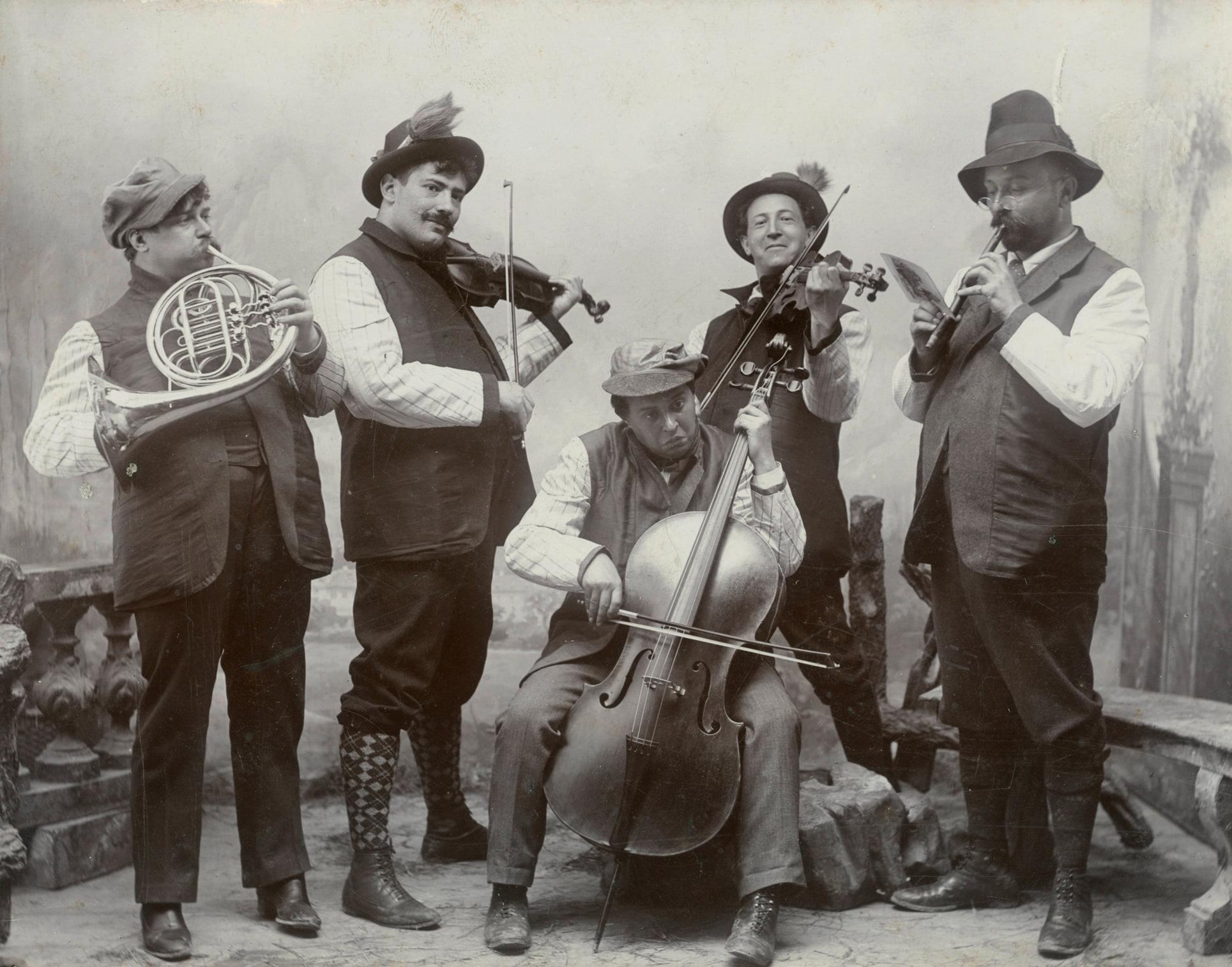
    PHOTO: Fritz Kreisler (second from left) and Arnold Schoenberg (cello) in 1900

  • Rachmaninoff’s Humor Love & April Fools

    Rachmaninoff’s Humor Love & April Fools

    Depending on where you look, Igor Stravinsky described Sergei Rachmaninoff as either “six foot two of Russian gloom” or “a six and a half foot scowl” (perhaps both). It’s true, you won’t find very many photos of Rachmaninoff smiling, but just to prove that he was not entirely without a sense of humor, I share with you the following anecdote:

    Rachmaninoff and his friend, the violinist Fritz Kreisler, were in the middle of a joint recital, when all of a sudden Kreisler got lost and began to noodle. Rachmaninoff would have noticed immediately, of course, and the two improvised brilliantly as the violinist searched for a way back. Hoping to save face, Kreisler inched over to his pianist and whispered, “Where are we?” To which Rachmaninoff replied, “Carnegie Hall.”

    On this April Fool’s Day – which also happens to be Rachmaninoff’s birthday – the two friends will be reunited in Rachmaninoff’s transcription of Kreisler’s “Liebesfreud,” or “Love’s Joy.”

    More in keeping with our impression of the dour pianist-composer, Rachmaninoff was crushed by the failure of his First Symphony (the responsibility for which may lay at the feet of its conductor, Alexander Glazunov, who is said to have been drunk at the work’s premiere). So devastated was the 23 year-old Rachmaninoff that he found himself unable to compose and sought psychiatric help. His physician, Nikolai Dahl, who was also an amateur violist, was able to restore his confidence after months of hypnotherapy, and Rachmaninoff returned to the concert stage in blazing triumph with his Piano Concerto No. 2.

    In gratitude, Rachmaninoff dedicated the concerto to Dahl, but there is another story behind the work, and it is a tender one. Rachmaninoff had fallen in love with Natalia Satina, a fellow pianist, who would later become his wife. Already in hot water with his piano teacher, Nikolai Sverev, who berated him for diverting time from his practice in order to compose, Rachmaninoff now endured the additional stress of making his relationship with Satina public, much to the dismay of his family and the Russian Orthodox Church.

    You see, Satina was Rachmaninoff’s first cousin. Any kind of union between the two would have been forbidden. However, Rachmaninoff was able to obtain a special dispensation from the Tsar, and the couple bypassed the Church by marrying at a military barracks. By all accounts the union was a happy one, and the Rachmaninoffs raised two healthy daughters.

    The marriage took place only after the concerto’s successful premiere. So “Brief Encounter” is not the only love story to be able to claim it as a soundtrack. Love makes fools of us all.

    What are the odds? Today is also the anniversary of the birth of another one of the great pianists, Ferruccio Busoni. We’ll keep it light with Busoni’s “Lustspielouverture,” or “Comedy Overture,” as well as his fantasy on themes from Mozart’s elevated farce, “The Marriage of Figaro.”

    The rest of the afternoon will be devoted to April’s fools and salutations to the month. We’ll be none the wiser, from 4 to 7 p.m. EDT, on WWFM – The Classical Network and wwfm.org.

Tag Cloud

Aaron Copland (92) Beethoven (95) Composer (114) Film Music (120) Film Score (143) Film Scores (255) Halloween (94) John Williams (185) KWAX (229) Leonard Bernstein (100) Marlboro Music Festival (125) Movie Music (135) Opera (198) Philadelphia Orchestra (88) Picture Perfect (174) Princeton Symphony Orchestra (106) Radio (87) Ralph Vaughan Williams (85) Ross Amico (244) Roy's Tie-Dye Sci-Fi Corner (290) The Classical Network (101) The Lost Chord (268) Vaughan Williams (103) WPRB (396) WWFM (881)

DON’T MISS A BEAT

Receive a weekly digest every Sunday at noon by signing up here


RECENT POSTS