Tag: Fritz Kreisler

  • Elgar’s Enigmatic Violin Concerto

    Elgar’s Enigmatic Violin Concerto

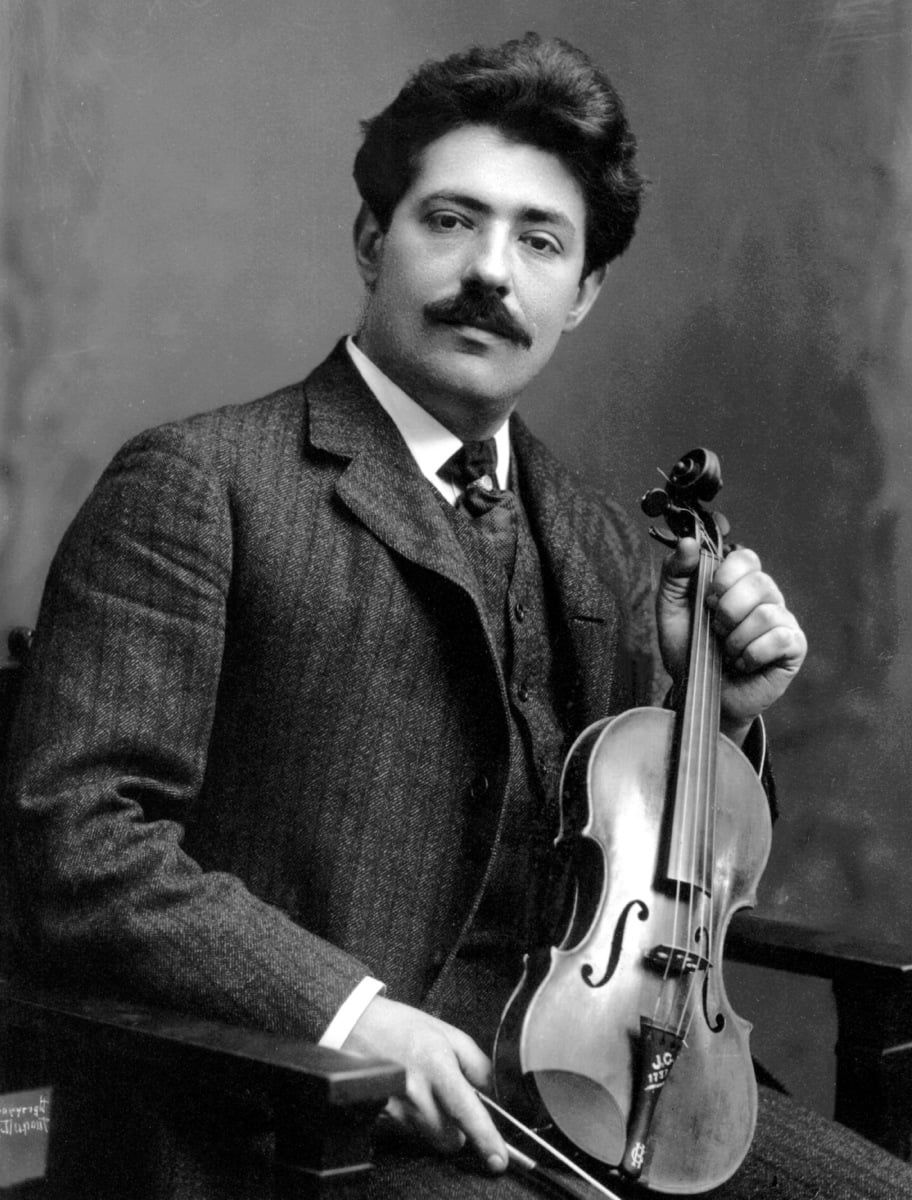
    In 1905, the celebrated violinist Fritz Kreisler remarked to the press, “If you want to know whom I consider to be the greatest living composer, I say without hesitation Elgar… I say this to please no one; it is my own conviction… I place him on an equal footing with my idols, Beethoven and Brahms. He is of the same aristocratic family. His invention, his orchestration, his harmony, his grandeur, it is wonderful. And it is all pure, unaffected music. I wish Elgar would write something for the violin.”

    Two years later, Elgar complied, beginning work on a concerto at Kreisler’s request. (In 1909, the piece was formally commissioned by the Royal Philharmonic Society.) The completed work was given its first public performance in 1910 and received immediate, widespread acclaim. Kreisler himself was not disappointed. He declared it “the greatest violin concerto since Beethoven’s.”

    Heartbreakingly, plans for Kreisler and Elgar to record the work fell through. The first recording of the piece, using the acoustic process and an abridgement of the score, was in 1916, with Marie Hall the soloist and Elgar on the podium. Later, Hall would advise Ralph Vaughan Williams on the violin part of “The Lark Ascending,” which she would introduce in both versions (first for violin and piano, and then for violin orchestra).

    The first COMPLETE recording, made using the electrical process, which allowed for greatly improved dynamic range and realism, was set down in 1929 by Albert Sammons with Sir Henry Wood conducting.

    It was record producer Fred Gaisberg’s desire to preserve the concerto with Elgar conducting in better sound, with Kreisler reprising his interpretation, but when Kreisler proved to be elusive, he turned instead to the teenaged Yehudi Menuhin. In the event, Menuhin rose to the challenge and their recording of the concerto has remained in the catalogue since it was first issued in 1932.

    The Violin Concerto is not the work of a composer whose legacy was soon to be reduced to, and sadly dismissed as, one of pomp and empire, a relic of the Edwardian era. Rather, it is a confessional work of great tenderness and intimacy.

    There have been many theories as to whom the composer might have had in mind in prefacing his score with the Spanish superscription, “Aqui está encerrada el alma de…..” (“Herein is enshrined the soul of…..”). By Elgar’s own admission, the unusual ellipsis of five dots is meant to signify one of his acquaintances. Does it hint at his close friend and confidante Alice Stuart Wortley, married daughter of the painter John Everett Millais? “Windflower” was the affectionate name Elgar bestowed upon her, and he professed that the concerto is full of “windflower themes.”

    Or could it be Helen Weaver, a violinist to whom Elgar was briefly engaged, before they were divided by economic and religious objections on the part of her family? When Helen contracted tuberculosis, she departed for New Zealand, and Elgar never saw her again. (It is believed that Weaver is the subject of the penultimate variation, there identified with three asterisks, in Elgar’s “Enigma Variations.” The music quotes Mendelssohn’s “Calm Sea and Prosperous Voyage,” with a side-drum played in a manner perhaps suggestive of a steamer’s engine.)

    Or, as Elgar scholar Jerrold Northrop Moore suggested, are there actually multiple souls enshrined (Wortley and Weaver in the first movement; Elgar’s wife, Alice, and his mother in the second; and violinist W.H. “Billy” Reed, with whom he worked closely on the concerto, and the composer’s friend and publisher Augustus Jaeger, subject of the “Enigma’s” famous “Nimrod” variation, in the third)?

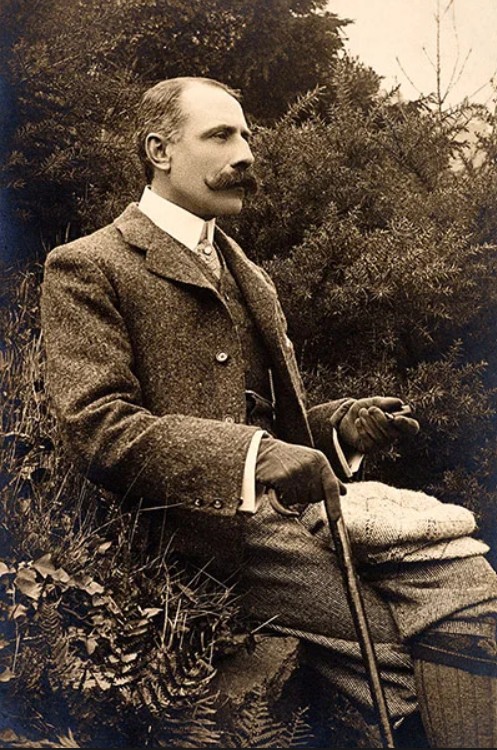
    Elgar, in his ceremonial music and portraits, may have projected an air of self-confidence and respectability, but beneath the veneer of that push-broom mustache and starched collar was an artist of great sensitivity, fundamental melancholy, and jealously guarded privacy.

    Raised Roman Catholic in a predominately Protestant country, he rose from lowly origins (his father worked in music sales, his mother was the daughter of a farm worker, and he was largely self-taught as a composer) to become the most celebrated musician in the land as Master of the King’s Music.

    It’s interesting that late in life Elgar affected to care more about attending the races than promoting his own music. Perhaps he would be amused to find himself characterized as a dark horse. On paper, he was the ultimate outsider. It’s hardly surprising that emotional and intellectual enigmas would underpin his greatest masterworks.

    Happy birthday, Sir Edward Elgar.


    Yehudi Menuhin and Elgar in 1932

    Tasmin Little and Andrew Davis at the Proms in 2011
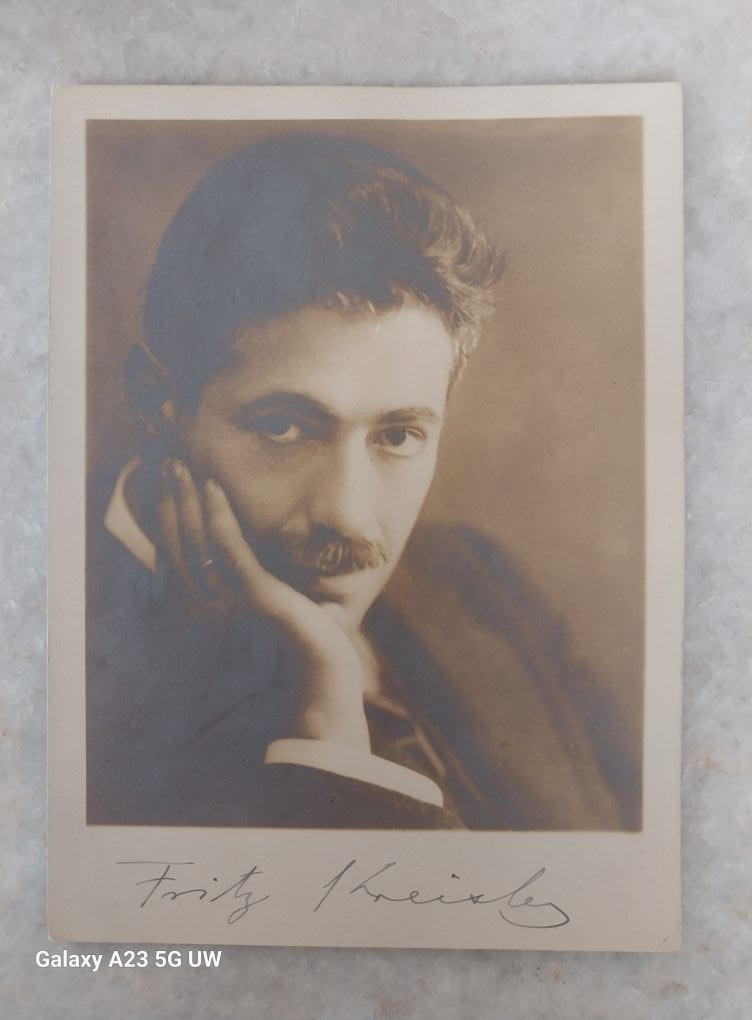
  • Fritz Kreisler Autograph Find

    Fritz Kreisler Autograph Find

    Eesh. I totally forgot I have an autographed photo of Fritz Kreisler.

  • Fritz Kreisler Sesquicentennial: Violin Legend

    Fritz Kreisler Sesquicentennial: Violin Legend

    Somehow, as I was in the thrall of the groundhog yesterday, I failed to equate February 2 with the birthday of Fritz Kreisler. And I’d had my eye on it, too, because it happened to be an important one. Kreisler was born on February 2, 1875 – 150 years ago.

    In contrast to the cool intensity of his colleague, the great violinist Jascha Heifetz, who subjected himself to a punishing, though strictly secret, regimen of self-discipline in pursuit of superhuman perfection, Kreisler was warm, gregarious, and easygoing. As a sweet-toned confectioner and purveyor of violin bonbons, Kreisler ruffled feathers, not with his playing, but because he casually let slip that many of the 18th century “rediscoveries” he had used to charm audiences, critics, and musicologists were not in fact rediscoveries at all. Nor did they date from the 18th century. Rather they were composed by Kreisler himself. When the professionals complained, Kreisler shrugged.

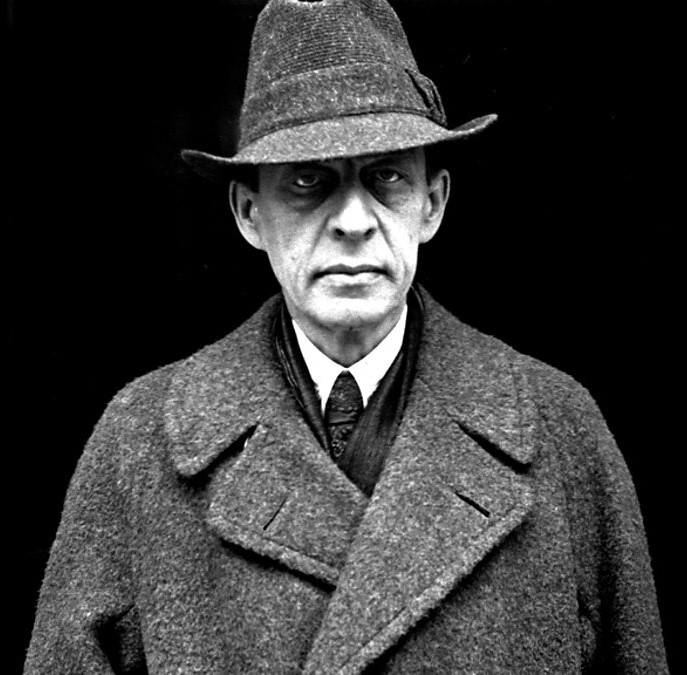
    It would be futile to argue against his serious musical credentials. He gave the world premiere of the Elgar concerto and became a favorite recital partner of Sergei Rachmaninoff. A famous anecdote relates that Kreisler and Rachmaninoff were giving a concert in New York. In the middle of a performance, Kreisler suffered a memory lapse, and as he noodled around on his violin, trying to find his way back, he inched closer to his pianist. “Where are we?” Kreisler whispered. To which Rachmaninoff replied, “Carnegie Hall.”

    In 1941, Kreisler was crossing the street, when he was hit by a milk truck. The accident fractured his skull and put him in a coma. Like something out of an early Woody Allen comedy, when he awoke, he could communicate only in Latin and Greek. Thankfully, the effect was only temporary.

    Kreisler met Heifetz, with whom he shared a birthday (Heifetz was born in Vilnius on February 2, 1901), for the first time at a private press party in 1912. After listening to the boy play through the Mendelssohn concerto, Heifetz declared, “We can all just break our fiddles over our knees.”

    Happy belated birthday, and a joyous sesquicentennial, Fritz Kreisler. And since February 3 happens to be the anniversary of the birth of Felix Mendelssohn, here’s Kreisler performing Mendelssohn’s evergreen concerto.

    Kreisler plays the “Meditation” from Massenet’s “Thaïs”

    Kreisler, master of the miniature

    Kreisler and Rachmaninoff play Schubert

    Kreisler plays Rachmaninoff

    Rachmaninoff plays Kreisler

    Kreisler with John McCormack, in an aria from Benjamin Godard’s “Jocelyn”

    Two-part radio interview on the occasion of Kreisler’s 80th birthday, with spoken tributes from Elman, Menuhin, Milstein, Stern, Szigeti and others:

  • Rachmaninoff’s April Fool’s Humor & Busoni’s Epic

    Rachmaninoff’s April Fool’s Humor & Busoni’s Epic

    Happy April Fool’s birthday to laugh-riot Sergei Rachmaninoff.

    Depending on where you look, Igor Stravinsky described his dour compatriot as either “six-foot-two of Russian gloom” or “a six-and-a-half-foot scowl.” Perhaps both. It’s true, you won’t find very many photos of Rachmaninoff smiling. But just to prove he was not entirely without a sense of humor, I share with you the following anecdote:

    Rachmaninoff was a favorite recital partner of violinist Fritz Kreisler. Once, in the middle of a concert in New York, Kreisler suffered a memory lapse. As he continued to noodle on his violin, feigning nonchalance while attempting to grope his way out of the labyrinth, he subtly inched closer to his pianist.

    “Where are we?” he whispered.

    To which Rachmaninoff replied, “Carnegie Hall.”

    On this day devoted to fun and frivolity, the two friends are reunited in spirit in Rachmaninoff’s transcription of Kreisler’s “Liebesfreud,” or “Love’s Joy.”

    Also, a shout-out to inadvertent prankster Ferruccio Busoni, another great pianist born on this date. Actually, his parents named him Ferruccio Dante Michelangelo Benvenuto Busoni. So clearly he had a sense of destiny. Or at any rate, he had a lot to prove! Perhaps that’s what spurred him to write what could very well be the most grandiose piano concerto of all time.

    Busoni’s concerto swings for the fences, with an epic, 70-minute running time, large orchestration, demanding solo part, and men’s chorus in the finale (which doesn’t start singing until an hour in).

    The text, from Adam Oehlenschläger’s verse-drama “Aladdin,” begins:

    “Deep and quiet, the pillars of rock begin to sound:
    Lift up your hearts to the power eternal,
    Feel Allah’s presence, behold all his works!”

    In the score, Busoni instructs that the chorus should be “invisible.” Somehow, this was mistranslated, resulting in a widespread belief that he actually wanted the singers to perform nude. Whether or not it’s ever been presented that way (in the interest of authenticity) is anyone’s guess.

    Oddly, the concerto isn’t designed as a showcase for a fire-eating virtuoso. Beyond it being something of an endurance test for the soloist, there aren’t really any flashy cadenzas or too many opportunities to hot dog. The work is more like a gargantuan piano fever dream.

    I particularly like the movement “All’Italiana,” evocative of Italian folk music and popular song. It always makes me think of Chico Marx.

    To give you a sense of perspective, Rachmaninoff’s ever-popular Piano Concerto No. 2, at less than half the length, was first performed three years earlier, in 1901. The work would later be used on the soundtrack to “Brief Encounter.” There is nothing brief about Busoni’s concerto.

    The pianist here is Marc-André Hamelin, who used to come into my bookshop looking for arcane sheet music, back in the day. Just a few years before this video, as a matter of fact. About a decade later, I saw him perform Busoni’s concerto at Carnegie Hall.

    The Chico Marx business begins about 46 minutes in. The movement gets zanier and zanier.

    Here Eileen Joyce plays Rachmaninoff’s Piano Concerto No. 2 in “Brief Encounter,” with Celia Johnson and a young Trevor Howard:

    Happy birthday, Busoni and Rachmaninoff!

  • Valentine’s Day Music KWAX Sweetness and Light

    Valentine’s Day Music KWAX Sweetness and Light

    This morning on KWAX, it’s flowers and chocolate for breakfast. I’ll do my best to indulge your sweet tooth and lend a serotonin boost with a special Valentine’s Day sampler.

    Luxuriate with an assortment of decadent Fritz Kreisler violin bonbons, a suite from Lord Berners’ ballet “Cupid and Psyche,” Victor Herbert’s orchestration of Franz Liszt’s “Liebestraum,” Henry Mancini’s arrangement of Nino Rota’s “Love Theme from Romeo and Juliet,” and some romantic reveries by Gilbert & Sillivan, Charles Ancliffe, and Leonard Bernstein.

    Better limber up those lips. It will be an hour of musical confections for Valentine’s Day on “Sweetness and Light,” this Saturday morning at 11:00 EST/8:00 PST. Hear it exclusively on KWAX, the radio station of the University of Oregon!

    You can stream it, wherever you are, at the link:

    https://kwax.uoregon.edu/

Tag Cloud

Aaron Copland (92) Beethoven (95) Composer (114) Film Music (120) Film Score (143) Film Scores (255) Halloween (94) John Williams (185) KWAX (229) Leonard Bernstein (100) Marlboro Music Festival (125) Movie Music (135) Opera (198) Philadelphia Orchestra (88) Picture Perfect (174) Princeton Symphony Orchestra (106) Radio (87) Ralph Vaughan Williams (85) Ross Amico (244) Roy's Tie-Dye Sci-Fi Corner (290) The Classical Network (101) The Lost Chord (268) Vaughan Williams (103) WPRB (396) WWFM (881)

DON’T MISS A BEAT

Receive a weekly digest every Sunday at noon by signing up here


RECENT POSTS