Tag: Gabriel Fauré

  • Alexandre Dumas Music on KWAX Radio

    Alexandre Dumas Music on KWAX Radio

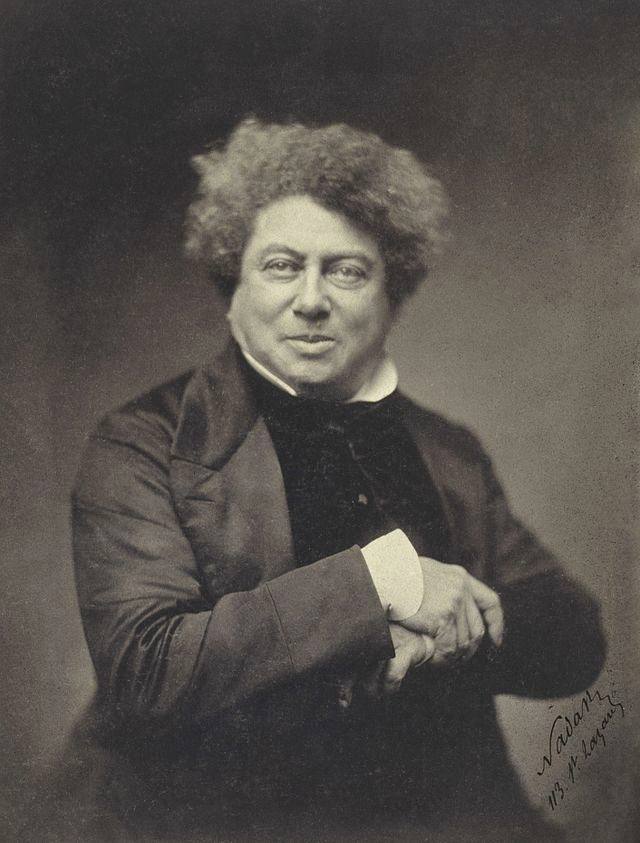
    He is best known as the author of “The Three Musketeers” and “The Count of Monte Cristo.” However, Alexandre Dumas churned out historically-inspired prose on all manner of subjects, and he did so by the metre.

    This week on “The Lost Chord,” we present an hour of music inspired by his writings, including rarely-heard incidental music composed for a revival of his play “Caligula,” by Gabriel Fauré; ballet music from an opera, “Ascanio,” taken from a novel featuring Benvenuto Cellini, by Camille Saint-Saëns; and a poetic monologue, “Joan of Arc at the Stake,” by Franz Liszt. We’ll also hear the suite for symphonic band “The Three Musketeers,” by George William Hespe.

    It’s all for one, and one for all! I hope you’ll join me for “The Lost Sword,” on “The Lost Chord,” now in syndication on KWAX, the radio station of the University of Oregon!


    Clip and save the start times for all three of my recorded shows:

    PICTURE PERFECT, the movie music show – Friday at 8:00 PM EDT/5:00 PM PDT

    SWEETNESS AND LIGHT, the light music program – Saturday at 11:00 AM EDT/8:00 AM PDT

    THE LOST CHORD, unusual and neglected rep – Saturday at 7:00 PM EDT/4:00 PM PDT

    Stream them, wherever you are, at the link!

    https://kwax.uoregon.edu/

  • Nadia Boulanger: Celebrating the Legendary Teacher

    Nadia Boulanger: Celebrating the Legendary Teacher

    Nadia Boulanger, the grande dame of 20th century music, was born on this date in 1887.

    Widely considered to have been the greatest musical pedagogue who ever lived, she was especially instrumental to the development of American composition. Hopefuls flocked to the American Conservatory at Fontainebleau, France, where she accepted applicants from all backgrounds. Her only stipulation was that they be determined to learn. It was Virgil Thomson who quipped, “She was a one-woman graduate school, so powerful and permeating that legend credits every United States town with two things: a five and dime and a Boulanger pupil.” The five and dimes may have faded, but not so the legacy of the “Boulangerie.”

    Beneath those grey hairs and pince-nez lurked an iron will that brooked no nonsense, yet Boulanger was surprisingly accepting, astonishingly objective, and generally dead-on in her assessments.

    Her students included everyone from Dinu Lipatti to Igor Markevitch, from Aaron Copland to Elliott Carter, from Astor Piazzolla to Philip Glass, from Michel Legrand to Quincy Jones, from Leonard Bernstein (unofficially) to “What Makes It Great?” radio host Rob Kapilow.

    Here’s what a few of those who benefited from her tutelage have to say about their experiences with her.

    Quincy Jones

    Harold Shapero

    Elliot Carter

    Elliot Carter and Ned Rorem

    Fascinating documentary, including first-hand accounts, historical footage, and terrific insights. Leonard Bernstein is interviewed in French, beginning around the 7-minute mark:

    There’s a live recording of Mme Boulanger conducting the Requiem of her teacher, Gabriel Fauré, from 1968 that’s circulated on various labels, with the BBC Chorus and BBC Symphony Orchestra. However, this performance too, with the Choral Art Society and the New York Philharmonic, is quite lovely, captured in Carnegie Hall in 1962.

    Nadia’s early ambition was to become a composer herself. However, she soon acknowledged that her sister, Lili, was the true talent in this regard and devoted her life to teaching. Sadly, Lili died of Crohn’s Disease at the age of only 24.

    Here’s Nadia’s own “Fantaisie variée” for piano and orchestra from 1912, written when she was 25.

    And an earlier work, “Cantique” from 1909

    Boulanger died in 1979 at the age of 92.

    Joyeux anniversaire… et merci!

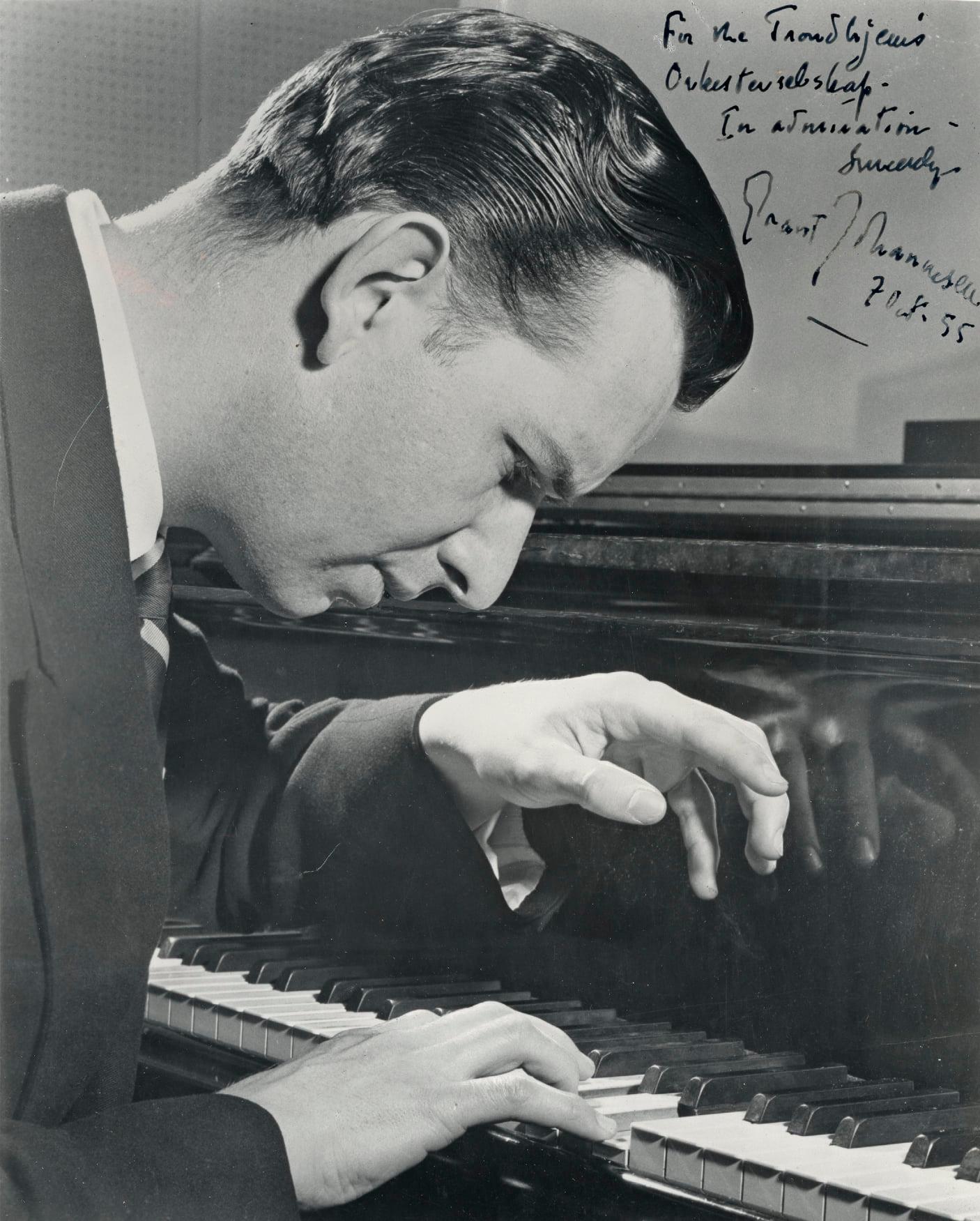
  • Grant Johannesen A Centenary Celebration

    Grant Johannesen A Centenary Celebration

    Nobody likes a know-it-all.

    When five-year-old Grant Johannesen’s first music teacher recognized his talent, as she heard him noodling on a piano across the street, her generosity soon turned to annoyance when she discovered that he could emulate anything she played. He went on to study with Robert Casadesus, Egon Petri, Roger Sessions, and Nadia Boulanger.

    Johannesen was born in Salt Lake City 100 years ago today.

    As an adult, he toured extensively, both with the New York Philharmonic under Dmitri Mitropoulos, and as a solo pianist. He was particularly acclaimed for his elegant performances of French music, especially that of Gabriel Fauré.

    From 1974 to 1985, he served as director of the Cleveland Institute of Music. He was a frequent soloist with the Cleveland Orchestra and his hometown band, the Utah Symphony.

    Happy centenary, Grant Johannesen!


    Johannesen performs music by “American Indianist” Arthur Farwell (“Navajo War Dance”) and Samuel Barber (“Homage to John Field”)

    Johannesen plays “Nights in the Gardens of Spain” with the Cleveland Orchestra

    A lovely recital of French music presented at the Bergen Festival in 1973

    Fauré’s Fantaisie for Piano and Orchestra, Op. 111

    In conversation with David Dubal, now host of WWFM – The Classical Network’s “The Piano Matters”

  • Alexandre Dumas Music on The Lost Chord

    Alexandre Dumas Music on The Lost Chord

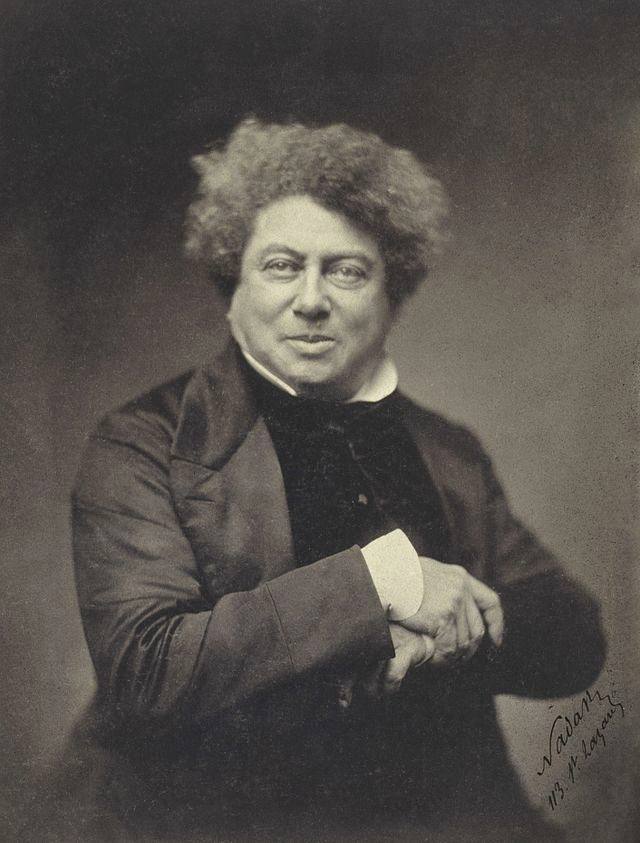
    He is best known as the author of “The Three Musketeers” and “The Count of Monte Cristo.” However, Alexandre Dumas churned out historically-inspired prose on all manner of subjects, and he did so by the yard.

    This Sunday night on “The Lost Chord,” we present an hour of music inspired by his writings, including rarely-heard incidental music composed for a revival of his play “Caligula,” by Gabriel Fauré; ballet music from an opera, “Ascanio,” taken from a novel featuring Benvenuto Cellini, by Camille Saint-Saëns; and a poetic monologue, “Joan of Arc at the Stake,” by Franz Liszt. We’ll also hear the suite for symphonic band “The Three Musketeers,” by George Wiliam Hespe.

    It’s all for one, and one for all! I hope you’ll join me for “The Lost Sword,” this Sunday night at 10:00 EDT, on WWFM – The Classical Network and wwfm.org.

  • Fauré Elgar & Moustaches A Musical Meeting

    Fauré Elgar & Moustaches A Musical Meeting

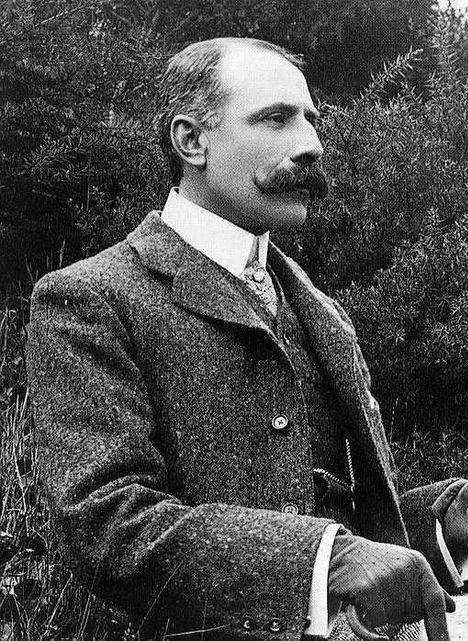
    On Gabriel Fauré’s birthday, I am fascinated to learn that the composer was not only hugely popular in England, having visited there many times, he was also greatly admired by Sir Edward Elgar.

    Fauré was staying the month with Elgar’s friend, Frank Schuster, prior to the London premiere of Elgar’s Symphony No. 1, in 1908. Following a rehearsal, the two attended a dinner party held by Schuster in their honor.

    What did the two of them talk about? Their moustaches, I hope.

Tag Cloud

Aaron Copland (92) Beethoven (95) Composer (114) Film Music (120) Film Score (143) Film Scores (255) Halloween (94) John Williams (185) KWAX (229) Leonard Bernstein (100) Marlboro Music Festival (125) Movie Music (135) Opera (198) Philadelphia Orchestra (88) Picture Perfect (174) Princeton Symphony Orchestra (106) Radio (87) Ralph Vaughan Williams (85) Ross Amico (244) Roy's Tie-Dye Sci-Fi Corner (290) The Classical Network (101) The Lost Chord (268) Vaughan Williams (103) WPRB (396) WWFM (881)

DON’T MISS A BEAT

Receive a weekly digest every Sunday at noon by signing up here


RECENT POSTS