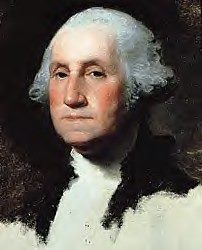
It’s the 285th birthday of George Washington. Get ready for George Antheil’s “McKonkey’s Ferry (Washington at Trenton).” It will kick off an afternoon of music including birthday celebrations for American composer Lowell Liebermann (his 56th) and Danish composer Niels Wilhelm Gade (his 200th). We’ll also remember conductor Stanislaw Skrowaczewski, who died yesterday at the age of 93. All in all, it’s shaping up to be an eventful show. Listen in from 4 to 7 p.m. EST on WWFM – The Classical Network and at wwfm.org.
Tag: George Antheil
-

St Valentine’s Skull & Antheil Waltzes
Happy Valentine’s Day! Behold the skull of St. Valentine and enjoy these “Valentine Waltzes” by Trenton’s own George Antheil.
There are eleven of them in all. Here’s the 5th:
And Number 9:
-

Presidents Day Music Washington Lincoln
Presidents Day (Washington’s Birthday observed).
Here are two pieces of music I was unable to fit into my five-hour presidential salute the other morning (in honor of Lincoln’s birthday) on WPRB 103.3 FM.
“McKonkey’s Ferry (Washington at Trenton)”, by Trenton’s own George Antheil:
https://www.youtube.com/watch?v=dROk2QXrFOs
“Aspects of Lincoln and Liberty,” variations on an 1860 campaign song, by Paul Turok:
https://www.youtube.com/watch?v=_XHBMEqCmIQ
A couple of ditties to carry with you as you head out to the white sales.
-
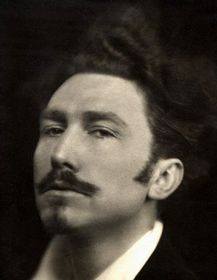
Ezra Pound’s Opera A Shocking UK Premiere
Did you know that Ezra Pound wrote an opera?
As a blow against Debussy and the pernicious influence of “Pelleas,” Pound contrived to write music of such rhythmic complexity as to leave “Le sacre du printemps” in the shade. Characteristically, the freewheeling poet described his method as “improving a system by refraining from obedience to all its present ‘laws.’” In other words, he was a proud contrarian.
In 1919, when Pound was 34 years-old, he conceived “Le Testament de Villon,” an operatic setting of François Villon’s poem of 1461. An ardent champion of Trenton’s own George Antheil from the composer’s early days in Paris, Pound enlisted Antheil’s help in developing a system of micro-rhythms the better to express the vitality of Villon’s Old French. The two worked at it in 1923. In 1924, Pound wrote a book titled “Antheil and the Treatise of Harmony,” a piece of hagiography so extravagant that it succeeded even in embarrassing the composer.
Preview performances in 1924 and 1926 brought criticism from the performers of the utter impracticality of the score. There are no rests or breath marks. There are crushing dissonances. The work’s demands call for scratches, hiccoughs, and the use of human bones in the percussion part.
Virgil Thomson praised the piece. “The music was not quite musician’s music,” he wrote, “though it may well be the finest poet’s music since Thomas Campion.” Pound’s colleague, the poet William Carlos Williams, described him thus: “…He knows nothing of music, being tone-deaf. That’s what makes him a musician.”
Excerpts from Pound’s “Le Testament de Villon” will receive a rare performance at the London Contemporary Music Festival on December 15. It is being advertised as the work’s UK premiere in its original version for two tins and a washboard. The first complete performance, in Antheil’s arrangement for small orchestra, was given over BBC radio in 1933.
Subsequently, Pound began work on two other operas. Neither was ever completed.
More about the upcoming performance here:
https://billetto.co.uk/lcmf-2015-15-december
Anyone remember this out-of-print Philips LP?
-

Hedy Lamarr Google Doodle Honors Trenton’s Antheil
If Google is your search engine of choice, keep an eye out today for Trenton’s own George Antheil. Antheil makes an appearance in Google’s tribute to actress Hedy Lamarr on what would have been her 101st birthday.
Not only was Lamarr marketed as the stunner she was, but she possessed a scientific curiosity decidedly at odds with her big screen persona. During WWII, she and Antheil devised a frequency-hopping system that would have prevented the Nazis from jamming radio-controlled Allied torpedoes.
What this article doesn’t tell us is that Lamarr had initially approached Antheil, a neighbor, to discuss endocrinological matters (a noted polymath himself, Antheil had written books on the subject), in reference to increasing the size of certain of her “assets,” or that neither Lamarr or Antheil ever saw a cent for their patent, which went on to form the basis for modern wireless technology.
Antheil, of course, was the self-proclaimed “Bad Boy of Music” (actually the title of his autobiography), who set Paris on its ear with his “Ballet Mécanique.” The work, conceived for 16 player pianos, 3 airplane propellers, 7 electric bells, and siren, instigated one of classical music’s most notorious riots. Later, the composer settled into a more conservative language to become one of America’s most performed composers.
There was never anything romantic between Lamarr and Antheil. They were just two quirky, misunderstood, lonely, intelligent Americans looking to do their patriotic duty. Happy birthday, Hedy Lamarr, and thank you, Google, for acknowledging George Antheil.
If you’re not a Google user, read more about it and see the animation here:
http://www.cnn.com/2015/11/09/entertainment/hedy-lamarr-google-doodle-feat/
Tag Cloud
Aaron Copland (94) Beethoven (95) Composer (114) Film Music (150) Film Score (143) Film Scores (255) Halloween (102) John Williams (198) KWAX (233) Leonard Bernstein (105) Marlboro Music Festival (125) Movie Music (165) Mozart (91) Opera (215) Philadelphia Orchestra (90) Picture Perfect (174) Princeton Symphony Orchestra (110) Radio (90) Ross Amico (244) Roy's Tie-Dye Sci-Fi Corner (290) The Classical Network (101) The Lost Chord (269) Vaughan Williams (107) WPRB (397) WWFM (881)