Tag: George Enescu

  • Romanian Classical Gems Unearthed

    Romanian Classical Gems Unearthed

    In this season when you can’t hear “Transylvania” without imagining a wolf howl, we’ll set aside creepy castles in the Carpathian Mountains for the more congenial sounds of Romania’s concert halls.

    This Sunday night on “The Lost Chord,” we’ll look beyond George Enescu, Romania’s most celebrated musical polymath, to hear music by three of his compatriots, only one of whom managed to achieve recognition beyond the borders of his homeland.

    George Stephănescu (1843-1925) was a seminal figure in the development of Romanian opera. He founded the nation’s first opera company in 1885. He is also credited with having composed the first Romanian symphony. Stephănescu conducted at the National Theater and taught at the Bucharest Academy of Music. His “National Overture” of 1876 reflects his patriotic concerns.

    By contrast, György Ligeti (1923-2006) was destined to be a bit of an outlier. Born into a Jewish family in an ethnically Hungarian region of Transylvania, Ligeti went on to become one of the most important composers of his generation, but much of his music is in a style that would have been deemed “avant-garde.” However, he also had his playful side. In 1951, he wrote his “Concert românesc” (“Romanian Concerto”), a wholly accessible and little-known work based on actual Romanian folk tunes he had studied at the Folklore Institute in Bucharest. Despite this being one of his most overtly delightful pieces, the work was banned after a single rehearsal in Bucharest and not heard publicly until 1971. “Totalitarian regimes do not like dissonances,” he observed ruefully.

    Finally, Paul Constantinescu (1909-1963) was part of a generation of Romanian composers that came of age in the shadow of Enescu. He composed in most musical forms: opera, ballet, oratorio, incidental music, symphonic, chamber and choral music, and music for film, yet he remains little-known in the West. His concertante output includes works for violin, cello, piano and harp, in addition to a concerto for string orchestra. We’ll hear Constantinescu’s Piano Concerto, from 1952.

    Children of the night! What music they make.

    Go batty for exhumed Romanian classics. The Count invites you to join him in his box, for “Romania Mania,” this Sunday night at 10:00 EDT, on WWFM – The Classical Network and wwfm.org.
  • George Enescu Hands The Genius Behind the Music

    George Enescu Hands The Genius Behind the Music

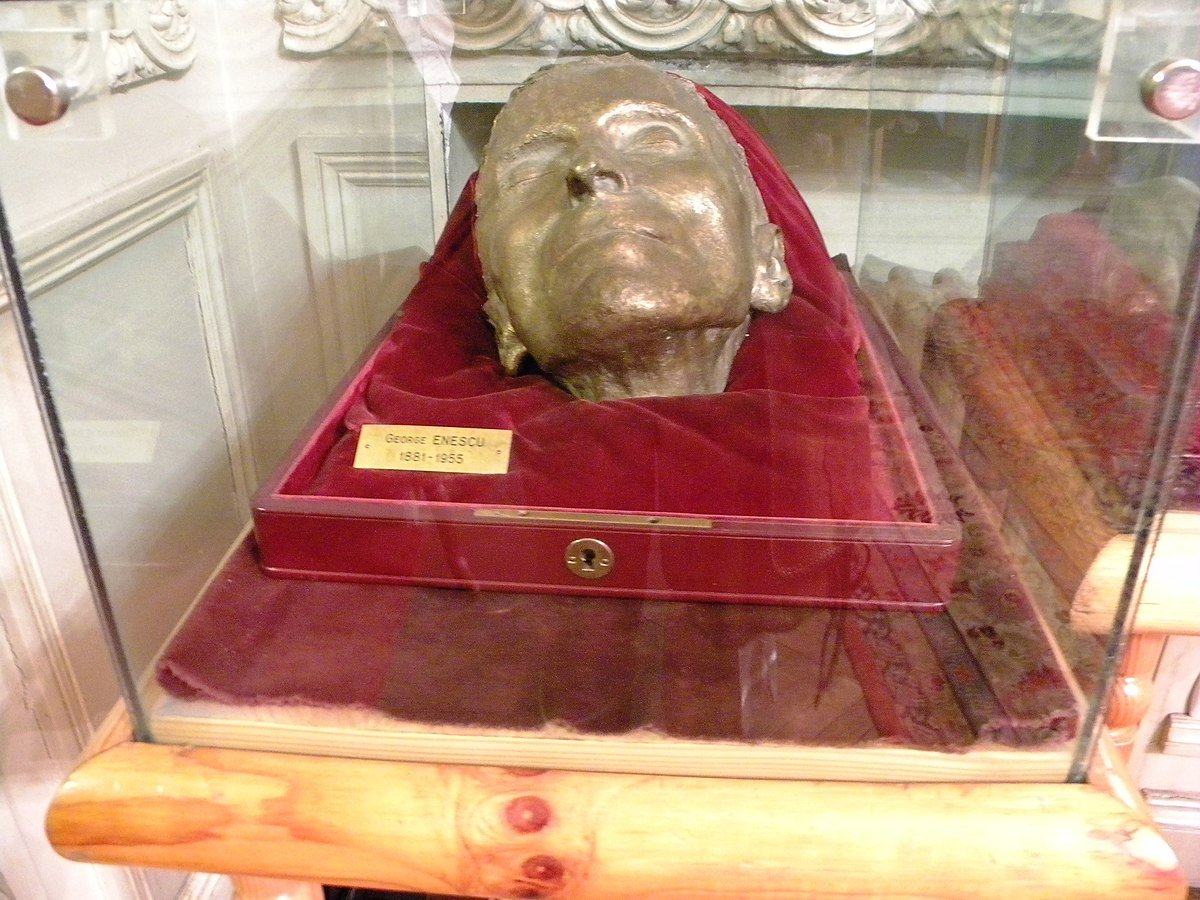
    There’s always something a little morbid about these casts of famous musicians’ hands. Aren’t the death masks enough?

    Oh, wait a minute. They’ve got one of those, too…

    These are the hands of George Enescu, on display at the George Enescu National Museum in Bucharest.

    Granted, while they were alive, the appendages that served as models were extraordinary, as were the synapses that fired inside the head that yielded the mask. Enescu was Romania’s most celebrated musician – as violinist, pianist, conductor, and composer a quadruple threat – a child prodigy who would also one day excel as a teacher.

    At the age of seven, Enescu became the youngest student ever to be admitted to the Vienna Conservatory. He graduated before his 13th birthday. From there, he went to Paris and embarked on a charmed career with too many highlights to detail here. Pablo Casals, described him as “the greatest musical phenomenon since Mozart.”

    He composed his biggest hit, the Romanian Rhapsody No. 1 (1901), at the age of 19. So popular did it prove that it became a kind of millstone to Enescu. People didn’t want to hear anything else. They still don’t!

    On Enescu’s birthday, I hope you’ll find these links “handy,” and that you’ll take a few minutes to sample some of his other music.


    A lovely piece for a summer’s day, the Decet for Winds (1906)

    A live performance of Enescu’s first published piece, the “Romanian Poem” (1898), written when he was only 16:

    Concert Overture on Popular Romanian Themes (1948)

    Enescu plays his own Violin Sonata No. 3 (1926), with legendary Romanian pianist Dinu Lipatti:

    Lipatti plays Enescu’s Piano Sonata No. 3 (1933-35)

    Symphonie Concertante for Cello and Orchestra (1901)

    The visionary Symphony No. 3, with choral finale (1916-18; rev. 1921-51)

  • Beyond Romanian Rhapsody Discover Enescu’s Genius

    Beyond Romanian Rhapsody Discover Enescu’s Genius

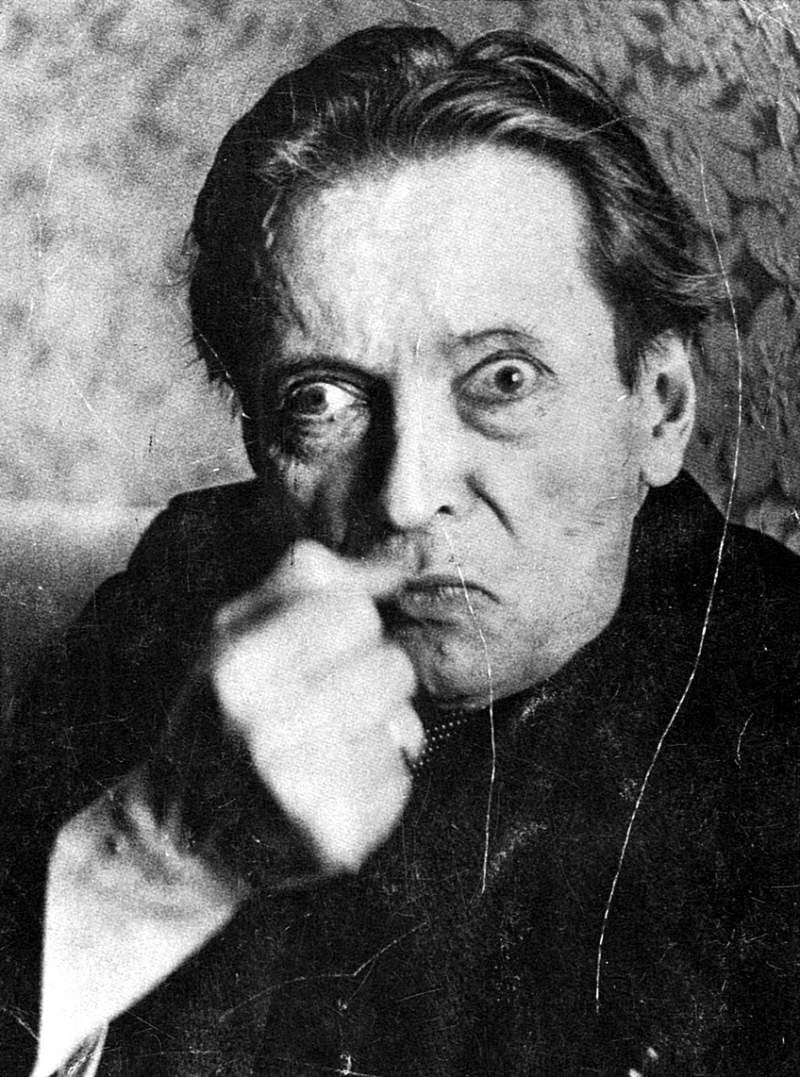
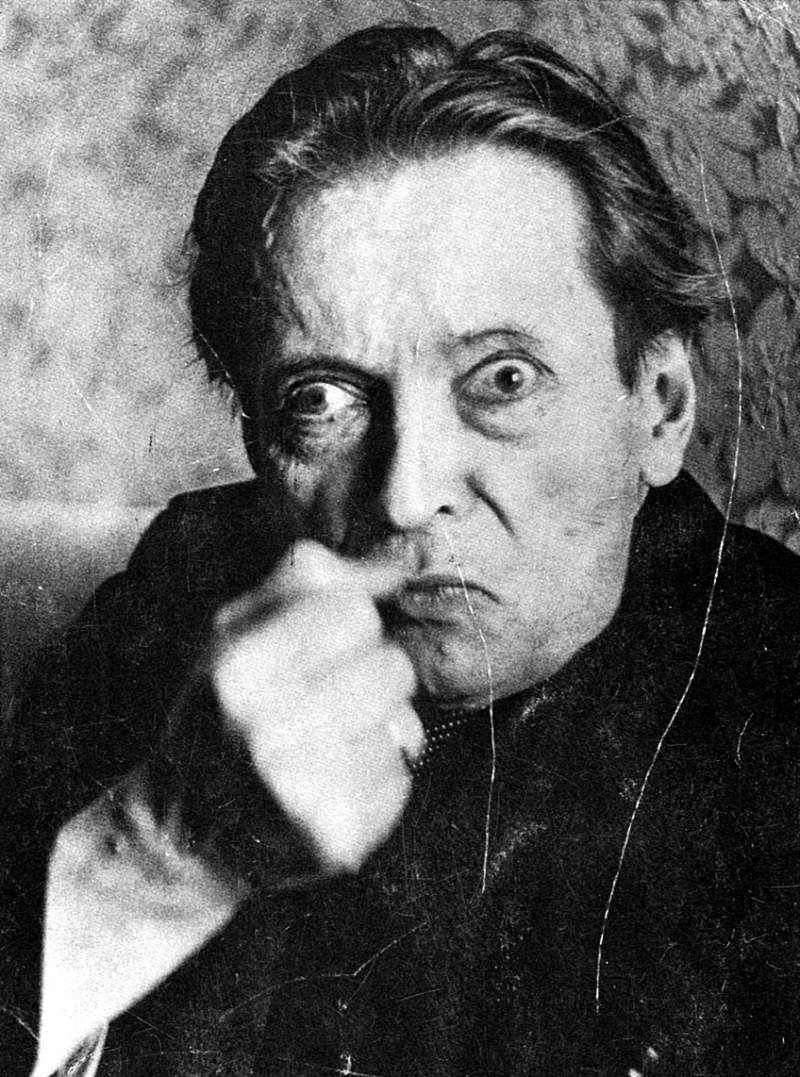
    Why exactly is composer George Enescu apoplectic? Because, still, 66 years after his death, all we ever hear is his Romanian Rhapsody No. 1.

    Enescu (1881-1955), arguably Romania’s greatest musical export, was a child prodigy who excelled also as a violinist, a pianist, a conductor, and a teacher. At the age of seven, he became the youngest student ever to be admitted to the Vienna Conservatory. He graduated before his 13th birthday. From there, he went to Paris and embarked on a charmed career with too many highlights to detail here. Pablo Casals, described him as “the greatest musical phenomenon since Mozart.”

    He composed his biggest hit, the Romanian Rhapsody No. 1 (1901), at the age of 19. So popular did it prove that it became a kind of millstone to Enescu. People didn’t want to hear anything else. They still don’t!

    On Enescu’s birthday, give the gift of an open mind and take a few minutes to sample some of his other music!


    A lovely piece for a summer’s day, the Decet for Winds (1906)

    A live performance of Enescu’s first published piece, the “Romanian Poem” (1898), written when he was only 16:

    Concert Overture on Popular Romanian Themes (1948)

    Enescu plays his own Violin Sonata No. 3 (1926), with legendary Romanian pianist Dinu Lipatti:

    Lipatti plays Enescu’s Piano Sonata No. 3 (1933-35)

    Symphonie Concertante for Cello and Orchestra (1901)

    The visionary Symphony No. 3, with choral finale (1916-18; rev. 1921-51)

  • Enescu’s Delightful “Dixtuor” at Marlboro

    Enescu’s Delightful “Dixtuor” at Marlboro

    George… GEORGE! Do you want your face to stay that way?

    If George Enescu is itching for a fight, it’s nowhere in evidence in his delightful “Dixtuor.” The work – scored for ten wind instruments, as its title suggests – can be heard on this evening’s “Music from Marlboro” broadcast.

    We’ll enjoy a 1978 performance by a “who’s who” of fabulous Marlboro wind players, including flutists Carol Wincenc and Julia Bogorad, oboist Rudolph Vrbsky, English hornist Gerard Reuter, clarinetists David Krakauer and Yehuda Hanani, bassoonists Kim Walker and Alexander Heller, and French hornists David Jolley and Meir Rimon, all under the direction of Marlboro co-founder Marcel Moyse.

    Perhaps Enescu is miffed that Marlboro musicians have elected to play Béla Bartók’s String Quartet No. 4 as the centerpiece of their upcoming tour. The first of this year’s Marlboro tours will take place from November 11 to November 18, with stops within our listening area – in New York City, at Weill Recital Hall in Carnegie Hall, on November 12, and in Philadelphia, at the American Philosophical Society, on November 14, presented by the Philadelphia Chamber Music Society. The tour will also feature two works by Antonín Dvořák: his Piano Trio in F minor, Op. 65, and the Miniatures, Op. 75a. Learn more and find a complete schedule at marlboromusic.org.

    Tonight’s broadcast will open with a 2016 performance of Bartók’s quartet, played by violinists Robyn Bollinger and Soovin Kim, violist Hwayoon Lee, and cellist Tony Rymer.

    It’s understandable that Enescu might be a little jealous. The quartet, composed in Budapest in 1928, when Bartók was in his mid-40s and at the height of his mastery, displays a striking, five movement, “arched” structure, and is full of unusual sonorities – rhythmic sforzandi (notes played with strong, sudden emphasis), passages performed on muted strings, passages performed without vibrato (the rapid oscillation on a sustained tone used for added warmth and expressivity), glissandi (sliding from note to note), and snap pizzicati (plucked strings slapping back against the instruments’ fingerboards).

    By contrast, Enescu’s “Dixtuor,” written in 1906, when the composer was in his mid-20s, is a much more relaxed-sounding work. However, its seemingly laid-back, almost rhapsodic disposition and seductive veneer disguise a carefully thought-out classical structure that makes it a kind of spiritual descendant of the 18th century divertimento. I think you’ll find it the perfect balm for the end of a long work day.

    Who needs anger management, when you’ve got access to great music-making from the legendary Marlboro Music School and Festival? Music hath charms to soothe the savage breast, this Wednesday evening at 6:00 EST, on WWFM – The Classical Network and wwfm.org.
    Marlboro School of Music and Festival: Official Page

  • Romania Mania Unearthing Musical Gems

    Romania Mania Unearthing Musical Gems

    For a country so steeped in music, George Enescu has done an awful lot of the heavy lifting. Regarded as Romania’s most gifted musical polymath, Enescu exploded onto the international scene at the age of 19 with his world famous “Romanian Rhapsody No. 1.” Perhaps even more impressive, his “Romanian Poem,” a half-hour expanse for chorus and orchestra, was composed four years earlier.

    But Enescu was also a gifted violin prodigy, a pianist, a conductor, and a notable teacher. Although we are exposed to a shamefully small proportion of his compositional output, at least much of it has been recorded, and his name is secure in the classical music pantheon. This Sunday night on “The Lost Chord,” we’ll look beyond Enescu to hear music by three of his compatriots, only one of whom managed to achieve a reputation beyond the borders of his homeland.

    George Stephănescu (1843-1925) was an important figure in the development of Romanian opera. He founded the nation’s first opera company in 1885. He is also credited with having composed the first Romanian symphony. Stephănescu conducted at the National Theater and taught at the Bucharest Academy of Music. His “National Overture” of 1876 reflects his patriotic concerns.

    By contrast, György Ligeti (1923-2006) was destined generally to be a bit of an outlier. Born into a Jewish family in an ethnically Hungarian region of Transylvania, Ligeti went on to become one of the most important composers of his generation, but much of his music is in a style which would be deemed “avant-garde.” But he also had his playful side. In 1951, he wrote his “Concert românesc” (“Romanian Concerto”), a wholly accessible and little-known work based on actual Romanian folk tunes that he had studied at the Folklore Institute in Bucharest. Despite this being one of his most overtly delightful works, the piece was banned after a single rehearsal in Bucharest and was not heard publicly until 1971. “Totalitarian regimes do not like dissonances,” he observed ruefully.

    Finally, Paul Constantinescu (1909-1963) was part of a generation of Romanian composers who came of age in the shadow of Enescu. He composed in most musical forms: opera, ballet, oratorio, incidental music, symphonic, chamber and choral music, and music for film, yet he remains little-known in the West. His concertante output includes works for violin, cello, piano and harp, in addition to a concerto for string orchestra. We’ll hear Constantinescu’s Piano Concerto, from 1952.

    I hope you’ll join me for this neglected music from Southeast Europe. That’s “Romania Mania,” this Sunday night at 10:00 EDT, on WWFM – The Classical Network and wwfm.org.

Tag Cloud

Aaron Copland (92) Beethoven (94) Composer (114) Film Music (117) Film Score (143) Film Scores (255) Halloween (94) John Williams (185) KWAX (228) Leonard Bernstein (99) Marlboro Music Festival (125) Movie Music (132) Opera (197) Philadelphia Orchestra (86) Picture Perfect (174) Princeton Symphony Orchestra (106) Radio (86) Ralph Vaughan Williams (85) Ross Amico (244) Roy's Tie-Dye Sci-Fi Corner (290) The Classical Network (101) The Lost Chord (268) Vaughan Williams (99) WPRB (396) WWFM (881)

DON’T MISS A BEAT

Receive a weekly digest every Sunday at noon by signing up here


RECENT POSTS