“Viva VERDI!” – the cry of Italian patriots on the eve of unification.
Italy of the 1850s was but a conglomerate of individual states, many of them still under foreign rule. The slogan “Viva VERDI!” was coined in 1859, following the premiere of the composer’s politically sensitive opera “Un ballo in maschera.”
Verdi’s ongoing troubles with the censors are well-known. It’s a safe bet that when he undertook an opera about a political assassination, he had a pretty good idea what to expect. The name VERDI was taken up by firebrands of the Risorgimento as an acronym for “Vittorio Emanuele, Re D’Italia.” King Vittorio Emanuele II of Piedmont was seen by many as the best hope for a free and united Italy.
This week on “The Lost Chord,” we’ll refrain for delving too much into Italy’s Second War for Independence, or of Garibaldi’s struggles with the Bourbons. Instead, we’ll enjoy examples of MUSICAL unification – various composers of Italian origin coming together to attempt cohesive works of art.
There are those who believe the serenata “Andromeda Liberata” may have been composed entirely by Antonio Vivaldi – but perhaps not. The likely impetus for its creation was the return to Rome of one Cardinal Ottobone, who was also a patron of both Arcangelo Corelli and Alessandro Scarlatti.
The story is that of Perseus and Andromeda. Andromeda has already been rescued from the sea serpent at the start of the piece, which mostly explores the ambiguous feelings of its characters, with a few extraneous love interests tossed into the mix to provide romantic conflict.
The two-hour entertainment contains in its second part a single aria known definitively to have been composed by Vivaldi. The authorship of the rest remains in doubt. The long-lost manuscript, dating from 1726, was rediscovered as recently as 2002.
In 1868, Verdi’s great operatic predecessor, the long-retired Gioachino Rossini, died. Rossini had completed his last opera nearly forty years before. Verdi undertook to bring together 12 of his contemporaries, now largely forgotten. The oldest, Carlo Coccia, at age 87, was actually a decade Rossini’s senior!
Within the year, a collaborative mass was compiled in Rossini’s memory, for which Verdi provided the concluding “Libera me.” In fact, the music looks forward to Verdi’s own masterful Requiem. The completed work doesn’t attain anywhere near the lofty heights of Verdi’s solo run. However, it’s an interesting compendium of contemporary styles, and even the music of lesser talents serves to cast Verdi’s genius in a new light.
Remarkably, the work lay unperformed in Verdi’s lifetime. Talk about politics! Here was Verdi, a Milanese, trying to kindle some sort of enthusiasm in Bologna (the location of Rossini’s earliest successes), for a project which was to bring together a bunch of compositional dinosaurs, to salute a figure who, for all intents and purposes, had retired from public life some four decades earlier. Bologna at the time was in the process of becoming a stronghold of the musical avant-garde.
All these factors, along with puzzling stipulations, such as the work being locked away after its first performance, to be trotted out only on special occasions, doomed the project virtually from the start. It remained unheard for another 120 years, resurrected only in 1988.
Roll over, Verdi; tell Rossini the news!
That’s “Viva VERDI!” (for Verdi’s birthday) – Italian unification through music – on “The Lost Chord,” now in syndication on KWAX Classical Oregon!
________________________________________
Clip and save the start times for all three of my recorded shows:
PICTURE PERFECT, the movie music show – Friday at 8:00 PM EDT/5:00 PM PDT
SWEETNESS AND LIGHT, the light music program – Saturday at 11:00 AM EDT/8:00 AM PDT (***now with a repeat Sunday at 9:00 PM EDT/6:00 PM PDT***)
THE LOST CHORD, unusual and neglected rep – Saturday at 7:00 PM EDT/4:00 PM PDT
Stream them, wherever you are, at the link!
https://kwax.uoregon.edu/
Tag: Giuseppe Verdi
-
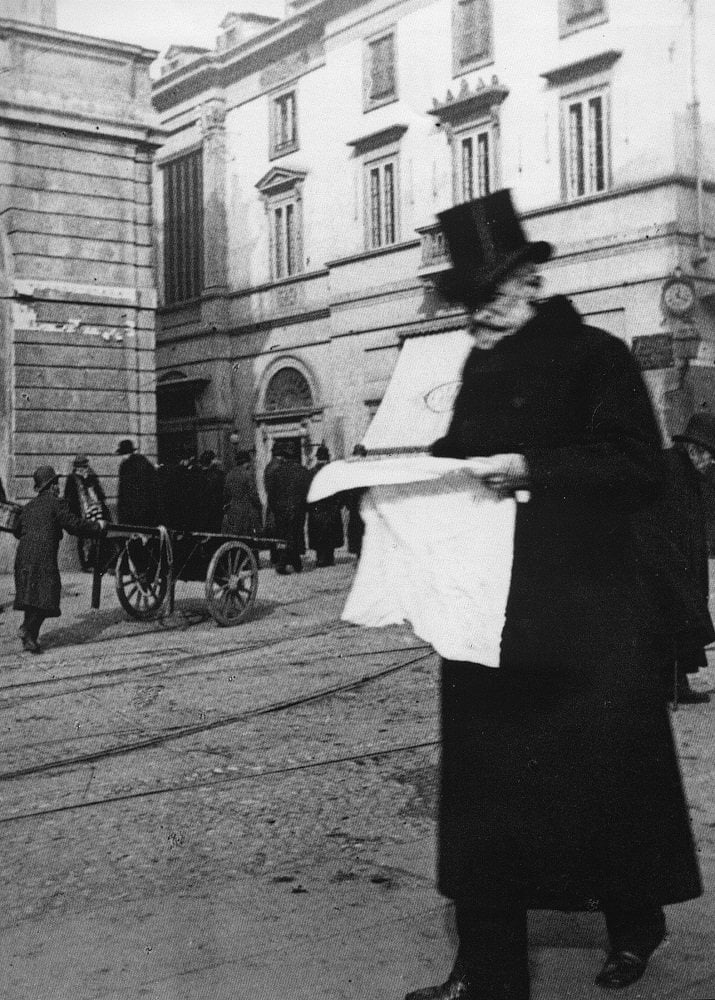
“The Lost Chord”: Roll Over, Verdi; Tell Rossini the News!
-

Verdi’s Aida Birthday and a Hater’s Refund
Today is the birthday of Giuseppe Verdi – Italian for “Joe Green.”
One of his most famous works, of course, is that grandest of grand operas, “Aida.” Its first staging in Cairo in 1871 included a dozen pachyderms and fifteen camels into the bargain. A dramatic spectacle of star-crossed love in Ancient Egypt, it created a sensation among the opening night audience of dignitaries, politicians, and critics.
Verdi himself did not attend the premiere and disliked the fact that the performance was not open to the general public. He was much happier when it was presented for the Italian people on his native soil.
Of course, anyone who’s ever dealt with the public understands that no success is unalloyed.
One day Verdi received a letter, by way of his publisher, from a dissatisfied customer by the name of Prospero Bertani. Bertani had traveled to Parma to attend a production of “Aida” in 1872.
Bertani confided to the composer, “I admired the scenery… I listened with pleasure to the excellent singers, and took pains to let nothing escape me. After it was over, I asked myself whether I was satisfied. The answer was ‘no’.”
In fact, he disliked “Aida” so much, he felt compelled to sit through it a second time, just to make sure he wasn’t missing something.
The letter continues, “The opera contains absolutely nothing thrilling or electrifying. If it were not for the magnificent scenery, the audience would not sit through it.”
Bertani went on to include the cost of admission, travel expenses, and the price of his meals, and demanded a full refund from the composer.
This amused Verdi. After a moment’s reflection, he instructed his publisher to reimburse Bertani, but not to pay for his meals. Verdi responded, “…To pay for his dinner too? No! He could very well have eaten at home!”
Happy birthday, Mean Joe Green.
No elephants in this “Aida,” but certainly plenty of spectacle
-
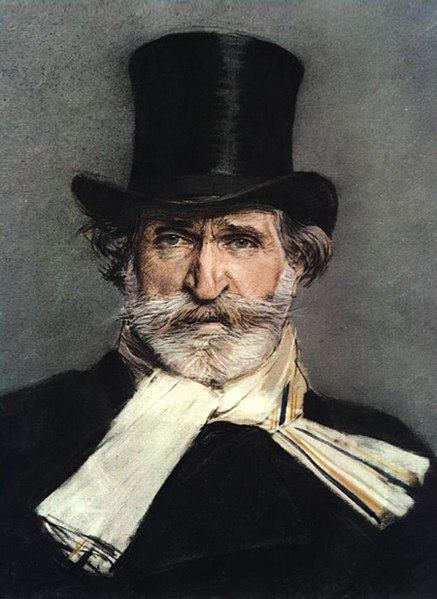
Viva Verdi Italy’s Musical Unification
“Viva VERDI!” – the cry of Italian patriots on the eve of unification.
Italy of the 1850s was but a conglomerate of individual states, many of them still under foreign rule. The slogan “Viva VERDI!” was coined in 1859, following the premiere of the composer’s politically sensitive opera “Un ballo in maschera.”
Verdi’s ongoing troubles with the censors are well-known. It’s a safe bet that when he undertook an opera about a political assassination, he had a pretty good idea what to expect. The name VERDI was taken up by firebrands of the Risorgimento as an acronym for “Vittorio Emanuele, Re D’Italia.” King Vittorio Emanuele II of Piedmont was seen by many as the best hope for a free and united Italy.
This Sunday night on “The Lost Chord,” we’ll refrain for delving too much into Italy’s Second War for Independence, or of Garibaldi’s struggles with the Bourbons. Instead, we’ll enjoy examples of MUSICAL unification – various composers of Italian origin coming together to attempt cohesive works of art.
There are those who believe the serenata “Andromeda Liberata” may have been composed entirely by Antonio Vivaldi – but perhaps not. The likely impetus for its creation was the return to Rome of one Cardinal Ottobone, who was also a patron of both Arcangelo Corelli and Alessandro Scarlatti.
The story is that of Perseus and Andromeda. Andromeda has already been rescued from the sea serpent at the start of the piece, which mostly explores the ambiguous feelings of its characters, with a few extraneous love interests tossed into the mix to provide romantic conflict.
The two-hour entertainment contains in its second part a single aria known definitively to have been composed by Vivaldi. The authorship of the rest remains in doubt. The long-lost manuscript, dating from 1726, was rediscovered as recently as 2002.
In 1868, Verdi’s great operatic predecessor, the long-retired Gioachino Rossini, died. Rossini had completed his last opera nearly forty years before. Verdi undertook to bring together 12 of his contemporaries, now largely forgotten. The oldest, Carlo Coccia, at age 87, was actually a decade Rossini’s senior!
Within the year, a collaborative mass was compiled in Rossini’s memory, for which Verdi provided the concluding “Libera me.” In fact, the music looks forward to Verdi’s own masterful Requiem. The completed work doesn’t attain anywhere near the lofty heights of Verdi’s solo run. However, it’s an interesting compendium of contemporary styles, and even the music of lesser talents serves to cast Verdi’s genius in a new light.
Remarkably, the work lay unperformed in Verdi’s lifetime. Talk about politics! Here was Verdi, a Milanese, trying to kindle some sort of enthusiasm in Bologna (the location of Rossini’s earliest successes), for a project which was to bring together a bunch compositional dinosaurs, to salute a figure who, for all intents and purposes, had retired from public life some four decades earlier. Bologna at the time was in the process of becoming a stronghold of the musical avant-garde.
All these factors, along with puzzling stipulations, such as the work being locked away after its first performance, to be trotted out only on special occasions, doomed the project virtually from the start. It remained unheard for another 120 years, resurrected only in 1988.
I hope you’ll join me for “Viva VERDI!” – Italian unification through music – this Sunday night at 10:00 EDT, on WWFM – The Classical Network and wwfm.org.
-

Friday the 13th Music for Unlucky Composers
Suffering from triskaidekaphobia? Join me on this Friday the 13th for music by composers who were afflicted with extraordinary bad luck.
Jean-Baptiste Lully, also an accomplished dancer, injured his toe while pounding the floor with a heavy stick to mark time; the resultant infection killed him. Anton Webern violated curfew when he snuck out on his porch for a smoke and was shot by an American soldier. Ernest Chausson lost control of his bicycle and fatally slammed into a brick wall. Fire tore through Geirr Tveitt’s cabin and destroyed four-fifths of his compositional output, driving him to alcoholism. Friedrich Kuhlau blinded himself when he fell on a bottle at the age of seven; later, he died of complications after being left out in the cold all night as his house burned to the ground. Charles-Valentin Alkan was reaching for a copy of the Talmud, located on a high shelf, when the bookcase toppled, crushing him. Henry Purcell developed pneumonia after his wife locked him out of the house for coming home late after one too many pub crawls. Alexander Scriabin died of a septic carbuncle. Tchaikovsky drank cholera-contaminated water. Jean-Marie Leclair was found murdered in his room. Alessandro Stradella was set upon by unidentified assassins.
None of these misfortunes occurred on Friday the 13th. Toss some salt over your shoulder and sit back and enjoy, this Friday from 4 to 6 p.m. EDT, on WWFM – The Classical Network and wwfm.org. And then stick around for a good luck charm forged by wizards and sorcerers on “Picture Perfect,” music for the movies, at 6.
BONUS! Read about Giuseppe Verdi and the Evil Eye:
http://www.classicfm.com/composers/verdi/guides/verdis-curse-evil-eye/
-
Columbus Verdi Creston Salute
It’s a great day for Italians. Not only is it Columbus Day, it’s also the anniversary of the births of Giuseppe Verdi and American composer Giuseppe Guttoveggio (better known as Paul Creston). Tune in this afternoon for music honoring all three, in addition to Vernon Duke, from 4 to 7 EDT, on WWFM – The Classical Network and at wwfm.org.
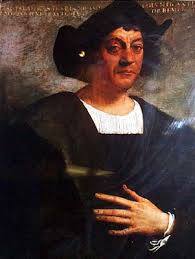
Sons of Italy (clockwise from left): Columbus, Creston and Verdi
Tag Cloud
Aaron Copland (94) Beethoven (95) Composer (114) Film Music (148) Film Score (143) Film Scores (255) Halloween (97) John Williams (196) KWAX (232) Leonard Bernstein (105) Marlboro Music Festival (125) Movie Music (163) Mozart (91) Opera (215) Philadelphia Orchestra (90) Picture Perfect (174) Princeton Symphony Orchestra (110) Radio (90) Ross Amico (244) Roy's Tie-Dye Sci-Fi Corner (290) The Classical Network (101) The Lost Chord (269) Vaughan Williams (107) WPRB (397) WWFM (881)