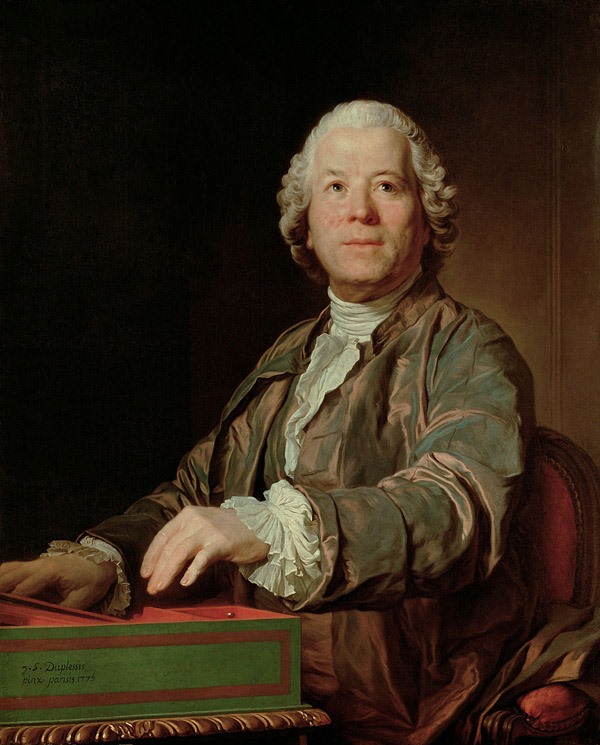
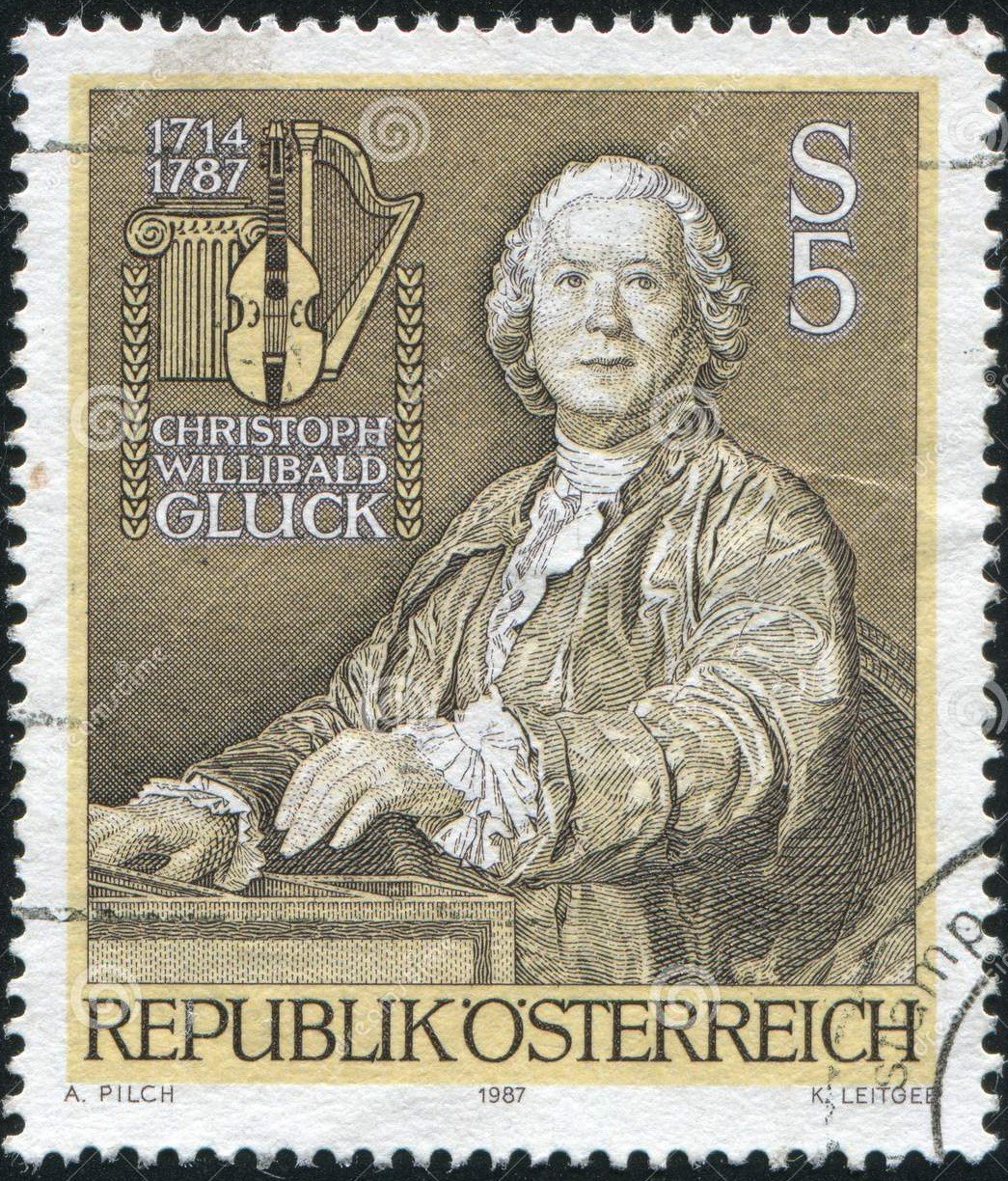
On the anniversary of the birth of Christoph Willibald Gluck (on this date in 1714), here’s Interesting filmed production of his most famous opera, “Orfeo ed Euridice,” complete with Orpheus’ wake-up routine – bereft musicians should not leave home without laurels and lyre – periwigged orchestra and “thanks, Mean Joe” epilogue honoring the emotional truth of the mythological tale while undercutting the composer’s happy ending. American countertenor Bejun Mehta sings Orfeo, Austrian soprano Eva Liebau sings Euridice, and Václav Luks conducts Collegium 1704.
The opera was filmed at the Baroque Theater of Český Krumlov Castle (every castle should have one) in the South Bohemian Region of the Czech Republic. The theater dates from 1767, within five years of the opera’s first performance (at the Burgtheater in Vienna in 1762). Gluck revised the work twelve years later, the better to suit the taste of Parisian audiences.
The opera’s naturalistic expression and dramatic simplicity, with its rejection of the formulaic – ornamental arias interleaved with recitative and scene changes – proved highly influential. Here, the arias subvert formula and avoid grandstanding, serving a coherent drama, with an emphasis on sustained mood (melancholy) and poetry, as opposed to by-the-numbers fiery passions and vocal acrobatics.
Gluck’s reforms, which would have been perceived as radical, pissing off showboating singers of the day and confusing, perhaps even frustrating, audience expectations, influenced sympathetic composers from Mozart to Weber, from Berlioz to Wagner.
I’ve been reading Berlioz’s “Evenings with the Orchestra” in preparation for next month’s Bard Music Festival. (“Hector Berlioz and His World” is the focus. You’ll find more information at a link at the bottom of this post.) The book is a loose collection of tales, anecdotes, and observations shared among bored musicians in the pit over 25 nights of opera performances. Many of the operas and composers come in for Berlioz’s satiric barbs. One of the few exceptions is Christoph Willibald Gluck. In fact, about two thirds of the way through, a Gluck festival becomes the focus of some bizarre sci-fi reflection – complete with air ships – set in the year 2344. The book was written in 1852. Berlioz always was a visionary and quirky fellow!
I’m sure I will offer further impressions of the book in the coming days. For my purposes this morning, I am merely using it as prelude to celebrate the anniversary of Gluck’s birth, on this date in 1714.
We are forever hearing about Christoph Willibald Gluck – if we hear about him at all, that is – as his being a reformer, and in truth his influence on the future of opera was incalculable. He shunned floridity for its own sake. Despite his evident love of nature (at least once, he had his piano carried out to a field), he was not a sensualist. He rebelled against the superficial effects of “opera seria,” with its showy arias ornamented beyond recognition by star castrati, to arrive at something closer to naturalism.
With Gluck, words and music bore equal weight. Drama was of the foremost importance. He tossed out the dry recitative to create a more continuous flow in the action. Performers took a back seat to emotional truth. The effect was kind of a chaste grandeur, simplicity at the service of theatrical power. Works such as “Orfeo ed Euridice” and “Alceste” were radical for their time.
Gluck’s influence runs through Mozart to Weber, Berlioz, and Wagner. Yet today his works are less frequently performed than those of any of his followers. In fact, of his dozens of operas (about 35 survive), he’s pretty much remembered by your average classical music Joe for but a single work, “Orfeo ed Euridice” – especially the “Dance of the Blessed Spirits.” Think you don’t know it? Click here:
On the other side of the coin is his “Dance of the Furies.” I wonder if Gluck would find the diablerie of this interpretation as intriguing as I do?
Also from “Orfeo,” Dame Janet Baker sings “Che farò senza Euridice?”
Here’s Wagner’s arrangement of the overture to Gluck’s “Iphigénie en Tauride,” conducted by Otto Klemperer:
The overture will be performed in Wagner’s arrangement on an August 10 concert at this year’s Bard Music Festival, “Hector Berlioz and His World,” to be held at Bard College in Annandale-on-Hudson, NY, August 9-18. You’ll find more information here:
Berlioz was notably ambivalent about the artistry of another successful opera composer, Giacomo Meyerbeer. As preamble to the festival, and as part of its broader “SummerScape” celebration of the arts, Bard will present Meyerbeer’s rarely-staged “La prophète,” in its first U.S. production in 47 years, July 26-August 1.
“There are two supreme gods in the art of music: Beethoven and Gluck. The former’s realm is that of infinite thought, the latter’s that of infinite passion; and though Beethoven is far above Gluck as a musician, there is so much of each in the other that these two Jupiters form a single god, and all we can do is to lose ourselves in admiration and respect for him.” – Hector Berlioz
Learn more about Gluck in “Gluck the Reformer” (featuring John Eliot Gardiner, William Christie and others) here:
Christoph Willibald Gluck has come down to us as one the great operatic reformers. Yet, of his dozens of operas (about 35 survive), he’s pretty much remembered for but a single work, “Orfeo ed Euridice” – especially the “Dance of the Blessed Spirits.”
On the other side of the coin is his “Dance of the Furies.” I wonder if he would find the diablerie of this interpretation as intriguing as I do.
Think you don’t know the “Dance of the Blessed Spirits?” Click here!
Gluck’s own blessed spirit lives on primarily through his influence on others – Mozart, Weber, Berlioz, and Wagner. For Gluck, words and music were to bear equal weight. No more, the florid, showy arias of yore, ornamented beyond recognition by star castrati. DRAMA was to be of foremost importance.
Dame Janet Baker sings “Che farò senza Euridice?”:
Don’t be sad, Gluck. “Glück” is German for happiness!
Happy birthday, Christoph. Zum Geburtstag viel Glück!