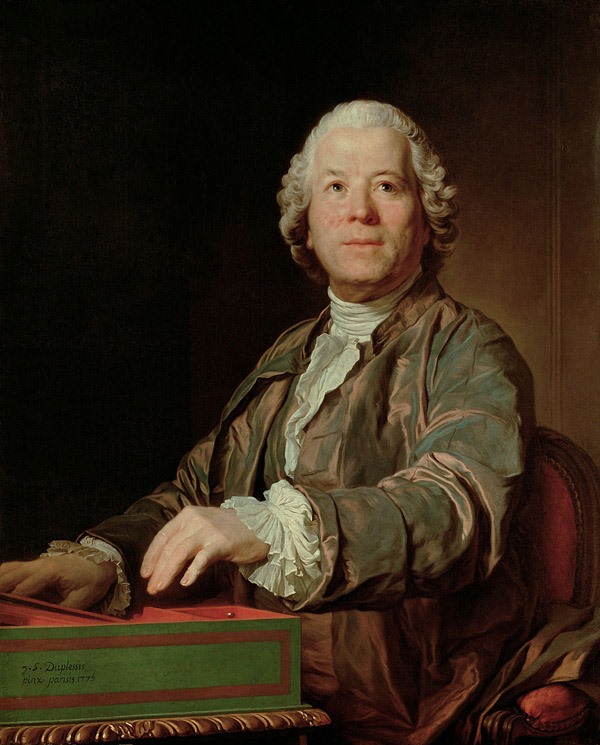
On the anniversary of the birth of Christoph Willibald Gluck (on this date in 1714), here’s Interesting filmed production of his most famous opera, “Orfeo ed Euridice,” complete with Orpheus’ wake-up routine – bereft musicians should not leave home without laurels and lyre – periwigged orchestra and “thanks, Mean Joe” epilogue honoring the emotional truth of the mythological tale while undercutting the composer’s happy ending. American countertenor Bejun Mehta sings Orfeo, Austrian soprano Eva Liebau sings Euridice, and Václav Luks conducts Collegium 1704.
The opera was filmed at the Baroque Theater of Český Krumlov Castle (every castle should have one) in the South Bohemian Region of the Czech Republic. The theater dates from 1767, within five years of the opera’s first performance (at the Burgtheater in Vienna in 1762). Gluck revised the work twelve years later, the better to suit the taste of Parisian audiences.
The opera’s naturalistic expression and dramatic simplicity, with its rejection of the formulaic – ornamental arias interleaved with recitative and scene changes – proved highly influential. Here, the arias subvert formula and avoid grandstanding, serving a coherent drama, with an emphasis on sustained mood (melancholy) and poetry, as opposed to by-the-numbers fiery passions and vocal acrobatics.
Gluck’s reforms, which would have been perceived as radical, pissing off showboating singers of the day and confusing, perhaps even frustrating, audience expectations, influenced sympathetic composers from Mozart to Weber, from Berlioz to Wagner.
You might say, they was all shook by Gluck.
Happy birthday, C.W.G.!
Leave a Reply