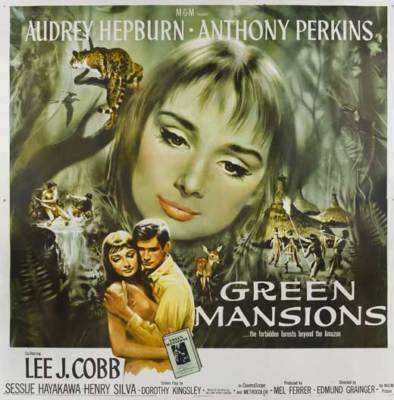
Tag: Green Mansions

  • Villa-Lobos’s Amazonian Hollywood Tale

    Villa-Lobos’s Amazonian Hollywood Tale

    When Heitor Villa-Lobos was contracted by M-G-M to write music for a big screen adaptation of W.H. Hudson’s novel “Green Mansions” (1959), expectations ran high on both sides. The Brazilian master began immediately, diving into the project with characteristic gusto. After all, he had been writing music inspired by the rain forest for his entire career.

    Unfortunately, he had very little affinity for the practicality of the filmmaking process, turning in musical impressions of scenes from the book. The studio was befuddled. Since Villa-Lobos was unable to adapt to the customary way of doing things, he was replaced by M-G-M house composer Branislau Kaper, who used the Villa-Lobos material as a springboard for his own dramatic conception. The result is part Villa-Lobos, part Kaper, and all M-G-M gloss.

    Villa-Lobos was a little embittered by his Hollywood experience. He promptly assembled a multi-movement symphonic poem, “Forest of the Amazon” (1958), some 75 minutes in length, which employed his rejected sketches. He made a recording of 45 minutes of the music in 1959, for which the soprano Bidu Sayão came out of retirement.

    This week on “Picture Perfect,” we’ll have selections from both versions of “Green Mansions,” as well as from the Mayan adventure “Kings of the Sun” (1963), composed by Elmer Bernstein, and “The Night of the Mayas” (1939), by Mexican composer Silvestre Revueltas.

    I hope you’ll join me for cinematic evocations of the indigenous peoples of Latin America, on “Picture Perfect,” music for the movies, now in syndication on KWAX, the radio station of the University of Oregon!


    Clip and save the start times for all three of my recorded shows:

    PICTURE PERFECT, the movie music show – Friday at 8:00 PM EDT/5:00 PM PDT

    SWEETNESS AND LIGHT, the light music program – Saturday at 11:00 AM EDT/8:00 AM PDT

    THE LOST CHORD, unusual and neglected rep – Saturday at 7:00 PM EDT/4:00 PM PDT

    Stream them, wherever you are, at the link!

    https://kwax.uoregon.edu/


    PHOTO: The project that left Villa-Lobos feeling green around the gills

  • Villa-Lobos’s Hollywood Rainforest

    Villa-Lobos’s Hollywood Rainforest

    When Heitor Villa-Lobos was contracted by M-G-M to write music for a big screen adaptation of W.H. Hudson’s novel “Green Mansions” (1959), expectations ran high on both sides. The Brazilian master began immediately, diving into the project with characteristic gusto. After all, he had been writing music inspired by the rainforest for his entire career.

    Unfortunately, he had very little affinity for the practicality of the filmmaking process, turning in musical impressions of scenes from the book. The studio was befuddled. Since Villa-Lobos was unable to adapt to the customary way of doing things, he was replaced by M-G-M house composer Branislau Kaper, who used the Villa-Lobos material as a springboard for his own dramatic conception. The result is part Villa-Lobos, part Kaper, and all M-G-M gloss.

    Villa-Lobos was a little embittered by his Hollywood experience. He promptly assembled a multi-movement symphonic poem, “Forest of the Amazon” (1958), some 75 minutes in length, which employed his rejected sketches. He made a recording of 45 minutes of the music in 1959, for which the soprano Bidu Sayão came out of retirement.

    This week on “Picture Perfect,” we’ll hear selections from both versions of “Green Mansions,” as well as from the Mayan adventure “Kings of the Sun” (1963), by Elmer Bernstein, and “La noche de los Mayas” (“The Night of the Mayas,” 1939), by Mexican composer Silvestre Revueltas.

    If you can’t beat the heat, join it! It’s an hour of tropical inspirations from films centered on the indigenous peoples of Latin America, on “Picture Perfect,” music for the movies, now in syndication on KWAX, the radio station of the University of Oregon!


    Clip and save the start times for all three of my recorded shows:

    PICTURE PERFECT, the movie music show – Friday at 8:00 PM EDT/5:00 PM PDT

    SWEETNESS AND LIGHT, the light music program – ALL NEW! – Saturday at 11:00 AM EDT/8:00 AM PDT

    THE LOST CHORD, unusual and neglected rep – Saturday at 7:00 PM EDT/4:00 PM PDT

    Stream them, wherever you are, at the link!

    https://kwax.uoregon.edu/


    PHOTO: The project that left Villa-Lobos feeling green around the gills

  • Yma Sumac Queen of Exotica at 100

    Yma Sumac Queen of Exotica at 100

    Peruvian soprano Yma Sumac was born 100 years ago today. Marketed as an Incan princess (an assertion supported by the Peruvian government), Sumac possessed a preternatural five-octave range. That’s a Guinness record.

    She was a pioneer in the world music genre, dubbed the Queen of Exotica. At times, she emulated bird song, at others she sounded like a didgeridoo. She attributed her extraordinary range to having been reared in the Andes, where the high altitude caused her to develop her exceptional lung power.

    She was certainly one of a kind. I imagine her as having stepped out of the pages of W.H. Hudson’s “Green Mansions.”

    Here, she sings “Chuncho” (“The Forest Creatures”), from 1954, by her husband, Moisés Vivanco.

    On June 25, 1953, Sumac appeared on a Lewisohn Stadium concert, conducted by Leonard Bernstein. The program included the Piano Concerto No. 4 by Heitor Villa-Lobos, with Bernardo Segall the soloist, Aaron Copland’s “Danzon Cubano,” and “Three Brazilian Dances” by Camargo Guarnieri, with Sumac performing works by Vivanco and others. Here, she’s like a human theremin as she lends her voice to Debussy’s “Clair de lune.”

    She appeared in “Secret of the Incas” with Charlton Heston, in 1954, a primary inspiration for “Raiders of the Lost Ark.”

    Decades later, in 1987, she appeared on “Late Night with David Letterman.”

    She received a late-career boost from the lounge revival of the 1990s, as her albums began to be reissued on compact disc. Her recording of “Ataypura” was used to introduce Ben Gazzara as Jackie Treehorn in the “The Big Lebowski.” (It’s the second song she sings at the “Secret of the Incas” link above).

    “Gopher Mambo,” from 1954, again by Vivanco, has been used many times, including at the 2018 Olympics.

    Sumac’s final concert appearance was at the Montreal Jazz Festival, on July 1, 1997, when she was 74 years-old. “The Peruvian Songbird” died in 2008 at the age of 86.

  • South American Film Scores Rózsa & Morricone

    South American Film Scores Rózsa & Morricone

    If you are a Miklós Rózsa fan, you’ll want to join me for this week’s “Picture Perfect,” as I dig deep into the archive for two contrasting scores to movies set in South America.

    Rózsa, who is probably best remembered for his work on Biblical and historical epics (he won his third Academy Award for “Ben Hur” in 1959) provides a lush symphonic tapestry for “Green Fire” (1954), starring Stewart Granger and Grace Kelly. Rózsa piles on the MGM gloss, for a conflict between love and lust for emeralds in the jungles of Colombia.

    Then we’ll hear perhaps Rózsa’s most unusual venture, “Crisis” (1950). “Crisis” stars Cary Grant and Jose Ferrer in the story of a brain surgeon who must weigh ethical considerations when faced with saving the life of a dictator who oppresses the people of an unnamed banana republic. Unusual for a composer who likes to swing for the fences, Rózsa set himself the limitations of writing for solo guitar.

    MGM must have felt it had scored a major coup when securing famed Brazilian composer Heitor Villa-Lobos to supply music for “Green Mansions” (1959). The big screen adaptation of W.H. Hudson’s novel, set in the rainforests of southeastern Venezuela, stars Audrey Hepburn as Rima the Bird Girl. Unfortunately, the studio deemed what Villa-Lobos produced unusable, since the composer had begun writing based on his impressions of the novel, rather than wait for the completed film. MGM house composer Bronislau Kaper was brought in to salvage what he could.

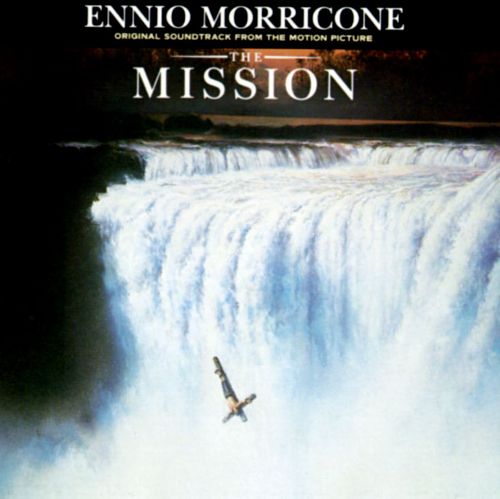
    Finally, we’ll turn to one of Ennio Morricone’s best-loved scores – that for “The Mission” (1986). “The Mission” stars Jeremy Irons, as a Jesuit priest who penetrates the South American jungle to convert the native Guarani to Christianity, and Robert DeNiro, as a reformed slave hunter. The lovely and moving “Gabriel’s Oboe” became a recognizable hit, thanks in particular to its use by figure skaters and Aer Lingus.

    This is the score for which Morricone believed he should have won the Oscar.

    I hope you’ll join me for these South American adventures this week, on “Picture Perfect” – music for the movies – this Friday evening at 6:00 EDT, on WWFM – The Classical Network and wwfm.org.

  • Villa-Lobos’s Lost Hollywood Dream

    Villa-Lobos’s Lost Hollywood Dream

    When Heitor Villa-Lobos was contracted by M-G-M to write music for a big screen adaptation of W.H. Hudson’s novel “Green Mansions” (1959), expectations ran high on both sides. The Brazilian master began immediately, diving into the project with characteristic gusto. After all, he had been writing music inspired by the rain forest for his entire career.

    Unfortunately, he had very little affinity for the practicality of the filmmaking process, turning in musical impressions of scenes from the book. The studio was befuddled. Since Villa-Lobos was unable to adapt to the customary way of doing things, he was replaced by MGM house composer Branislau Kaper, who used the Villa-Lobos material as a springboard for his own dramatic conception. The result is part Villa-Lobos, part Kaper, and all MGM gloss.

    Villa-Lobos was a little embittered by his Hollywood experience. He promptly assembled a multi-movement symphonic poem, “Forest of the Amazon” (1958), some 75 minutes in length, which employed his rejected sketches. He made a recording of 45 minutes of the music in 1959, for which the soprano Bidu Sayao came out of retirement.

    This week on “Picture Perfect,” we’ll have selections from both versions of “Green Mansions,” as well as from the Mayan adventure “Kings of the Sun” (1963), composed by Elmer Bernstein, and “The Night of the Mayas” (1939), by Mexican composer Silvestre Revueltas.

    I hope you’ll join me for cinematic evocations of the indigenous peoples of Latin America, this Friday evening at 6 EDT, on WWFM – The Classical Network and wwfm.org.


    PHOTO: The project that left Villa-Lobos feeling green around the gills
Tag Cloud

Aaron Copland (92) Beethoven (94) Composer (114) Film Music (116) Film Score (143) Film Scores (255) Halloween (94) John Williams (185) KWAX (228) Leonard Bernstein (99) Marlboro Music Festival (125) Movie Music (131) Opera (197) Philadelphia Orchestra (86) Picture Perfect (174) Princeton Symphony Orchestra (106) Radio (86) Ralph Vaughan Williams (85) Ross Amico (244) Roy's Tie-Dye Sci-Fi Corner (290) The Classical Network (101) The Lost Chord (268) Vaughan Williams (99) WPRB (396) WWFM (881)

DON’T MISS A BEAT

Receive a weekly digest every Sunday at noon by signing up here


RECENT POSTS