Tag: Grieg

  • Stravinsky Grieg Boulez Marlboro Music

    Stravinsky Grieg Boulez Marlboro Music

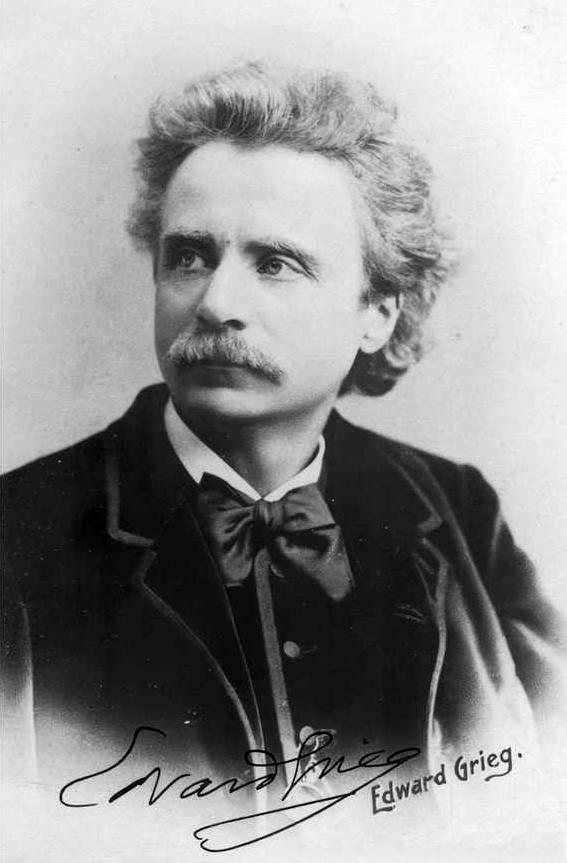
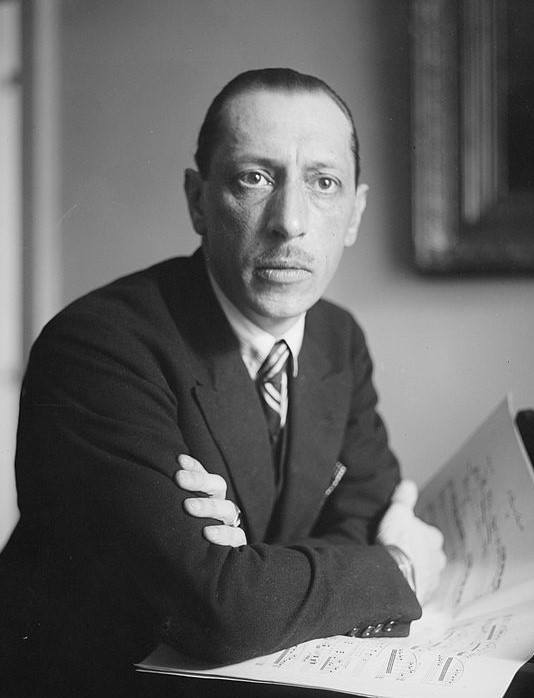
    When Igor Stravinsky unveiled his “Four Norwegian Moods” in 1945, Pierre Boulez was appalled. Stravinsky had been a kind of god to him. The young man had been dissecting the score to “The Rite of Spring” under Olivier Messiaen at the Paris Conservatory. That the Master who had revealed to the world the unvarnished brutality of “The Rite” had retreated to a pastiche of Edvard Grieg, of all people – it was unforgivable. Boulez and his classmates booed vigorously.

    Boulez must be spinning in his grave right now, as Stravinsky and Grieg will reunite for this week’s “Music from Marlboro.”

    With a wintry mix in the forecast, our featured work for the hour will be Grieg’s String Quartet in G minor. Grieg wrote his quartet in 1877-78 while living on a farm in Hardanger. It’s a rare long-form piece from a composer generally typecast as a miniaturist.

    From his letters, we know that Grieg was frustrated by his propensity for shorter works. “Nothing that I do satisfies me,” he wrote, “and though it seems to me that I have ideas, they neither soar nor take form when I proceed to the working out of something big.”

    In addition to giving Grieg the opportunity to flex his creative muscle, the quartet may also reveal something of autobiographical significance. The work opens with a motto lifted from one of Grieg’s songs, “The Minstrel,” on a text by Henrik Ibsen. The poem tells of Hulder, a spirit from Norse mythology, who dwells in waterfalls and lures aspiring musicians with the promise to reveal art in music. However, in return for this invaluable gift, Hulder robs its recipient of both happiness and peace of mind.

    Claude Debussy was also dismissive of Grieg’s music, which he famously derided as “pink bonbons filled with snow.” (What is it about the Norwegian’s music that could have so galled the Gauls?) That said, it has been convincingly demonstrated that Debussy owed more than a little to Grieg in the writing of his own String Quartet in G minor and in some of his piano miniatures.

    We’ll hear a performance of the Grieg quartet from the 2002 Marlboro Music Festival, featuring violinists Ayano Ninomiya and Sharon Roffman, violist Teng Li, and cellist David Soyer.

    Beyond its overt Norwegianisms, what really put Boulez over the edge about the “Four Norwegian Moods” was Stravinsky’s embrace of neoclassicism. Boulez, an austere disciple of the serialist techniques advocated by Arnold Schoenberg and his circle, would later conduct and record Stravinsky’s very neoclassical “Pulcinella.” Perhaps he softened his stance somewhat in light of Stravinsky’s late conversion to the serial cause.

    In any case, one wonders what Boulez would have made of the “Octet for Wind Instruments.” Composed in 1922, this is the work with which Stravinsky really threw down the gauntlet as neoclassicism’s foremost champion.

    We’ll hear it performed at Marlboro in 1968 by flutist Paula Robison, clarinetist Larry Combs, bassoonists Sol Schoenbach and Thomas Woodhams, trumpeters Henry Nowak and Ronald Anderson, and trombonists John Swallow and Richard Rodda, all directed by Leon Kirchner.

    The weather outside is frightful. Cozy in with an abominable bouillabaisse for Boulez, on the next “Music from Marlboro,” this Wednesday evening at 6:00 EST, on WWFM – The Classical Network and wwfm.org.

    Marlboro School of Music and Festival: Official Page

  • Norwegian Stage Music Halvorsen & Grieg

    Norwegian Stage Music Halvorsen & Grieg

    If, as the Bard asserts, all the world’s a stage, then why not Norway? This Sunday night on “The Lost Chord,” we vicariously tread the boards through incidental music by two of that country’s most prominent composers.

    Following a lengthy apprenticeship as a violinist, in the course of which he performed in orchestras all over Europe, Johan Halvorsen (1864-1935) developed an interest in conducting. In 1893, the same year he was appointed principal conductor of the Bergen Philharmonic, he worked as conductor of the theater orchestra at Bergen’s National Stage. In 1899, he became conductor of the newly-opened National Theater in Kristiana, a post he would occupy for the next three decades, until his retirement in 1929.

    Following his retirement, Halvorsen largely concentrated on writing symphonies and his popular Norwegian Rhapsodies. Until then, his work in the theater, understandably, brought many opportunities to write for the stage. In fact, he composed music for more than 30 plays.

    One of those was “Askeladden,” or “The Ash Lad,” a children’s comedy, based on Norwegian folk tales. Askeladden is an unprepossessing young man who succeeds where others fail, generally winning the hand of a princess and half the kingdom. Halvorsen actually composed the music for this particular play in his retirement. In fact, it is his last orchestral score.

    Norway’s best known composer, of course, is Edvard Grieg (1843-1907). Grieg’s suite from the play “Sigurd Jorsalfar,” or “Sigurd the Crusader,” is actually rather famous, yet we the seldom have an opportunity to hear the complete incidental music. Sigurd I, King of Norway, reigned from 1103 to 1130. His reign is regarded by historians as a golden age for medieval Norway.

    Sigurd became the subject of a play by Bjornsterne Bjornson, for which Grieg provided music in 1872. The familiar suite was given its premiere 20 years later. Bjornson’s play concerns the brothers, Sigurd and Oystein, joint rulers of 12th century Norway, and the beautiful Borghild, whose love for Oystein is unrequited, but who herself is loved by Sigurd. The composer does his best to lend a third dimension, or at least some pageantry, to this historical tableau.

    I hope you’ll join me for “A-fjordable Theater,” music for the Norwegian stage, this Sunday night at 10:00 EDT, on WWFM – The Classical Network and wwfm.org.

  • Grieg Birthday Broadcast on WWFM

    Grieg Birthday Broadcast on WWFM

    It’s Grieg to me!

    Join me today for music by the great Norwegian master on his birthday anniversary, including a knock-out performance of his Piano Concerto with Arturo Benedetti Michelangeli. We’ll also have music to mark the births of Franz Danzi, Guy Ropartz, Robert Russell Bennett, and Otto Luening.

    There’s Norway you’ll want to miss this show! Be with me from 4 to 7 p.m. EDT, on WWFM – The Classical Network and wwfm.org.

Tag Cloud

Aaron Copland (92) Beethoven (94) Composer (114) Film Music (117) Film Score (143) Film Scores (255) Halloween (94) John Williams (185) KWAX (228) Leonard Bernstein (99) Marlboro Music Festival (125) Movie Music (132) Opera (197) Philadelphia Orchestra (86) Picture Perfect (174) Princeton Symphony Orchestra (106) Radio (86) Ralph Vaughan Williams (85) Ross Amico (244) Roy's Tie-Dye Sci-Fi Corner (290) The Classical Network (101) The Lost Chord (268) Vaughan Williams (101) WPRB (396) WWFM (881)

DON’T MISS A BEAT

Receive a weekly digest every Sunday at noon by signing up here


RECENT POSTS