Tag: Guillaume Lekeu

  • Maundy Thursday Music: Meaning & Somber Reflections

    Maundy Thursday Music: Meaning & Somber Reflections

    I’ll bet a lot of people wind up googling “maundy” today. I know I do. Maundy Thursday commemorates Jesus’ washing of the feet of his disciples, the Last Supper, and the betrayal and arrest of Christ in the garden of Gethsemane.

    Here’s what I’ve been able to find out: “maundy” is most likely derived from the Latin word “mandatum,” as in “Mandatum novum do vobis ut diligatis invicem sicut dilexi vos” (“A new commandment I give you, That ye love one another; as I have loved you”). Or it could be from the Middle English and Old French words “maund” and “mendier,” respectively, after the Latin “mendicare,” meaning to beg.

    Okay, so the origins are vague. Let’s just say it ties in to the concepts of humility and service, as exemplified by Jesus’ ritual foot-washing. In any case, “maundy” has been in use since at least 1530, so we’re just going to roll with it.

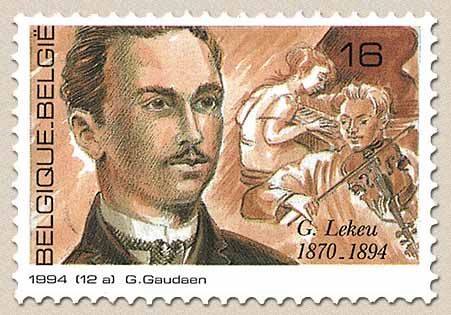
    Here’s an exceedingly somber work for Maundy Thursday by the Belgian composer Guillaume Lekeu. Lekeu died of typhoid the day after his 24th birthday. In his short life, he managed to produce about 50 works. Admittedly, some are incomplete. If one were to judge solely from his music, he was a melancholy soul indeed.

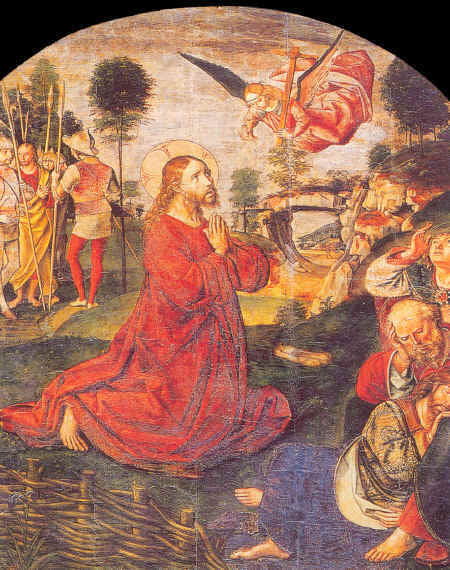
    This is “Molto Adagio,” composed by a 16-year-old Lekeu, inspired by the words of Christ in the garden of Gethsemane, “My soul is exceeding sorrowful, even unto death.”

    From 1999 to 2014, the Brentano Quartet served as ensemble-in-residence at Princeton University. Among its other achievements, the ensemble played on the soundtrack of the 2012 film “A Late Quartet,” starring Christopher Walken, Philip Seymour Hoffman, Catherine Keener, and Wallace Shawn. The group’s cellist, Nina Lee, also appeared onscreen, as a fictionalized version of herself.

    Victor de Sabata is remembered primarily as a conductor, especially of opera, having led the classic recording of “Tosca” with Maria Callas. He got his start playing violin in an orchestra under Toscanini. Toscanini encouraged the young man to become a conductor, which was kind of like letting the genie out of the bottle. Their relationship status passed from mentor-disciple to friendship to bitter rivalry. For decades, De Sabata was principal conductor at La Scala. For a time, he was its artistic director. One observer described his appearance while conducting as a cross between Julius Caesar and Satan.

    An interesting tension, then, between the sacred and the diabolical. De Sabata was also the composer of this beautiful and contemplative meditation for orchestra, titled “Gethsemani” [sic]. In this recording, on the Hyperion label, the conductor is De Sabata’s son-in-law, Aldo Ceccato.

    Finally, from a gorgeous album of Palestrina’s music for Maundy Thursday on the Chandos label, here’s a playlist of performances by Musica Contexta.

    All sensitively done, I think. There’s little maudlin in this Maundy music.


    “Jesus in the Garden of Gethsemane,” c. 1500, by Pedro Berruguete (1450–1504)
  • César Franck and His Belgian Legacy

    César Franck and His Belgian Legacy

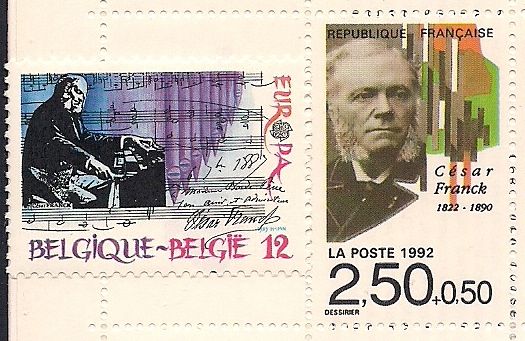
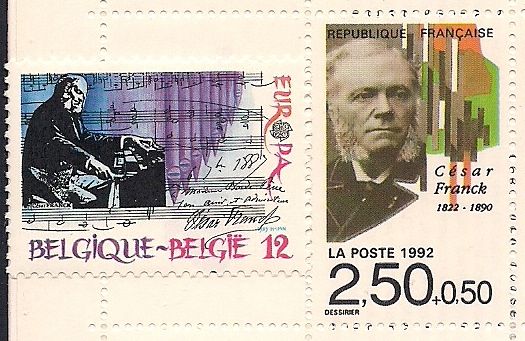
    César Franck was a strangely charismatic outsider. A Belgian abroad, he was required to take French citizenship in order to teach at the Paris Conservatory. A renowned organist, his unexpected genius for composition blossomed late.

    His enduring fame rests on a handful of fairly late works. He managed to reinvigorate the French symphonic and chamber music traditions through his use of “cyclic form,” with themes throughout generated from a single motif. He also embraced the symphonic poem. In these regards he certainly bore the influence of Franz Liszt. In turn, he himself became highly influential among a generation of French and Belgian composers.

    This week on “The Lost Chord,” we’ll examine music by two Belgians who fell under his sway.

    Armand Marsick, born in 1877, trained as a violinist at the Liège Conservatory, before studying abroad in Nancy with Franck enthusiast Guy Ropartz. Then he moved to Paris, where he studied with another Franckian, Vincent d’Indy. His career led him to Athens, and then Bilbao, where he founded a conservatory and an orchestra. He returned to Liège at the age of 50, settling in to teach and direct the concert society there. He died in 1959. The bulk of Marsick’s compositional output, which consisted of some forty works, was written between the ages of 23 and 37. We’ll enjoy a symphonic poem from 1908, titled “La Source.”

    Guillaume Lekeu was born in Verviers in 1870. He studied with Franck in Paris, then, like Marsick, with d’Indy following Franck’s death. Lekeu, unfortunately, is also remarkable for his very short life. He became ill with typhoid fever after consuming contaminated sherbet at a restaurant, and died in 1894, one day after his 24th birthday. Despite his sadly shortened existence, he managed to make important contacts and to write music of considerable promise. At the time of his death, he had already been composing for nine years, from the age of 15. In 1891 he was recipient of a second prize in the celebrated Prix de Rome competition.

    In all, Lekeu composed about 50 works. We’ll hear his Violin Sonata from 1892, written for the great Belgian virtuoso Eugene Ysaye, and his Adagio from 1891, originally composed for quartet and string orchestra. The score to the latter bears an epigraph from a poem by Georges Vanor, “The pale flowers of memory.”

    I hope you’ll join me for music by these Belgian followers of César Franck. That’s “Franckly Belgian,” on “The Lost Chord,” now in syndication on KWAX, the radio station of the University of Oregon!


    Clip and save the start times for all three of my recorded shows:

    PICTURE PERFECT, the movie music show – Friday at 8:00 PM EDT/5:00 PM PDT

    SWEETNESS AND LIGHT, the light music program – ALL NEW! – Saturday at 11:00 AM EDT/8:00 AM PDT

    THE LOST CHORD, unusual and neglected rep – Saturday at 7:00 PM EDT/4:00 PM PDT

    Stream them, wherever you are, at the link!

    https://kwax.uoregon.edu/

  • Maundy Thursday Music: Lekeu, Sabata, Palestrina

    Maundy Thursday Music: Lekeu, Sabata, Palestrina

    Is it Monday, or is it Thursday? Why, it’s Maundy Thursday!

    Of course, Maundy has nothing to do with Monday. The word is most likely derived from the Latin “mandatum,” as in “Mandatum novum do vobis ut diligatis invicem sicut dilexi vos” (“A new commandment I give you, That ye love one another; as I have loved you”). Or it could come from the Middle English and Old French words “maund” and “mendier,” respectively, after the Latin “mendicare,” meaning to beg.

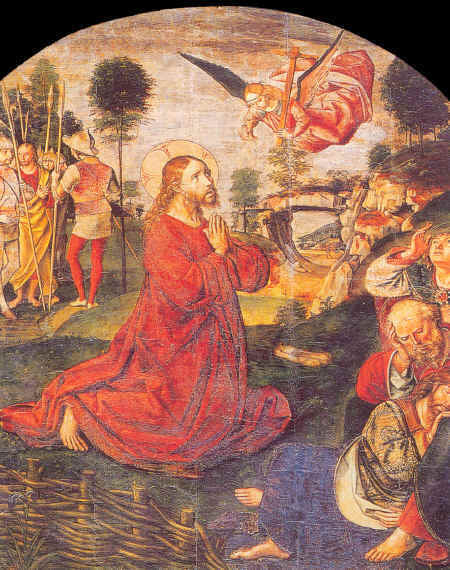
    In any case, we are now entering the holiest days of the Christian calendar. Maundy Thursday commemorates Jesus’ washing of the feet of his disciples, the Last Supper, and the betrayal and arrest of Christ in the garden of Gethsemane.

    Here’s an exceedingly somber work for Maundy Thursday by the Belgian composer Guillaume Lekeu (1870-1894). Lekeu died of typhoid the day after his 24th birthday. In his short life, he managed to produce about 50 works. Admittedly, some are incomplete. If one were to judge solely from his music, he was a melancholy soul indeed.

    This is “Molto Adagio,” composed by a 16 year-old Lekeu, inspired by the words of Christ in the garden of Gethsemane, “My soul is exceeding sorrowful, even unto death.”

    From 1999 to 2014, the Brentano Quartet served as ensemble-in-residence at Princeton University. Among its other achievements, the ensemble played on the soundtrack of the 2012 film “A Late Quartet,” starring Christopher Walken, Philip Seymour Hoffman, Catherine Keener, and Wallace Shawn. The group’s cellist, Nina Lee, also appeared onscreen, as a fictionalized version of herself.

    A couple of days ago, I posted about conductor Victor de Sabata, for his birthday. De Sabata too wrote a lovely piece for Maundy Thursday, called “Gethsemani.” I highly recommend it in its orchestral guise, available on a CD of De Sabata’s symphonic poems on the Hyperion label. However, since either Hyperion or the algorithm is so hyper-vigilant, Hyperion recordings seem to get yanked off YouTube very quickly.

    So here’s the work in a version for piano. Still beautiful, still contemplative, but without the orchestral sheen.

    Finally, from a gorgeous album of Palestrina’s music for Maundy Thursday on the Chandos label, here’s a playlist of performances by Musica Contexta.

    All sensitively done, I think. There’s little maudlin in this Maundy.


    “Jesus in the Garden of Gethsemane,” c. 1500, by Pedro Berruguete (1450–1504)
  • César Franck and His Belgian Disciples

    César Franck and His Belgian Disciples

    César Franck was a strangely charismatic outsider. A Belgian abroad, he was required to take French citizenship in order to teach at the Paris Conservatory. A renowned organist, his unexpected genius for composition blossomed late.

    His enduring fame rests on a handful of fairly late works. He managed to reinvigorate the French symphonic and chamber music traditions through his use of “cyclic form,” with themes throughout generated from a single motif. He also embraced the symphonic poem. In these regards he certainly bore the influence of Franz Liszt. In turn, he himself became highly influential among a generation of French and Belgian composers.

    This Sunday night on “The Lost Chord,” we’ll examine music by two Belgians who fell under his sway.

    Armand Marsick, born in 1877, trained as a violinist at the Liège Conservatory, before studying abroad in Nancy with Franck enthusiast Guy Ropartz. Then he moved to Paris, where he studied with another Franckian, Vincent d’Indy. His career led him to Athens, and then Bilbao, where he founded a conservatory and an orchestra. He returned to Liège at the age of 50, settling in to teach and direct the concert society there. He died in 1959. The bulk of Marsick’s compositional output, which consisted of some forty works, was written between the ages of 23 and 37. We’ll enjoy a symphonic poem from 1908, titled “La Source.”

    Guillaume Lekeu was born in Verviers in 1870. He studied with Franck in Paris, then, like Marsick, with d’Indy following Franck’s death. Lekeu, unfortunately, is also remarkable for his very short life. He became ill with typhoid fever after consuming contaminated sherbet at a restaurant, and died in 1894, one day after his 24th birthday. Despite his sadly shortened existence, he managed to make important contacts and to write music of considerable promise. At the time of his death, he had already been composing for nine years, from the age of 15. In 1891 he was recipient of a second prize in the celebrated Prix de Rome competition.

    In all, Lekeu composed about 50 works. We’ll hear his Violin Sonata from 1892, written for the great Belgian virtuoso Eugene Ysaye, and his Adagio from 1891, originally composed for quartet and string orchestra. The score to the latter bears an epigraph from a poem by Georges Vanor, “The pale flowers of memory.”

    I hope you’ll join me for music by these Belgian followers of César Franck. That’s “Franckly Belgian,” this Sunday night at 10:00 EDT, on WWFM – The Classical Network and wwfm.org.

  • César Franck & His Belgian Legacy

    César Franck & His Belgian Legacy

    César Franck was a strangely charismatic outsider. A Belgian abroad, he was required to take French citizenship in order to teach at the Paris Conservatory. A renowned organist, his unexpected genius for composition blossomed late.

    His enduring fame rests on a handful of fairly late works. He managed to reinvigorate the French symphonic and chamber music traditions through his use of “cyclic form,” with themes throughout generated from a single motif. He also embraced the symphonic poem. In these regards he certainly bore the influence of Franz Liszt. In turn, he himself became highly influential among a generation of French and Belgian composers.

    This Sunday night on “The Lost Chord,” we’ll examine music by two Belgians who fell under his sway.

    Armand Marsick, born in 1877, trained as a violinist at the Liège Conservatory, before studying abroad in Nancy with Franck enthusiast Guy Ropartz. Then he moved to Paris, where he studied with another Franckian, Vincent d’Indy. His career led him to Athens, and then Bilbao, where he founded a conservatory and an orchestra. He returned to Liège at the age of 50, settling in to teach and direct the concert society there. He died in 1959. The bulk of Marsick’s compositional output, which consisted of some forty works, was written between the ages of 23 and 37. We’ll enjoy a symphonic poem from 1908, titled “La Source.”

    Guillaume Lekeu was born in Verviers in 1870. He studied with Franck in Paris, then, like Marsick, with d’Indy following Franck’s death. Lekeu, unfortunately, is also remarkable for his very short life. He became ill with typhoid fever after consuming contaminated sherbet at a restaurant, and died in 1894, one day after his 24th birthday. Despite his sadly foreshortened existence, he managed to make important contacts and to write music of considerable promise. At the time of his death, he had already been composing for nine years, from the age of 15. In 1891 he was recipient of a second prize in the celebrated Prix de Rome competition.

    In all, Lekeu composed about 50 works. We’ll hear his Violin Sonata from 1892, written for the great Belgian virtuoso Eugene Ysaye, and his Adagio from 1891, originally composed for quartet and string orchestra. The score to the latter bears an epigraph from a poem by Georges Vanor, “The pale flowers of memory.”

    I hope you’ll join me for music by these Belgian followers of César Franck – “Franckly Belgian” –– this Sunday night at 10:00 EDT, on WWFM – The Classical Network and wwfm.org.

Tag Cloud

Aaron Copland (92) Beethoven (94) Composer (114) Film Music (117) Film Score (143) Film Scores (255) Halloween (94) John Williams (185) KWAX (228) Leonard Bernstein (99) Marlboro Music Festival (125) Movie Music (132) Opera (197) Philadelphia Orchestra (86) Picture Perfect (174) Princeton Symphony Orchestra (106) Radio (86) Ralph Vaughan Williams (85) Ross Amico (244) Roy's Tie-Dye Sci-Fi Corner (290) The Classical Network (101) The Lost Chord (268) Vaughan Williams (101) WPRB (396) WWFM (881)

DON’T MISS A BEAT

Receive a weekly digest every Sunday at noon by signing up here


RECENT POSTS