Tag: Gunnar de Frumerie

  • St John’s Eve Midsummer Magic on Classic Ross Amico

    St John’s Eve Midsummer Magic on Classic Ross Amico

    June 23. St. John’s Eve. By the time “the iron tongue of midnight hath told twelve,” bonfires will have been lit, love potions will have been sought, and the night will be alive with supernatural beings.

    Anyway, it’s a big deal in Europe, where it pervades the folklore of the British Isles, Scandinavia, France, Italy, Spain, Poland, Hungary, Russia and elsewhere. In Sweden, Midsummer is a national holiday.

    The influence is felt vicariously in the United States by way of the “Night on Bald Mountain” sequence in Disney’s “Fantasia,” Shakespeare’s “A Midsummer Night’s Dream,” and Igmar Bergman’s “Smiles of a Summer Night.”

    Among our featured highlights this morning will be a recording of “St. John’s Eve” by Gunnar de Frumerie. The allegorical ballet features appearances by John the Baptist, Salome, the Seven Deadly Sins, Angels, and the Devil, all tied up with Swedish Midsummer traditions.

    How now, spirit! Robin Goodfellow will squeeze the juice of love-in-idleness onto sleeping eyelids, from 6 to 11 EDT on WPRB 103.3 FM and at wprb.com. We’ll be singeing our tails leaping over bonfires, on Classic Ross Amico.


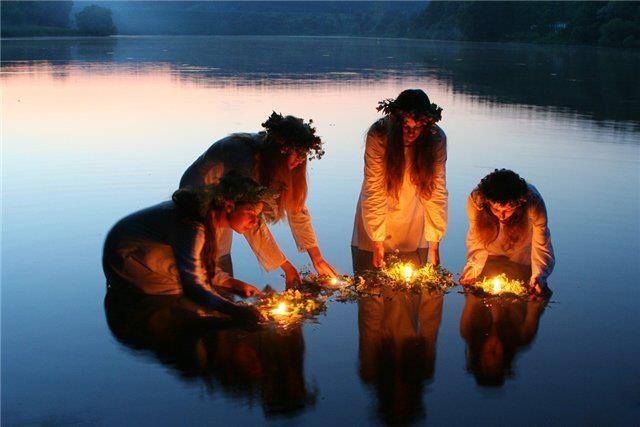
    PHOTO: Young women engage in a Ukrainian St. John’s Eve ritual

  • St. John’s Eve Bonfires Music and Midsummer

    St. John’s Eve Bonfires Music and Midsummer

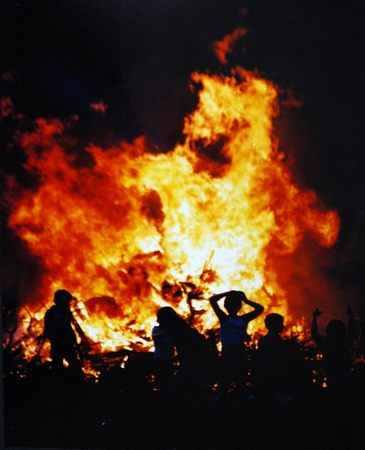
    Why is it whenever man feels the urge to celebrate, his first impulse is to set things on fire? We see it today in the hot-dogging conflagrations that follow on the heels of championship sports victories. In the ancient world, bonfires were already a mainstay of any festive occasion.

    This Sunday night on “The Lost Chord,” we listen to music for St. John’s Eve. St. John’s Day holds a place on the Christian calendar akin to that of Christmas, in that it coincides with solstice time. Midsummer was originally a pagan festival, which was absorbed by the Church for the observance of John the Baptist’s birth, which St. Luke implies took place six months before that of Jesus.

    Though the actual summer solstice may occur anytime between June 21 and June 25, it was designated that June 24 would be the Feast Day of St. John.

    St. John’s Eve is a time for the harvesting of St. John’s Wort, with its miraculous healing powers. It’s a time to seek the fern flower, which can bring good fortune, wealth, and the ability to understand animal speech. It’s a time for the lighting of bonfires against evil spirits, and even dragons, which roam the earth, as the sun again pursues a southerly course. And it’s a time when witches are believed to rendezvous with powerful forces, such as the demon Chernobog, who emerges from the Bald Mountain on St. John’s Eve at the climax of Disney’s “Fantasia.”

    Leaping over a bonfire was seen as a surety of prosperity and good luck. Not to light a bonfire was seen as offering up one’s own house for destruction by fire. The bigger the fire, the further at bay were kept evil spirits. The further the evil spirits, the better the guarantee of a good harvest.

    We’ll have music inspired by some of these Midsummer customs, as we listen to Modest Mussorgsky’s “St. John’s Night,” an earlier, less-familiar incarnation of his popular musical picture “A Night on Bald Mountain,” as heard in his opera, “Sorochinsky Fair.”

    Also featured will be Alfred Schnittke’s impish rondo, “(K)ein Sommernachtstraum.” The root of the title is German for “A Midsummer Night’s Dream,” but the postmodern inclusion of the “K” in parentheses modifies the meaning to “NOT a Midsummer Night’s Dream.” Indeed! Schnittke sets up the listener with a soothing notturno in the style of Mozart or Schubert, but very soon the atmosphere begins to shift.

    Finally, we’ll hear selections from the ballet, “St. John’s Eve,” by the Swedish composer Gunnar de Frumerie. Not surprisingly, after a long, hard winter, the Scandinavian countries are crazy for Midsummer. The allegorical ballet features appearances by John the Baptist, Salome, the Seven Deadly Sins, Angels, and the Devil, all tied up in Swedish Midsummer traditions.

    Join me for “Midsummer Night’s Fiends,” tonight at 10 ET, with a repeat Thursday at 11, or catch the show as a webcast at http://www.wwfm.org.

    PHOTO: St. John’s Eve celebration in Northern Ireland
  • Swedish Spring Music on The Lost Chord

    Swedish Spring Music on The Lost Chord

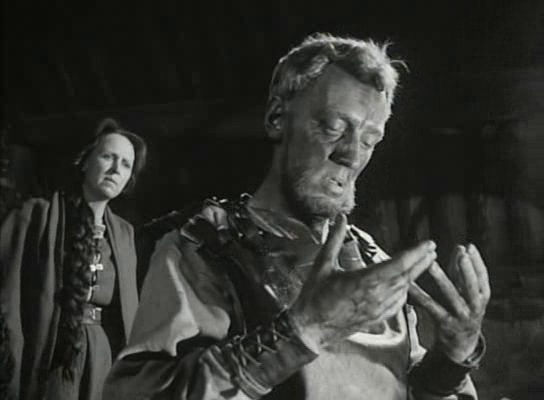
    This Sunday night on “The Lost Chord,” we focus on “The Virgin Spring.” No, not the Bergman film, in which Max von Sydow exacts terrible vengeance on those who… well, nevermind. See the movie.

    Anyway, the show’s not about that. The spring in the film is a body of water, a symbol of rebirth and renewal, but we’re using “spring” in the purely seasonal sense, as we enjoy an hour of vernal expressions by Swedish composers.

    We’ll hear the “Pastoral Suite,” by Gunnar de Frumerie, and two works by Wilhelm Peterson-Berger: first, one of the books from his collection “Flowers of Frösö;” then the “Earina Suite.” “Earina,” derived from the Greek “earinos,” meaning “spring-like,” according to the composer conjures a world of “cult deeds and magic rites… belonging to some undefined natural religion.”

    The long winter dissolves in the lengthening days of “The Virgin Spring,” this Sunday night at 10 ET, with a repeat Thursday night at 11; or enjoy it as a webcast at http://www.wwfm.org.

Tag Cloud

Aaron Copland (92) Beethoven (95) Composer (114) Film Music (119) Film Score (143) Film Scores (255) Halloween (94) John Williams (185) KWAX (229) Leonard Bernstein (99) Marlboro Music Festival (125) Movie Music (134) Opera (198) Philadelphia Orchestra (86) Picture Perfect (174) Princeton Symphony Orchestra (106) Radio (87) Ralph Vaughan Williams (85) Ross Amico (244) Roy's Tie-Dye Sci-Fi Corner (290) The Classical Network (101) The Lost Chord (268) Vaughan Williams (102) WPRB (396) WWFM (881)

DON’T MISS A BEAT

Receive a weekly digest every Sunday at noon by signing up here


RECENT POSTS