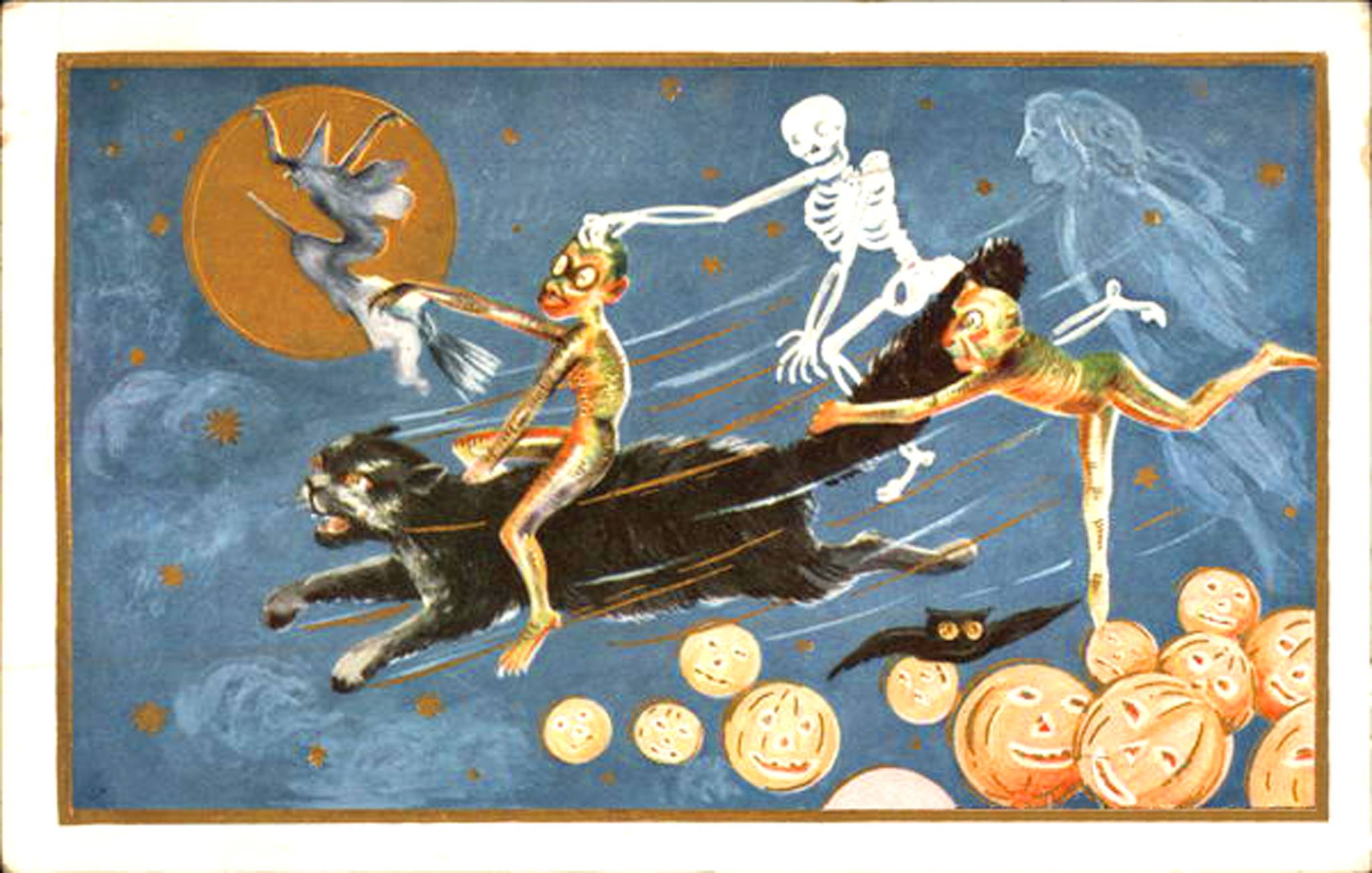
This week on “Sweetness and Light,” we’ll be cutting holes in Mom’s best sheets for a light music trick-or-treat. Join me for 13 ghostly premonitions of a holiday I am happy to say I never outgrew.
We’ll enjoy Halloween songs, selections from Halloween film scores, Halloween piano miniatures, and Halloween light music classics about a haunted ballroom, an ostracized imp, and a devil’s ride, all lovingly curated by you-know-who. Nothing too terribly terrible. It’s all in good fun. There will be no cowering before this disarming parade of spirits, reanimated corpses, witches, bogeymen, demons, and necromancers!
I’ve carefully examined all the candy for pins and razor blades, so you mustn’t hesitate to indulge. It will be Smarties® and peanut butter cups for breakfast, when you join me for “Sweetness and Light,” this Saturday morning at 11:00 EDT/8:00 PDT, exclusively on KWAX, the radio station of the University of Oregon!
This week on “Sweetness and Light,” we’ll be cutting holes in Mom’s best sheets for a light music trick-or-treat. Join me for 13 ghostly premonitions of a holiday I am happy to say I never outgrew.
We’ll enjoy Halloween songs, selections from Halloween film scores, Halloween piano miniatures, and Halloween light music classics about a haunted ballroom, an ostracized imp, and a devil’s ride, all lovingly curated by you-know-who. Nothing too terribly terrible. It’s all in good fun. There will be no cowering before this disarming parade of spirits, reanimated corpses, witches, bogeymen, demons, and necromancers!
I’ve carefully examined all the candy for pins and razor blades, so you mustn’t hesitate to indulge. It will be Smarties® and peanut butter cups for breakfast, when you join me for “Sweetness and Light,” this Saturday morning at 11:00 EDT/8:00 PDT, exclusively on KWAX, the radio station of the University of Oregon!
With Halloween only days away, it’s time to get the frock coat out of moth balls. This week on “The Lost Chord,” we’ll celebrate Edgar Allan Poe, with an hour of music inspired by his mad and melancholy verse.
We’ll hear a “melo-declamation” for narrator and orchestra on “The Raven” by Arcady Dubensky (1890-1966), a violinist in the New York Philharmonic. The piece was given its world premiere at the Academy of Music in Philadelphia in 1932, captured in an experimental recording by RCA Victor, on 35mm optical film. It was issued on a special 78 rpm, 2-record set, with the poem, together with monochrome engravings of Stokowski and Poe etched into the shellac. Benjamin de Loache is the speaker.
Then we’ll have a symphonic poem inspired by Poe’s “Ulalume” by English composer Joseph Holbrooke (1878-1958). Holbrooke evidently adored Poe, as he wrote a number of pieces inspired by his writings, including “The Raven,” “The Bells” (which predated the work by Rachmaninoff), and “The Masque of the Red Death.” “Ulalume” was first performed in 1905. The composer thought it one of his finest pieces. Again, the source poem is a gloomy meditation on the loss of a loved one.
Then, from the Princeton-based Affetto label, we’ll hear selections from a song cycle, “Lenoriana,” by Benjamin C.S. Boyle (b. 1979). Boyle was on the faculty of Westminster Choir College of Rider University, as were the performers, baritone Elem Eley and pianist J.J. Penna. Of the seven songs, we’ll sample Boyle’s settings of “Annabel Lee,” “The Conqueror Worm,” and “To Helen.”
Finally, we’ll have an orchestral etude on “The Haunted Palace,” which Poe incorporated into his story “The Fall of the House of Usher.” The French composer Florent Schmitt (1870-1958) knew the work from a translation by Stéphane Mallarmé. It tells of a king of olden times full of presentiments of impending doom to his palace and himself. The house and the royal family are destroyed, and remnants of the court may still be glimpsed as phantoms flickering in the windows and doors.
“The Haunted Palace” may be the first piece of music by a French composer to be inspired by Poe. It was completed in 1904, and first performed the following year.
Prepare to brood over many a quaint and curious volume of forgotten lore. That’s “Edgar Allan Poems,” on “The Lost Chord,” now in syndication on KWAX, the radio station of the University of Oregon!
Remember, KWAX is on the West Coast, so there’s a three-hour difference for the Trenton-Princeton area. Here are the respective air-times of my recorded shows (with East Coast conversions in parentheses):
PICTURE PERFECT, the movie music show – Friday on KWAX at 5:00 PACIFIC TIME (8:00 PM EDT)
THE LOST CHORD, unusual and neglected rep – Saturday on KWAX at 4:00 PACIFIC TIME (7:00 PM EDT)
In New York the other night at Old John’s Luncheonette, prior to catching a performance of Ralph Vaughan Williams’ Symphony No. 8 with the New Conductors Orchestra, I was asked by my companion for the evening, the filmmaker H. Paul Moon, off the top of my head, for the quintessential piece of Halloween music. With my back to the wall, I blurted out George Crumb’s “Black Angels.”
This spinetingling piece, for electric string quartet, has lived in my head and fired my imagination for some 40 years. The first time I ever encountered it was on George Diehl’s “Music Through the Centuries,” on Philadelphia’s late, lamented classical music station, WFLN. Diehl, one time program director of the station, who also provided program notes for the Philadelphia Orchestra, engagingly introduced Crumb’s otherworldly, often hair-raising piece by placing it in context, deftly illuminating its structure, and supplementing it with recordings of other works referenced within. This was fascinating radio. I have no hesitation in crediting “Music Through the Centuries” as a principal influence on my own radio show, “The Lost Chord.” So, thank you, George Diehl, wherever you are!
Sure, “Black Angels,” subtitled “Thirteen Images from the Dark Land,” was conceived as a reaction to the Vietnam War, but real-life horrors aside, this is one haunting, magical piece. It’s not for nothing that it was embraced by David Bowie, that it inspired David Harrington to form the Kronos Quartet (after he too encountered it on the radio), and that William Friedkin included a passage in “The Exorcist.”
There are references to Schubert’s “Death and the Maiden,” Tartini’s “The Devil’s Trill,” and the medieval plainchant “Dies Irae” (“Day of Wrath”) – quoted in so many works by Berlioz, Liszt, Rachmaninoff, and others, as well as making an appearance under the opening credits of Stanley Kubrick’s “The Shining.”
But it was not Crumb’s intention to evoke jeering demons, necessarily. The composer saw it as “a kind of parable on our troubled contemporary world. The numerous quasi-programmatic allusions in the work are therefore symbolic, although the essential polarity – God versus Devil – implied more than a purely metaphysical reality. The image of the ‘black angel’ was a conventional device used by early painters to symbolize the fallen angel.”
Its thirteen movements are divided into three larger groups.
I. Departure
Threnody I: Night of the Electric Insects (tutti)
Sounds of Bones and Flutes (trio)
Lost Bells (duo)
Devil-music (solo)
Danse Macabre (duo)
II. Absence
Pavana Lachrymae (trio)
Threnody II: Black Angels! (tutti)
Sarabanda de la Muerte Oscura (trio)
Lost Bells (Echo) (duo)
III. Return
God-music (solo)
Ancient Voices (duo)
Ancient Voices (Echo) (trio)
Threnody III: Night of the Electric Insects (tutti)
Each player is required to play a variety of instruments and to employ extended techniques.
Violin 1
• maraca
• 7 crystal glasses
• 6″ glass rod
• 2 metal thimbles
• metal pick (paper clip)
Violin 2
• 15″ suspended tam-tam and mallet
• contrabass bow (for use on tam-tam)
• 7 crystal glasses
• 6″ glass rod
• 2 metal thimbles
• metal pick (paper clip)
Viola
• 6 crystal glasses
• 6″ glass rod
• 2 metal thimbles
• metal pick
Cello
• maraca
• 24″ suspended tam-tam, soft and hard mallets
• contrabass bow
Of course, Crumb was more than simply a “Halloween” composer, though his music can be creepy as hell. Many of his chamber works, especially those that employ percussion and voice, are models of economy and elegance. I always think of him as a kind of spiritual descendent of Charles Ives, in that many of the curious sonorities he explored, especially in the context of his song settings, seem to suggest truths beyond our workaday concerns.
That said, here’s some sensational Crumb to play when you’re alone with the lights out.
Crumb died last year at the age of 92. Remembering him, blackly, on his birthday.
“Star-Child” (Watch out for that “Musica Apocalyptica,” beginning at 11:47!)
“Ancient Voices of Children” in concert (“Ghost Dance” at 17:55)
George Crumb was the recipient of the Pulitzer Prize for Music in 1968, for “Echoes of Time and the River,” and a Grammy Award for Best Contemporary Composition in 2001, rather appropriately, for “Star-Child.” All or most of his music is available in the “Complete Crumb Edition,” an ongoing project on Bridge Records, Inc.
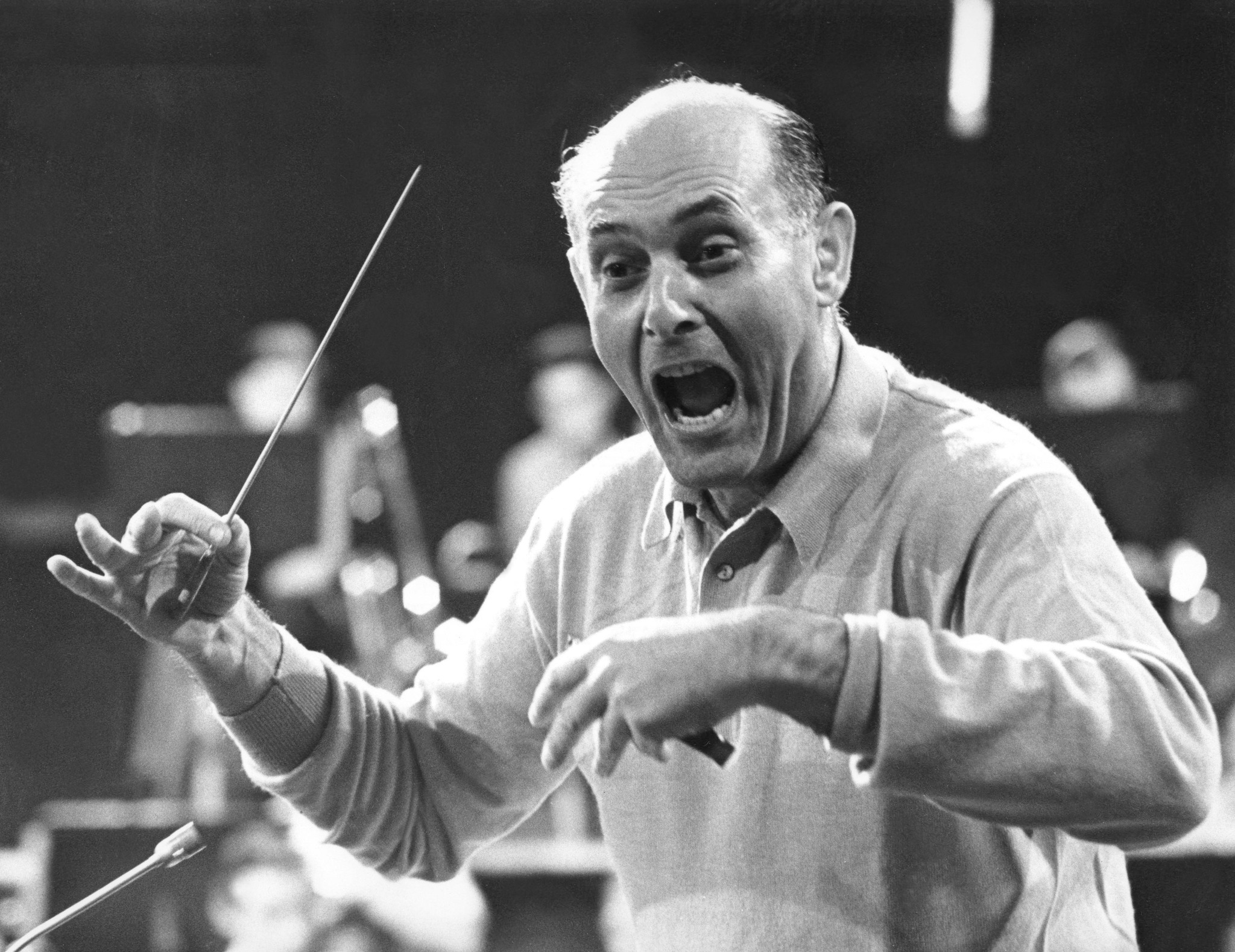
His musicians dubbed him “The Screaming Skull.” Can’t get much more Halloween than that. I enjoyed listening to Sir Georg Solti’s recording of Liszt’s “A Faust Symphony” while driving around this afternoon. Perhaps you’ll like it too.