Tag: Halloween

  • Spooky Comedy Movie Soundtracks Halloween Mix

    Spooky Comedy Movie Soundtracks Halloween Mix

    Spooky comedies. A seeming oxymoron. Perhaps in an attempt to subvert our fears, or to generate laughter from tension, filmmakers have frequently juxtaposed humor with the supernatural – or at any rate death.

    This week on “Picture Perfect,” we’ll conjure some Hallowe’en spirit with music from four macabre comedies.

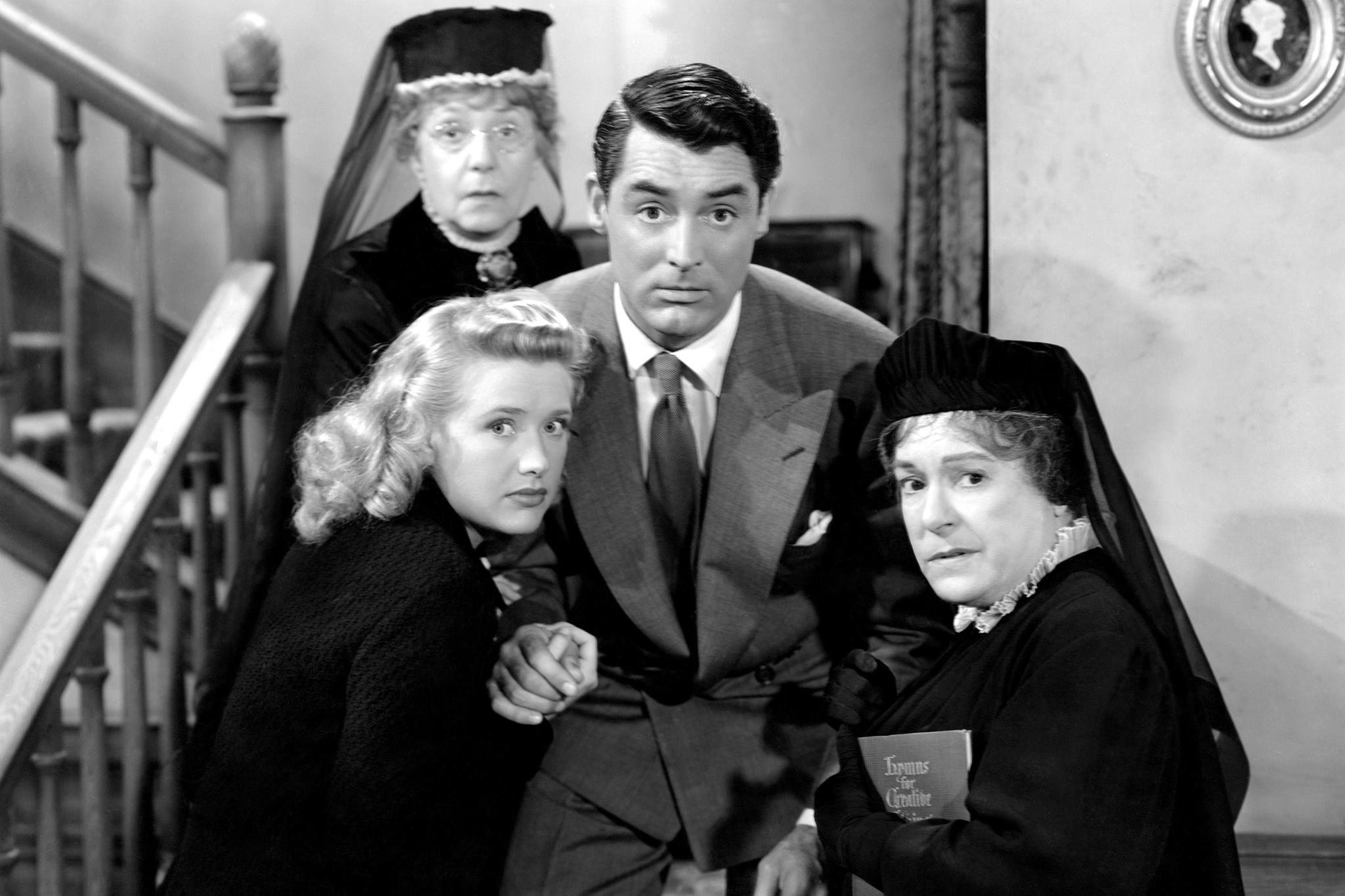
    Frank Capra’s screen adaptation of “Arsenic and Old Lace” (1944) was actually shot in 1941, but it could not be released until after the hit stage play, by Joseph Kesselring, had concluded its Broadway run.

    The film starred Cary Grant, Priscilla Lane, Raymond Massey, Peter Lorre, Jack Carson, and Capra favorites James Gleason and Edward Everett Horton.

    Two seemingly innocuous spinster aunts poison lonely old men and have them buried in their basement, by a family member who believes that he’s Teddy Roosevelt. (He thinks that he’s digging the Panama Canal.) Massey and Lorre play a murderer on the lam and his plastic surgeon, respectively, who hole up in the house, unaware that Massey’s body count pales next to that of his unwitting hosts.

    The score, by Max Steiner, is as manic as Grant’s performance – perhaps a mite overdone, with its breakneck allusions to familiar melodies – but it bears the same distinctive gloss as other Steiner classics like “Gone With the Wind” and “Casablanca.”

    Composer Bernard Herrmann will always be most closely associated with the films of Alfred Hitchcock. In particular, his music for the shower scene in “Psycho” has entered the popular consciousness as few other film scores have. Hitchcock and Herrmann collaborated on nine films in all. The first of these was a black comedy called “The Trouble with Harry” (1955), a droll farce about a corpse that materializes in a New England community and can’t seem to stay buried.

    Don Knotts and a haunted house – that’s the high concept behind “The Ghost and Mr. Chicken” (1966). How could it possibly miss? Knotts’ elastic-faced terror finds a goofy foil in Vic Mizzy’s score. Mizzy also wrote music for “The Addams Family.”

    Finally, in a kind of twist on “Topper,” Alec Baldwin and Geena Davis play a recently-deceased couple who try to scare off the inhabitants of their former home, in “Beetlejuice” (1988). In desperation, they enlist the services of a manic “bio-exorcist” (a loosy-goosy Michael Keaton) and things get seriously antic.

    The music is by Danny Elfman, as always a fan of Nino Rota, although he also pays homage to the Stravinsky of “The Soldier’s Tale” and frequently alludes to Raymond Scott. There’s even a touch of Bernard Herrmann in one of the tracks, as Elfman evokes the skeleton fight from “The Seventh Voyage of Sinbad.”

    I hope you’ll join me for a mishmash of horror and humor this week, on “Picture Perfect,” music for the movies, now in syndication on KWAX, the radio station of the University of Oregon!


    Clip and save the start times for all three of my recorded shows:

    PICTURE PERFECT, the movie music show – Friday at 8:00 PM EDT/5:00 PM PDT

    SWEETNESS AND LIGHT, the light music program – Saturday at 11:00 AM EDT/8:00 AM PDT

    THE LOST CHORD, unusual and neglected rep – Saturday at 7:00 PM EDT/4:00 PM PDT

    Stream them, wherever you are, at the link!
    https://kwax.uoregon.edu/

  • Halloween Radio Special on KWAX

    Halloween Radio Special on KWAX

    Since Halloween falls on a Friday this year – one week from today – I hope you’ll indulge me this weekend as all three of my radio shows will tie in to my favorite holiday.

    First, on “Picture Perfect,” music for the movies (Friday at 8:00 p.m. EDT/5:00 p.m. PDT), we’ll enjoy scores from spooky or macabre comedies, including “Arsenic and Old Lace” (Max Steiner), “The Trouble with Harry” (Bernard Herrmann), “The Ghost and Mr. Chicken” (Vic Mizzy), and “Beetlejuice” (Danny Elfman).

    Then, tomorrow on “Sweetness and Light” (Saturday morning at 11:00 EDT/8:00 PDT), it will be a light music Halloween, with spooktacular selections associated with haunted ballrooms, ostracized imps, reanimated skeletons, nimble witches, adept sorcerers, ghost removal specialists, consumerist zombies, dancing lunatics, boogey men, headless horsemen, boy wizards, and galloping devils.

    Finally, on “The Lost Chord” (Saturday at 7:00 p.m. EDT/4:00 p.m. PDT), écoutez to French music for the season, including Maurice Ravel’s “Gaspard de la nuit,” after grotesque poetry of Aloysius Bertrand (with pianist Gina Bachauer and narrator Sir John Gielgud), a fragment of an unfinished opera inspired by Edgar Allan Poe’s “The Fall of the House of Usher” by Claude Debussy, and an etude subtitled “Scherzo diabolico” by the misanthropic and reclusive Charles-Valentin Alkan.

    But wait! There’s more!

    Since “Picture Perfect” falls on a Friday, I’ll have one more chance next week, on Halloween proper, when I’ll offer a playlist of evocative and ear-catching vintage horror and science fiction scores from the 1950s, with enough narration and gaudy sound effects to provide the perfect soundtrack for your Trick-or-Treat.

    All air times for the above shows are reiterated below. Stream them wherever you are from KWAX, the radio station of the University of Oregon!

    https://kwax.uoregon.edu/


    PICTURE PERFECT, the movie music show – Friday at 8:00 PM EDT/5:00 PM PDT

    SWEETNESS AND LIGHT, the light music program – Saturday at 11:00 AM EDT/8:00 AM PDT

    THE LOST CHORD, unusual and neglected rep – Saturday at 7:00 PM EDT/4:00 PM PDT

  • Herrmann’s Fantasy Film Scores for Halloween

    Herrmann’s Fantasy Film Scores for Halloween

    Hallowe’en is fast approaching. This week on “Picture Perfect,” it’s high time we get the pumpkin rolling, with an hour of fantasy film scores of Bernard Herrmann.

    Just about everyone has some awareness of Herrmann’s fruitful run with Alfred Hitchcock, a collaborative relationship which yielded scores to “Vertigo,” “North by Northwest” and “Psycho,” among others. Concurrently, Herrmann worked with producer Charles H. Schneer to create a series of classic films on fantastic subjects, featuring special effects by stop-motion maestro Ray Harryhausen. We’ll be listening to selections from two of these.

    Jules Vernes’ novel, “Mysterious Island,” was a sequel of sorts to “20,000 Leagues under the Sea.“ During the American Civil War, a ragtag band of Union soldiers escape from a Confederate prison by hot air balloon. A storm sweeps them off to the titular island, where they encounter pirates, a castaway, and an orangutan. Indeed Captain Nemo turns up late in the narrative, though no giant creatures, as in the film (made in 1961). Herrmann has a field day characterizing an enormous crab, bee, and especially bird, for which he employs a fugue!

    Harryhausen’s skeleton fight from Schneer’s “Jason and the Argonauts” (1963) stands as one of the all-time classic fantasy sequences, a dream marriage of visuals and music. Herrmann, who always provided his own orchestrations, was well known for putting together unique combinations of instruments, the better to illustrate the special character of a given film. In the case of “Jason,” he went in the opposite direction from what he had taken with “Psycho,” stripping away the strings and concentrating instead on winds, brass and percussion.

    On a somewhat gentler note, Herrmann scored the beautiful spectral romance, “The Ghost and Mrs. Muir” (1947), with Gene Tierney as a young widow who moves with her daughter to a seaside village, where she encounters the ghost of salty Captain Gregg (played by Rex Harrison). Of course, their banter leads to a hopeless attraction developing between them. Herrmann was a master at creating musical evocations of yearning, and his score for “The Ghost and Mrs. Muir” is full of romantic longing.

    Criminally, for a composer whose career spanned over four decades, from “Citizen Kane” to “Taxi Driver,” Herrmann received only a single Oscar, for “The Devil and Daniel Webster” (released in 1941 as “All That Money Can Buy”). Walter Huston makes a meal of his role as Mr. Scratch in Stephen Vincent Benét’s recasting of the Faust legend, transferred to the New England countryside. Director William Dieterle, who had his roots in German Expressionism, creates some truly eerie visuals, and Herrmann’s score barn-dances deftly back and forth between dread and whimsy.

    Join me for fantasy film scores of Bernard Herrmann this week on “Picture Perfect,” music for the movies, now in syndication on KWAX, the radio station of the University of Oregon!


    Clip and save the start times for all three of my recorded shows:

    PICTURE PERFECT, the movie music show – Friday at 8:00 PM EDT/5:00 PM PDT

    SWEETNESS AND LIGHT, the light music program – Saturday at 11:00 AM EDT/8:00 AM PDT

    THE LOST CHORD, unusual and neglected rep – Saturday at 7:00 PM EDT/4:00 PM PDT

    Stream them, wherever you are, at the link!

    https://kwax.uoregon.edu/

  • Saint-Saëns’ Danse Macabre Halloween Classic

    Saint-Saëns’ Danse Macabre Halloween Classic

    I don’t care how stealthily one creeps through the graveyard at midnight. You won’t get through the Halloween season without encountering Camille Saint-Saëns’ “Danse Macabre.”

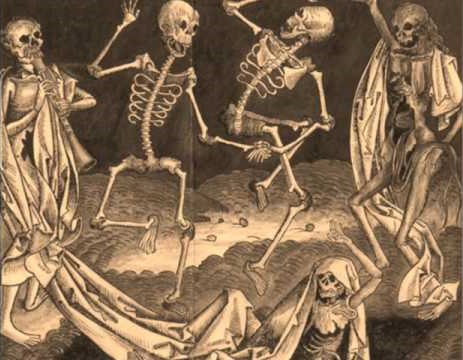
    Saint-Saëns, born on this date in 1835, originally set Henri Cazalis’ poem – about the personification of Death summoning the departed from their graves to cut a rug until cockcrow – as a chanson, or art song, for voice and piano in 1872. Two years later, he expanded it, putting some flesh on its bones and crafting it into the beloved symphonic poem, which has been a staple of Halloween programs ever since.

    Someone married the classic 1937 cartoon short “Skeleton Frolic” – pretty well, I think – to the orchestral version.

    It’s also used effectively in this modern trailer for the 1922 silent classic “Häxan.”

    And featured prominently in this scene from Jean Renoir’s 1939 film “Rules of the Game.”

    Here it is, in its original version. José Van Dam sings it, with Jean-Philippe Collard at the piano.

    Here’s a translation of the text, by Henri Cazalis:

    Zig, zig, zig, Death in cadence
    Striking a tomb with his heel
    Death at midnight plays a dance-tune
    Zig, zig, zag, on his violin

    The winter wind blows, and the night is dark;
    Moans are heard in the linden trees
    White skeletons pass through the gloom
    Running and leaping in their shrouds

    Zig, zig, zig, each one is frisking
    You can hear the cracking of the bones of the dancers
    A lustful couple sits on the moss
    So as to taste long lost delights

    Zig zig, zig, Death continues
    The unending scraping on his instrument
    A veil has fallen! The dancer is naked
    Her partner grasps her amorously

    The lady, it’s said, is a marchioness or baroness
    And her green gallant, a poor cartwright
    Horror! Look how she gives herself to him
    Like the rustic was a baron

    Zig, zig, zig. What a saraband!
    They all hold hands and dance in circles
    Zig, zig, zag. You can see in the crowd
    The king dancing among the peasants

    But hist! All of a sudden, they leave the dance
    They push forward, they fly; the cock has crowed
    Oh what a beautiful night for the poor world!
    Long live death and equality!


    These “grave” thoughts a little lurid for your taste? Try this autumnal Clarinet Sonata, one of three woodwind sonatas written by the composer during the last year of his life, 1921, when he was 85 years old.

    Happy birthday – and happy Halloween – Saint-Saëns!

  • October Reads: Ghosts, Ghouls & Literary Classics

    October Reads: Ghosts, Ghouls & Literary Classics

    I’m still determined to finish rereading Michael Chabon’s “The Amazing Adventures of Kavalier and Clay” before seeing Mason Bates’ operatic adaptation at the Met next week – which won’t be hard to do honestly, though it’s seriously going to cut into my Halloween reading. (I’ve still got 250 pages to go.) But Halloween can run into November, as far as I’m concerned. And winter is made for ghost stories. With that in mind, this is what I’m planning to have on my bedside table for the month of October.

    Somehow, I missed the fact that in 2014, Penguin put out a series of paperback reissues of once-popular novels that became classic movies. I’m not really slavering over Edna Ferber or Fannie Hurst, but I was poking around a used bookstore last week and stumbled across a copy of R.A. Dick’s “The Ghost and Mrs. Muir.” I’ve never read it, but having seen the film many times and watched the TV series when I was a kid, I am familiar with the story: a widow moves into a seaside cottage once owned by a salty sea captain who never really moved out. It’s not going to have a lot in it to really make the skin crawl, so it’s the kind of book I could put off reading until winter or even Valentine’s Day, but I’m moving it up to the top of the list because the Princeton Garden Theatre happens to be showing the movie next Wednesday. Anyway, at 192 pages, it looks like it’s going to be a swift read. Blood and Swash!

    (Parenthetically, if you’re interested, here are the other novels in the series: https://www.penguinrandomhouse.com/series/VMO/a-vintage-movie-classic/.)

    A while ago, I was up in Tarrytown, NY, where I visited Washington Irving’s house (on my way to see Percy Grainger Home & Studio in White Plains), and also Sleepy Hollow, which is not so sleepy anymore. But it does have some decent cemeteries, and I paid my respects at Washington Irving’s grave. There’s also a bridge there on what is alleged to have been the site that inspired “The Legend of Sleepy Hollow.” I’ve read the story a few times over the years (“Rip Van Winkle” too), starting all the way back in seventh grade, but it’s been a while. In recent Octobers, I reacquainted myself with the stories of Edgar Allan Poe (2023) and Nathaniel Hawthorne (2021), so I figured this year I could go back to Irving and cherry-pick some of his supernatural tales, which are often interleaved in his story collections with material that has nothing whatsoever to do with ghosts. I know it’s been a long, long time since I read “The Adventure of the German Student” (though I remember it well) and “The Devil and Tom Walker,” but I find he’s written a great deal else of a supernatural bent beside.

    Posting yesterday about Walter Huston reminded me of his scenery-devouring performance as Mr. Scratch in “The Devil and Daniel Webster.” I mentioned in a comment that when I first saw the film, I didn’t love it, despite Huston’s performance and the fact that it looks like an Orson Welles movie. The reason was that the indelible short story by Stephen Vincent Benét (born in Fountain Hill, outside Bethlehem, PA) was still fresh in my head. I have since grown to love the film, but it occurs to me that I have not read the story for many, many years. So I’m adding it to the list.

    Another recent, happy discovery while used book-shopping is a work by Philadelphia-born Charles Brockden Brown, who has been called the Father of the American Novel, especially celebrated for his gothic tales. He’s probably best-known for “Wieland,” which is kind of an 18th century precursor to “The Shining,” in some respects, with the added ingredients of religious fanaticism, ventriloquism, and spontaneous combustion. A Brown novel that is new to me is “Edgar Huntly, or Memoirs of a Sleep-Walker.” I picked it up not really knowing anything about it, but after I got it home I learned it’s set where the Delaware and Lehigh Rivers meet – essentially in my hometown of Easton, PA (only in 1787)! Of course, there’s somnambulism, murder, and Lenni Lenape, so not much has really changed. Not sure if I’ll have time for this one before Halloween – maybe – but it’s definitely on the list for November or after Christmas.

    You may recall, last year I finally made the commitment to tackle “Varney the Vampyre,” attributed to James Malcolm Rymer. Rymer is also thought to have written “The String of Pearls,” which introduced the character of Sweeney Todd. One of the most notorious of the Victorian penny dreadfuls, “Varney” detailed the villain’s blasphemous rampages for 109 weekly installments from 1845 to 1847. Combined, they add up to 1166 pages in a Wordsworth Edition paperback I was delighted to acquire after decades of searching for a complete collection. In the early ‘70s, “Varney” had also been compiled by Dover, in two volumes, and last year I was able to get a hold of a reprint of that edition, as well. The reproduction of the text is not always of the finest quality, with parts of the individual letters murky or even missing, but it does have the original illustrations. As you can imagine, reading a 1100-page vampire serial in lurid, stodgy prose can be a bit like going back and binge-watching “Dark Shadows.” In time, you risk becoming one of the undead yourself. So at the end of Volume 1, for my own welfare, I decided I needed a rest. I’m hoping to sit down with Volume 2 and finish my descent to the nadir of this anti-Everest of vampire fiction.

    I admit, it sounds like a lot, but if I push “Edgar Huntly” to another month, I bet I could do it. It would be a lot easier if not for “Kavalier and Clay,” which I am loving, but am revisiting mostly because I want it fresh in my head for the opera.

    By all means, let me know what you’re reading, especially if it’s seasonal and horrible. Happy Halloween!

    BONUS! Today is Paul Dukas’ birthday. Maybe a good time to trot out Goethe’s ballad of “The Sorcerer’s Apprentice.” And to watch Mickey stir up a world of trouble here:

    https://video.disney.com/watch/sorcerer-s-apprentice-fantasia-4ea9ebc01a74ea59a5867853


    PAINTING: “The Devil and Tom Walker” (1843), by Charles Deas

Tag Cloud

Aaron Copland (94) Beethoven (95) Composer (114) Film Music (148) Film Score (143) Film Scores (255) Halloween (97) John Williams (196) KWAX (232) Leonard Bernstein (105) Marlboro Music Festival (125) Movie Music (163) Mozart (91) Opera (215) Philadelphia Orchestra (90) Picture Perfect (174) Princeton Symphony Orchestra (110) Radio (90) Ross Amico (244) Roy's Tie-Dye Sci-Fi Corner (290) The Classical Network (101) The Lost Chord (269) Vaughan Williams (107) WPRB (397) WWFM (881)

DON’T MISS A BEAT

Receive a weekly digest every Sunday at noon by signing up here


RECENT POSTS