Tag: Hanukkah

  • Hobbits Hanukkah & Tolkien’s Jewish Allegory

    Hobbits Hanukkah & Tolkien’s Jewish Allegory

    Hobbits for Hanukkah? It turns out it’s not so far-fetched. While I am by no means a fan of Peter Jackson’s Tolkien adaptations, at least his take on “The Hobbit” spawned this informative article:

    https://www.timesofisrael.com/are-tolkiens-dwarves-an-allegory-for-the-jews/

    Hanukkah arrives early this year. The eight-day Festival of Light begins tonight at sunset. Light the menorah, then join Roy and me as we reminisce about the Rankin-Bass version of “The Hobbit” (1977). This fondly-remembered television special – graced by the voices of Orson Bean, John Huston, Hans Conried, Otto Preminger, Cyril Ritchard, and Brother Theodore as Gollum – was first broadcast on Thanksgiving weekend, 44 years ago.

    Our special guest on this “Unexpected Journey” will be my good friend and Tolkien connoisseur Paul Miller, as he’s known in the world of men (the elves call him Mithrandir). He’ll decipher the runes and flag down the eagles.

    The three of us will get all misty for the Misty Mountains, on the next Roy’s Tie-Dye Sci-Fi Corner. Bring your “Sting” to the comments section. The conversation won’t really last eight nights; it will just feel that way, when we livestream on Facebook, THIS SUNDAY EVENING AT 7:00 EST!

    https://www.facebook.com/roystiedyescificorner


    Further reflections on Tolkien and the Jews here:

    The Secret Jews of The Hobbit

  • Beethoven Handel & Hanukkah Music

    Beethoven Handel & Hanukkah Music

    Remember when 2020 was supposed to be the big Beethoven year? To mark the 250th anniversary of his birth, I mean? How did that work out?

    Small compensation, I know, but how about a week’s worth of posts about Beethoven, to mark his actual birthday, commonly observed on December 16?

    On the fourth evening of Hanukkah, the obvious choice is Beethoven’s “Variations on ‘See the conquering hero comes,’” from Handel’s “Judas Maccabaeus.” Here’s a performance I’ve got all cued up from a recording of the complete cello sonatas:

    Beethoven was a great admirer of Handel’s music. “Handel is the greatest composer who ever lived,” he said. “I would uncover my head and kneel down on his tomb.” On his deathbed, he indicated an edition of Handel’s works and said, “There is the truth.”

    Handel’s influence can also be heard in Beethoven’s “Consecration of the House Overture” (which has nothing at all to do with the Maccabees). Note the stately intro of the piece, the fanfares, and the magnificent fugal passages:

    If you’ve got a long evening ahead of you, why not give Handel’s “other” holiday oratorio a whirl?

    If you want to skip right to the big tune, here it is:

    Then I hope you’ll join me for an hour of Hanukkah music by Michael Isaacson, Leon Stein, and Ofer Ben-Amots, on “Pieces of Eight,” on “The Lost Chord,” this Sunday night at 10:00 EST, on WWFM – The Classical Network and wwfm.org.


    Judah Maccabee, 18th century style

  • Hanukkah Music Lost Chord Festival of Lights

    Hanukkah Music Lost Chord Festival of Lights

    Hanukkah begins at sunset. Kick off the Festival of Lights with a little musical sustenance, in this archived episode of “The Lost Chord,” originally broadcast last December.

    The program begins with David Ludwig’s “Hanukkah Cantata.” Ludwig, who studied with Richard Danielpour, Jennifer Higdon, and Ned Rorem at the Curtis Institute of Music, and John Corigliano at Juilliard, is the nephew of pianist Peter Serkin, the grandson of Rudolf Serkin, and the great-grandson of Adolf Busch. That’s quite a pedigree! The text of his cantata, compiled by Cantor Dan Sklar, is sung in English and Hebrew. The work falls into eight movements, wholly befitting for this eight-day celebration.

    That’s followed by Ludwig Altman’s “Theme and Variations on ‘Ma’oz Tzur,’” the Hanukkah melody also known as “Rock of Ages.” Altman was born in what was once Breslau, Germany (now Wroclaw, Poland). He studied at the University of Breslau, and then at Berlin’s State Academy for Sacred Music. The rise of the National Socialist Party meant that he was restricted to employment in Jewish organizations.

    In 1936, he emigrated to the United States, settling in San Francisco, where he became organist and choral director at Congregation Emanu-El. For over three decades, he was also organist of the San Francisco Symphony. Altman’s variations on a Hanukkah theme are performed by another composer of note, Barbara Harbach, at the console.

    The hour concludes with “A Klezmer Nutcracker” – with apologies to Peter Ilych Tchaikovsky – in a lively recording made by the Boston-based ensemble Shirim. Kazatsky ‘til you dropsky!

    It’s a “sound” foundation for eight days of fried food, sugar, and cheese. Click the link for “Latke Tonic,” music of substance for Hanukkah.

    https://www.wwfm.org/post/lost-chord-december-22-latke-tonic

    Then tune in to “The Lost Chord” this Sunday night at 10:00 EST for more, including Ofer Ben-Amots’ Klezmer Concerto, on “Pieces of Eight.”

    There’s oil to burn, on WWFM – The Classical Network and wwfm.org.

  • Hanukkah Music: Ludwig, Altman & Klezmer Nutcracker

    Hanukkah Music: Ludwig, Altman & Klezmer Nutcracker

    Hanukkah begins at sunset. This Sunday night on “The Lost Chord,” kick off the Festival of Lights with a little musical sustenance.

    We’ll hear David Ludwig’s “Hanukkah Cantata.” Ludwig, who studied with Richard Danielpour, Jennifer Higdon, and Ned Rorem at the Curtis Institute of Music, and John Corigliano at Juilliard, is also the nephew of pianist Peter Serkin, the grandson of Rudolf Serkin, and the great-grandson of Adolf Busch. The text of his cantata, compiled by Cantor Dan Sklar, is sung in English and Hebrew. The work falls into eight movements, wholly befitting for this eight-day celebration.

    We’ll follow that with Ludwig Altman’s “Theme and Variations on ‘Ma’oz Tzur,’” the Hanukkah melody also known as “Rock of Ages.” Altman was born in what was once Breslau, Germany (now Wroclaw, Poland). He studied at the University of Breslau, and then at Berlin’s State Academy for Sacred Music. The rise of the National Socialist Party meant that he was restricted to employment in Jewish organizations.

    In 1936, he emigrated to the United States, settling in San Francisco, where he became organist and choral director at Congregation Emanu-El. For over three decades, he was also organist of the San Francisco Symphony. Altman’s variations on a Hanukkah theme will be performed with another composer of note, Barbara Harbach, at the console.

    Then we’ll round out the hour with “A Klezmer Nutcracker” – with apologies to Peter Ilych Tchaikovsky – in a lively recording made by the Boston-based ensemble Shirim. Kazatsky ‘til you dropsky!

    We’ll do our best to lay a sound foundation for eight days of fried food, sugar, and cheese. Join me for “Latke Tonic,” music of substance for Hanukkah. We’ve got oil to burn, this Sunday night at 10:00 EST, on WWFM – The Classical Network and wwfm.org.


    David Serkin Ludwig, Composer
    Milken Archive of Jewish Music
    Shirim Klezmer Orchestra

  • Chelm’s Wise Fools Meet Bach on WWFM

    Chelm’s Wise Fools Meet Bach on WWFM

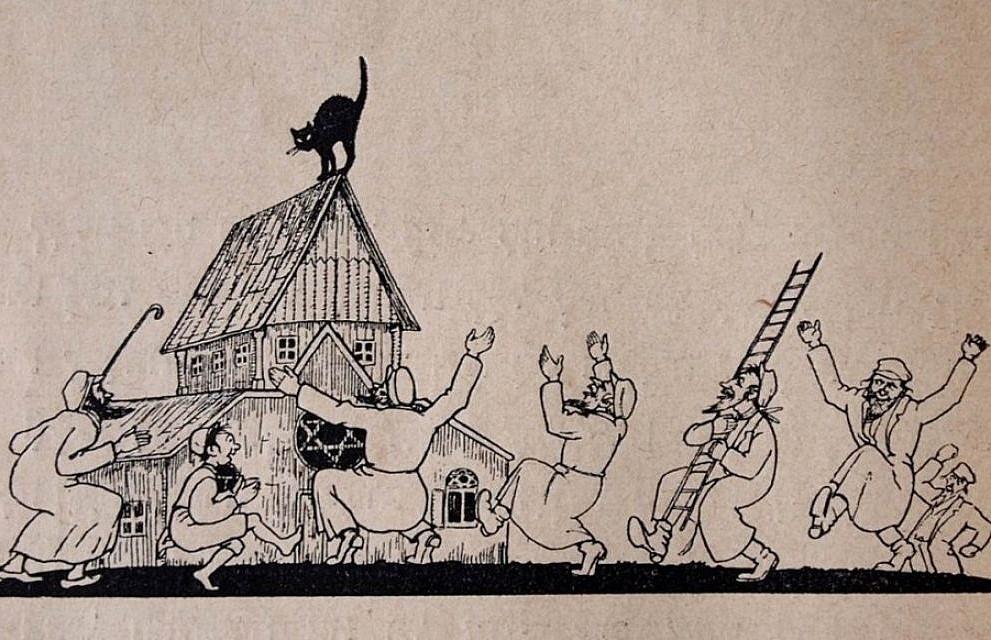
    In Jewish lore, the wise men of the Polish city of Chelm may be very wise indeed, but they sure do lack common sense. For example, when carrying logs down a mountain to build their dwellings, they encounter someone who suggests it might be easier simply to roll them down. They recognize this as a very good idea – so they carry the logs back up the mountain and proceed to roll them down.

    This kind of playful irony informs the tales of Isaac Bashevis Singer, Aaron Zeitlin, and Sholem Aleichem. More to our purposes, the folkloric antics inspired composer Matthew H. Fields when he came to write his “Sages of Chelm.” The work falls into three movements: “Khutzpah,” “Tsores,” and “Simchas.” We’ll enjoy the piece on this last day of Hanukkah, beginning at 3:00 EST.

    In the meantime, here’s a link to a round-up of favorite Chelm stories:

    https://www.myjewishlearning.com/article/the-sages-of-chelm/

    I’ll actually be in a little earlier than usual today, to host “Bach at One.” The Choir of Trinity Wall Street and Trinity Baroque Orchestra will present the Cantata BWV 8 “Liebster Gott, wenn Werd ich sterben” (“Dearest God, when will I die?”), under the direction of Julian Wachner. Then we’ll get a taste of “Pipes at One,” with Kent Tritle on the organ of Trinity’s St. Paul’s Chapel. Featured composers will include Dietrich Buxtehude, Nicolas de Grigny, Louis Marchand, Jean Langlais, Felix Mendelssohn, and of course Bach. As the titles of the programs suggest, these concerts will be broadcast back-to-back (Bach-to-Bach?), beginning at 1:00 EST.

    Then, following “Sages of Chelm,” it will be business as usual at 4:00 EST, as I offer a skillful juxtaposition of birthday anniversaries and commuter entertainment, with some intimations of Christmas folded into the mix.

    The “ch” in “Chelm” is pronounced like the “ch” in “Bach.” It’s not just the cold weather that will have me clearing my throat during this musical marathon run, from 1 to 7 p.m. EST, on WWFM – The Classical Network and wwfm.org.


    The People of Chelm and the Cat:

    https://www.yiddishbookcenter.org/collections/oral-histories/excerpts/woh-ex-0002054/people-chelm-and-cat

Tag Cloud

Aaron Copland (92) Beethoven (95) Composer (114) Film Music (119) Film Score (143) Film Scores (255) Halloween (94) John Williams (185) KWAX (229) Leonard Bernstein (99) Marlboro Music Festival (125) Movie Music (134) Opera (198) Philadelphia Orchestra (86) Picture Perfect (174) Princeton Symphony Orchestra (106) Radio (87) Ralph Vaughan Williams (85) Ross Amico (244) Roy's Tie-Dye Sci-Fi Corner (290) The Classical Network (101) The Lost Chord (268) Vaughan Williams (102) WPRB (396) WWFM (881)

DON’T MISS A BEAT

Receive a weekly digest every Sunday at noon by signing up here


RECENT POSTS