I’m sitting here thinking I could really use some William Mathias Harp Concerto. This webcast of “The Lost Chord” from a few years back is the very thing. Mathias’ concerto is the centerpiece of an hour of Welsh music. March 1st, St. David’s Day, has been celebrated in Wales since the Middle Ages. I honor the country’s patron saint with a playlist also featuring Grace Williams’ “Penillion” and John Thomas’ work for solo harp “Megan’s Daughter.” You’ll also hear Bryn Terfel sing a Welsh song with his former school mate, tenor John Eifion.
There’s a giant leek in the fridge. Yes, you heard that correctly, and no, it’s not broken. Listen to “And God Created Great Wales” here:
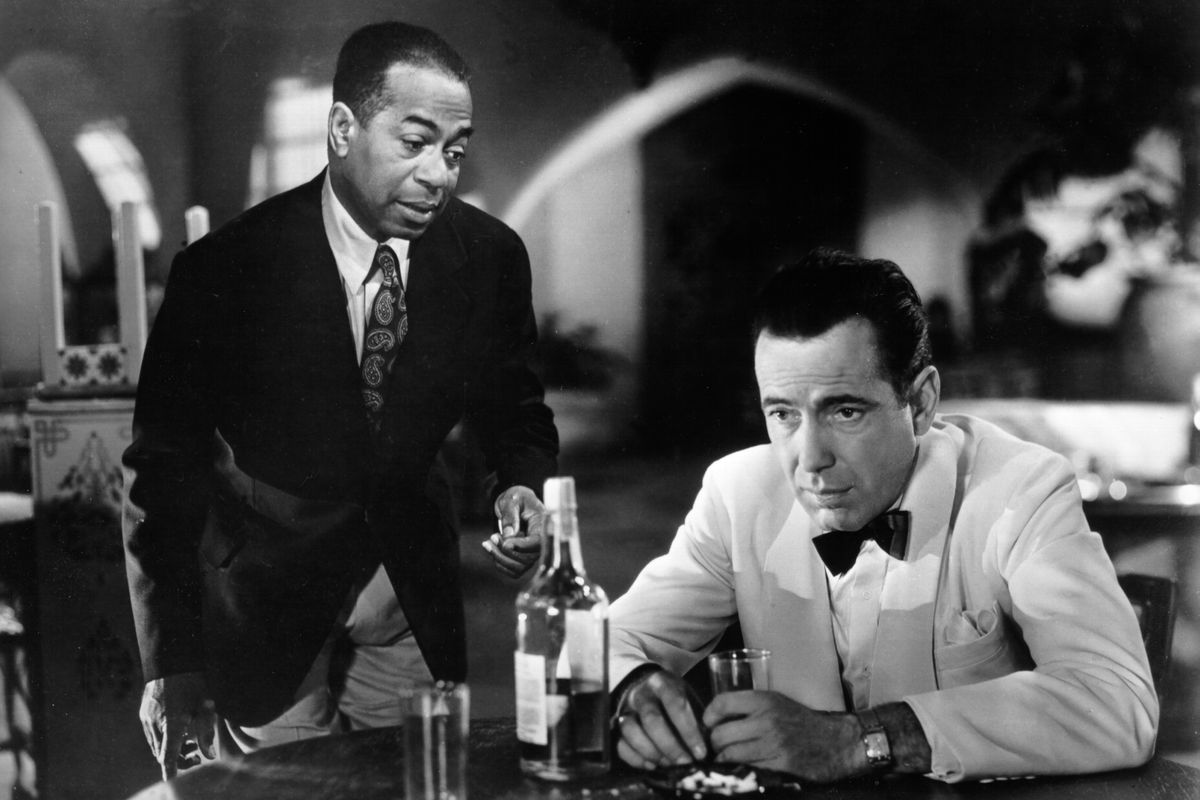
RICK: “You said it for her, you can say it for me. Say it!”
ILSA: “Say it, Sam. Say… Carl Ditters von Dittersdorf.”
It’s true, Dittersdorf is good for anything that ails you. Even if you’re a guy standing on a station platform in the rain, with a comical look on your face, because your insides have been kicked out. The very act of pronouncing of his name can’t help but make you smile.
Dittersdorf (1739-1799) was one of the closest friends of Franz Joseph Haydn. He played first violin in a superstar string quartet, with Haydn (second violin), Mozart (viola) and Dittersdorf pupil Jan Křtitel Vaňhal – a.k.a. Johann Baptist Wanhal – (cello). Imagine being a fly on a wall at those performances, or even rehearsals! Though killjoy Michael Kelly, the Irish tenor who created Don Basilio and Don Curzio in Mozart’s “The Marriage of Figaro,” claimed the ensemble played well enough, but was not really anything exceptional. Oh, Michael. It sounds like you need to make “Dittersdorf” your mantra.
Among Dittersdorf’s enormous output, which includes some 120 numbered symphonies (it’s possible he may have composed 90 more) are twelve programmatic works inspired by Ovid’s “Metamorphoses.”
Personally, I find more enjoyment in his chamber music. Here is his String Quartet No. 3 in G major.
But perhaps you’d prefer his Harp Concerto, once his most-frequently encountered work (which admittedly isn’t saying much).
Dittersdorf was actually just “Ditters” until 1773. Where’s the fun in that? When he was granted a musical position that required a noble title, he was sent to Vienna, where fortuitously he was dubbed “von Dittersdorf.” And the world has been smiling ever since.
Here’s looking at you, Carl Ditters von Dittersdorf, on your birthday. Your very name is a gift that bestows a sense of the kind of cheer your music embodies.
I heard this on the radio yesterday, and I think it’s terrific.
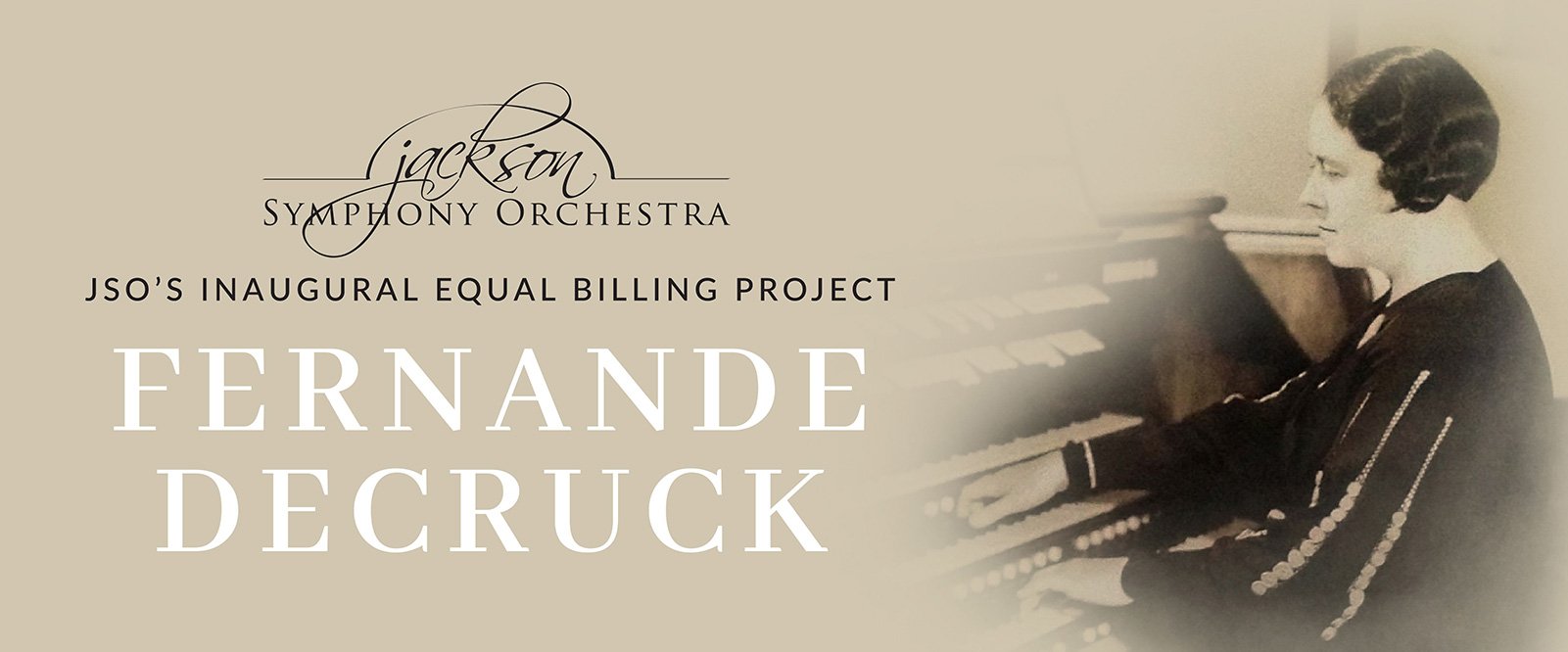
Fernande Decruck, born on Christmas Day, 1896, is best-known, if at all, for her works for the saxophone. She composed over 40 pieces for the instrument. Playing piano from the age of 8, she attended the Toulouse Conservatory. She was then accepted into the Paris Conservatory, beginning in 1918. There, she studied organ and composition. Her mastery of the instrument led to a concert tour of the U.S.
In 1928, Decruck and her husband, Maurice, moved to the United States with their young family. Maurice played clarinet and saxophone and was appointed principal bassist with the New York Philharmonic. He would return to France in 1932 to become a music publisher. At home, he established Les Editions de Paris. Fernande rejoined him there in 1933. She then found work as a professor at the Toulouse Conservatory. She lived in Toulouse with her three children, while Maurice remained in Paris.
In 1942, she returned to the capital, where many of her works were performed. After years of separation, the Decrucks finally divorced in 1950. Fernande died of a stroke in 1954. She was 57 years-old.
Her Harp Concerto was given its first performance on a program of the Concerts Colonne in 1946. Pierre Jamet was the soloist (and its dedicatee), and the orchestra was conducted by Paul Paray. Also on the program was Schumann’s “Manfred Overture” and Berlioz’s “Symphonie Fantastique.”
The concerto received favorable notices, then promptly faded into obscurity. It was recorded this year and released on Claves Records, thanks to the Jackson Symphony Orchestra, of Jackson, Michigan, as part of the organization’s Equal Billing Project. The project supports and records works by composers who weren’t equally billed or adequately recognized in their lifetimes. A laudable endeavor. You can learn more about it here:
Apparently it’s a thing that some people wake on the first day of every month and, before they have even had a cup of coffee, exclaim, “Rabbit rabbit!” This, I am told, is for luck. It is a practice I somehow have never encountered, which is surprising, since surely it is the sort of quaint tradition a lover of twee, old-fashioned books would have run across well before midlife.
Be that as it may, every November 2, it is my practice to wake and the first thing I cry is “Carl Ditters von Dittersdorf!” Not for luck, mind you, but simply because it’s a name that makes me happy. Then, I’ve always had a little bit of Schroeder in me.
Dittersdorf (1739-1799) was one of the closest friends of Franz Joseph Haydn. He played first violin in a superstar string quartet, with Haydn (second violin), Mozart (viola) and Dittersdorf pupil Jan Křtitel Vaňhal – a.k.a. Johann Baptist Wanhal – (cello). Imagine being a fly on a wall at those performances, or even rehearsals! Though wet blanket Michael Kelly, the Irish tenor who created Don Basilio and Don Curzio for Mozart’s “The Marriage of Figaro,” claimed the ensemble played well enough, but was not really anything exceptional. Mee-yow!
Among Dittersdorf’s enormous output, which includes some 120 numbered symphonies (it’s possible he may have composed 90 more) are twelve programmatic works inspired by Ovid’s “Metamorphoses.”
Personally, I find more enjoyment in his chamber music. Here is his String Quartet No. 3 in G major.
But perhaps you’d prefer his Harp Concerto, once his most-frequently encountered work (which admittedly isn’t saying much).
Happy birthday, Carl Ditters von Dittersdorf! Try it. His very name gives me a sense of the kind of cheer his music embodies.