Tag: Harrison Birtwistle

  • Elgar Howarth Last Manchester Maverick Dies

    Elgar Howarth Last Manchester Maverick Dies

    When composer Alexander Goehr died last August, I erroneously reported – and then, when the error was pointed out to me, emended it – that the final representative of the so-called Manchester School had died at a venerable age. Now, truly, with the death of Elgar Howarth, the last of the Mancunian mavericks has left us. Howarth died yesterday at the age of 89.

    One of that squad of rebel angels that emerged from the Royal Manchester (now Northern) College of Music in the 1950s, Howarth joined fellow students and angry young men Harrison Birtwistle, Peter Maxwell Davies, Alexander Goehr, and John Ogdon in championing works that were hardly easy listening. To this end, they formed New Music Manchester. Collectively, they may have presented a tough face, but after-hours, they would geek out talking about things like medieval modes.

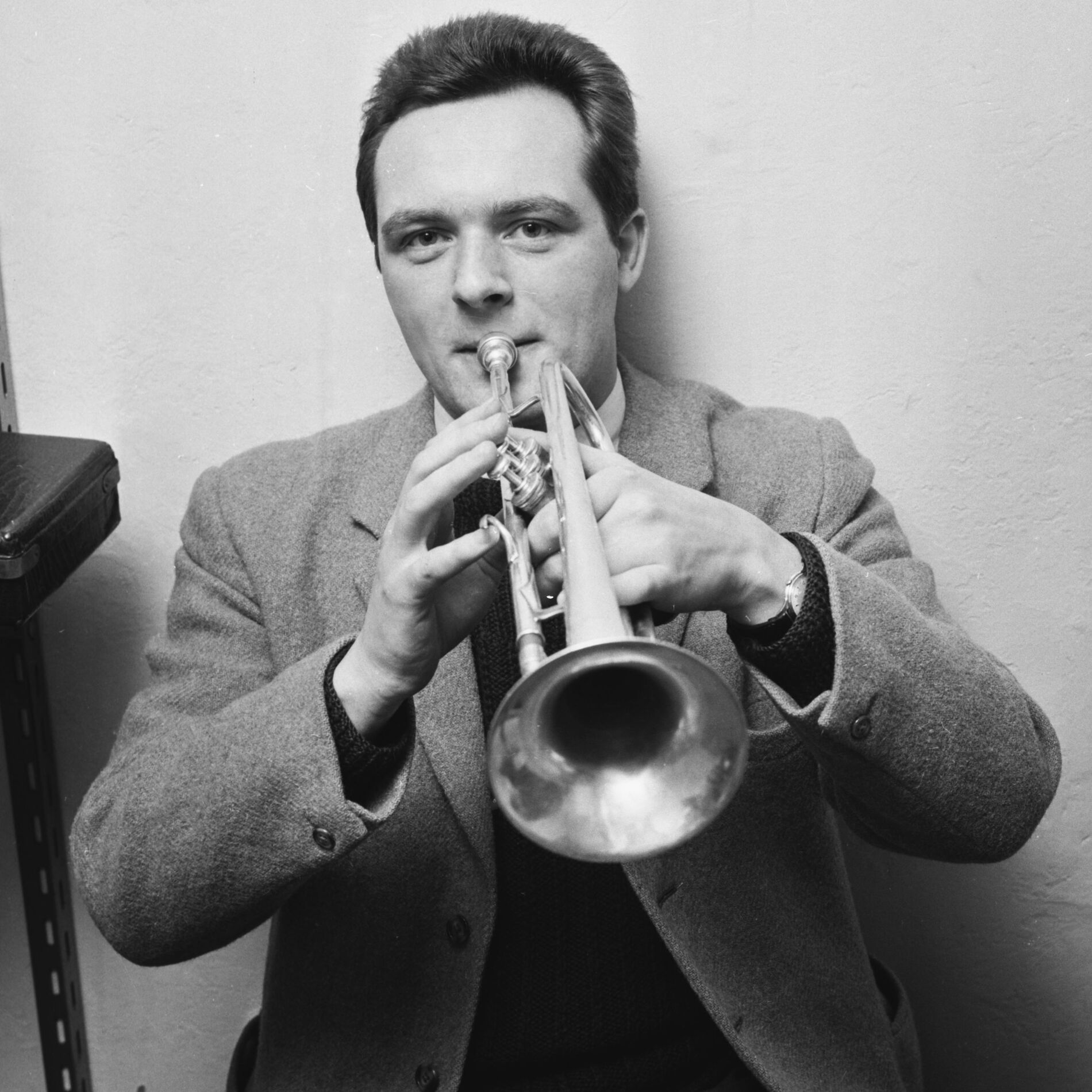
    Howarth was reared in a family of brass players. His father taught him cornet and trumpet. His brother was a trombonist. He received his formal education at Manchester University and RMCM.

    Of his college cohort, Ogdon gained fame as a pianist, Goehr evolved into a post-serialist avant-gardist steeped in Messiaen and world music, Maxwell Davies acquired a reputation as a symphonist (although he retained his impish glint), all the while cannily developing a sideline of light music classics, and was eventually appointed Master of the Queen’s Music, and Birtwistle, for all his notoriety, was regarded as one of the most important British composers of his generation.

    Howarth kept bread on the table as a trumpeter and conductor. He found employment in the Covent Opera Orchestra, before advancing to principal trumpet of the Royal Philharmonic Orchestra. He also appeared frequently with the London Sinfonietta, to which he would later return as a guest conductor.

    He cut his teeth on the podium as conductor of the Royal Philharmonic, in the early 1970s, for Frank Zappa’s film and album “200 Motels.” In 1967, he had arranged and performed, as one of four trumpeters, the fanfares for the Beatles’ “Magical Mystery Tour.”

    His impact on the brass band world was considerable. He took both the Grimethorpe Colliery Band and Black Dyke Mills Band to the BBC Proms. He was also closely associated with the Philip Jones Brass Ensemble. He commissioned and arranged works by William Walton, Harrison Birtwistle, Hans Werner Henze, Toru Takemitsu, and many others. His virtuosic arrangement of Mussorgsky’s “Pictures at an Exhibition” was widely praised.

    Howarth went on to lead all the major British orchestras, in both concert hall and recordings. He was especially associated with the works of Birtwistle and György Ligeti. (He gave first performances of four of Birtwistle’s operas as well as Ligeti’s “Le Grand Macabre.”) But his repertoire was broad, also encompassing works from the 18th and 19th centuries, and he appeared often with other well-known orchestras on mainland Europe. He was nearly as seasoned an opera conductor as he was a director of brass bands.

    In 2003, it was revealed that he had rejected the royal honor of a CBE. Howarth may have of necessity operated around the fringes of the establishment, but beneath that veneer of respectability still lurked a rebel angel.

    R.I.P.


    “Pictures at an Exhibition”

    Conducting Birtwistle

    Zappa

    Conversation with Elgar Howarth

    Howarth talks about his involvement with the Grimethorpe Colliery Band in 1972

  • Alexander Goehr, Manchester Rebel, Dies at 92

    Alexander Goehr, Manchester Rebel, Dies at 92

    Composer Alexander Goehr, the penultimate representative of the so-called Manchester School – that group of rebel angels that emerged from the Royal Manchester (now Northern) College of Music in the 1950s – has died at a venerable age.

    The son of composer and conductor Walter Goehr, a Schoenberg pupil, Alexander was born in Berlin in 1932. The influence of Olivier Messiaen (his father conducted the U.K. premiere of Messiaen’s “Turangalila Symphony;” Alexander later studied with the composer) colored his own personal approach to the twelve-tone method.

    Interestingly, Goehr’s first important, though likely least influential, teacher was Allan Gray (birth name Józef Żmigrod), also a Schoenberg disciple, who made his hay as a film composer. Schoenberg had already been rolling his eyes at Gray’s involvement in cabaret and theater. One can only assume what he made of this later development. (Of course, Schoenberg himself considered scoring “The Good Earth” in Hollywood, but priced himself out.) Gray would soon find employment providing music for Powell-Pressburger films like “The Life and Death of Colonel Blimp.” He also wrote the score for “The African Queen.”

    Despite, or perhaps because of, his own experiences, Goehr’s father did not encourage his son’s pursuit of a musical career. He would have preferred him to study classics at Oxford.

    At Manchester, Alexander fell in with angry young men Harrison Birtwistle, Peter Maxwell Davies, Elgar Howarth, and John Ogdon. They may have presented a tough face, but after-hours, they would geek out talking about things like medieval modes. Together, they founded New Music Manchester. The works they championed were hardly easy listening.

    Ogdon soon gained fame as a pianist, Howarth, now the group’s sole surviving member, kept bread on the table as a trumpeter and conductor, Maxwell Davies cannily developed a sideline of light music classics and was later appointed Master of the Queen’s Music, and Birtwistle, for all his notoriety, was regarded as one of the most important British composers of his generation.

    While in Paris to study with Messiaen, Goehr became friends with Pierre Boulez, who served as a mentor in the late ‘50s. Eventually they parted ways, after Goehr became disenchanted with the strictures of serialism and craved greater artistic freedom, in regard to spontaneity and personal choice. Messiaen also sparked his interest in non-Western music, including Indian raga.

    Questions of his personal evolution aside, in “Englands green & pleasant Land,” Goehr, in common with his classmates Maxwell Davies and especially Birtwistle, would continue to be regarded by casual concertgoers as an overgrown enfant terrible. At an age when many seriously begin to contemplate retirement, Goehr retained his influence and reputation as a prominent figure of the avant-garde. Yet in his later work, he seemed to step up his engagement with earlier historical styles and, as a result, wound up composing some of his most immediately appealing music.

    I don’t claim to be a Goehr expert, nor should this post be taken as a comprehensive overview of his life or career. I suppose I know about as much about him as any fanatical classical music record collector might, but even a scroll through his Wikipedia page reveals that, for whatever effort I may have made here, I still have merely skimmed the surface.

    Among other things I neglected to mention, he also held a number of prestigious academic posts, culminating in a professorship at Cambridge University from 1976 to 1999.

    Goehr’s death at 92 was reported yesterday. I would have gotten this up sooner, but I spent this morning at the DMV!


    Piano Concerto (1972), composed for Daniel Barenboim; played here by Peter Serkin

    String Quartet No. 4 “In Memoriam John Ogdon” (1990)

    “Metamorphosis/Dance,” inspired by Homer’s “The Odyssey”

    “Fugue on the Notes of Psalm IV” (1976)

    Interview with Alexander Goehr


    PHOTOS:

    Top, left to right: Alexander Goehr, Harrison Birtwistle, Audrey Crawford, formerly Goehr (front), John Ogdon (rear), Elgar Howarth, Peter Maxwell Davies, and John Dow in 1955;

    Bottom: Goehr interviewed in 2014

  • Harrison Birtwistle: A Complicated Farewell

    Harrison Birtwistle: A Complicated Farewell

    Monday is just about the only day I’m not around a computer, and wouldn’t you know it, it’s also the time that Harrison Birtwistle, ever the contrarian, died.

    I know I’ve posted here before about my complicated relationship with this composer. Despite sharing his fascination with Gawain, Punch, the Minotaur, Anubis, Orpheus, King Kong, and any number of other subjects that form the bases for his operas and concert works, I find he’s someone whose music I have only ever moderately warmed up to.

    In common with Peter Maxwell Davies, his former colleague of the Manchester School of composition, Birtwistle emerged from a working-class Lancashire background to radically modernize British music. But unlike Max, whose palpable sense of mischief made even his most scandalous works somehow approachable, Birtwistle never cracked a smile, unless perhaps it was at the audience’s expense.

    I don’t really need music to be “easy,” necessarily, or even tonal. There are times when I can put on a Birtwistle record and totally go with it. But I don’t know that anything he has written has ever engendered much affection in me. This is not an objective assessment, of course, and perhaps you will react differently.

    Interestingly, Birtwistle had a local connection. He attended Princeton University on a Harkness Fellowship, beginning in 1965. There, he completed his opera “Punch and Judy,” which begins with Punch tossing his baby into the fire This commences a murder spree that includes the stabbing of Judy, his wife. All is presented in human form, making it that much more disturbing than when enacted by puppets. The experience proved to be so unpleasant that Benjamin Britten walked out on the premiere.

    Perhaps you will find something to latch on to in one of these pieces recommended by The Guardian.

    https://www.theguardian.com/music/tomserviceblog/2014/jul/15/harrison-birtwistle-80th-birthday-five-introductory-pieces?fbclid=IwAR0dnkOT9wr0jsM91ngZM-h_N90rpenZdWuBhJj30c4LEO8FFxY-aJ_JDvY

    If I had to recommend a place to start, it would be “Earth Dances” from 1986.

    There is something primordial in Birtwistle’s work, but it is not someplace I generally choose to live. At least his music has integrity, which I can’t always claim for some contemporary works of an easier-going disposition.

    See what you think.

    Also, “The Moth Requiem” is a little gentler than most.

    Birtwistle was 87 years-old. R.I.P.

  • Julian Bream Turns 86 WWFM Celebrates

    Julian Bream Turns 86 WWFM Celebrates

    Holy smokes! Julian Bream is also 85 today!

    So we’ll celebrate him AND Sir Hairy Birtwistle, also 85, among our featured artists, between now and 7:00 EDT, on WWFM – The Classical Network and wwfm.org.

    ERRATUM: Actually, Bream is 86. Wikipedia has got it wrong. Pardon my slipshod scholarship.

  • Birtwistle at 85 An Appreciation?

    Birtwistle at 85 An Appreciation?

    Has Sir Harrison Birtwistle ever cracked a smile? One that isn’t at the expense of his audience, I mean?

    Today is Sir Harry’s 85th birthday. Despite sharing his fascination with Gawain, Punch, the Minotaur, Anubis, Orpheus, King Kong, and any number of other subjects that form the bases for his operas and concert works, I find he’s a composer whose music I have only ever moderately warmed up to.

    I vastly prefer the output of his contemporary and fellow former enfant terrible of the so-called Manchester School, Sir Peter Maxwell Davies. Late in life, Max may have been appointed Master of the Queen’s Music – you can’t get more establishment than that – but he never lost his impish glint. To some extent, it is that sense of mischief that makes even his earlier, more scandalous works somehow approachable.

    I don’t really need music to be “easy” or even tonal. There are times when I can put on a Birtwistle record and totally go with it. But I don’t know that anything he has written engenders much affection in me. This is not an objective assessment, of course, and perhaps you will react differently.

    Birtwistle has a local connection, by the way. He attended Princeton University on a Harkness Fellowship, beginning in 1965. There, he completed his opera “Punch and Judy,” which begins with Punch tossing his baby into the fire. This commences a murder spree that includes the stabbing of Judy, his wife. All this is presented in human form, making it much more disturbing than when enacted by puppets.

    Perhaps you will find something to latch on to in one of these pieces recommended by The Guardian.

    https://www.theguardian.com/music/tomserviceblog/2014/jul/15/harrison-birtwistle-80th-birthday-five-introductory-pieces

    If I had to recommend one with which to start, it would be “Earth Dances” from 1986. I confess, listening to it now, it is not as impenetrable as I remember it being. In fact, it actually kind of makes sense.

    There is something primordial in Birtwistle’s work, but it is not someplace I choose to live. At least the music has integrity, which I can’t always claim for some contemporary works of an easier-going disposition.

    See what you think. Here is Birtwistle’s “Earth Dances.”

    His music may not be the most conducive for wrapping up a work day, getting one through the afternoon commute, or enhancing the enjoyment of a cocktail hour, but we’ll see how I feel. One of his could be among the featured selections on my air shift today from 4 to 7 p.m. EDT, on WWFM – The Classical Network and wwfm.org.

    If so, hang in there – it’s also the birthday of British Light Music master, Ronald Binge!

Tag Cloud

Aaron Copland (92) Beethoven (95) Composer (114) Film Music (120) Film Score (143) Film Scores (255) Halloween (94) John Williams (185) KWAX (229) Leonard Bernstein (100) Marlboro Music Festival (125) Movie Music (135) Opera (198) Philadelphia Orchestra (88) Picture Perfect (174) Princeton Symphony Orchestra (106) Radio (87) Ralph Vaughan Williams (85) Ross Amico (244) Roy's Tie-Dye Sci-Fi Corner (290) The Classical Network (101) The Lost Chord (268) Vaughan Williams (103) WPRB (396) WWFM (881)

DON’T MISS A BEAT

Receive a weekly digest every Sunday at noon by signing up here


RECENT POSTS