Tag: Hollywood Composers

  • Celebrating Steiner and Tiomkin Movie Music Legends

    Celebrating Steiner and Tiomkin Movie Music Legends

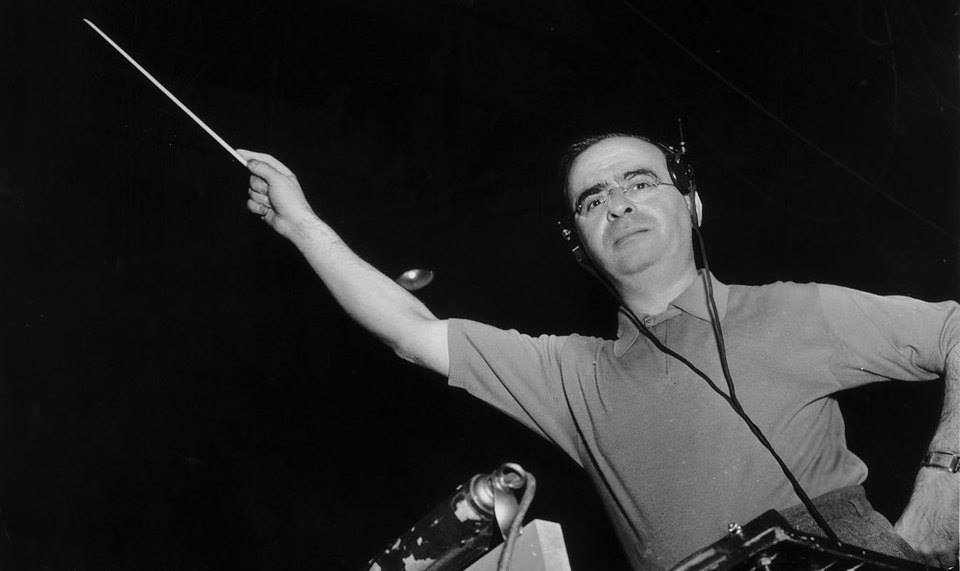
    On Friday, May 7, the classical music world celebrated the dual birthdays of Johannes Brahms and Peter Ilych Tchaikovsky. But for those who care about film music, there’s May 10 – the anniversary of the births of Max Steiner and Dimitri Tiomkin.

    Steiner (1888-1971), the literal godson of Richard Strauss, was instrumental in transplanting the sound of fin de siècle Vienna to the realm of cinematic dreams. He composed over 300 film scores for RKO and Warner Brothers, earning 24 Academy Award nominations and winning three – for “The Informer,” “Now, Voyager” and “Since You Went Away” – though he is unquestionably better remembered today for his work on “King Kong,” “Gone with the Wind” and “Casablanca.”

    Tiomkin (1894-1979), a pupil of Alexander Glazunov, was born in Ukraine. He settled in the United States, where he composed music for films in all genres, though in the 1950s he enjoyed particular success writing for Westerns, including the Academy Award-winning “High Noon.” When asked why this would be the case, that a composer born halfway around the world would have such a command of this distinctly American idiom, Tiomkin replied, “A steppe is a steppe is a steppe.”

    Tiomkin was honored with four Academy Awards – three for Best Original Score (for “High Noon,” “The High and the Mighty” and “The Old Man and the Sea”) and one for Best Original Song (“The Ballad of High Noon”).

    Here’s a transcript of his acceptance speech, delivered after being handed the Oscar for “The High and the Mighty” in 1955:

    “Lady and gentlemen, because I working in this town for twenty-five years, I like to make some kind of appreciation to very important factor what make me successful to lots of my colleagues in this town. I’d like to thank Johannes Brahms, Johann Strauss, Richard Strauss, Beethoven, Mozart, George Gershwin, Jerome Kern, Wagner, Tchaikovsky, Rimsky-Korsakov. Thank you.”

    You can watch it here:

    Though Steiner and Tiomkin were both very well-connected in the wider musical world, comparatively speaking, neither left very much in the way of classical concert music. In 2019, Intrada Records put out a diverting 2-CD set of Tiomkin’s brightly-scored ballet music, dances composed in Paris for his wife, Albertina Rasch, in 1927-1932, prior to his work in film. It’s good mid-morning music, but would also be wonderful for afternoon drive-time – if only I had a live air shift! You can sample some of it by following the link. Already detectable is Tiomkin’s trademark snarling brass, in a number titled “Mars” (the second track in this YouTube playlist):

    In 2020, Oxford University Press published a book by Steven C. Smith, “Music by Max Steiner: The Epic Life of Hollywood’s Most Influential Composer.” Read my impressions of this authoritative biography, unbelievably the first full-length treatment of Steiner’s life and achievements, here. Then get yourself a copy!

    Also last year, while I was twiddling my thumbs, waiting to get back to work, I put together a Steiner-Tiomkin crossword puzzle. The clues not only allude to specifics of their respective lives and careers, but they should also be of ample interest, I hope, to classic movie buffs. So even if you’re convinced you don’t know a lot about music, do check it out if, like me, you happen to watch a lot of movies from the ‘30s, ‘40s, and ‘50s.

    To fill out the puzzle, follow the link and select “solve online” at the bottom of the page. You’ll then be able to type directly into the squares. Once you feel you’ve exhausted the puzzle, you’ll find the solutions by clicking on “Answer Key PDF.”

    https://www.armoredpenguin.com/crossword/Data/2020.05/1007/10071219.977.html?fbclid=IwAR3_LH48DW_z4Zy7RZmD8-lryFTVOKybs6Kb28ZccpCfAXjQkTUYXR8Vknw

    Happy birthday to Max Steiner and Dimitri Tiomkin, two composers who enriched generations of movie lovers by keeping it “reel!”

    Steiner’s “Now, Voyager”

    Tiomkin’s “Land of the Pharaohs”

    A great, two-part interview with Steiner:

    Part 1 https://www.youtube.com/watch?v=eQuNnzH6_g8
    Part 2 https://www.youtube.com/watch?v=jmJLTn_6UOY

    The official Dimitri Tiomkin website:

    Welcome to DimitriTiomkin.com


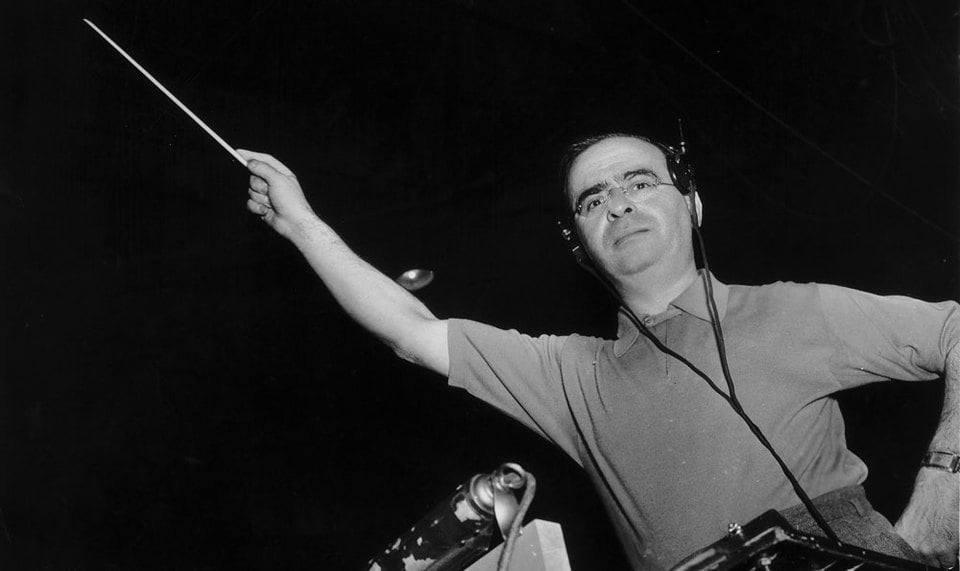
    PHOTOS: Steiner conducts (top); Tiomkin composes

  • Korngold From Vienna to Hollywood

    Korngold From Vienna to Hollywood

    One of classical music’s most astonishing composer prodigies – springing fully formed from the head of Zeus, as it were – Erich Wolfgang Korngold became the toast of Vienna. His opera “Die tote Stadt” was probably his greatest success, receiving double-premieres in Hamburg and Cologne. It became one of the most popular operas by a living composer during the 1920s.

    With the rise of the Nazis, Korngold and his family found refuge in Hollywood, where he wrote film scores for Warner Brothers, including those for some of my personal favorites: “The Adventures of Robin Hood,” (1938) “The Private Lives of Elizabeth and Essex” (1939), “The Sea Hawk” (1940), and “Kings Row” (1942).

    Also during this period, he composed a “Passover Psalm,” on a commission from Rabbi Jacob Sonderling, founder of Fairfax Temple in Los Angeles. While ethnically Jewish, Korngold was not a particularly religious man. His only other sacred work, “Prayer,” was also composed for Sonderling.

    Korngold swore he would produce no new concert music until Hitler was removed from power. He made those two exceptions for Fairfax Temple. Here is Korngold’s “Passover Psalm” (1941):

    https://www.youtube.com/watch?v=5cpvsi4TFto

    Chag aviv sameach!


    By coincidence, Korngold is also the subject of today’s “Composer’s Datebook.” Listen here:

    https://www.yourclassical.org/programs/composers-datebook/episodes/2021/03/28

  • André Previn Hollywood’s Musical Genius

    André Previn Hollywood’s Musical Genius

    Before André Previn became an acclaimed conductor of symphonies, he stood before some of the greatest sight-readers in the world, who made up the Hollywood studios’ crackerjack orchestras. From Lassie to “My Fair Lady” to “Rollerball,” Previn worked on over 50 films.

    He was nominated for 11 Academy Awards, and won four – in 1958, 1959, 1963 and 1964. He is one of the few composers to be recognized with back-to-back Oscars, and only one of two to have been so twice.

    This week on “Picture Perfect,” we’ll focus on this comparatively neglected aspect of a supremely talented musical polymath, through selections from his scores to “The Four Horsemen of the Apocalypse,” “Irma la Douce,” “Dead Ringer,” and “Elmer Gantry.”

    Previn’s Hollywood career began when he was still in high school, as he was brought in by his great uncle, Charles Previn, one-time music director for Universal Studios, to transcribe jazz improvisations for José Iturbi. Soon young André was writing and recording his own scores. His first official screen credit was for “The Sun Comes Up,” an entry in the Lassie series, in 1949. The same year, he scored “Challenge to Lassie.”

    He went on to compose music for “Kim,” “Bad Day at Black Rock,” “The Fastest Gun Alive,” “Designing Woman,” “The Subterraneans,” “Long Day’s Journey into Night,” and “Inside Daisy Clover,” among others. He won Oscars for his work on “Gigi,” “Porgy and Bess,” “Irma la Douce,” and “My Fair Lady.”

    I hope you’ll join me for André Previn at the movies, this Friday evening at 6:00 EST, on WWFM – The Classical Network and wwfm.org.


    PLEASE NOTE: Of perhaps related interest, I’ll be sharing an hour of Previn’s concert works on “The Lost Chord,” this Sunday night at 10:00 EDT.


    Regardless of what the Academy would have us believe, the notorious Best Picture snafu of 2017 was not the first time such a mix-up occurred. Here’s an earlier episode that momentarily delayed Previn from collecting his third Oscar, well-fielded by Sammy Davis, Jr.

    Note the other nominees in both categories and weep over just how far civilization has declined in the past 50 years.


    PHOTO (left to right): André Previn, Sammy Davis, and Elmer Bernstein

  • Korngold’s Hollywood Composers

    Korngold’s Hollywood Composers

    Errol Flynn writes a ballet? Charles Boyer composes a tone poem? Claude Rains writes a cello concerto!

    This week on “Picture Perfect,” we’ve got three examples from Hollywood’s Golden Age of movies about fictional composers. These, of course, required music allegedly written by the characters, and this was provided by two-time Academy Award-winner Erich Wolfgang Korngold.

    Korngold is probably best known to movie buffs as the composer for Flynn swashbucklers such as “The Adventures of Robin Hood” and “The Sea Hawk,” but his filmography is more varied than one might at first suspect. No matter what the subject, Korngold could be counted on to bring that opulent fin de siècle gloss, developed in a Vienna steeped in Mahler and Strauss.

    We’ll hear music from “Escape Me Never” (1947), a slightly preposterous melodrama about two composer brothers who become rivals in love; “The Constant Nymph” (1943), about a would-be romantic bond between a composer struggling to find his true voice and an admiring girl on the verge of womanhood who develops deeper feelings for him; and “Deception” (1946), about a cellist reunited with his former love, who had believed him killed during the war, and the vindictive composer who attempts to shatter his psyche through grueling rehearsals of his latest concerto.

    “Deception” was Korngold’s last, wholly original score, though he was lured back to Hollywood for one final project, “Magic Fire” (1955), a biopic of the composer Richard Wagner, for which he adapted selections from Wagner’s operas. Furthermore, Korngold makes an appearance onscreen (!) as conductor Hans Richter. The film was subject to heavy cuts prior to its U.S. release and was not a success.

    Hollywood seldom gets it right when it comes to portraying the process of the composer, but Korngold, true to his name, did his best to spin gold from corn, producing some appropriately grand utterances, albeit condensed to only a few minutes of screen time. Quite a task for this figure who made his greatest mark in opera.

    Join me for these examples of Korngold as ghostwriter, on “Picture Perfect,” this Friday evening at 6:00 EST, on WWFM – The Classical Network and wwfm.org.

    Follow the link to hear Korngold improvise on themes from “The Flying Dutchman” (with entertaining stills):

    https://www.youtube.com/watch?v=h4bNEw1nu3I


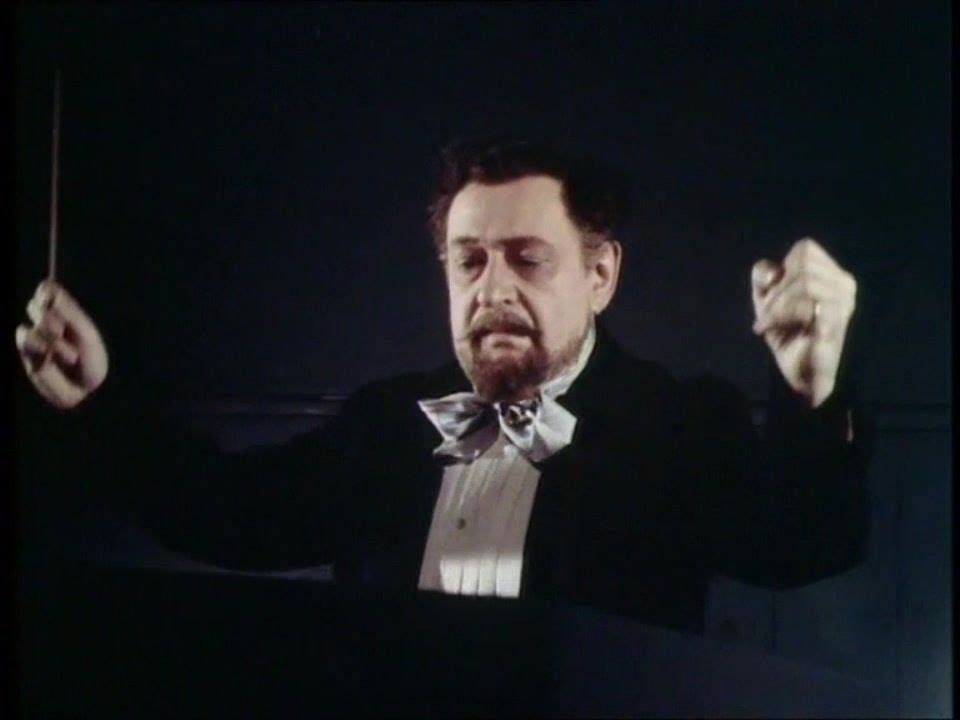
    MAGIC FIRE: When the actor who was hired to play Hans Richter failed to show, Korngold was rushed into make-up (hence, the fake beard). This is the only existing footage of Korngold conducting.

  • Steiner and Tiomkin Hollywood Giants

    Steiner and Tiomkin Hollywood Giants

    There are only so many days in a year, so it shouldn’t come as a surprise that two giants in a particular field would share a birthday anniversary. Hence, we have Rachmaninoff and Busoni on April 1, and Heifetz and Kreisler on February 2. May 10 marks the birthdays of Max Steiner and Dimitri Tiomkin.

    Steiner (1888-1971), the literal godson of Richard Strauss, helped transplant the sound of fin de siècle Vienna to the realm of cinematic dreams. He composed over 300 film scores for RKO and Warner Brothers, earning 24 Academy Award nominations and winning three – for “The Informer,” “Now, Voyager” and “Since You Went Away” – though he is unquestionably better remembered today for his work on “King Kong,” “Gone with the Wind” and “Casablanca.”

    Tiomkin (1894-1979), a pupil of Alexander Glazunov, was born in Ukraine. He settled in the United States, where he composed music for films in all genres, though in the 1950s he enjoyed particular success writing for Westerns, including the Academy Award-winning “High Noon.” When asked why this would be the case, that a composer born half a world away would have such a command of this distinctly American idiom, Tiomkin replied, “A steppe is a steppe is a steppe.”

    Tiomkin was honored with four Academy Awards – three for Best Original Score (for “High Noon,” “The High and the Mighty” and “The Old Man and the Sea”) and one for Best Original Song (“The Ballad of High Noon”).

    Here’s a transcript of his reception speech, when winning the Oscar for “The High and the Mighty” in 1955:

    “Lady and gentlemen, because I working in this town for twenty-five years, I like to make some kind of appreciation to very important factor what make me successful to lots of my colleagues in this town. I’d like to thank Johannes Brahms, Johann Strauss, Richard Strauss, Beethoven, Mozart, George Gershwin, Jerome Kern, Wagner, Tchaikovsky, Rimsky-Korsakov. Thank you.”

    You can watch here:

    Steiner’s “Now, Voyager”:

    Tiomkin’s “Land of the Pharoahs”:

    If you have an interest in Hollywood composers and what they achieved on screen and in the concert hall, you might want to set aside your Thursday morning this week to join me on WPRB 103.3 FM and at wprb.com. I’ll tell you a little more about it tomorrow.


    PHOTOS: Steiner conducts (top); Tiomkin composes

Tag Cloud

Aaron Copland (92) Beethoven (95) Composer (114) Film Music (120) Film Score (143) Film Scores (255) Halloween (94) John Williams (185) KWAX (229) Leonard Bernstein (100) Marlboro Music Festival (125) Movie Music (135) Opera (198) Philadelphia Orchestra (88) Picture Perfect (174) Princeton Symphony Orchestra (106) Radio (87) Ralph Vaughan Williams (85) Ross Amico (244) Roy's Tie-Dye Sci-Fi Corner (290) The Classical Network (101) The Lost Chord (268) Vaughan Williams (103) WPRB (396) WWFM (881)

DON’T MISS A BEAT

Receive a weekly digest every Sunday at noon by signing up here


RECENT POSTS