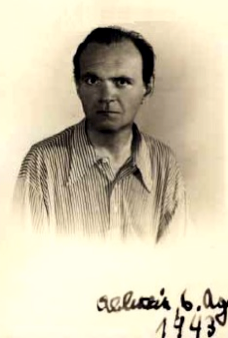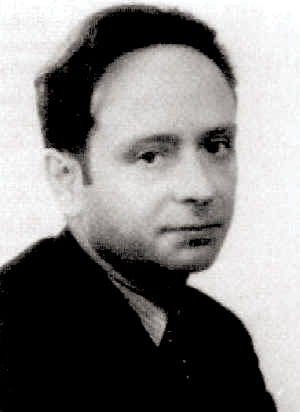
Even under the most unspeakable circumstances, he continued to be Viktor.
Viktor Ullmann was one of the best-known composers to be interned in Terezin, or Theresienstadt, the “model camp” set up by the Nazis to deceive the foreign press and the International Red Cross.
There, concert orchestras, chamber groups and jazz ensembles were formed, operas were staged, and the Verdi Requiem was mounted no less than fourteen times. At Terezin, composers continued to create, until deportation to Auschwitz.
Ullmann wrote in 1944, “…that musically I have been challenged not hindered by Theriesenstadt, that we did not just sit by Babylon’s rivers bewailing our fate, and that our will to create culture was as strong as our will to live.”
We’ll be listening to a cross-section of Ullmann’s music written in the camp, including a piano sonata (performed by Terezin survivor Edith Kraus, who died in 2013 at the age of 100), a concert overture, and a song cycle; also, a piano concerto written shortly before his arrest, a period of hardship for the composer, as he began to be stripped of his rights and his options to make a living. He never heard the concerto performed in his lifetime. Ullmann died at Auschwitz in 1944.
Ironically, most of his unpublished works dating from before his internment are now lost. It is his music written at Terezin, for the most part, which survives. The music written during his confinement, then, becomes a metaphor for the indomitable spirit of the artist.
The composer lives on through his creations, on “Ullmann Victorious,” this Sunday night at 10:00 EST, on WWFM – The Classical Network and wwfm.org.
To enhance your appreciation of Ullmann’s “Der Mensch und sein Tag” (“Man and His Day”), I am posting English translations of the aphoristic texts below, so that they may be read while listening to the music.
“DER MENSCH UND SEIN TAG” (MAN AND HIS DAY), Op. 47
12 Portraits by Hans-Günter Adler
-
WALK INTO MORNING
Sight. Hands in front of eyebrows
and maternal light. Meadowland.
A blade of grass. A step. Dew on the flowers. -
SONG
So much. So much and still more.
A great ocean, surging and pounding –
flutes lightly, horns heavily. -
HOME
In the ground, the cool ground. So colourful.
Billowing fields and meadows around.
In the ground – hidden heart and mouth. -
TO THE BELOVED
With you, in smiles and tears.
Nearness of hand and mouth. Longing
fades. With you no blind fancy. -
FLOWERS
Inward, buried deep and warm.
Breath – singing to life.
Bright goblets, lips, tongues. -
IN THE PARLOUR
Tightly pressed to one another.
Planted with care and trouble.
Animate and inanimate. Mute and loud. -
THE NEIGHBOUR
Help is good. Hand in hand.
Door to door and wall to wall:
quite united. Bond and band. -
PRAYERS
Scattered in the chalice of piety
ripe corn offered
to the gladdened protector and creator. -
IN THE FOREST
Dappled, close and far and scent.
The sun dreams, the air slumbers.
Crepitation. Calcification. Trees. Scent. -
FADE
Down, down. The bell tolls.
Clouds glow. Evening glimmers.
Down, down. The moon-breath shimmers. -
NIGHT
Come, gentle sleep! Come, sweet night!
The ground relaxes in muted glory.
Lone thoughts sink to earth. -
SILENCE
Stillness. Silence. Looking and watching.
Tranquil in blessed reflection.
Sleep before the divine.