Tag: Howard Hanson

  • Hanson’s Merry Mount: Puritanism & Opera

    Hanson’s Merry Mount: Puritanism & Opera

    Now that the feasting and the parades are past, it’s time to look beneath the quaint images of idealized Pilgrims to the dark underbelly of Puritan intolerance, fanaticism and repression. But that doesn’t mean the lesson has to be a bitter pill.

    Join me tomorrow for Sunday Morning Opera with Sandy, as once again I sit in for host Sandy Steiglitz to present Howard Hanson’s “Merry Mount.” Hanson cloaks his libretto – by Richard Stokes, loosely based upon Nathaniel Hawthorne’s short story, “The May-Pole of Merry Mount” – in the romantic idiom so characteristic of this composer of the “Romantic Symphony” (Hanson’s Symphony No. 2). No expense was spared for the work’s lavish premiere, at New York’s Metropolitan Opera, despite its having been mounted at the height of the Great Depression. No doubt Wrestling Bradford, the Puritan minister originally portrayed by Lawrence Tibbett, would not have approved.

    Coverage of the rehearsals in the New York Times questioned whether the candor and blunt Anglo-Saxonisms of the English libretto would slip past the censors. The plot seethes with sexual obsession and demonology. In fact, a good portion of Act II is set in Hell. Even so, there are stirring melodies and catchy tunes in abundance. The “Maypole Dances” are downright Polovtsian in their colorful excess.

    If the press is anything to go by, the opera was a smash. At its premiere in 1934, “Merry Mount” received no less than 50 curtain calls, with a headline in the Times proclaiming, “Reception of Hanson-Stokes Opera Most Enthusiastic of 10 Years at Metropolitan.” Yet, despite its initial success, the work is never done. It was dropped from the Met repertoire following the 1933-34 season and has rarely been heard since.

    Tastes changed. “Merry Mount” is never going to compete with “Carmen,” but I believe the pendulum has swung far enough that its voluptuous romanticism can again be enjoyed without a trace of Hawthornian guilt. We’ll be listening to a recording made from performances mounted in 1996, with soprano Lauren Flanigan (Lady Marigold Sandys), tenor Walter MacNeil (Sir Gower Lackland), baritone Richard Zeller (Wrestling Bradford), and bass Charles Robert Austin (Praise-God Tewke). The Seattle Symphony & Chorale are conducted by Gerard Schwarz.

    Before the morning is out, we’ll also have a chance to sample from Tibbett’s original characterization.

    Tune in tomorrow to see what all the fuss was about, with “Merry Mount,” on “Sunday Morning Opera,” from 7 to 10:00 EST, on WPRB 103.3 FM and at wprb.com.


    Learn about the historical Merrymount here:

    The Maypole That Infuriated the Puritans

  • Howard Hanson’s Bold Island Inspiration

    Howard Hanson’s Bold Island Inspiration

    For many people, having to work through vacation can be a real drag; but for the creative artist, vacation can be a time to really get things done.

    For 40 years, Howard Hanson was the director of the Eastman School of Music. In that capacity he nurtured and championed innumerable American composers, giving literally thousands of premieres at the helm of the Eastman-Rochester Orchestra, an ensemble he founded. The lucky ones found their way onto records, issued on the Mercury label.

    Hanson, of course, was himself a composer. He was awarded the Pulitzer Prize for Music in 1944, for his Symphony No. 4 “Requiem,” written in memory of his father. But his best known music, undoubtedly, is his Symphony No. 2 “Romantic,” composed in 1930.

    The famous “Hanson sound” is one of heart-on-the-sleeve romanticism, characterized by glowingly nostalgic melodies, though he also had his severe side. After all, he was born in Wahoo, Nebraska, to Swedish immigrants, and a certain Nordic austerity can be detected, especially in his later works.

    This Sunday night on “The Lost Chord,” we’ll be listening to three pieces inspired by Hanson’s summer home on Bold Island, which is located in the North Atlantic, off the coast of Maine. The major work will be the Symphony No. 6, written in 1967 for the New York Philharmonic and dedicated to Leonard Bernstein.

    The piece is more tightly argued than Hanson’s earlier, more famous symphonies, structured in six brief movements, built on a recurring motif. At times, it can sound a bit like Sibelius, though Hanson very much remains his own man. Hanson being Hanson, he doesn’t really skimp on the lyricism, but he doesn’t exactly indulge it to the same extent he does in the earlier works. Still, predictably, the symphony was derided as old-fashioned by the genuinely austere musical establishment of the day.

    The Bold Island connection is through Hanson’s “Summer Seascape No. 2,” written a few years earlier, and clearly the blueprint for the symphony. In fact, the opening of the symphony is identical.

    The first “Summer Seascape” was the centerpiece of the “Bold Island Suite,” a separate work composed in 1961. The suite also contains movements with the descriptive titles “Birds of the Sea” and “God in Nature.”

    For Howard Hanson, summer in the North Atlantic was clearly a time to give his Nordic sensibility free rein. I hope you’ll join me for “August Hanson,” tonight at 10 EDT on WWFM – The Classical Network; or that you’ll listen to it later as a webcast at wwfm.org.


    PHOTO: Not-very-austere Puffins off the coast of Maine

  • Father’s Day Classical Music Tributes

    Father’s Day Classical Music Tributes

    For the nearly two decades that I hosted WWFM’s weekend mornings, I presented special shows on Father’s Day – as indeed I did on most holidays.

    Naturally, as the years went by, these became more and more elaborate, as a result of the cumulative material I was able to uncover. I played music written by composers from classical music dynasties, music performed by composers’ offspring, performer families playing music together, and music dedicated from father to son and vice versa, with the odd piece written specifically about fathers and family (Puccini’s “O mio babbino caro,” Richard Strauss’ “Sinfonia Domestica,” Percy Grainger’s “Father and Daughter,” Wolf-Ferrari’s “The School for Fathers,” Hugo Alfven’s “The Prodigal Son”). By the end of my run, it had gotten to the point where I could have programmed the entire day had they allowed me.

    I admit, I am just as happy at this point to have my Sunday mornings to myself, but I still can’t resist posting a few things for Father’s Day. I hope you enjoy them.


    Cellist Julian Lloyd Webber (brother of Andrew Lloyd Webber) plays music by his father, William Lloyd Webber:

    Eric Ewazen’s memorial to his father, the oboe concerto “Down a River of Time”:

    Howard Hanson’s Pulitzer Prize-winning Symphony No. 4, “Requiem,” dedicated to the memory of his father:

    Mov’t I https://www.youtube.com/watch?v=RWoq9Pgcjss
    Mov’t II https://www.youtube.com/watch?v=kigbLmK9ZJs
    Mov’t III https://www.youtube.com/watch?v=2TrA0WDZs-4
    Mov’t IV https://www.youtube.com/watch?v=kmb2P2Ec0Gs

    If you need to cut to the chase, just listen to the last movement. So beautiful.


    PHOTO: William Lloyd Webber (left), pater familias of the Lloyd Webber household

  • John Alden Carpenter American Composer

    John Alden Carpenter American Composer

    Like Charles Ives, the Chicago-based composer John Alden Carpenter was fairly sensible about earning a living, as opposed to starving in a garret.

    Carpenter studied music at Harvard with John Knowles Paine, then set out for London to meet Sir Edward Elgar. He finally caught up with Elgar in Rome, then returned home to finish up his formal education with Bernhard Ziehn in Chicago.

    Understanding the improbability of sustaining himself as a composer, Carpenter became vice president of the family business, a shipping supply company, where he did quite well. He composed during his time off, and especially after his retirement.

    His music is amiable, often jazzy and just a touch modernistic, though not to an extent that would have frightened the horses. His strongest piece appears to have been his construction worker ballet “Skyscrapers,” which was given its premiere at the Metropolitan Opera in 1926.

    His 1914 “Adventures in a Perambulator,” evocative of a day in the life of an infant in charming, impressionistic terms, was preserved by Howard Hanson, as part of his landmark Mercury Living Presence series of recordings of mostly lesser-known American music.

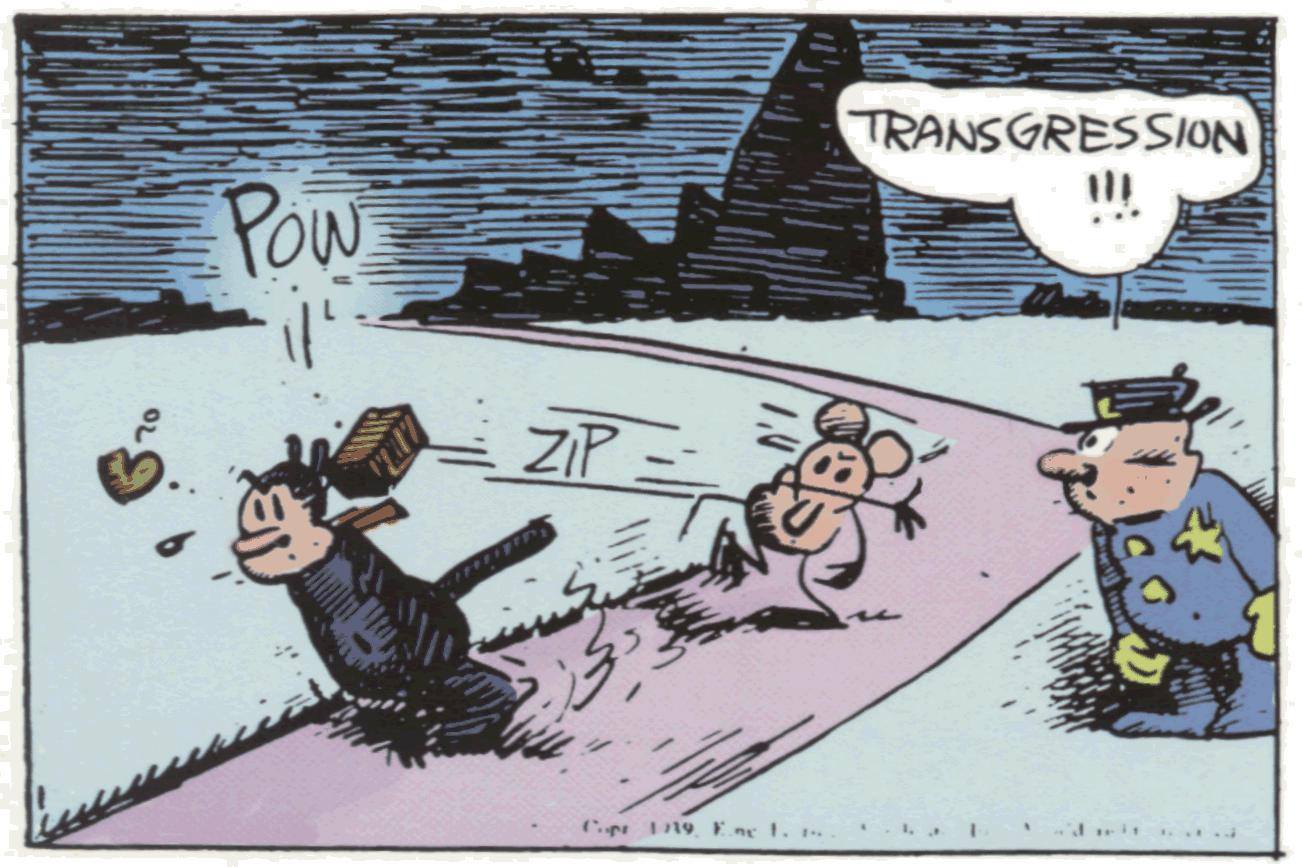
    In my opinion, Carpenter’s language is a mite too tame to tackle George Herriman’s “Krazy Kat,” but he did just that, composing a ballet after the popular comic strip, featuring Krazy, Ignaz Mouse and Offissa Pup. Ignaz even gets to hurl a brick or two.

    Sergei Prokofiev, in Chicago for the 1921 premiere of “The Love for Three Oranges,” was present for the first performance and expressed guarded admiration. In private, I seem to remember, he thought the orchestration lacking.

    Here’s music from the ballet “Krazy Kat.” I may be one of the few people alive to have actually heard this work in concert twice, performed by two totally different groups. I keep wishing it were more of a piece with the strip that inspired it.

    Happy birthday, John Alden Carpenter (1876-1951).

  • Howard Hanson Romantic Composer

    Howard Hanson Romantic Composer

    Howard Hanson, you incurable Romantic. I wish I had time to write about you today, your birthday, but I don’t. For four decades, you were the director of the Eastman School of Music; you were the recipient of a Pulitzer Prize in 1944 for your Symphony No. 4; and you were the champion of dozens of American composers as conductor of the Eastman-Rochester Orchestra.

    Criminally, only a fraction of your recordings have made it to compact disc. Here’s one of them that didn’t, of you conducting your Symphony No. 4:

    Movt. I https://www.youtube.com/watch?v=nMMDVJ2EARA

    Movt. II https://www.youtube.com/watch?v=Ny8RMEGv5GY

    Movt. III https://www.youtube.com/watch?v=8A7jFyddiOo

    Movt. IV https://www.youtube.com/watch?v=3nhFIeigxjI

    The symphony is subtitled “Requiem,” and dedicated to the memory of your father. I could listen to this music again and again (and probably will).

    I salute you, Kindred Spirit!

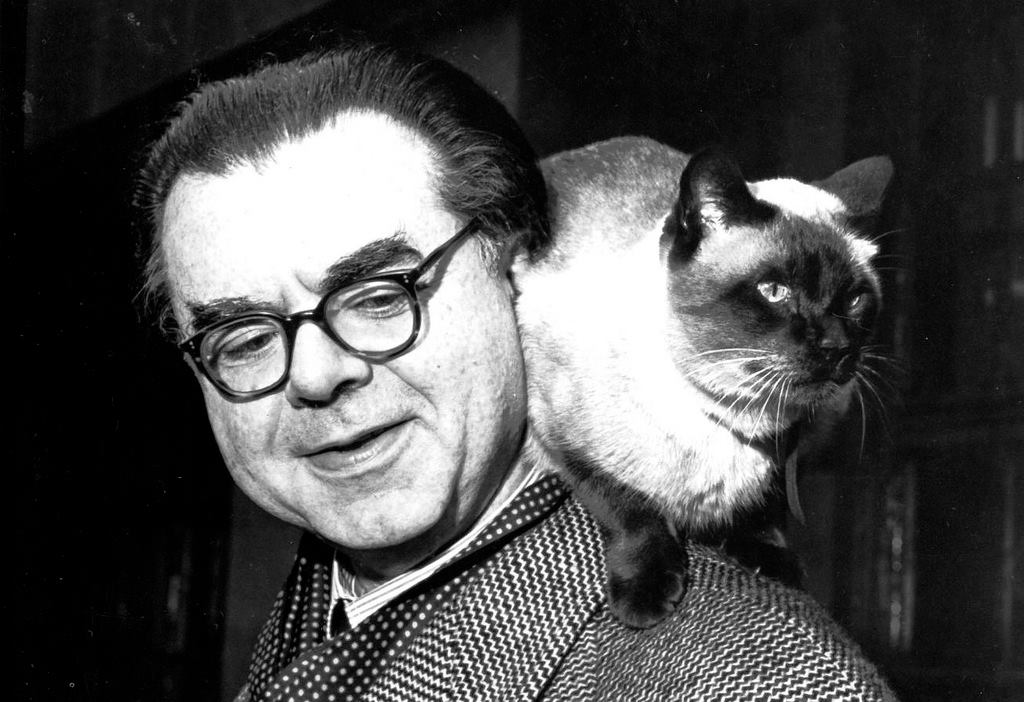
    PHOTO: Howard Hanson, romantic spirit

Tag Cloud

Aaron Copland (92) Beethoven (95) Composer (114) Film Music (119) Film Score (143) Film Scores (255) Halloween (94) John Williams (185) KWAX (229) Leonard Bernstein (99) Marlboro Music Festival (125) Movie Music (134) Opera (198) Philadelphia Orchestra (86) Picture Perfect (174) Princeton Symphony Orchestra (106) Radio (87) Ralph Vaughan Williams (85) Ross Amico (244) Roy's Tie-Dye Sci-Fi Corner (290) The Classical Network (101) The Lost Chord (268) Vaughan Williams (102) WPRB (396) WWFM (881)

DON’T MISS A BEAT

Receive a weekly digest every Sunday at noon by signing up here


RECENT POSTS