Tag: Howard Hanson

  • Howard Hanson’s Bold Island Inspiration

    Howard Hanson’s Bold Island Inspiration

    For many people, the prospect of having to work through vacation could be a real drag; but for the creative artist, getting away can provide an opportunity to really get things done.

    This Sunday night on “The Lost Chord,” we’ll hear three pieces associated with Bold Island, Maine, the summer home of Howard Hanson.

    For 40 years, Hanson was the director of the Eastman School of Music. In that capacity he nurtured and championed innumerable American composers, giving literally thousands of premieres at the helm of the Eastman-Rochester Orchestra, an ensemble he founded. The lucky ones found their way onto records issued on the Mercury label.

    Hanson, of course, was himself a composer. He was awarded the Pulitzer Prize for Music in 1944, for his Symphony No. 4 “Requiem,” written in memory of his father. But his best known music, undoubtedly, is his Symphony No. 2 “Romantic,” composed in 1930.

    The famous “Hanson sound” is one of heart-on-the-sleeve romanticism, characterized by glowingly nostalgic melodies, though he also had his severe side. After all, he was born in Wahoo, Nebraska, to Swedish immigrants, and a certain Nordic austerity can be detected, especially in his later works.

    His Symphony No. 6, of 1967, is more tightly argued than his earlier, more famous symphonies, structured in six brief movements, built on a recurring motif. At times, it can sound a bit like Sibelius, though Hanson very much remains his own man. Hanson being Hanson, he doesn’t really skimp on the lyricism, but he doesn’t exactly indulge it to the same extent he does in the earlier works. Still, predictably, the symphony was derided as old-fashioned by the genuinely austere musical establishment of the day.

    The Bold Island connection is through Hanson’s “Summer Seascape No. 2,” written a few years earlier, and clearly the blueprint for the symphony. In fact, the opening of the symphony is identical.

    The first “Summer Seascape” was the centerpiece of the “Bold Island Suite,” a separate work composed in 1961. The suite also contains movements with the descriptive titles “Birds of the Sea” and “God in Nature.”

    The North Atlantic inspires some august music, on “August Hanson,” this Sunday night at 10:00 EDT, on WWFM – The Classical Network and wwfm.org.


    PHOTO: Not-very-austere Puffins off the coast of Maine

  • Father’s Day Reflections Loss & Legacy

    Father’s Day Reflections Loss & Legacy

    It’s Father’s Day. Both my folks are gone, and I had a rather complex relationship with my biological father, who died of cancer a little over a year ago. Still, toward the end, I visited him a lot, and we kind of became friends. At least I developed a better, or more rounded, understanding of him, though we still had a few adventures that reminded me of why it was probably a good thing that my mother herded us out of the nest when she did.

    My old man could be an amusing personality if he were a work of fiction, or if he could be taken in at a safe remove. Also, in his way, he had a kind heart. His circle included a remarkable number of outsiders and societal cast-offs, and he managed to take care of many of them, after his fashion. But he was not one to be bound by rules or, more strictly speaking, the law. At best, he could be considered a bit of a scapegrace; at worst, he was an ardent hellraiser, especially in his prime.

    But spending time with him later in life, it was fascinating to discover that, whether he knew it or not, he did live by a kind of code. Also, given his nature, I learned that a lot of what the rest of us had resented all these years was probably not entirely his fault. He just wasn’t cut out to raise a family. You can’t really fault a striped hyena for not being able to fly.

    I could tell you stories about my dad that would make you howl with laughter or make your blood curdle, but instead I’ll just tie this in with my program tonight on “The Lost Chord,” which will consist of two pieces by American composers, written in loving memory of their fathers – with perhaps just a transitional bit of advice to get to know your parents, for better or worse, while there’s still time.

    In 1999, composer Eric Ewazen was commissioned by an oboist-friend, Linda Strommen, who had recently lost her father, to write a new work as a kind of memorial tribute. Having recently experienced the death of his own father, the composer embarked on the project with a special sense of poignancy. He recollected that the day his father passed – Christmas Day, 1997 – an essay had appeared in the Cleveland Plain Dealer, by Richard Feagler. It consisted of funny, heartfelt stories of relatives and parents, long since departed. Near the end of the essay, titled “Christmas Past Comes Alive at Aunt Ida’s,” Feagler describes those beloved souls, “moving, though they can’t feel the current, down a river of time.”

    Ewazen borrowed this image for the title of his concerto, “Down a River of Time,” a contemplation of that inexorable, rushing river – the first movement influenced by its ebbs and flows, hopes and dreams; the second attempting to convey emotions felt during times of loss, sorrow, resignation, tenderness, and peace in remembrance of happier, distant times. In the final movement, happier memories prevail, and feelings of strength and determination dominate.

    Ewazen studied at, among other places, the Eastman School of Music. Howard Hanson had been director there for some 40 years. Along with the opera “Merry Mount,” Hanson came to regard his Symphony No. 4 as a personal favorite, a purely orchestral requiem, dedicated to the memory of his father. It falls into four movements, each bearing a Latin subtitle – “Kyrie,” “Requiescat,” “Dies Irae,” and “Lux Aeterna.” The work was given its first performance in 1943, with the composer conducting the Boston Symphony. It was awarded the Pulitzer Prize for Music in 1944.

    It sure as hell beats another necktie. Spare a thought for the Old Man, and then join me for “Day of the Dad,” this Sunday night at 10:00 EDT, on WWFM – The Classical Network and wwfm.org.

  • Whitman’s 200th Birthday Celebration on WWFM

    Whitman’s 200th Birthday Celebration on WWFM

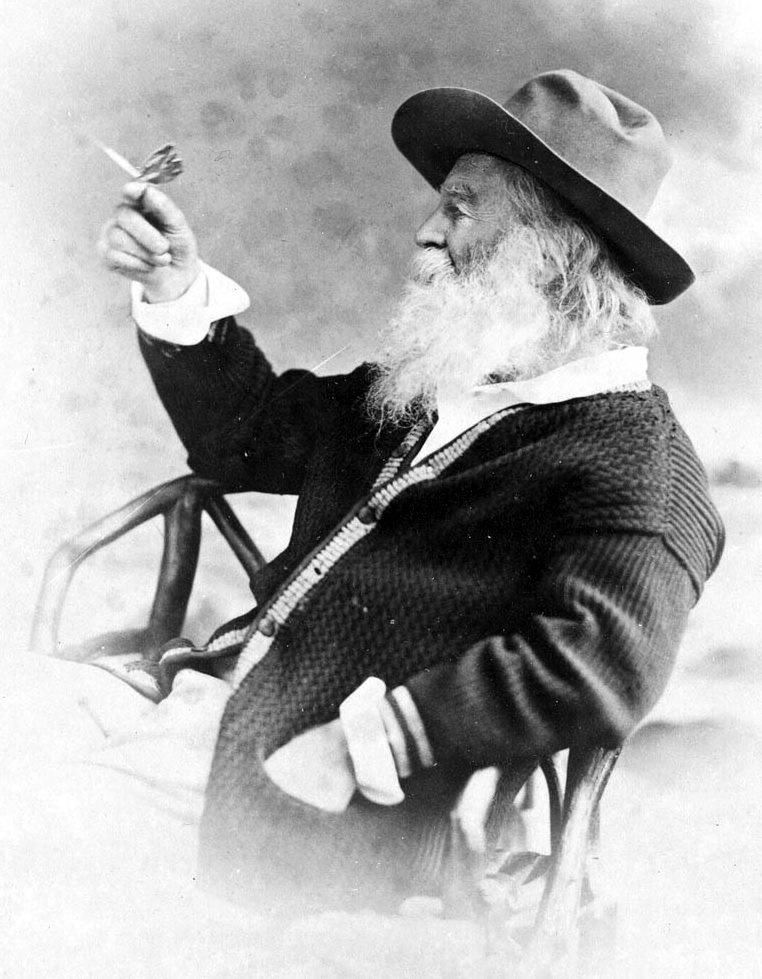
    Whitman Week is underway!

    May 31st marks the 200th anniversary of the birth of America’s “bard of democracy.” We’ve been celebrating this most influential of American poets, all month long, with music inspired by his verse.

    Over the past several weeks, we’ve taken side trips to England and Germany. This Sunday night on “The Lost Chord,” we’ll conclude, as we began the series, with an all-American program.

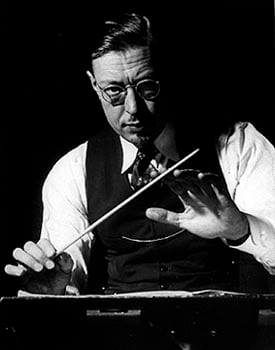
    Howard Hanson wrote several works inspired by Whitman. Hanson lived from 1896 to 1981. For some 40 years, he was the director of the Eastman School of Music. The recipient of the Pulitzer Prize in 1944 for his Symphony No. 4, he is really best remembered for his Second Symphony, from 1930. Subtitled the “Romantic,” the moniker pretty much sums up Hanson’s personal and artistic disposition.

    We’ll experience his setting of “The Mystic Trumpeter,” from 1969. The speaker will be none other than James Earl Jones.

    Lowell Liebermann, born in New York City in 1961, has met with considerable success in the writing tonal, immediately accessible music. His Flute Concerto, written for James Galway, has entered the repertoire, as has his Flute Sonata, and his suite for piano, “Gargoyles.”

    Liebermann studied at Julliard with David Diamond and Vincent Persichetti. Over the course of his career, he has written symphonies, concertos, operas, and ballet, as well as chamber and instrumental music. He is currently on the faculty of the Mannes School.

    Liebermann evidently has great affection for the music of Sergei Prokofiev, and a refreshing open-heartedness characterizes his output. In fact, like Hanson, he has been criticized in some circles for being so ingratiating, a throwback to less cynical times – to which I say, own it, brother!

    Liebermann’s Symphony No. 2, for large chorus and orchestra, was composed for the centennial of the Dallas Symphony Orchestra and Chorus. It was given its first performance in the year 2000.

    The work unfolds in one continuous, 40-minute span, yet manages to honor the conventions of a traditional, four-movement structure. Liebermann incorporates Whitman texts in a spirit of optimism and affirmation.

    Whitman’s verse has inspired literally hundreds of musical responses. We’ll conclude our four-week survey of choral works, orchestral pieces, and songs – merely scratching the surface, with eleven works by ten composers – on “Joy, Shipmate, Joy,” this Sunday night at 10:00 EDT, on WWFM – The Classical Network and wwfm.org.


    PLEASE NOTE: This is not the end of our Whitman celebrations on The Classical Network. On Saturday at 7:30 p.m., we’ll offer a live broadcast, from Washington’s National Cathedral, of Bernard Herrmann’s radio play “Whitman.” Baritone William Sharp will assume the title role, with the PostClassical Ensemble conducted by Angel Gil-Ordóñez. In addition, the program will include Herrmann’s Clarinet Quintet “Souvenirs de Voyage” and “Psycho: A Narrative for String Orchestra.”

    We’ve also got something cooking for Friday afternoon, the actual anniversary of Whitman’s birth. Watch this space for further developments.

  • Classical Music Birthday Celebration Today

    Classical Music Birthday Celebration Today

    We’ll have some French sports and divertissements this afternoon on The Classical Network, including “Rugby” by Arthur Honegger (Swiss-born, I know), “Jeux” by Claude Debussy, and “Bugler’s Dream,” the iconic Olympic fanfare by Leo Arnaud, whose birthday it is today.

    Later on, we’ll take a side trip to Scandinavia to observe the birthday of Swedish composer Erland von Koch. Then we’ll head back home, for recordings of American music with the Eastman-Rochester Orchestra conducted by Howard Hanson, including “Adventures in the Perambulator” by John Alden Carpenter, on the anniversary of his birth.

    As always, we’ll be serving up great music for your afternoon commute, from 4 to 7 p.m. EDT, on WWFM – The Classical Network and wwfm.org.
  • Opera’s Dark Side Merry Mount on WPRB

    Opera’s Dark Side Merry Mount on WPRB

    If the long holiday weekend has filled your head with warm and fuzzy notions of Pilgrims sitting down to dine with Native Americans in perfect concord, think again. I am guest host on “Sunday Morning Opera with Sandy” today, and we are listening to Howard Hanson’s “Merry Mount.” An adaptation of the Nathaniel Hawthorne short story, “The May-Pole of Merry Mount,” the work is an at times hallucinatory study in fanaticism, sexual obsession and demonology. Enjoy that with your leftover turkey sandwiches!

    It’s on right now, on “Sunday Morning Opera,” until 10:00 EST, on WPRB 103.3 FM and wprb.com.

Tag Cloud

Aaron Copland (92) Beethoven (95) Composer (114) Film Music (119) Film Score (143) Film Scores (255) Halloween (94) John Williams (185) KWAX (229) Leonard Bernstein (99) Marlboro Music Festival (125) Movie Music (134) Opera (198) Philadelphia Orchestra (86) Picture Perfect (174) Princeton Symphony Orchestra (106) Radio (87) Ralph Vaughan Williams (85) Ross Amico (244) Roy's Tie-Dye Sci-Fi Corner (290) The Classical Network (101) The Lost Chord (268) Vaughan Williams (102) WPRB (396) WWFM (881)

DON’T MISS A BEAT

Receive a weekly digest every Sunday at noon by signing up here


RECENT POSTS