Tag: Ides of March

  • Ides of March Ancient Rome in the Movies

    Ides of March Ancient Rome in the Movies

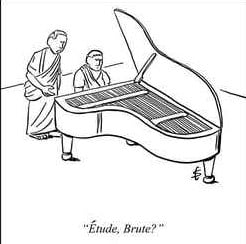
    Beware the Ides of March!

    March 15th is a day that has lived in infamy and superstition, ever since the assassination of Julius Caesar in 44 B.C. After declaring himself Dictator for Life, Caesar was set upon by members of the Roman Senate and stabbed 23 times.

    This week on “Picture Perfect,” toga is the dressing of choice for a Caesar salad of films set in Ancient Rome.

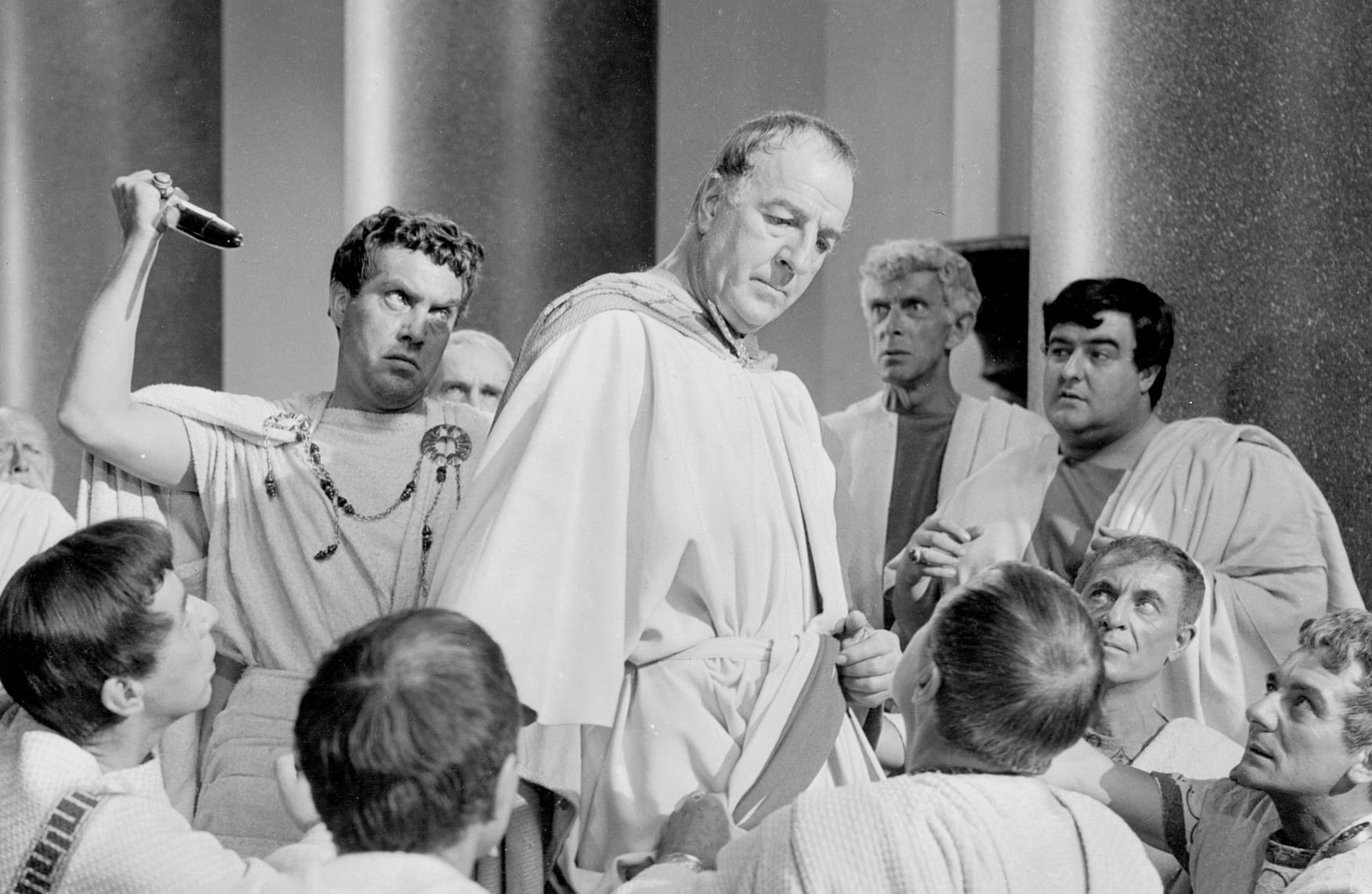
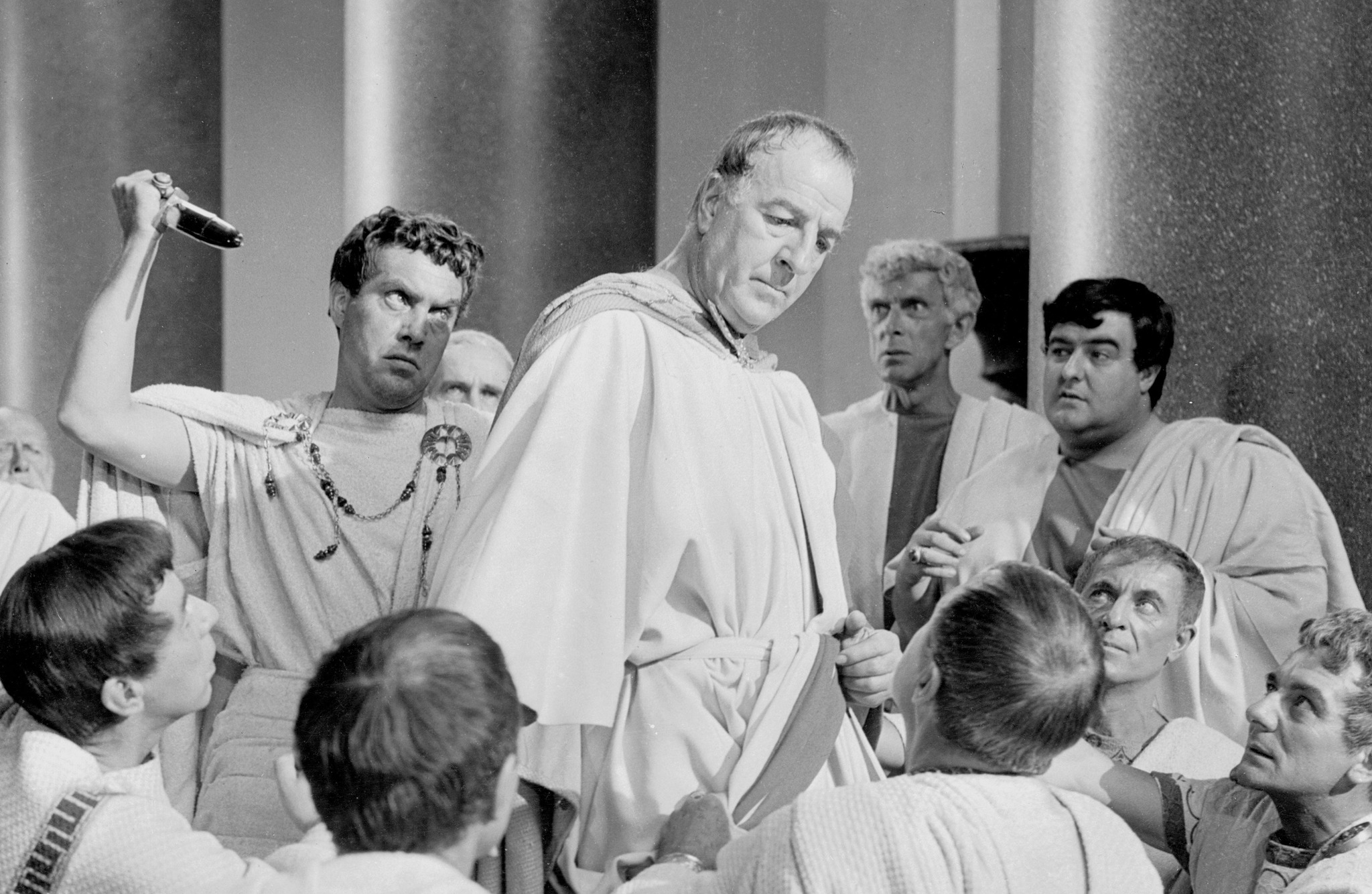
    We’ll begin with Joseph L. Mankiewicz’s adaptation of Shakespeare’s “Julius Caesar” (1953). A two-time double Oscar winner, Mankiewicz – who won back-to-back Academy Awards for writing and directing “A Letter to Three Wives” in 1949 and “All About Eve” in 1950 – wrote and directed this big screen version of the Bard’s historical drama, which was produced by John Houseman, and features an all-star cast, including Marlon Brando as Mark Antony, James Mason as Brutus, John Gielgud as Cassius, and Louis Calhern as Caesar.

    The music is by MGM’s go-to composer for spectacles of this sort, Miklós Rózsa, who had earlier provided the score for “Quo Vadis,” and would go on to win his third Academy Award for “Ben-Hur.”

    Ten years later, Mankiewicz would return to Rome, at least in part, for “Cleopatra” (1963), though it was a decision he would come to rue. For budgetary and interpersonal reasons, “Cleopatra” became a nightmarish experience for practically everyone involved. Although a box office success – the year’s highest grossing release – the film achieved the dubious distinction of becoming the most expensive ever made. Its massive cost overruns and production woes nearly bankrupted 20th Century Fox.

    “Cleopatra” stars Elizabeth Taylor and Richard Burton, whose scandalous, extra-marital romance caught fire during the making of the film. Despite the behind-the-scenes drama, both film and score were nominated for Academy Awards, as was Rex Harrison for Best Actor, in the role of Julius Caesar.

    Alex North, who had written the highly-regarded music for “Spartacus” three years earlier, follows up on his success with another one of his finest scores.

    By contrast, the Pax Romana was an era of relative peace and stability. It spanned two centuries, from the reign of Augustus Caesar to the death of Marcus Aurelius. The movies would have us believe that Marcus was the victim of foul play, murdered by his son Commodus. Hollywood never did let history get in the way of a good story!

    Joaquin Phoenix plays Commodus in “Gladiator” (2000), something of a missed opportunity, with a dream cast, including Russell Crowe, Richard Harris, Derek Jacobi, and Oliver Reed. Alas, it gave most of its over-qualified supporting players very little to do.

    More damningly, the visual storytelling was marred by the over-use of shaky handheld cameras and an over-reliance on computer generated imagery, supplanting the traditional – though likely prohibitive – lavish sets and cast-of-thousands. Even so, the film was honored with five Academy Awards, including that for Best Picture.

    One of those Oscars went to Hans Zimmer for his score, though the music is not without controversy. As is often the case with this composer, Zimmer was heavily assisted by a lot of under-credited hands, who appear in fine print in the soundtrack’s CD booklet. Also, one of the battle scenes adheres so closely to “Mars, the Bringer of War” that Zimmer was actually sued by the Holst Foundation. That said, the score was tremendously popular, and the soundtrack remains one of the best-selling of all time.

    One of my biggest beefs with “Gladiator” is that, although never acknowledged as a remake, it essentially lifts most of its plot from “The Fall of the Roman Empire” (1964). Anthony Mann directed the old school sword-and-sandal epic, which stars Sophia Loren, Stephen Boyd, Alec Guinness, and James Mason. On this occasion, Christopher Plummer plays mad Commodus.

    The grandiose score is by Dimitri Tiomkin, who conducted a 110 piece orchestra, made up of (as advertised) “England’s finest musicians.” Only Tiomkin, a pupil of Alexander Glazunov, would include balalaikas in a score about Ancient Rome.

    Watch your back! Rome wasn’t built in a day. It falls in an hour this week, on “Picture Perfect,” music for the movies, now in syndication on KWAX, the radio station of the University of Oregon!


    Remember, KWAX is on the West Coast, so there’s a three-hour difference for those of you listening in the East. Here are the respective air-times for all three of my recorded shows (with East Coast conversions in parentheses):

    PICTURE PERFECT, the movie music show – Friday on KWAX at 5:00 PM PACIFIC TIME (8:00 PM EASTERN)

    SWEETNESS AND LIGHT, the light music program – ALL NEW! – Saturday on KWAX at 8:00 AM PACIFIC TIME (11:00 AM EASTERN)

    THE LOST CHORD, unusual and neglected rep – Saturday on KWAX at 4:00 PM PACIFIC TIME (7:00 PM EASTERN)

    Stream all three, at the times indicated, by following the link!

    https://kwax.uoregon.edu/

  • Ides of March History and Why We Still Remember

    Ides of March History and Why We Still Remember

    An oldie but a goodie. Beware the Ides of March.

  • Ides of March Rome on Film

    Ides of March Rome on Film

    Beware the Ides of March!

    March 15th is a day that has lived in infamy and superstition, ever since the murder of Julius Caesar in 44 B.C. After declaring himself Dictator for Life, Caesar was set upon by members of the Roman Senate and stabbed 23 times.

    This week on “Picture Perfect,” toga is the dressing of choice for a Caesar salad of films set in Ancient Rome.

    We’ll begin with Joseph L. Mankiewicz’s adaptation of Shakespeare’s “Julius Caesar” (1953). A two-time double Oscar winner, Mankiewicz – who won back-to-back Academy Awards for writing and directing “A Letter to Three Wives” in 1949 and “All About Eve” in 1950 – wrote and directed this big screen version of the Bard’s historical drama, which was produced by John Houseman, and features an all-star cast, including Marlon Brando as Mark Antony, James Mason as Brutus, John Gielgud as Cassius, and Louis Calhern as Caesar.

    The music is by MGM’s go-to composer for spectacles of this sort, Miklós Rózsa, who had earlier provided the score for “Quo Vadis,” and would go on to win his third Academy Award for “Ben-Hur.”

    Ten years later, Mankiewicz would return to Rome, at least in part, for “Cleopatra” (1963), though it was a decision he would come to rue. For budgetary and interpersonal reasons, “Cleopatra” became a nightmarish experience for practically everyone involved. Although a box office success – the year’s highest grossing release – the film achieved the dubious distinction of becoming the most expensive ever made. Its massive cost overruns and production woes nearly bankrupted 20th Century Fox.

    “Cleopatra” stars Elizabeth Taylor and Richard Burton, whose scandalous, extra-marital romance caught fire during the making of the film. Despite the behind-the-scenes drama, both film and score were nominated for Academy Awards, as was Rex Harrison for Best Actor, in the role of Julius Caesar.

    Alex North, who had written the highly-regarded music for “Spartacus” three years earlier, follows up on his success with another one of his finest scores.

    By contrast, the Pax Romana was an era of relative peace and stability. It spanned two centuries, from the reign of Augustus Caesar to the death of Marcus Aurelius. The movies would have us believe that Marcus was the victim of foul play, murdered by his son Commodus. Hollywood never did let history get in the way of a good story!

    Joaquin Phoenix plays Commodus in “Gladiator” (2000), something of a missed opportunity, with a dream cast, including Russell Crowe, Richard Harris, Derek Jacobi, and Oliver Reed. Alas, it gave most of its over-qualified supporting players very little to do.

    More damningly, the visual storytelling was marred by the over-use of shaky handheld cameras and an over-reliance on computer generated imagery, supplanting the traditional – though likely prohibitive – lavish sets and cast-of-thousands. Even so, the film was honored with five Academy Awards, including that for Best Picture.

    One of those Oscars went to Hans Zimmer for his score, though the music is not without controversy. As is often the case with this composer, Zimmer was heavily assisted by a lot of under-credited hands, who appear in fine print in the soundtrack’s CD booklet. Also, one of the battle scenes adheres so closely to “Mars, the Bringer of War” that Zimmer was actually sued by the Holst Foundation. That said, the score was tremendously popular, and the soundtrack remains one of the best-selling of all time.

    One of my biggest beefs with “Gladiator” is that, although never acknowledged as a remake, it essentially lifts most of its plot from “The Fall of the Roman Empire” (1964). Anthony Mann directed the old school sword-and-sandal epic, which stars Sophia Loren, Stephen Boyd, Alec Guinness, and James Mason. On this occasion, Christopher Plummer plays mad Commodus.

    The grandiose score is by Dimitri Tiomkin, who conducted a 110 piece orchestra, made up of (as advertised) “England’s finest musicians.” Only Tiomkin, a pupil of Alexander Glazunov, would include balalaikas in a score about Ancient Rome.

    Watch your back! Rome wasn’t built in a day. It falls in an hour this week, on “Picture Perfect,” music for the movies, this Saturday evening at 6:00 EST, on WWFM – The Classical Network and wwfm.org.

  • Ides of March Roman Movie Music on WWFM

    Ides of March Roman Movie Music on WWFM

    Beware the Ides of March!

    March 15th lives in infamy as the anniversary of the murder of Julius Caesar in 44 B.C. Shortly after declaring himself Dictator for Life, Caesar was set upon by members of the Roman Senate and stabbed 23 times.

    This week on “Picture Perfect,” toga is the dressing for a Caesar salad of films set in Ancient Rome. We’ll hear selections from “Julius Caesar” (1953) by Miklós Rózsa, “Cleopatra” (1963) by Alex North, “Gladiator” (2000) by Hans Zimmer, and “The Fall of the Roman Empire” (1964) by Dimitri Tiomkin.

    Rome wasn’t built in a day. It falls in an hour, this week, on “Picture Perfect” – music for the movies – this Friday evening at 6:00 EDT, on WWFM – The Classical Network and wwfm.org.


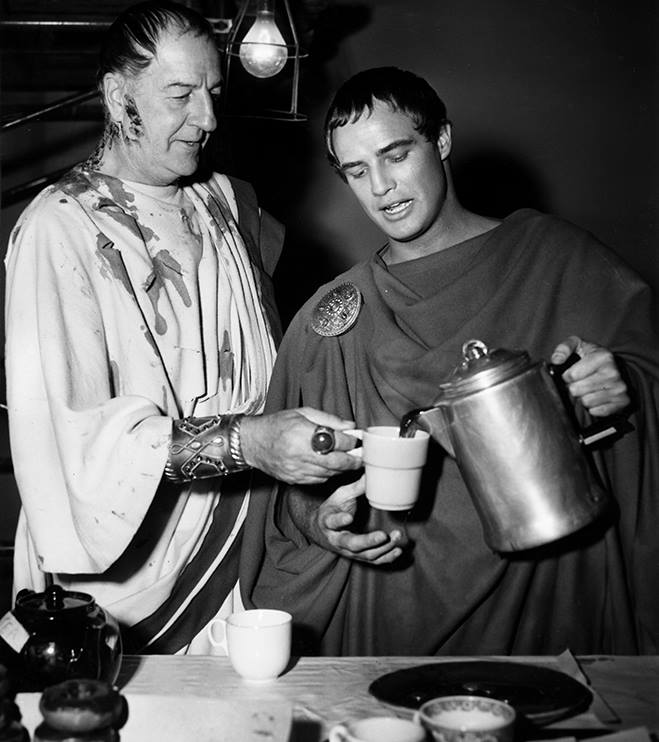
    Great Caesar’s ghost! Louis Calhern shares a cup of coffee with Marlon Brando on the set of “Julius Caesar”

Tag Cloud

Aaron Copland (92) Beethoven (94) Composer (114) Film Music (117) Film Score (143) Film Scores (255) Halloween (94) John Williams (185) KWAX (228) Leonard Bernstein (99) Marlboro Music Festival (125) Movie Music (132) Opera (197) Philadelphia Orchestra (86) Picture Perfect (174) Princeton Symphony Orchestra (106) Radio (86) Ralph Vaughan Williams (85) Ross Amico (244) Roy's Tie-Dye Sci-Fi Corner (290) The Classical Network (101) The Lost Chord (268) Vaughan Williams (101) WPRB (396) WWFM (881)

DON’T MISS A BEAT

Receive a weekly digest every Sunday at noon by signing up here


RECENT POSTS