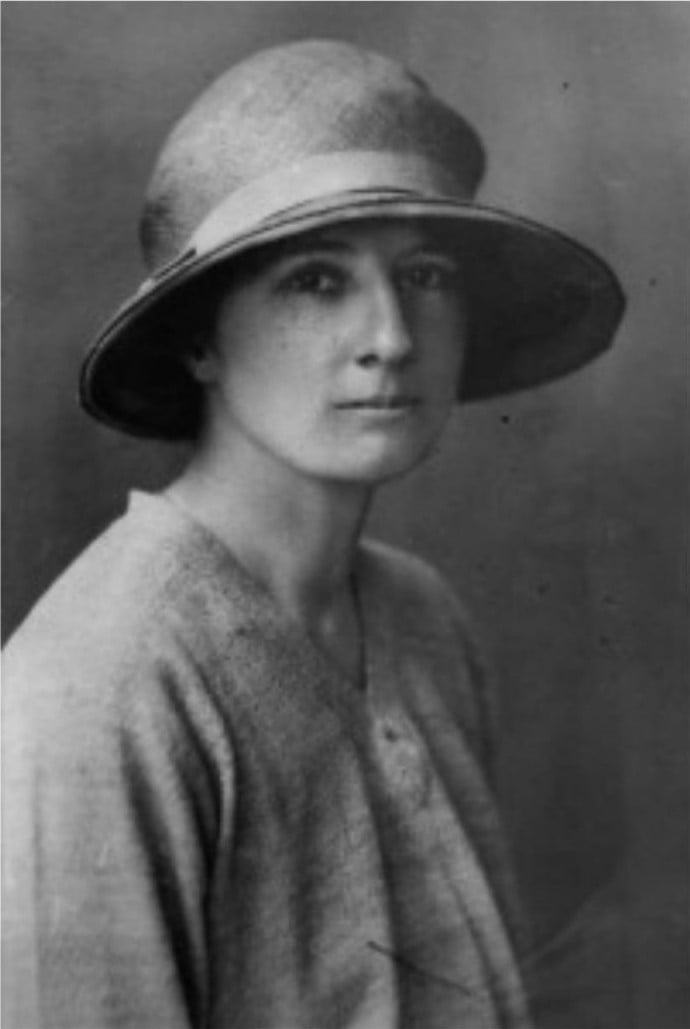
Ina Boyle was an Irish composer, born near Enniskerry, County Wicklow, who made regular trips to London to study with Ralph Vaughan Williams. She did receive a number of first performances in England in the 1920s and ‘30s. The music was well-received, but failed to gain any real traction. Family obligations kept her at home, but she continued to compose every day and was active in her correspondence and sending out scores. Yet performances were infrequent, and only one of her works (“Wildgeese”) was programmed twice in her lifetime. She died in 1967 at the age of 78.
Boyle wrote some really lovely stuff, and it’s only comparatively recently that much of it has been recorded. Even so, there’s still plenty that hasn’t made it before the microphones (including two of her three symphonies).
Here’s one of her works that I had never heard before:
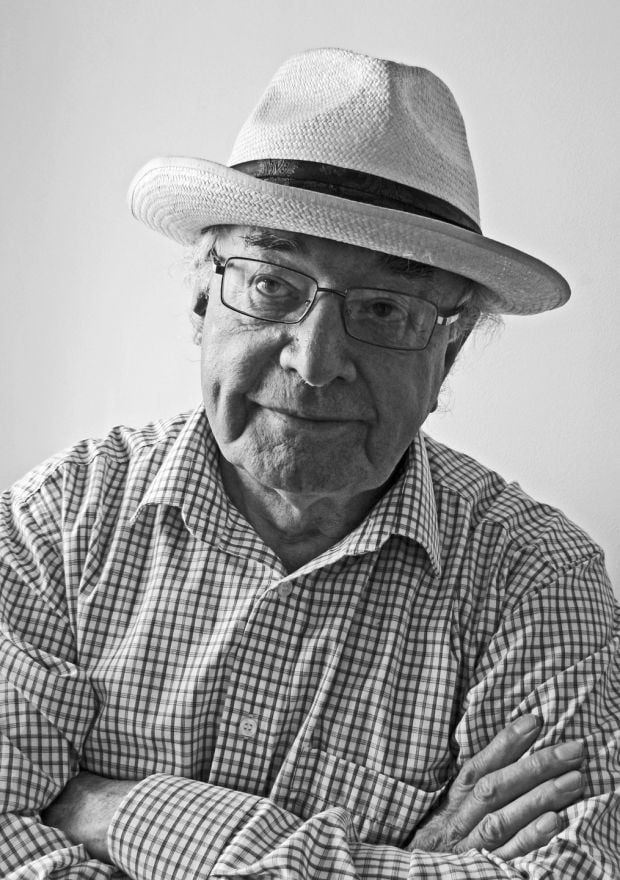
Sorry to learn of the death of Irish composer John Kinsella. Kinsella died on Tuesday at the age of 89. His passing was announced yesterday. Kinsella was Ireland’s most prolific symphonist. His most recent symphony, the Symphony No. 11, written in homage to Sibelius, was given its debut by the RTÉ National Symphony Orchestra in November of 2019. He once commented that the summit of his life would be to have the work performed in Finland.
Kinsella was born in Dublin in 1932. His burgeoning musical interests were fostered by his parents, his father (who worked for Guinness Brewery) buying him scores and acting as his guide to broadcasts they listened to together on the family radio – in the “magic corner,” as the composer described it. Though encouraged by a number of notable names in Irish music (Gerard Victory, Brian Boydell, and Proinnsías Ó Duinn, among others), Kinsella was largely self-taught as a composer. The core of his education was the study of scores and recordings, attending live concerts, and playing chamber music on the viola.
In 1968, he was appointed senior assistant in the music department at RTÉ (Raidió Teilifís Éireann, or Radio Television Ireland).
During the first phase of his career as a composer, he was attracted to European avant-garde techniques, with a particular fascination with serialism. But by the late ‘70s, he began to call into question the validity of everything he had thus far written.
Following the completion of his String Quartet No. 3 in 1977, he completely stopped writing for a period of eighteen months in order to regroup. When again he put pencil to paper, it was with a determination to pursue his own creative voice, which would develop regardless of current trends. Few would have anticipated that Kinsella would make his greatest mark as a classical symphonist. He didn’t finish his First until the age of 52.
With the completion of his Second, in 1988, he retired early from RTÉ (by then, he was Head of Music, and much involved with the RTÉ Symphony and RTÉ Concert Orchestra), in order to devote himself full-time to composition. In addition to his body of symphonies, he also leaves two violin concertos, a cello concerto, five string quartets, and many other chamber, instrumental, choral and vocal works.
He was celebrated as a composer of stature throughout the British Isles. Recordings of his works have appeared on the Chandos, Naxos, Marco Polo, and Toccata Classics labels.
Kinsella’s music has been featured on my Sunday night program, “The Lost Chord,” several times over the years, most recently on March 14, when I aired his Symphony No. 3, “Joie de vivre.”
He was the younger brother of the poet Thomas Kinsella, now 93. Interestingly, my copy of “The Táin” is in the Kinsella translation. John too was inspired by the epic – frequently described as “The Irish Iliad” – to compose the orchestral work “Cúchullainn and Ferdia: Duel at the Ford.”
RTÉ honored Kinsella today by resharing this broadcast on its website of his Symphony No. 11, in concert, coupled with a performance of Sibelius’ Symphony No. 3. Prokofiev’s “wild and witty” Piano Concerto No. 3 is merely icing on the cake.
R.I.P. John Kinsella
Symphony No. 4 “The Four Provinces” (1991)
“Essay for Orchestra” (1980), soon to become the first movement of his Symphony No. 1
Symphony No. 2 (1988)
Symphony No. 9 for strings (2004)
Violin Concerto No. 2 (1989)
A selection from “Cúchullainn and Ferdia: Duel at the Ford” (1988)