Big Ennio is watching you!
Ennio Morricone mural dedicated in Rome yesterday on what would have been the composer’s 94th birthday.
Big Ennio is watching you!
Ennio Morricone mural dedicated in Rome yesterday on what would have been the composer’s 94th birthday.

There is something just so innately Italian about the music of Ennio Morricone. So often in his works the smiles and tears commingle. He really caught the bittersweet essence of what it is to be alive. If he had lived a hundred years earlier, he might have been one of the great opera composers. When he’s not in badass spaghetti western mode, that is.
Happy birthday, Ennio Morricone, wherever you are.
“Cinema Paradiso”
“The Mission”
“Once Upon a Time in the West”
And, just so I don’t take the gas pipe, “The Ecstasy of Gold” from “The Good, the Bad and the Ugly”
Which I would request to be played at my funeral, if not for “Navajo Joe”

What, is no one celebrating the 300th birthday of Pietro Nardini?
Nardini was pupil of violinist Giuseppe Tartini, who found employment at the court chapel in Stuttgart for a few years in the 1760s. Then he returned home to become Kappelmeister to the Grand Duke of Tuscany in Florence.
Nardini met the teenage Wolfgang Amadeus Mozart on one of his trips to Italy in 1770-71. This was on the same tour during which Mozart liberated Allegri’s “Miserere” from the Sistine Chapel in Rome, copying it down from memory, though it was forbidden for the music to be distributed elsewhere. (The Pope let it slide.)
If we’re to believe Mozart’s father, Leopold, an accomplished violinist himself, Nardini played his instrument beautifully, but struggled in more difficult passages. A poet, then, if not a virtuoso. He was also criticized for his lack of depth. Hey, we can’t all be Tartini.
Still time to pick up a card and some flowers. It’s 300 candles on Nardini’s ice cream cake. Buon compleanno!
Sonatas for strings
Violin concertos
String quartets
I have so much music at this point, there’s probably no way I’ll ever be able to listen to all of it. Certainly, there are records and CDs I own that I will never hear again. But it is gratifying to have such an extensive library. It marks me as something of a dinosaur, I know, in this age of digital downloads and streaming.
And I am at a point of life now that it vexes me to wonder who will be around to appreciate it all when I am gone. Even if I were to bequeath it to some institution or other, I envision everything being scanned into a computer and the physical media winding up in a thrift shop or a landfill. My own fault, I suppose, for not cultivating any heirs. I guess I’ll just have to have it all bundled up and carted off with me to my pyramid.
Meditations on the impermanence of things aside, one of the delights of having such a vast collection is stumbling across music I didn’t even know I owned. As a patron of Princeton Record Exchange, I frequently walk out of the store with shopping bags full of CDs marked down to a dollar or two, and being involved with radio and the press for so long, I receive promos in the mail all the time. Is it any wonder I have only the vaguest idea of what I own?
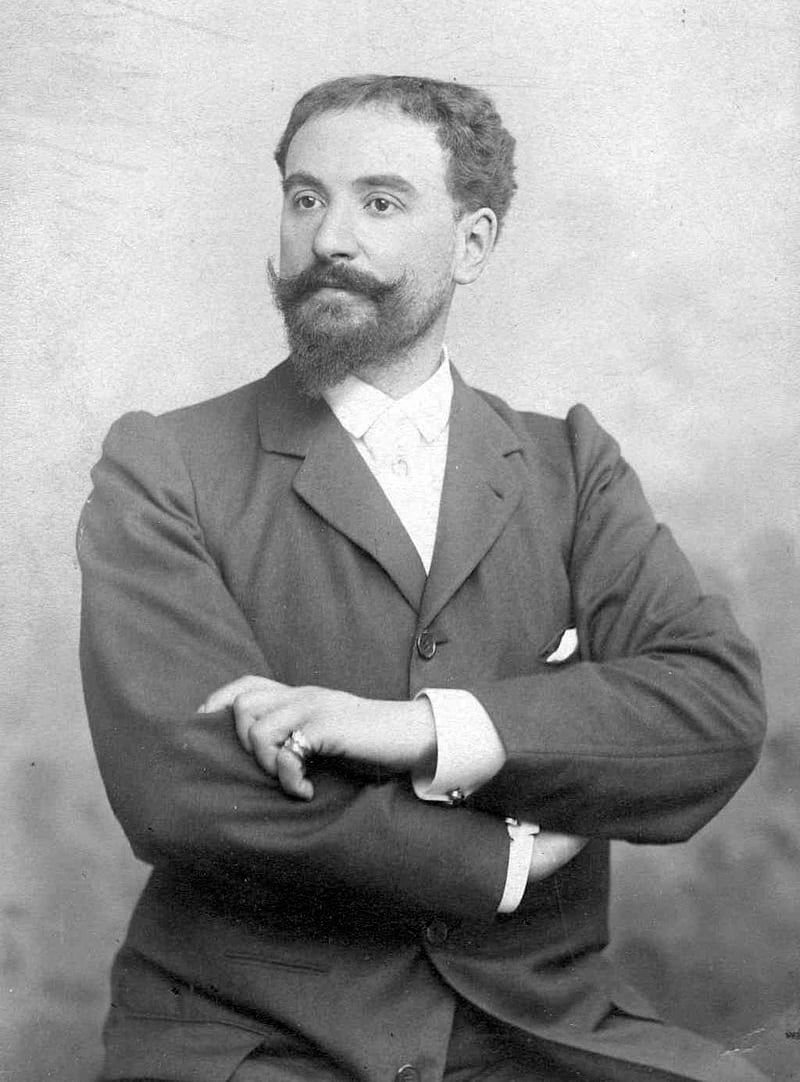
At some point during the pandemic, I was eyeballing the shelves and happened across a Naxos album of works by Luigi Mancinelli (1848-1921). I didn’t know the first thing about the composer. In fact, I had never even heard his name.
Mancinelli was a cellist and composer, but in his lifetime, apparently, he received most of his recognition as a conductor. He held principal conducting posts at home (that is to say, in Italy) and abroad, scoring great success at both the Royal Opera House, Covent Garden, and New York’s Metropolitan Opera. He also held appointments in Madrid, Rio de Janeiro, and Buenos Aires. He inaugurated the Teatro Colón with a performance of Verdi’s “Aida” in 1908.
Arrigo Boito called him the ideal interpreter of “Mefistofele,” and he was highly regarded as a Wagner conductor, even receiving the endorsement of the composer himself. Mancinelli introduced Verdi’s “Falstaff” at both Covent Garden and the Met. He also conducted the first Met performances of “The Magic Flute,” “Don Giovanni,” and “La bohème.”
Mancinelli composed several operas himself. Sadly, none of his works, operatic or otherwise, have entered the repertoire. I find it surprising that one of the criticisms leveled against him in the “Grove Dictionary of Music and Musicians” is an inability to craft memorable melodies, since one of the things that struck me immediately, based on the works on this CD (issued in 2013), is Mancinelli’s distinctly Italianate flair for long-limbed, singable tunes.
“Scene veneziane” (1889), in particular, is a winner, a piece I would program happily on any radio air shift. It would make an absolutely charming addition to any mid-morning, or perhaps even dinner hour. Mancinelli’s mastery of the orchestra is colorful and felicitous. The opening sounds like something out of Respighi’s “Three Botticelli Pictures,” though predating that other work by nearly 40 years!
But don’t take my word for it. Give a listen for yourself.
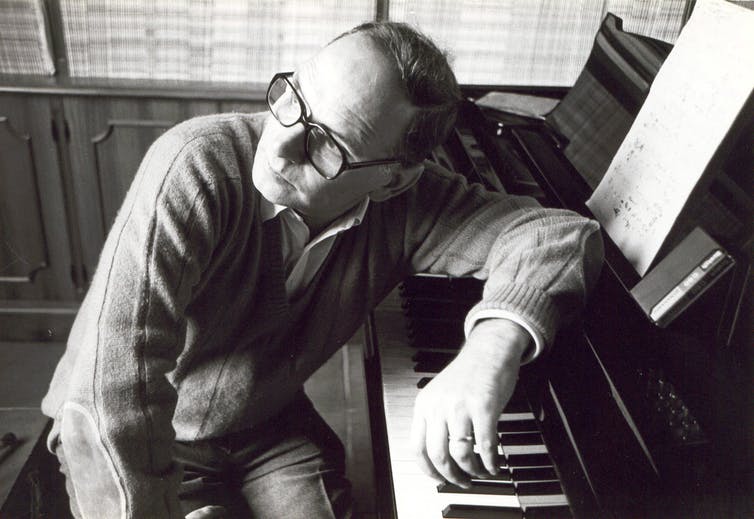
This is the first Ennio Morricone birthday we celebrate without the Maestro. Morricone died in July at the age of 91. The untouchable who touched us all. Mi manchi, Morricone.
Aaron Copland (92) Beethoven (94) Composer (114) Film Music (117) Film Score (143) Film Scores (255) Halloween (94) John Williams (185) KWAX (228) Leonard Bernstein (99) Marlboro Music Festival (125) Movie Music (132) Opera (197) Philadelphia Orchestra (86) Picture Perfect (174) Princeton Symphony Orchestra (106) Radio (86) Ralph Vaughan Williams (85) Ross Amico (244) Roy's Tie-Dye Sci-Fi Corner (290) The Classical Network (101) The Lost Chord (268) Vaughan Williams (99) WPRB (396) WWFM (881)