Tag: It’s a Wonderful Life

  • Lionel Barrymore Hidden Talents

    Lionel Barrymore Hidden Talents

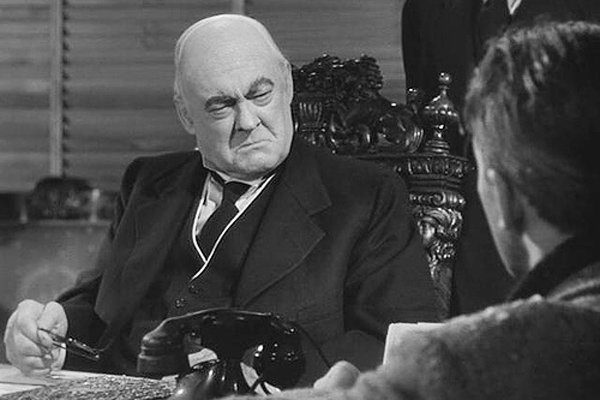
    In “It’s a Wonderful Life,” Lionel Barrymore plays heartless Old Man Potter, a modern-day Scrooge, who views his fellow citizens of Bedford Falls as so much grist to be ground for his own profit. Barrymore the man, however, was full of generous human qualities, with a great enthusiasm and aptitude for the arts. I’d long known that he was also a composer, but it is only in doing a YouTube search this week that I discovered a broader cross-section of his output than the last time I checked, now perhaps six years ago.

    Barrymore was born in Philadelphia in 1878. He was, of course, part of a venerable acting dynasty that also included his famous siblings, John and Ethel Barrymore. He’s also the great-uncle of Drew Barrymore.

    He was especially fine in character roles, playing a variety of them on screen, in retrospect perhaps most memorable for his curmudgeons. He played the irascible Dr. Gillespie in the “Doctor Kildare” movies of the 1930s and ‘40s. He was Ebenezer Scrooge in annual radio broadcasts of “A Christmas Carol.” Of course, he is probably most familiar these days as the soul-crushing capitalist Mr. Potter. He was honored with an Academy Award for Best Actor for his performance in “A Free Soul” in 1931.

    Despite his natural aptitude and widely acknowledged success in the field, it had never been his ambition to act. Instead, he was interested in being a visual artist. He even trained in Paris, and his prints and etchings were widely circulated.

    As a composer, several of his piano works were published. His “Tableau Russe” was played, in both its piano and orchestral versions, in the film “Dr. Kildare’s Wedding Day.” His orchestral piece, “In Memoriam,” written to the memory of his brother John, was performed by the Philadelphia Orchestra. He also wrote an historical novel, “Mr. Cantonwine: A Moral Tale.”

    Barrymore died in 1954. He had suffered from crippling arthritis for decades, which is why you’ll generally see him a wheelchair in most of his later films. He also broke his hip twice. He required morphine and cocaine to get through a shoot and to get to sleep at night. It was only through frequent injections of painkillers that he was able to get through “You Can’t Take It with You” on crutches.

    Barrymore’s “Halloween Suite” can be heard here, beginning at the 36-minute mark. Barrymore is the narrator. Mario Lanza also appears on the concert. Miklós Rózsa conducts.

    https://randsesotericotr.podbean.com/2009/10/29/hollywood-bowl-pgm-78/?fbclid=IwAR2F_zAWPb_SE439DSkvvRsRHNTkhCqrT9BAbZR4aIFcb5ab6OiDsHxupMY

    More ambitious is a Piano Concerto, the first movement of which is posted here

    Barrymore’s “Fugue Fantasia”

    “In Memoriam John Barrymore”

    “Tableau Russe,” as heard in “Dr. Kildare”

    Barrymore etchings

    https://hotcore.info/babki/lionel-barrymore-etchings.htm

    Some of his paintings recall classic illustration

    https://www.artnet.com/artists/lionel-barrymore/

    A sample of his still lifes

    https://www.artsy.net/artwork/lionel-barrymore-still-life-in-a-brown-bucket

    Artistic renderings of Barrymore, mostly by other hands

    http://lionelbarrymore.blogspot.com/2016/12/look-ned-its-lionel-bizarre-barrymorish.html

    Music for the ages? Who cares? I would be the first in line if Naxos were to put out such an album.


    PHOTOS (counterclockwise from top) As Old Man Potter; as himself; behind the scenes of “Rasputin and the Empress” (1932), the only film he ever made with both his siblings; and at lunch with fellow composers Eugene Zador, Charles Wakefield Cadman, Nat Finston, Mario Castelnuovo-Tedesco, and Daniele Amfitheatrof.
  • It’s a Wonderful Life Turns 75!

    It’s a Wonderful Life Turns 75!

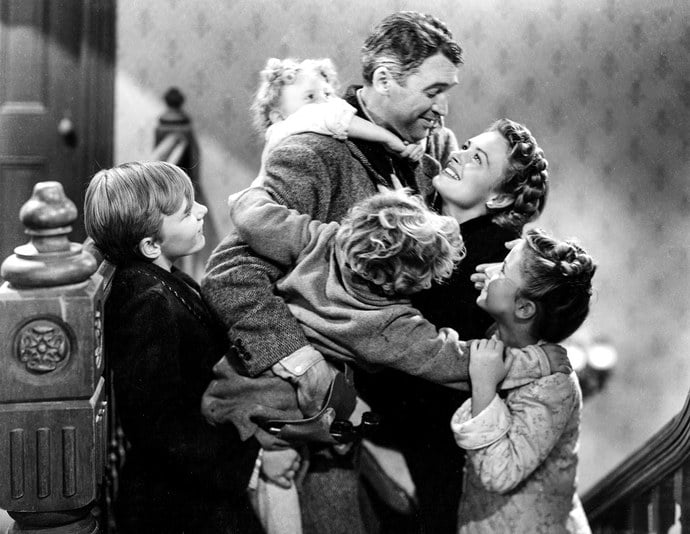
    75 years ago today, “It’s a Wonderful Life” opened at the Globe Theatre in New York. It had been slated for a January premiere, but was bumped up to qualify for Academy Awards consideration. The film would be nominated in five categories, including those for Best Picture, Best Director (Frank Capra), and Best Actor (James Stewart).

    It’s amazing that nobody involved in the making or distribution of the film seemed to regard it, from the start, as a Christmas movie. “It’s a Wonderful Life” received mixed reviews and was something of a box office disappointment. However, decades later, it attained classic status through incessant television broadcasts around the holidays, back when the film was still in the public domain.

    When Republic Pictures finally realized the value of what it had lost, after having allowed the copyright to lapse in 1974 (opening the floodgates for anyone to exhibit the film without having to pay them a fee), the studio was determined to regain control of the property, which it did in 1993. It accomplished this by pushing its ownership of both the original story, upon which the film was based, and the film’s music score, by Dimitri Tiomkin. Now, legally, no one is allowed to show “It’s a Wonderful Life” without the studio’s express permission, as long as those components are intact. Republic wasted no time in signing a long-term agreement with NBC, which holds onto its broadcast rights like grim death.

    Capra himself thought the film his finest achievement. Interestingly, while many would be inclined to agree with him, “It’s a Wonderful Life” has also generated its share of backlash, with some finding it too dark, and others put off by its sentimentality. Too bad for them. It’s a fascinating movie, full of heartwarming snapshots of a world that probably never was. But damn it, I’m in love with the vision (and also with Donna Reed).

    It was a novel approach, to turn “A Christmas Carol” on its head and have the idealistic hero (as opposed to Old Man Potter) be the one who winds up desperately in need of redemption. The explosion of joy at the film’s climax would leave Alastair Sim winded.

    Tiomkin’s original score, which even alludes to Beethoven’s “Ode to Joy” (not heard in the final film), was issued only last month on La-La Land Records. The restoration is fabulous, considering the source material, like the film, is now 75 years-old. The album contains Tiomkin’s original thoughts, which were butchered in the editing and looping of the film. The release also contains a number of bonus tracks, including alternate takes, source music, music for the film’s trailer, and a “single,” with vocals, of the movie’s love theme, proposed for broadcast. A missed opportunity, for sure, as it was only six years later that Tiomkin would kick off the mania for main title songs with his Academy Award winning “The Ballad of High Noon.”

    “It’s a Wonderful Life” is not my favorite Tiomkin score, by a long shot. I much prefer the music he wrote for Capra’s “Lost Horizon,” which didn’t have all the shotgun, cartoony allusions to classical, pop, patriotic, and folk melodies that were the stock-in-trade for Capra’s populist fantasies (like “You Can’t Take It with You,” “Mr. Smith Goes to Washington,” and “Meet John Doe”). Only Tiomkin would juxtapose “Ave Maria” with “Twinkle, Twinkle, Little Star.”

    Even so, the score works great on record. There are many differences from what we’ve become familiar with from the film, since entire sequences of Tiomkin’s original conception were jettisoned as the movie was repositioned for a Christmas release. Heartbreakingly for the composer, the film’s music editor began to draw heavily on pre-existing cues from the RKO music library, in spackling together the soundtrack for certain key sequences.

    Tiomkin called the finished project “an all-around scissors job.” Though he and Capra would remain friends, they kept their distance for a year and a half, and then they never worked together again.

    There’s no question this release of the film’s original score is evocative. It’s at its most interesting when it plunges into the dark side, and then swings back hard to the light. You really get a sense of the scope of Tiomkin’s vision as he brings the love theme to its apotheosis. As an unapologetic fan of the film, La-La Land’s soundtrack release is one I wouldn’t want to be without.

    https://lalalandrecords.com/its-a-wonderful-life-75th-anniversary-remastered-limited-edition/

    Believe it or not, I once owned one of the 200 original copies of “The Greatest Gift,” the 4,100-word story upon which “It’s a Wonderful Life” is based. It was self-published by Philip Van Doren Stern in 1943 to be distributed to his friends as a kind of Christmas card. For years, I was living hand-to-mouth as a young book dealer in Philadelphia, and regrettably I wound up having to sell it in order to pay the rent. It’s now listed, if you can find a copy, for thousands. Not that I’d ever sell it now. It’s one of my life’s great regrets – of those that don’t involve other people – to have had to part with it. I sold it to a real creep, too. But at least he paid cash.

  • Lionel Barrymore Composer Actor Artist

    Lionel Barrymore Composer Actor Artist

    Very interesting. I’d always known that actor Lionel Barrymore was also a composer, but this is the first time I’ve been able to locate any of his music. Barrymore, of course, was part of the great acting dynasty that also included his famous siblings, John and Ethel Barrymore. He is the great-uncle of Drew Barrymore.

    Lionel was a fabulous character actor, who played a variety of roles on screen, though he seemed to specialize in curmudgeons. He played the irascible Dr. Gillespie in the “Doctor Kildare” movies of the 1930s and ‘40s. He was Ebenezer Scrooge in annual radio broadcasts of “A Christmas Carol.” Of course, he is probably most familiar these days as the soul-crushing capitalist Mr. Potter from “It’s a Wonderful Life.”

    Barrymore, born in Philadelphia in 1878, won an Academy Award for Best Actor for his performance in “A Free Soul” (1931). Despite his natural aptitude and widely acknowledged success in the field, it had never been his ambition to act. Instead, he was interested in being a visual artist. He even trained in Paris, and his prints and etchings were widely circulated.

    As a composer, several of his piano works were published. Apparently his “Tableau Russe” was played, in both its piano and orchestral versions, in the film “Dr. Kildare’s Wedding Day.” His orchestral piece, “In Memoriam,” written to the memory of his brother John, was performed by the Philadelphia Orchestra. He also wrote an historical novel, “Mr. Cantonwine: A Moral Tale.”

    Barrymore died in 1954. He had suffered from crippling arthritis for decades, which is why you’ll generally see him a wheelchair in most of his later films. He also broke his hip twice. He required morphine and cocaine to get through a shoot and to get to sleep at night. It was only through frequent injections of painkillers that he was able to get through “You Can’t Take It With You” on crutches.

    Barrymore’s “Halloween Suite” can be heard here, beginning at the 36 minute mark.

    http://randsesotericotr.podbean.com/2009/10/29/hollywood-bowl-pgm-78/

    Barrymore is the narrator. Mario Lanza also appears on the concert. Miklós Rózsa conducts.

Tag Cloud

Aaron Copland (92) Beethoven (94) Composer (114) Film Music (117) Film Score (143) Film Scores (255) Halloween (94) John Williams (185) KWAX (228) Leonard Bernstein (99) Marlboro Music Festival (125) Movie Music (132) Opera (197) Philadelphia Orchestra (86) Picture Perfect (174) Princeton Symphony Orchestra (106) Radio (86) Ralph Vaughan Williams (85) Ross Amico (244) Roy's Tie-Dye Sci-Fi Corner (290) The Classical Network (101) The Lost Chord (268) Vaughan Williams (99) WPRB (396) WWFM (881)

DON’T MISS A BEAT

Receive a weekly digest every Sunday at noon by signing up here


RECENT POSTS