Tag: Jazz

  • Wynton Marsalis at 60 A Jazz Icon Reflects

    Wynton Marsalis at 60 A Jazz Icon Reflects

    Holy smokes! Wynton Marsalis is 60????????????

    Granted, I suppose it was a long time ago that I took the shrink wrap off his brilliantly played classical debut album of the Haydn Trumpet Concerto, a treasured gift from a high school girlfriend, on the recommendation of her wise and knowledgeable father.

    Marsalis, of course, has made his biggest mark as a jazz artist. He holds the influential positions of artistic director of Jazz at Lincoln Center and music director of the Jazz at Lincoln Center Orchestra. Marsalis founded the summer concert series in 1987, and he’s been directing the orchestra since 1996.

    Although he hails from an illustrious New Orleans family of jazz musicians – his father was Ellis, and among his brothers are Branford, Delfeayo, and Jason Marsalis – it had originally been the plan for Wynton to pursue a career in classical music. He moved to New York City to attend Juilliard, but then he fell in with Art Blakey and toured Europe as one of Blakey’s Jazz Messengers. That was followed by a tour with Herbie Hancock. In 1982, he began forming his own ensembles.

    In 1997, Marsalis’ “Blood on the Fields” became the first jazz work to be awarded the Pulitzer Prize for Music. Controversially, Duke Ellington had been denied a special citation in 1965. He was finally recognized in 1999 – a full quarter century after his death.

    Marsalis is the only musician ever to be awarded a Grammy in the classical and jazz categories in the same year – in 1983, for the aforementioned Haydn Trumpet Concerto and for his jazz album “Think of One.” Just to show it was no accident, he did it again in 1984, winning for an album of Baroque trumpet works, with soprano Edita Gruberova, and for “Hot House Flowers.” In all, he’s been recognized by the Grammys nine times.

    I haven’t seen that girlfriend in 35 years, probably, but I’m still listening to Marsalis’ Haydn.

    Happy birthday, Wynton Marsalis.


    A selection from “Blood on the Fields”

    “Hellbound Highball” from String Quartet No. 1 “At the Octoroon Balls”

    The family that plays together stays together

    https://www.youtube.com/watch?v=dkRqpslgh_k

    Happiness is Haydn
  • Louis Armstrong’s Real Birthday Surprise!

    Louis Armstrong’s Real Birthday Surprise!

    It’s not everyone who can choose the time and circumstances of their birth.

    One of the most important figures in American music really had no idea when he was born. So he and his manager settled on July 4. What could be more American than that? Furthermore, 1900 signified the start of a new century, the beginning of a new era. Thus it was that Louis Armstrong was “born” in New Orleans on July 4, 1900.

    It wasn’t until the 1980s, well after Armstrong’s death in 1971, that a researcher discovered Armstrong’s baptismal records and it was established that his actual birthdate was August 4, 1901. So Armstrong would have been 120 years-old today. He died fifty years ago, on July 6.

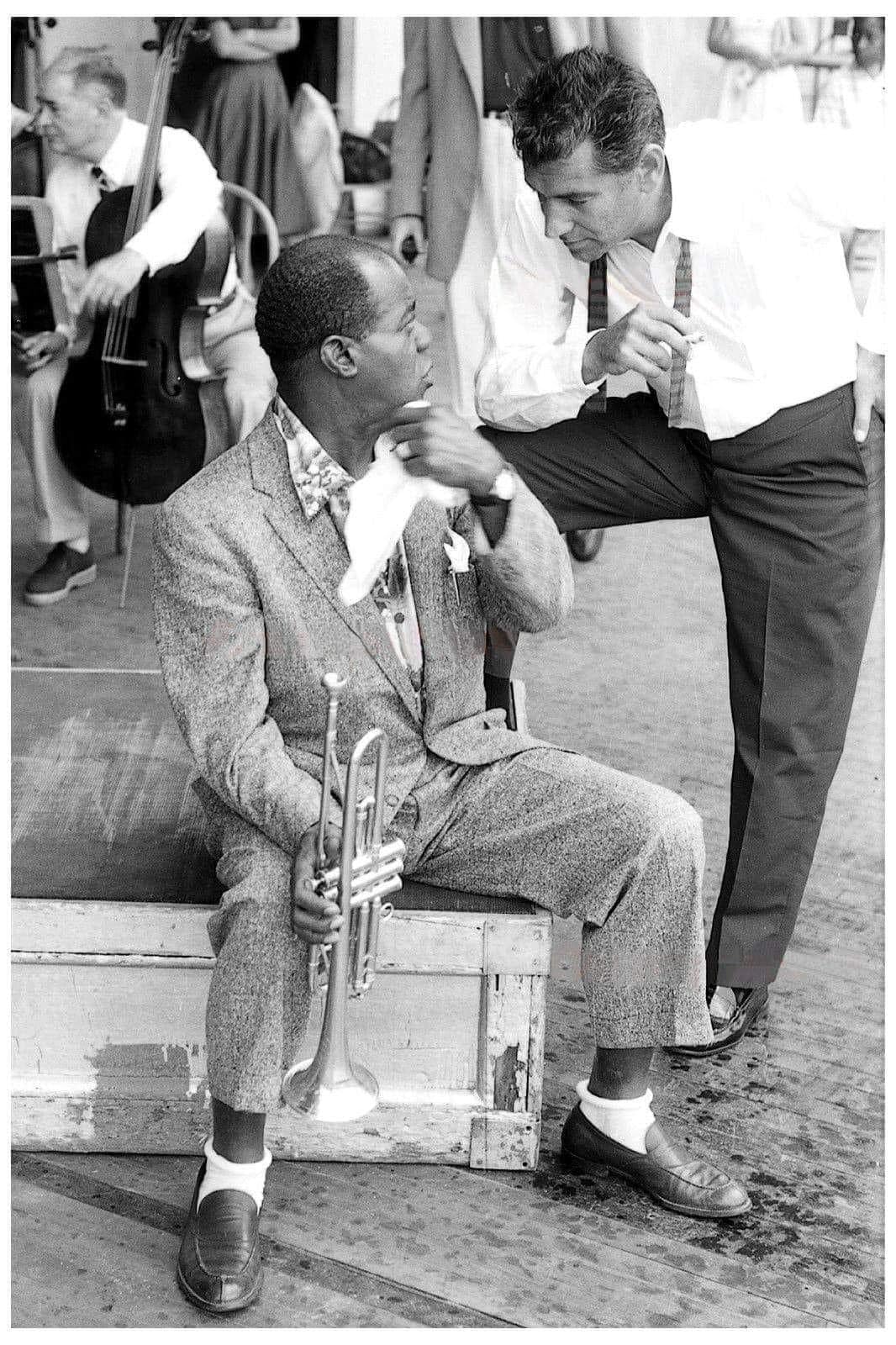
    Here is a special document, indeed. Armstrong and his All-Stars perform “St. Louis Blues,” with the New York Philharmonic conducted by Leonard Bernstein (Bernstein’s name mispronounced by Edward R. Murrow!) at Lewisohn Stadium on July 14, 1956. The composer, W.C. Handy, is in attendance.

    Happy birthday, Satchmo!

  • Remembering

    Remembering

    It’s a fairly well-known fact that my birthday is July 4. Or at any rate, once somebody learns it, they’re not likely to forget.

    For years, I thought I shared the date with Louis Armstrong. But it turns out Armstrong had no idea when he was born. It wasn’t until the 1980s that a researcher discovered Armstrong’s baptismal records and confirmed his official birthday was August 4, 1901.

    Oh well, at least I’ve still got Stephen Foster (born July 4, 1826).

    Armstrong, one of the most important figures in American jazz, as well as one of the most beloved musicians of the 20th century, died 50 years ago today.

    That’s right, the world lost Satchmo and Stravinsky in the same year.


    With Velma Middleton, singing (and playing) “All That Meat and No Potatoes”

    With uncanny Danny, namedropping the masters, in “The Five Pennies”

    With the Duke on Ed Sullivan


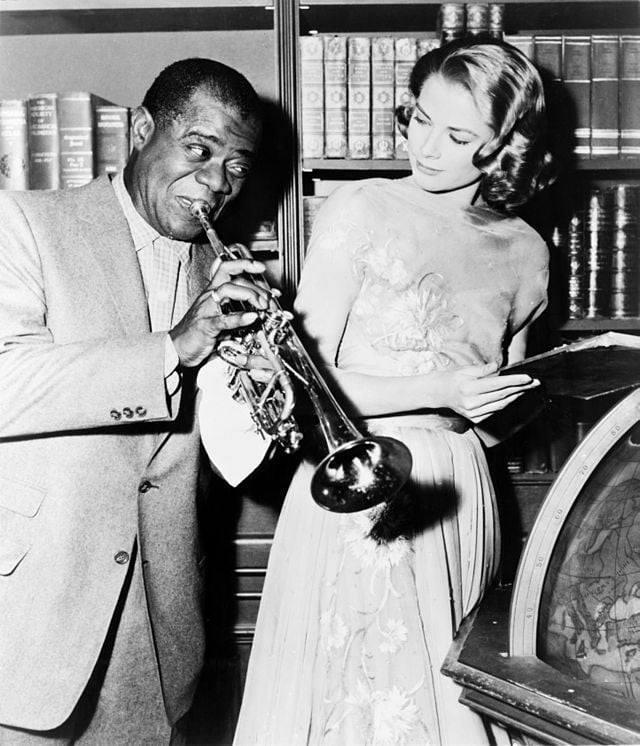
    PHOTO: Playing with Grace, on the set of “High Society”

  • Ellington’s Grieg A Jazz “Grotesque”?

    Ellington’s Grieg A Jazz “Grotesque”?

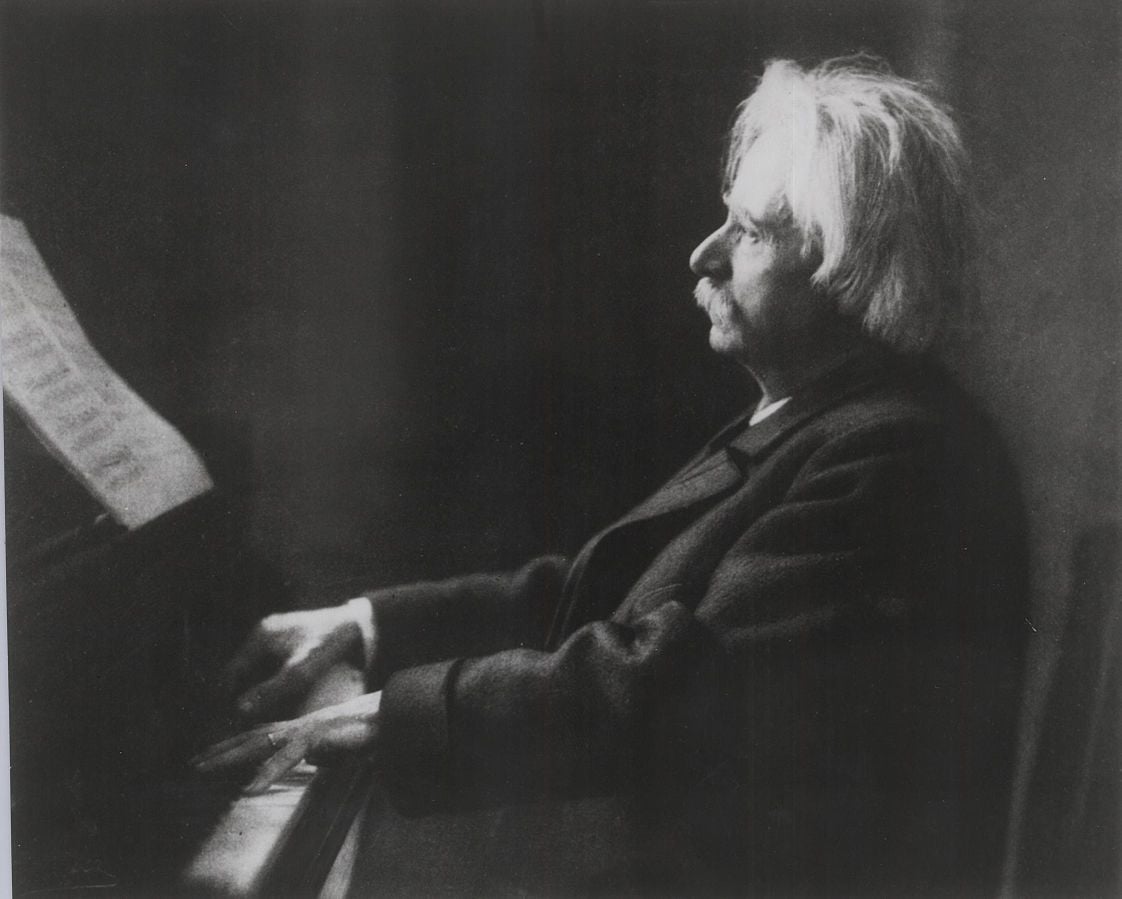
    Another tribute to Edvard Grieg on his birthday: Duke Ellington’s take on “Peer Gynt.” When the album came out in 1960, the Grieg Foundation was not flattered. The president of the organization found the arrangements to be ugly and uninspired and felt that Ellington and Billy Strayhorn had made Solveig “bray like a sow.” Critics in America, at best, expressed confusion. While conceding that the undertaking was a serious one, the results were deemed “grotesque” and even “contemptible.” The classical people weren’t happy. The jazz people weren’t happy. In the process, some reached past the Duke to take a slap at Grieg for his “lightweight” originals. Ouch! Tough crowd!

    More about it here:

    https://quod.lib.umich.edu/m/mp/9460447.0005.205/–duke-ellington-billy-strayhorn-and-the-adventures-of-peer?rgn=main;view=fulltext

    Fiedler conducting the original suites:

  • Hazel Scott: Swinging the Classics on TV

    Hazel Scott: Swinging the Classics on TV

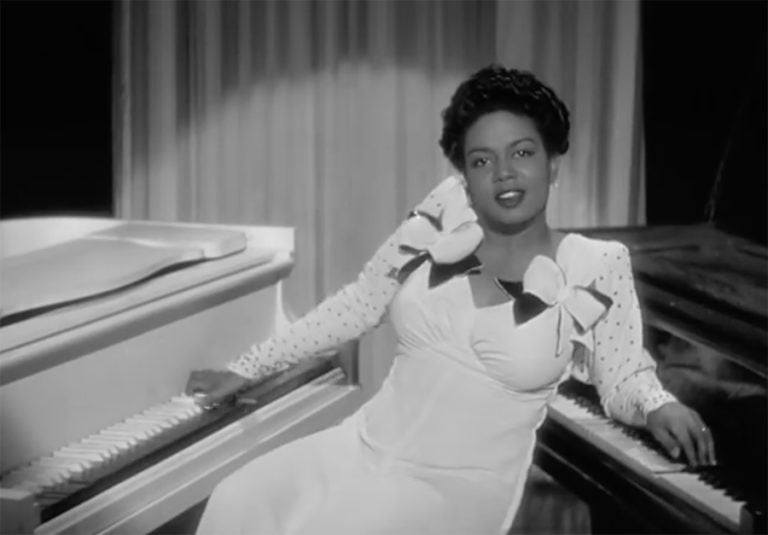
    In 1950, Juilliard-trained pianist Hazel Scott became the first Black American to host her own television show. A born performer, she excelled in jazz, blues, boogie-woogie, ballads, Broadway, and classical music. It was by “swinging the classics” that she first achieved fame.

    Unusual for any performer in Hollywood, she had complete control over her image and music. She always spoke up, and she never backed down. When she criticized the House Un-American Activities Committee, doors began to close. Happily, she was able to reinvent herself with a glorious third act in Paris.

    You’ll find lots of great footage in this fascinating 20-minute documentary:

    Scott swings Liszt:

    Scott stops the show, playing black and white grand pianos, in “The Heat’s On” (1943):

    Vernon Duke’s “Taking a Chance on Love”:

Tag Cloud

Aaron Copland (92) Beethoven (95) Composer (114) Film Music (120) Film Score (143) Film Scores (255) Halloween (94) John Williams (185) KWAX (229) Leonard Bernstein (100) Marlboro Music Festival (125) Movie Music (135) Opera (198) Philadelphia Orchestra (88) Picture Perfect (174) Princeton Symphony Orchestra (106) Radio (87) Ralph Vaughan Williams (85) Ross Amico (244) Roy's Tie-Dye Sci-Fi Corner (290) The Classical Network (101) The Lost Chord (268) Vaughan Williams (103) WPRB (396) WWFM (881)

DON’T MISS A BEAT

Receive a weekly digest every Sunday at noon by signing up here


RECENT POSTS