Tag: Jazz

  • Jazz Meets Classical on WPRB

    Jazz Meets Classical on WPRB

    Do classical musicians sound too literal when playing jazz? Do jazz musicians sound stiff when interpreting classical? It is my hope that when you tune in tomorrow morning to WPRB you’ll put all such concerns aside. This will be no ordinary crossover program. Let’s face it; there are a lot of really awful crossover albums.

    Rather, the playlist will be made up almost exclusively of straight classical music (with perhaps one or two examples of “Third Stream”), interpreted by the great jazz masters, including Paquito D’Rivera, Benny Goodman, Woody Herman, Keith Jarrett, Branford Marsalis, Wynton Marsalis, and Arturo Sandoval.

    We’ll also hear from genre-defying performers who kept at least one foot in jazz, such as Paco de Lucia, John McLaughlin, and Astor Piazzolla.

    Speaking of Piazzolla, the Princeton Symphony Orchestra will present a special concert of “The Four Seasons of Buenos Aires,” interleaved with Vivaldi’s “The Four Seasons,” tomorrow night at 8 p.m. at Princeton University’s Richardson Auditorium. The violinist and conductor will be Daniel Rowland, who has performed the program many times and has even made a very fine recording of it.

    The PSO’s executive director, Marc Uys, will drop by the studio tomorrow morning around 9:00 to tell us about the journey of Piazzolla’s work from bandoneon to violin. He’ll also tell us about some of the other highlights of the PSO season.

    The remainder of the show will be as described. The beatniks meet the longhairs, tomorrow morning from 6 to 11 EDT, on WPRB 103.3 FM and at wprb.com. We’ll be dixie fried and slated for crashville, daddy-o. Focus your audio, on Classic Ross Amico.

  • Radio Host’s Classical to Jazz Marathon on WRTI

    Radio Host’s Classical to Jazz Marathon on WRTI

    How many radio hosts can do a “Wozzeck” warm-up show and then turn around and introduce an evening of jazz favorites? Well, this one will do his best.

    Join me this afternoon — and this evening — on WRTI, as I fill in for Mark Pinto and Jeff Duperon. I’ll be on at noon with some music of Bach and Barber. Alban Berg’s “Wozzeck” is coming up at 1:00, from the Lyric of Opera of Chicago. In between, it will be the opera preview.

    New releases, hosted by yours truly, will follow at 3:00. Then it’s “Discoveries from the Fleisher Collection” with Kile Smith and Jack Moore at 5:00. The focus this week will be on music by American composer Edward MacDowell.

    Jazz begins at 6. Somewhere along the way, I’ll grab some tea and a sandwich. Listen today, in Philadelphia at 90.1 FM. You’ll find a full list of frequencies at wrti.org.

  • Ross Amico Jazz WRTI Tonight

    Ross Amico Jazz WRTI Tonight

    If you’ve never had the chance to hear Classic Ross Amico spinning the jazz, I’ll be donning the pork pie from 6 to 9 tonight on WRTI 90.1 FM in Philadelphia and at wrti.org. Stay cool, fools!

  • Henry Threadgill Wins Pulitzer Prize

    Henry Threadgill Wins Pulitzer Prize

    The recipients of the centennial Pulitzer Prizes were announced this afternoon at 3:00 EDT. The final category to be addressed was that of the Pulitzer Prize for Music. And the winner is…

    Henry Threadgill, for “In for a Penny, In for a Pound.”

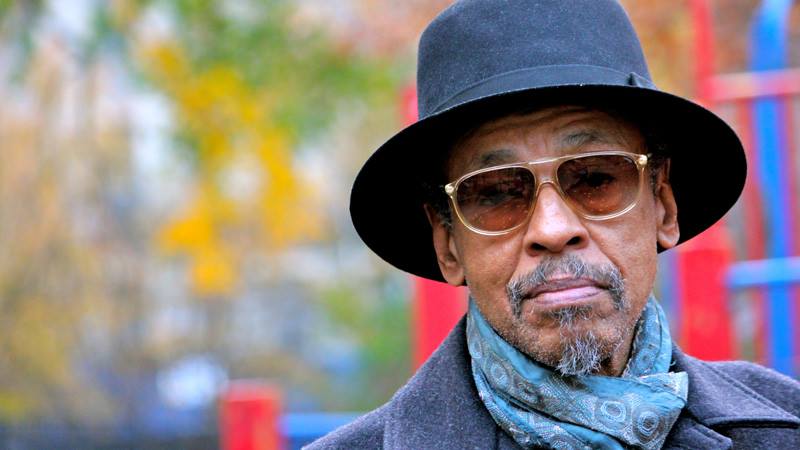
    Threadgill, 72, studied at the American Conservatory of Music in Chicago. He is a composer, saxophonist and flautist, whose compositions have pushed boundaries for the past 50 years. His orchestral, chamber, and solo instrumental works have been performed at BAM, Bang on a Can, and Carnegie Hall. Peter Watrous of The New York Times described Threadgill as “perhaps the most important jazz composer of his generation,” though Threadgill has distanced himself from any such easy categorization.

    You can read a review of the recording here. Threadgill plays sax in the embedded video

    http://www.allaboutjazz.com/in-for-a-penny-in-for-a-pound-henry-threadgill-pi-recordings-review-by-mark-f-turner.php

    Here’s another sample of his work (NOT “In for a Penny,” which has not, to my knowledge, been posted), this time with the composer on flute and sax, from the Library of Congress in Washington, DC:

    And a conversation with Threadgill, also from the Library of Congress:

    In other music news, Lin-Manuel Miranda was recognized with the Pulitzer Prize for Drama for his Broadway juggernaut “Hamilton.”

  • Richard Rodney Bennett at 80 A Neglected Genius

    Richard Rodney Bennett at 80 A Neglected Genius

    Today would have been the 80th birthday of Richard Rodney Bennett. Bennett could do it all, from twelve tone to torch songs, from film music to jazz. He was a brilliant musician who never really seemed to find his niche and continues to be undersold, despite the knighthood he acquired in 1998.

    Bennett studied at the Royal Academy of Music in London, with Howard Ferguson and Lennox Berkeley. Ferguson regarded him as perhaps the greatest talent of his generation, though lacking in a personal style – an assessment with which I happen to disagree, detecting the same fingerprints on his twelve tone works as on his compositions of more immediate appeal.

    It’s interesting to note that Bennett also studied in Paris with Pierre Boulez, from 1957 to 1959. He had been exposed to serialism while attending summer courses in Darmstadt.

    Bennett himself taught for a time at RAM (he was eventually the Chair of Composition there, from 1994 to the year 2000) and at the Peabody Conservatory in Baltimore. For the last three decades of his life, he maintained a residence in New York City. He died there in 2012. His remains are buried in Brooklyn.

    In all, he composed over 200 concert works, and 50 film scores, including music for “Far from the Madding Crowd,” ‘Nicholas and Alexandra,” “Murder on the Orient Express,” “Enchanted April” and “Four Weddings and a Funeral.”

    For 50 years, he was a writer and performer of jazz songs. He also arranged classics of the Great American Songbook.

    The further his career progressed, the more tonal, melodic and ingratiating his concert music became. In point of fact, Bennett’s serialism had always been a personalized one. He later repudiated his serial works, stating, “I wouldn’t want anybody now to play my pieces from those days, when I was turning out that atonal stuff.”

    Aside from his activities as a film composer and cabaret performer, he composed three symphonies, 17 concertos, five operas and dozens of chamber works. He had the attention and respect of his peers, with many of the world’s top musicians commissioning and performing his works, yet his music remains, somehow, less known than it should be.

    Be that as it may, happy birthday, Sir Richard Rodney Bennett!


    Here is the world premiere of his Symphony No. 2, in a concert broadcast from 1968:

    His ingratiating “Partita for Orchestra,” from 1995:

    Mov’t I: “Intrada” https://www.youtube.com/watch?v=YRtZr4wdPNg

    Mov’t II “Lullaby” https://www.youtube.com/watch?v=CXDym-RkuB8

    Mov’t III “Finale” https://www.youtube.com/watch?v=Wo6YheAcwLE

    Richard Rodney Bennett sings torch songs:

    Film music from “The Devil’s Disciple” (1959):

    https://www.youtube.com/watch?v=8e2pCQpONV0

    “Four Weddings and a Funeral” (1994):

    “Murder on the Orient Express” (1974):


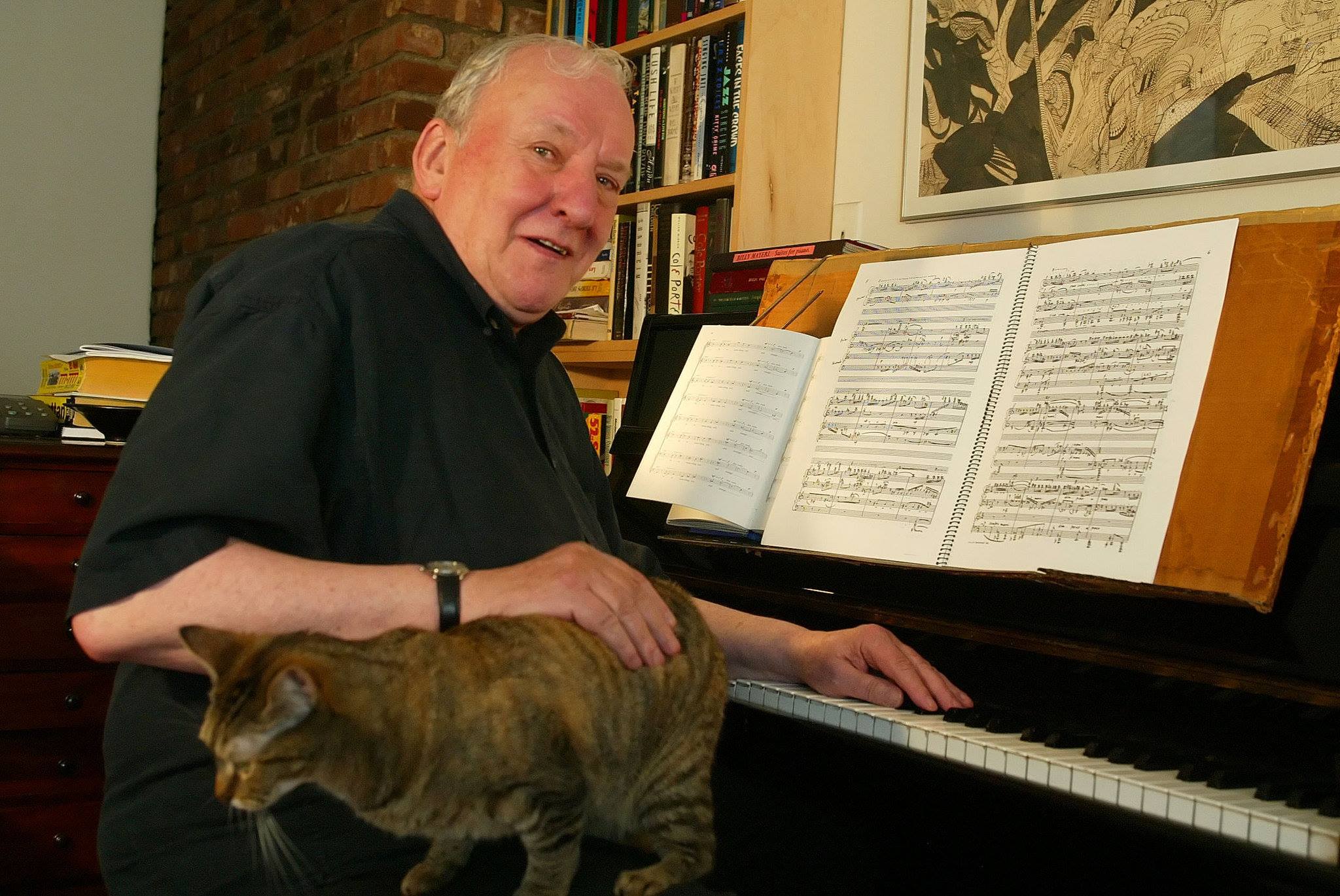
    PHOTO: Bennett wrote this “Suite for Skip and Sadie” for his two cats

Tag Cloud

Aaron Copland (94) Beethoven (95) Composer (114) Film Music (151) Film Score (143) Film Scores (255) Halloween (103) John Williams (198) KWAX (233) Leonard Bernstein (105) Marlboro Music Festival (125) Movie Music (166) Mozart (91) Opera (217) Philadelphia Orchestra (91) Picture Perfect (174) Princeton Symphony Orchestra (110) Radio (90) Ross Amico (244) Roy's Tie-Dye Sci-Fi Corner (290) The Classical Network (101) The Lost Chord (269) Vaughan Williams (107) WPRB (397) WWFM (881)

DON’T MISS A BEAT

Receive a weekly digest every Sunday at noon by signing up here


RECENT POSTS