Tag: Jean Cras

  • Black Oak Ensemble Plays Princeton

    Black Oak Ensemble Plays Princeton

    For whatever reason, the second half of the concert season always turns out to be especially busy for me. I don’t know if it’s the allure of the repertoire, the irresistible discount offers, or the madness of spring, but since the pandemic, anyway, every year, March and April have turned out to be crazy concert months. Surely the madness peaks at the end of April, when I will be hearing Yuja Wang and Yo-Yo Ma on the same day (!), but I’ll be running it close with a concert of rarely-heard music from the 1920s (including John Alden Carpenter’s “Skyscrapers”) at Lincoln Center with the American Symphony Orchestra this weekend and Jake Heggie’s “Moby Dick” at the Met later in the week.

    Despite the fact that my dance card is full, I’ll definitely make room for this one, which totally snuck up on me: tomorrow night, Thursday, at 7:00, the BLACK OAK Ensemble will perform works for string trio at Trinity Church, 33 Mercer Street in Princeton, NJ.

    The program is Classic Ross Amico catnip, including music by Gideon Klein, Jean Cras, and Henri Tomasi. Also some guy named Johann Sebastian Bach (to be played, as it turns out, on the eve of his birthday anniversary).

    The Czech pianist and composer Gideon Klein (1919-1945) was one of a number of major musical figures to be interned at Terezin, or Theresienstadt, the model “artists’ camp” set up by the Nazis for propaganda purposes. Basically, it was an antechamber to Auschwitz. When there were no camera crews or Red Cross representatives to bear witness, Klein was deported and killed with the rest.

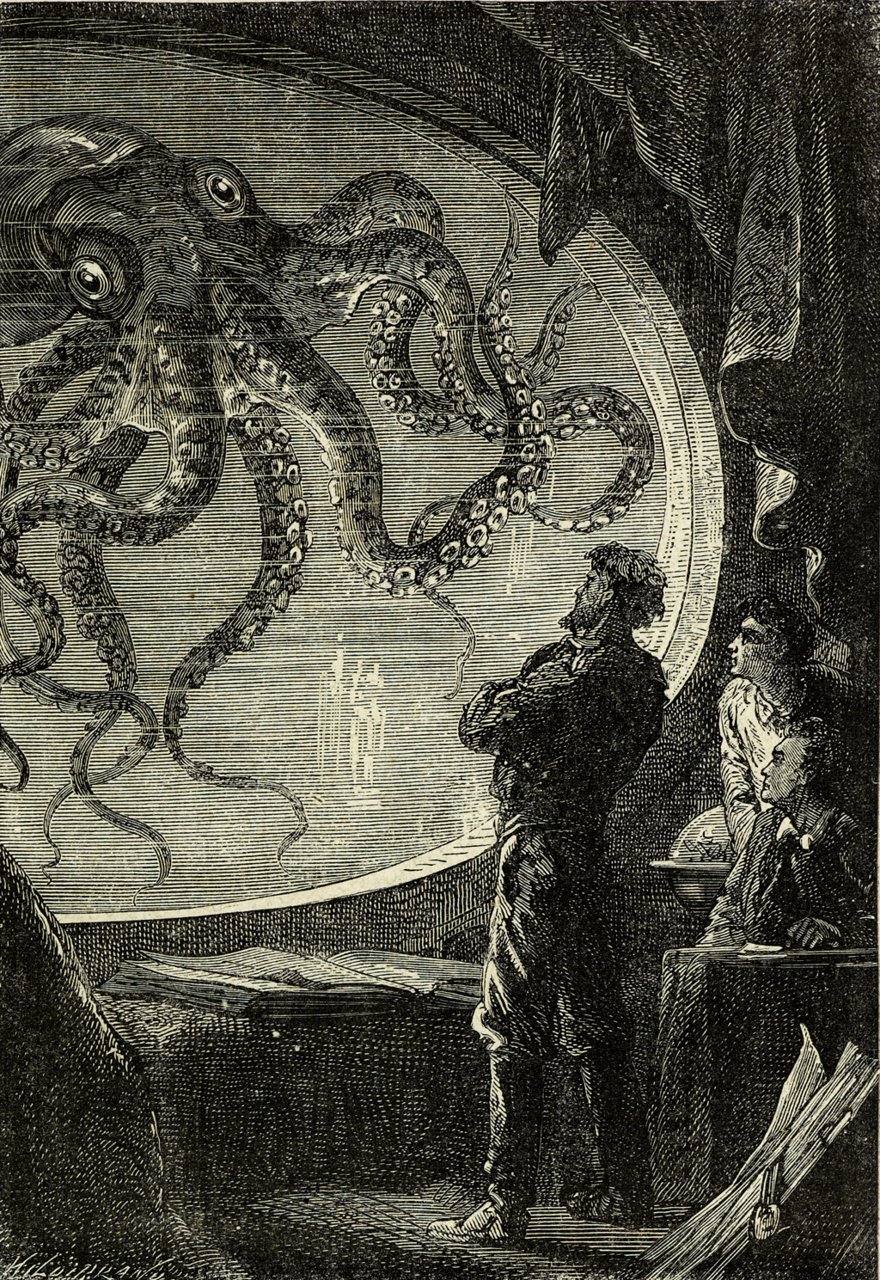
    Jean Cras (1879-1932) was a career navy officer from Brittany, who composed a fair amount of his music shipboard. His opera, “Polyphème,” about the lovelorn cyclops Polyphemus, is a great wallow.

    French composer Henri Tomasi (1901-1971) found steady work as a conductor, beginning in the early days of radio. In the 1940s, he established the contemporary music group Triton with Sergei Prokofiev, Darius Milhaud, Arthur Honegger, and Francis Poulenc.

    The program will conclude with some ersatz Romani music, Vittorio Monti’s “Csárdás” from 1904. (You know it, even if you think you don’t.)

    The concert is the latest in a chamber music series featuring visiting ensembles presented by the Princeton Symphony Orchestra. If it lures me out on a Thursday evening during such a busy month, it’s got to be something special. For tickets, visit princetonsymphony.org.

    To learn more about the Black Oak Ensemble, look here: https://www.blackoakensemble.com/about
  • French Sea Music Beyond Debussy on The Lost Chord

    French Sea Music Beyond Debussy on The Lost Chord

    Claude Debussy wasn’t the only French composer to write music inspired by the sea. This week on “The Lost Chord,” we’ll find refreshment in an hour of “musique de l’eau.”

    Jacques Ibert served as a naval officer during World War I. One of his most frequently performed pieces, “Escales” (“Ports of Call”), conjures impressions of three Mediterranean locales: Palermo, Tunis-Nefti, and Valencia. Considerably less well known is his “Symphonie marine,” composed nine years later, in 1931. Ibert refused to allow the work to be performed in his lifetime, though exactly why is unclear.

    The music actually derives from a film score (for a short film titled “S.O.S. Foch”). Ibert was the first European composer to write music for a talking picture. He certainly wasn’t ashamed of his output for the cinema. In all, he wrote some 30 film scores.

    For whatever reason, the “Symphonie marine” was given its belated premiere shortly after the composer’s death, in 1963, with Charles Munch conducting. We’ll hear the City of Birmingham Symphony Orchestra conducted by Louis Frémaux.

    Joseph-Guy Ropartz (1864-1955) was a student of Théodore Dubois, Jules Massenet, and César Franck. He composed five symphonies, chamber music, and a number of choral works. When his friend, Albéric Magnard, was killed defending his home from German soldiers during the First World War – in retribution Magnard’s house was burned to the ground and his unpublished manuscripts destroyed – Ropartz was able to reconstruct the orchestration of Magnard’s opera, “Guercœur,” from memory, since he had conducted a performance of its third act.

    Ropartz was associated with the Breton Cultural Renaissance and an ardent supporter of Breton regional autonomy. He joined the Breton Regionalist Union in 1898.

    The central movement of his “Prélude, marine et chansons,” composed in 1928 – actually a quintet for flute, violin, viola, cello and harp – is clearly a seascape. The finale is based on an old Breton folk song, “What noise there is upon the earth.” We’ll hear a performance by the Linos Ensemble.

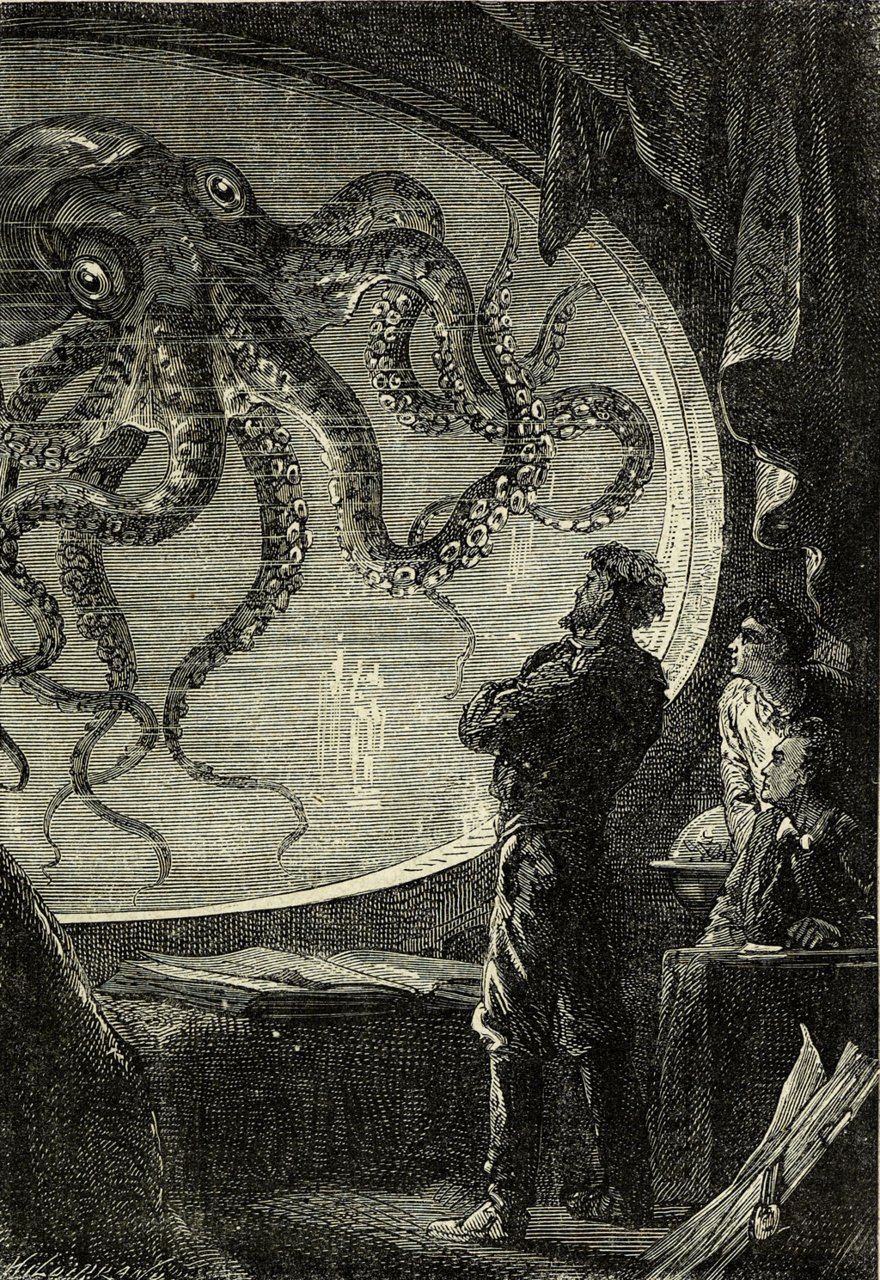
    Another composer with a connection to Brittany was Jean Cras (1879-1932). Cras, who was born and died in Brest, wrote a ravishing opera, “Polyphème” (“Polyphemus”), about a forlorn cyclops, unlucky in love, who wanders off into the sea. Not only was he a productive composer of meltingly lovely music, he was also a career naval officer. And one of distinction. He commanded a torpedo boat in the Adriatic, during the First World War. On one occasion, he sank an enemy submarine, then rescued one of his sailors who had fallen overboard. Clearly he would have written a lot more music if not for the demands of his day job.

    Cras’ “Journal de bord” (“Ship’s Log”) was composed in 1927. Like Debussy’s “La mer,” composed in 1903-05, the work suggests the sea at different times of the day and under various conditions.

    First: Eight to midnight quarter – swell on the open sea, the sky is overcast, clearing at sunset, nothing in sight.

    Second: Midnight to four quarter – beautiful weather, beautiful sea, nothing unusual, moonlight.

    Third: Four to midnight quarter: Land ahoy!

    We’ll hear the Luxembourg Philharmonic Orchestra, conducted by Jean-Francois Antonioli.

    I hope you’ll get yourself a crusty bread, then join me for “Fruits de mer,” a nourishing repast of French music for the sea, this week on “The Lost Chord,” now in syndication on KWAX, the radio station of the University of Oregon!


    Clip and save the start times for all three of my recorded shows:

    PICTURE PERFECT, the movie music show – Friday at 8:00 PM EDT/5:00 PM PDT

    SWEETNESS AND LIGHT, the light music program – ALL NEW! – Saturday at 11:00 AM EDT/8:00 AM PDT

    THE LOST CHORD, unusual and neglected rep – Saturday at 7:00 PM EDT/4:00 PM PDT

    Stream them, wherever you are, at the link!

    https://kwax.uoregon.edu/

  • Bramwell Tovey Beloved Conductor Dies at 69

    Bramwell Tovey Beloved Conductor Dies at 69

    The conductor Bramwell Tovey has died. Tovey was a popular guest in Philadelphia and New York, where he often seemed to conduct programs of lighter music (holiday pops, summer concerts), though he was certainly capable of much more. I first learned of him through his hypnotic recording of Jean Cras’ “Polyphème,” on the Timpani label. The opera is about a forlorn cyclops, unlucky in love, who wanders off into the sea. Beautiful stuff. In 2005, Tovey conducted the world premiere of Krzysztof Penderecki’s Symphony No. 8 – definitely not light music. He was also a composer, who wrote concertos for viola and cello, a work for chorus and brass band, “Requiem for a Charred Skull,” and a full-length opera, “The Inventor.” He was principal conductor of the BBC Concert Orchestra, the Sarasota Orchestra, and the Rhode Island Philharmonic. Prior to that, he served as music director in Winnipeg and Vancouver. As a conductor and as a person, he was much beloved. Tovey turned 69 on Monday, the day before his death. The cause was sarcoma. R.I.P.

    From “Polyphème”

    Conducting Beethoven with the Philadelphia Orchestra in Colorado

    Introducing Léhar with the New York Philharmonic

    Talking Bernstein, with rehearsal footage of Tovey, Lenny, and the London Symphony Orchestra

  • French Seascapes Music From the Water

    French Seascapes Music From the Water

    Claude Debussy wasn’t the only French composer to write music inspired by the sea. This Sunday night on “The Lost Chord,” we’ll find refreshment in an hour of “musique de l’eau.”

    Jacques Ibert served as a naval officer during World War I. One of his most frequently performed pieces, “Escales” (“Ports of Call”), conjures impressions of three Mediterranean locales: Palermo, Tunis-Nefti, and Valencia. Considerably less well known is his “Symphonie marine,” composed nine years later, in 1931. Ibert refused to allow the work to be performed in his lifetime, though exactly why is unclear.

    The music actually derives from a film score (for a short film titled “S.O.S. Foch”). Ibert was the first European composer to write music for a talking picture. He certainly wasn’t ashamed of his output for the cinema. In all, he wrote some 30 film scores.

    For whatever reason, the “Symphonie marine” was given its belated premiere shortly after the composer’s death, in 1963, with Charles Munch conducting. We’ll hear the City of Birmingham Symphony Orchestra conducted by Louis Frémaux.

    Joseph-Guy Ropartz (1864-1955) was a student of Théodore Dubois, Jules Massenet, and César Franck. He composed five symphonies, chamber music, and a number of choral works. When his friend, Albéric Magnard, was killed defending his home from German soldiers during the First World War – in retribution Magnard’s house was burned to the ground and his unpublished manuscripts destroyed – Ropartz was able to reconstruct the orchestration of Magnard’s opera, “Guercœur,” from memory, since he had conducted a performance of its third act.

    Ropartz was associated with the Breton Cultural Renaissance and an ardent supporter of Breton regional autonomy. He joined the Breton Regionalist Union in 1898.

    The central movement of his “Prélude, marine et chansons,” composed in 1928 – actually a quintet for flute, violin, viola, cello and harp – is clearly a seascape. The finale is based on an old Breton folk song, “What noise there is upon the earth.” We’ll hear a performance by the Linos Ensemble.

    Another composer with a connection to Brittany was Jean Cras (1879-1932). Cras, who was born and died in Brest, wrote a ravishing opera, “Polyphème” (“Polyphemus”), about a forlorn cyclops, unlucky in love, who wanders off into the sea. Not only was he a productive composer of meltingly lovely music, he was also a career naval officer. And one of distinction. He commanded a torpedo boat in the Adriatic, during the First World War. On one occasion, he sank an enemy submarine, then rescued one of his sailors who had fallen overboard. Clearly he would have written a lot more music if not for the demands of his day job.

    Cras’ “Journal de bord” (“Ship’s Log”) was composed in 1927. Like Debussy’s “La mer,” composed in 1903-05, the work suggests the sea at different times of the day and under various conditions.

    First: Eight to midnight quarter – swell on the open sea, the sky is overcast, clearing at sunset, nothing in sight.

    Second: Midnight to four quarter – beautiful weather, beautiful sea, nothing unusual, moonlight.

    Third: Four to midnight quarter: Land ahoy!

    We’ll hear the Luxembourg Philharmonic Orchestra, conducted by Jean-Francois Antonioli.

    I hope you’ll get yourself a crusty bread, then join me for “Fruits de mer,” a nourishing repast of French music for the sea, this Sunday night at 10:00 EDT, on WWFM – The Classical Network and wwfm.org.

  • Classical Music Beach Vacation Getaway

    Classical Music Beach Vacation Getaway

    With summer vacation winding down – and some even back to school already, poor dears – we’ll take one last trip to the beach. On today’s Noontime Concert on The Classical Network, it’s another program from the Cape May Music Festival.

    The New York Chamber Ensemble will present “Folk Dance in Chamber Music,” with repertoire including works by Béla Bartók, Luigi Boccherini, Astor Piazzolla, and Antonin Dvořák, alongside arrangements by Robert Beaser.

    Following the concert broadcast, stick around for Rick Sowash’s “Cape May Suite.” Sowash, who makes his home in Ohio, fondly recalls vacationing in South Jersey with his family.

    Then cast off with music by the Breton composer Jean Cras. Like Nikolai Rimsky-Korsakov and Albert Roussel, Cras was a navy man. Impressions of the sea saturate many of his works, a number of which were actually written in a ship’s cabin. We’ll hear his symphonic suite, “Journal de bord,” which, like Debussy’s “La mer,” attempts to convey the moods of the sea at different hours of the day.

    Rimsky-Korsakov had retired from active service by the time he came to write his Quintet for Piano and Winds. Even so, he had been appointed to the civilian post of Inspector of Naval Bands. We’ll hear a performance of Rimsky’s cheery quintet featuring members of the Munich Residenz Quintet and Wolfgang Sawallisch at the keyboard.

    I believe it was Igor Stravinsky who once said, “A good composer does not imitate; he steals.” No one is going to claim the Flemish composer Paul Gilson’s “De Zee” (“The Sea”) is one of the world’s great masterpieces, but clearly there is something to it for Debussy to have borrowed so shamelessly from it when he came to write “La mer.”

    Jacques Ibert served in the Navy during World War I. Before our time is out, we’ll travel to destinations around the Mediterranean – in Italy, North Africa, and Spain – with Ibert’s symphonic suite “Escales” (“Ports of Call”).

    You won’t have to join the Navy to see the world. We’ve got one in every port, this afternoon from 12 to 4 p.m. EDT, on WWFM – The Classical Network and wwfm.org.

Tag Cloud

Aaron Copland (92) Beethoven (95) Composer (114) Film Music (119) Film Score (143) Film Scores (255) Halloween (94) John Williams (185) KWAX (229) Leonard Bernstein (99) Marlboro Music Festival (125) Movie Music (134) Opera (198) Philadelphia Orchestra (86) Picture Perfect (174) Princeton Symphony Orchestra (106) Radio (87) Ralph Vaughan Williams (85) Ross Amico (244) Roy's Tie-Dye Sci-Fi Corner (290) The Classical Network (101) The Lost Chord (268) Vaughan Williams (102) WPRB (396) WWFM (881)

DON’T MISS A BEAT

Receive a weekly digest every Sunday at noon by signing up here


RECENT POSTS