Tag: Jewish

  • All About Steve (Reich) on “The Lost Chord”

    All About Steve (Reich) on “The Lost Chord”

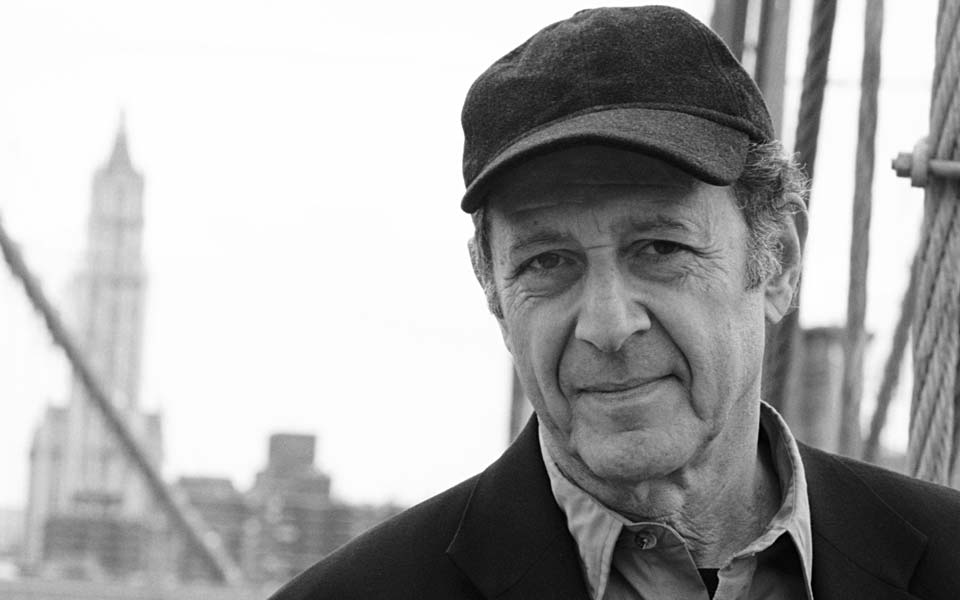
    There’s no minimizing the fact that Steve Reich is 90 years old today.

    Reich, of course, is best known as a pioneer of minimalism, his music marked by repetitive figures, slow harmonic rhythm, and canons. He’s also notable for his experiments with phase shifting, one or more repeated phrases playing slower or faster against others, gradually going “out of phase,” and creating new musical patterns.

    His use of tape loops has also been influential. He’s made his mark especially on experimental music, contemporary electronic music, and rock. In fact, his experiments have been so widely respected and emulated that he’s been one of the most significant American composers of his generation.

    I hope you’ll join me this week for “The Lost Chord,” as we celebrate Reich’s birthday by listening to two of his works.

    First, we’ll hear his Pulitzer Prize winner from 2007, “Double Sextet,” commissioned by the ensemble eighth blackbird – despite its name (always in the lower case) consisting of six musicians, here playing against a slightly different prerecording of themselves. I defy you not to groove to the propulsive outer sections.

    We’ll follow that with his settings of four Hebrew psalms, “Tehillim,” which sports a quite a distinctive palette: four treble voices, piccolo, flute, oboe, English horn, two clarinets, six percussionists (playing 4 small tuned tambourines without jingles, maracas, marimba, vibraphone and crotales, and clapping), two electronic organs, two violins, viola, cello, and bass. This is one work that proves you can be “minimal” but still engage the ear for half an hour.

    Minimal music yields maximum rewards on “All About Steve,” celebrating Steve Reich at 90 on “The Lost Chord,” today on KWAX Classical Oregon!

    ———-

    Clip and save the start times for all three of my recorded shows:

    PICTURE PERFECT, the movie music show – Friday at 8:00 PM EDT/5:00 PM PDT

    SWEETNESS AND LIGHT, the light music program – Saturday at 11:00 AM EDT/8:00 AM PDT (***now with a repeat Sunday at 9:00 PM EDT/6:00 PM PDT***)

    THE LOST CHORD, unusual and neglected rep – Saturday at 7:00 PM EDT/4:00 PM PDT

    Stream them, wherever you are, at the link
    !https://kwax.uoregon.edu/

  • “Totally Awesome” on “The Lost Chord”

    “Totally Awesome” on “The Lost Chord”

    Yom Kippur begins tomorrow night at sundown. The Day of Atonement marks the culmination of ten days of awe and repentance. Observed with fasting and prayer, it is the holiest day on the Jewish calendar.

    This week on “The Lost Chord,” we offer best wishes for a happy, healthy, and sweet new year with two complementary works inspired by the High Holidays.

    Jacob Weinberg’s String Quartet, Op. 55, of 1950, falls into three movements: “Rosh Hashana” (the Jewish New Year), “Yom Kippur,” and “Sukkot.” “Yom Kippur” is based on the cantorial chant “Kol Nidre.” You know, the same melody employed by Max Bruch in his famous cello piece.

    Ernest Bloch’s “Israel Symphony,” composed between 1912 and 1917, is more like an orchestral rhapsody in three sections – “Prayer in the Desert,” “Yom Kippur,” and “Succoth” [sic] – played continuously and culminating in parts for four vocal soloists.

    Sukkot, which follows Yom Kippur by only five days, is the harvest festival, during which temporary dwellings (or sukkot) are erected to commemorate the Jews’ 40 years wandering in the desert after the Exodus from Egypt. In modern times, these are decorated with fruits and vines. In contrast to the austerity and fasting of Yom Kippur, Sukkot is a celebration of life and abundance. But in ancient Israel, it was a solemn affair, with sacrifices offered at the temple.

    Welcome the year 5787, with musical reflections of the High Holidays, and then some, on “Totally Awesome,” on “The Lost Chord,” now in syndication on KWAX Classical Oregon.

    G’mar chatima tova.

    ———-

    Clip and save the start times for all three of my recorded shows:

    PICTURE PERFECT, the movie music show – Friday at 8:00 PM EDT/5:00 PM PDT

    SWEETNESS AND LIGHT, the light music program – Saturday at 11:00 AM EDT/8:00 AM PDT

    THE LOST CHORD, unusual and neglected rep – Saturday at 7:00 PM EDT/4:00 PM PDT

    Stream them, wherever you are, at the link.

    https://kwax.uoregon.edu/
  • Schoenberg, You Beautiful Mountain, You

    Schoenberg, You Beautiful Mountain, You

    First of all, this is the first opportunity I’ve had to wish all of you who observe Rosh Hashanah a sweet new year!

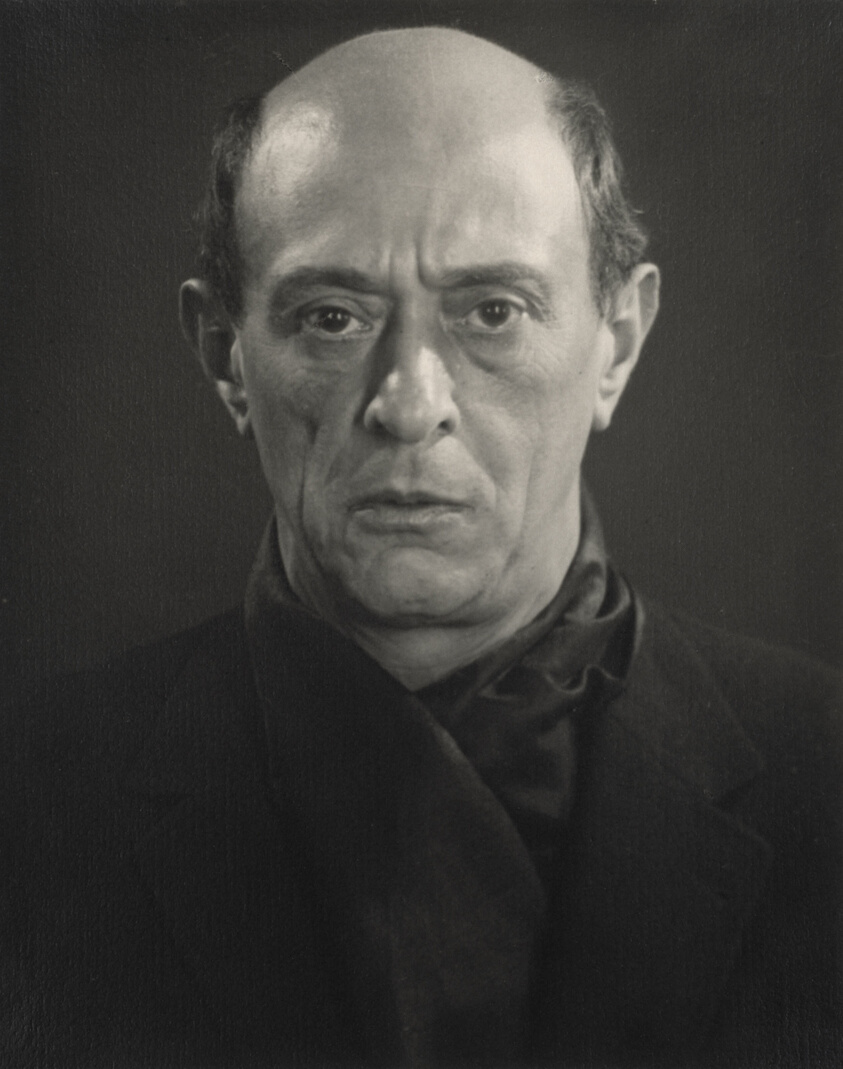
    There’s been a lot going on the past couple of days. And now today is the birthday of dodecaphonic icon Arnold Schoenberg (1874-1951).

    Schoenberg, who was born Jewish, converted to Lutheranism in 1898 – not, as might be assumed, for professional reasons or in an attempt to assimilate, but because of a nagging spiritual hunger.

    He formally converted back to Judaism in defiance of the National Socialists, who came to power in 1933. He was on vacation in France, when he was warned that it would dangerous for him to return to Germany. He reclaimed membership in the Jewish faith in a Paris synagogue. Schoenberg was summarily denounced by the Nazis as a Jew and an exponent of degenerate art. He was dismissed from his post at the Prussian Academy of Letters, where he had taught since 1925.

    Unbowed, he drafted a “Four-Point Program for Jewry,” calling for a united Jewish party and the creation of an independent Jewish state. He emigrated to the United States, eventually settling in Los Angeles, where he taught at U.C.L.A.

    Throughout his career, Schoenberg produced a number of works on Jewish themes, including his opera “Moses und Aron” (which he worked at between 1930 and 1932, before his second conversion). In 1938, the year of Kristallnacht, he composed a setting of “Kol Nidre.” He also wrote an oratorio, “Die Jakobsleiter,” between 1917 and 1922.

    In reputation, in photographs, and in his music, Schoenberg can often come across as a somewhat forbidding figure. But once one learns of his fondness for tennis, his friendship with George Gershwin, his delight in Hopalong Cassidy, and his fear of the number 13, it’s impossible not to grasp his humanity. In home movies, he smiles with friends. In photos, he loves his children. His social circle included Charlie Chaplin and Groucho Marx.

    There’s a section in Jeremy Eichler’s book “Time’s Echo” (published by Alfred A. Knopf in fall of 2023) – see the link below to learn more about it – that I guarantee will instill in a reader a greater affection for Schoenberg the man, possibly even a genuine curiosity to revisit his music. Because it turns out the somber godhead of serialism was actually a real mensch, a passionate humanitarian, even if touchingly blinkered by his idealism.

    His cantata “A Survivor of Warsaw” proved to be so disturbing in 1947, with its uncompromising text relating the barbarity of a concentration camp, complete with beatings and gas chambers, that nobody knew what to do with it. More disturbing was a willful silence surrounding many of the atrocities committed against Jews, in particular, that was upheld seemingly everywhere.

    When the Boston Symphony Orchestra hesitated to program the piece, which it had commissioned, it was picked up by a semi-amateur group, consisting of cowboys and farmhands, who mastered not only the twelve-tone idiom but Hebrew for its first performance – in Albuquerque, New Mexico! – in 1948. Time magazine reported that the work was performed twice, to allow the audience to better absorb what it was listening to, and that it responded with thunderous applause.

    With all the division in our country right now, how can this image not charm one’s socks off: Schoenberg, possibly the most divisive composer in the history of classical music, connecting with the salt of the earth.

    Happy birthday, Arnold Schoenberg, and shana tova!

    ———-

    More impressions of Jeremy Eichler’s “Time’s Echo”

    https://rossamico.com/2024/02/06/times-echo-music-the-holocaust/
  • Happy Hanukkah 2016 A Few Christmas Hanukkah Differences

    Happy Hanukkah 2016 A Few Christmas Hanukkah Differences

    To all my Jewish readers and listeners: Happy Hanukkah! I know I have been very Christmas-centric lately, but I will try to make it up to you in my programming next week. May you enjoy eight days of light and a very happy 2017!

    Here’s a tongue-in-cheek article on the differences between Christmas and Hanukkah. It’s from a few years back, so don’t be confused by the dates. Hanukkah begins tonight at sunset.

    http://lidblog.com/a-snarky-guide-to-the-differences-between-christmas-and-hanukkah/

Tag Cloud

Aaron Copland (94) Beethoven (95) Composer (114) Film Music (150) Film Score (143) Film Scores (255) Halloween (102) John Williams (198) KWAX (233) Leonard Bernstein (105) Marlboro Music Festival (125) Movie Music (165) Mozart (91) Opera (215) Philadelphia Orchestra (90) Picture Perfect (174) Princeton Symphony Orchestra (110) Radio (90) Ross Amico (244) Roy's Tie-Dye Sci-Fi Corner (290) The Classical Network (101) The Lost Chord (269) Vaughan Williams (107) WPRB (397) WWFM (881)

DON’T MISS A BEAT

Receive a weekly digest every Sunday at noon by signing up here


RECENT POSTS