Tag: Joan of Arc

  • Joan of Arc on Film Music

    Joan of Arc on Film Music

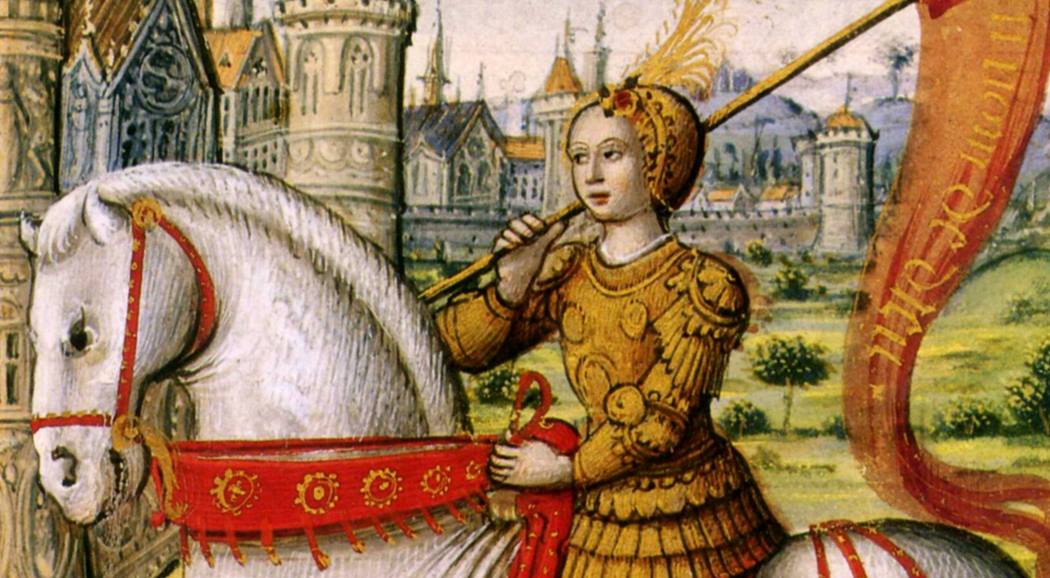
    Seven centuries ago, a humble peasant girl was able to convince Charles de Valois (soon King Charles VII) that she had been chosen by God to lead a French army against English forces during the Hundred Years’ War. With no military training, she achieved a momentous victory at the city of Orléans. She was later captured, tried for heresy, and burned at the stake at the age of 19.

    The story of Joan of Arc has been treated numerous times on film. This week on “Picture Perfect,” we’ll hear music from some of those.

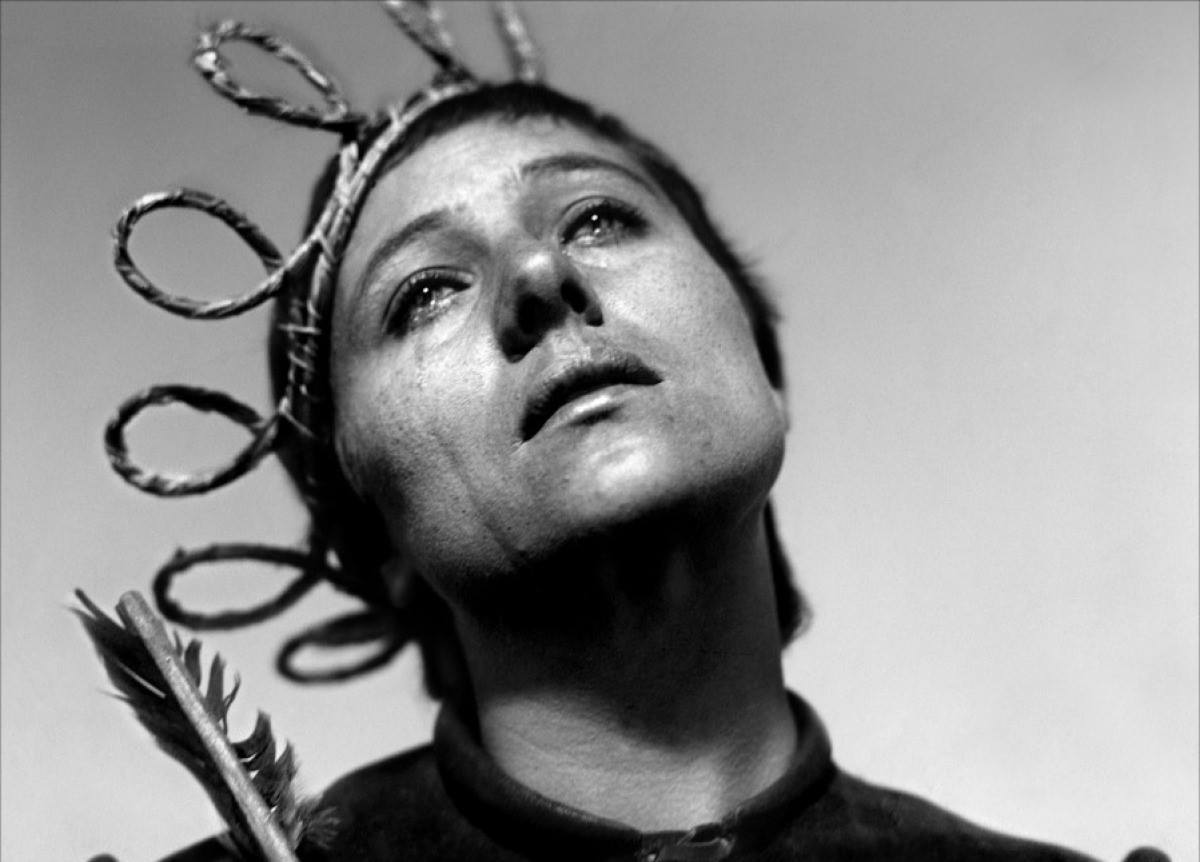
    Carl Theodor Dreyer’s silent classic “The Passion of Joan of Arc” (1928) is justly celebrated as a landmark of world cinema. The film features a legendary performance by Maria Falconetti. Falconetti’s portrayal is unusually nuanced and cumulatively heartbreaking. Richard Einhorn composed “Voices of Light,” an original work, in 1994, to accompany the film. The recording includes contributions by Anonymous 4.

    Earlier, in 1983, conductor and composer Ole Schmidt provided his own score to “The Passion of Joan of Arc.” Interestingly, Schmidt was born the same year the film was released. He also held the distinction of sharing Dreyer’s Danish nationality.

    Luc Besson directed the “The Messenger: The Story of Joan of Arc” (1999), featuring his then wife, Milla Jovovich, as the Maid of Orléans. The starry supporting cast includes John Malkovich, Faye Dunaway, and Dustin Hoffman (donning an Obi-Wan Kenobi robe). The composer was Éric Serra. The score is primarily orchestral, but incorporates synthesized effects.

    Finally, we’ll turn to Otto Preminger’s “Saint Joan” (1957), based on the play by George Bernard Shaw. Graham Greene wrote the screenplay. Newcomer Jean Seberg is Joan, somewhat out of her element alongside veteran actors John Gielgud, Anton Walbrook and Felix Aylmer. Also, would you believe Richard Widmark as Charles VII?

    Unfortunately, “Saint Joan” was immolated by the critics. Mischa Spoliansky composed the lovely score. You can sample some of it here, along with the film’s main title sequence, designed by the legendary Saul Bass:

    I hope you’ll join me for music for movies about Joan of Arc this week, on “Picture Perfect.” Feel the burn, this Friday evening at 6:00 EDT, on WWFM – The Classical Network and wwfm.org.

  • Saints on Film: Bernadette, Joan, More & Nero

    Saints on Film: Bernadette, Joan, More & Nero

    This week on “Picture Perfect,” the saints go marching in.

    We’ll hear a suite from “The Song of Bernadette” (1943), one of Jennifer Jones’ finest hours. Jones was honored with an Academy Award for her performance (the film was nominated in 12 categories). Franz Werfel’s novel tells the story of Bernadette Soubirous, a Lourdes peasant prone to visions of the Blessed Virgin Mary.

    Igor Stravinsky made several attempts to break into Hollywood, but he could never keep up with the grinding schedule. He took a crack at scoring the “Apparition of the Virgin” scene, but then thought better of it. The project went to Alfred Newman, who won his third (of nine) Oscars. Stravinsky’s music was recycled in the second movement of his “Symphony in Three Movements.”

    The story of Joan of Arc has been translated to film many times. In the case of “Saint Joan” (1957), Otto Preminger adapted the play by George Bernard Shaw. Newcomer Jean Seberg was cast in the title role. Her inexperience brought her in for a sound critical drubbing. Even an old hand like screenwriter Graham Greene was not immune to critical barbs for the liberties he took in reworking Shaw’s play. Despite all that, the score, by Russian-born English composer Mischa Spoliansky, is lovely.

    By contrast, the film of “A Man for All Seasons” (1966), after the play of Robert Bolt, was lavishly praised, especially Paul Scofield’s performance as Sir Thomas More (for which he received an Academy Award for Best Actor). The film won six Academy Awards in all, including that for Best Picture. The period-inflected score is by Georges Delerue.

    I guess it’s impossible to get through Easter without some Biblical bombast, so why not go all out with “Quo Vadis” (1951)? Henryk Sienkiewicz’s international bestseller incorporates into its narrative Saints Peter and Paul, but the really interesting characters are the cynical Petronius, who knows how to throw a party, and the quite mad Nero, who plays the lyre even as Rome burns.

    Miklós Rózsa’s score has been much-lauded for its attempt at historical authenticity (the incorporation of contemporaneous Greek, Hebrew and Sicilian melodies), though its popularity has been eclipsed, somewhat, by that of his work on “Ben-Hur” and “King of Kings.” “Quo Vadis” is really the film in which Rózsa lays out the blueprint for a decade or more of big screen piety. Bernard Herrmann called it “the score of a lifetime.”

    I hope you’ll join me for “Lives of the Saints” this week, on “Picture Perfect,” this Friday evening at 6 EDT, on WWFM – The Classical Network and wwfm.org.
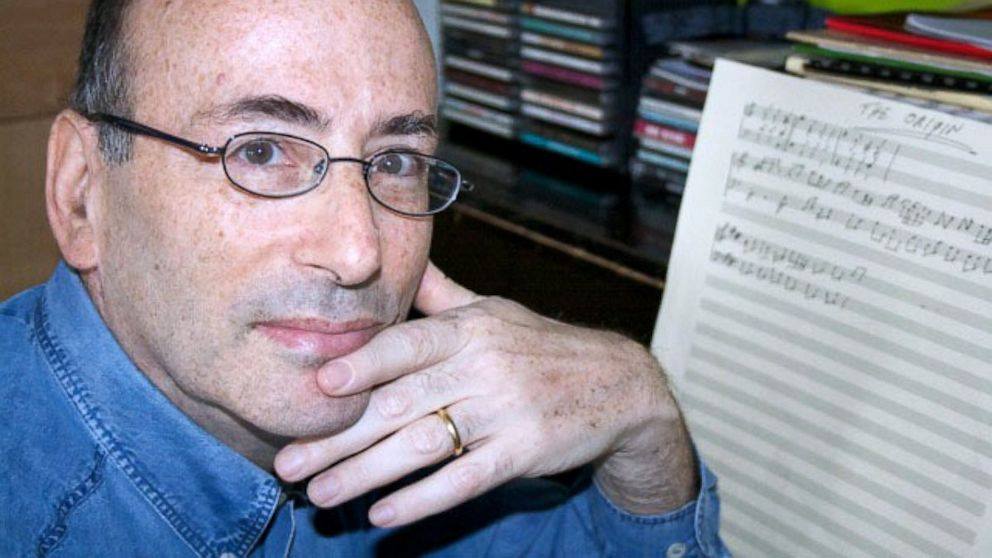

    PHOTO: Jennifer Jones and the Lourdes’ prayer

  • Joan of Arc Music & Richard Einhorn on WPRB

    Joan of Arc Music & Richard Einhorn on WPRB

    This morning on WPRB, we bear the standard for Joan of Arc, with a suite from Tchaikovsky’s opera “The Maid of Orleans,” Paul Paray’s “Mass for the 500th Anniversary of the Death of Joan of Arc,” Norman Dello Joio’s “The Triumph of Saint Joan,” and more. We’ll also hear music inspired by the Hundred Years’ War, music evocative of the Middle Ages in general, and some authentic music of the period by composers like John Dunstable, Gilles Binchois, and Guillaume Dufay.

    At 9:00, I’ll be joined by composer Richard Einhorn. Einhorn’s oratorio, “Voices of Light,” will be performed tonight, accompanying a screening of Carl Theodor Dreyer’s 1928 classic film “The Passion of Joan of Arc” at Princeton University Chapel at 8:30 p.m. The multimedia concert, which will feature soloists of Notre Dame Vocale, the Princeton Festival Chorus, and the Princeton Symphony Orchestra, will begin at 8:30 p.m. Einhorn will give a free pre-performance talk at the Princeton Garden Theatre at 5 p.m. This event is certain to be one of the high points of this year’s The Princeton Festival. To learn more about it, visit princetonfestival.org.

    During his morning visit to the WPRB studios, Einhorn will talk to us about his work on “Voices,” which has been performed over 100 times, recorded for the Sony Classical label by Anonymous 4, and issued as a bonus soundtrack on The Criterion Collection’s DVD release of the film. We’ll hear selections from the piece and sample from some of the composer’s other works.

    Join us as we celebrate this Arc of triumph, from 6 to 11 EDT on WPRB 103.3 FM and at wprb.com. Satisfy your jones for Joan, on Classic Ross Amico.

  • Joan of Arc Music on WPRB with Richard Einhorn

    Joan of Arc Music on WPRB with Richard Einhorn

    Right now on WPRB we’re listening to the gorgeous “Mass for the 500th Anniversary of the Death of Joan of Arc,” by Paul Paray.

    Shortly after 9:00 this morning, we’ll be joined by composer Richard Einhorn. Einhorn’s oratorio, “Voices of Light,” will be performed tonight as part of a multimedia presentation, which will include a screening of the Carl Theodor Dreyer classic “The Passion of Joan of Arc” at Princeton University Chapel at 8:30 p.m. Soloists of Notre Dame Vocale and the Princeton Festival Chorus will join the Princeton Symphony Orchestra, beginning at 8:30 p.m.

    Einhorn will give a free pre-performance talk at the Princeton Garden Theatre at 5 p.m. It’s all part of this year’s Princeton Festival. The Princeton Festival continues through June 26, with opera, jazz, musical theater, dance, choral, chamber and instrumental music. To learn more about it, visit princetonfestival.org.

    During this morning’s visit to the WPRB studios, Einhorn will talk with us about his work on “Voices,” which has been performed over 100 times, recorded for the Sony Classical label by Anonymous 4, and issued as a bonus soundtrack on The Criterion Collection’s DVD release of the film. We’ll hear selections from the piece and sample from some of the composer’s other works.

    Then at 11:00, our featured highlight will be Norman Dello Joio’s “The Triumph of Saint Joan.” It’s all music related to the Maid of Orleans this morning until 11 EDT on WPRB 103.3 FM and at wprb.com.

  • Joan of Arc Film Scores on WWFM

    Joan of Arc Film Scores on WWFM

    I suppose everyone is familiar with the basic story of Joan of Arc, the peasant girl who believed God chose her to lead the French against English forces during the Hundred Years’ War. She managed to convince the Dauphin, Charles de Valois (soon King Charles VII), to entrust her with an army, which she led to the besieged city of Orléans. There, without military training, she succeeded in achieving a momentous victory against Anglo-Burgundian forces. She was later captured, tried for heresy, and burned at the stake at the age of 19. Nearly 30 years later, the case was reopened and she was declared innocent. Revered for nearly 600 years, she was elevated to a national symbol by Napoleon in 1803 and finally canonized in 1920.

    This week on “Picture Perfect,” we’ll be listening to music for films inspired by Joan’s historical exploits, with two scores written in response to Carl Theodor Dreyer’s 1928 classic, “The Passion of Joan of Arc.” “The Passion of Joan of Arc” will be screened as part of this year’s The Princeton Festival. Soloists of Notre Dame Vocale will join the Princeton Festival Chorus and Princeton Symphony Orchestra to perform, with the film, “Voices of Light” by Richard Einhorn. That event will take place at Princeton University Chapel on June 9 at 8:30 p.m. Einhorn himself will give a free pre-performance talk at the Princeton Garden Theatre at 5 p.m. More information is available at princetonfestival.org.

    We’ll be sampling from Einhorn’s score, written in 1994, as well as one commissioned from Danish composer and conductor Ole Schmidt, also written to accompany the film, in 1983.

    In 1999, Luc Besson directed the “The Messenger: The Story of Joan of Arc,” with his then wife, Milla Jovovich, as the Maid of Orléans, and a starry supporting cast, including John Malkovich, Faye Dunaway and Dustin Hoffman (donning an Obi-Wan robe). The composer was Éric Serra. The score is primarily orchestral, but incorporates synthesized effects.

    Finally, we’ll turn to Otto Preminger’s “Saint Joan,” based on the play by George Bernard Shaw. Graham Greene wrote the screenplay for the 1957 film. Newcomer Jean Seberg was Joan, somewhat out of her league alongside veteran actors John Gielgud, Anton Walbrook and Felix Aylmer. Also, would you believe Richard Widmark as Charles VII? Unfortunately, “Saint Joan” was immolated by the critics. Mischa Spoliansky composed the lovely score. Here’s the film’s main title sequence, designed by the legendary Saul Bass:

    I hope you’ll join me for these scores written for films about Joan of Arc, on WWFM – The Classical Network, this Friday evening at 6 EDT, with a repeat Saturday morning at 6; or that you’ll listen to them later as a webcast at wwfm.org.

Tag Cloud

Aaron Copland (92) Beethoven (94) Composer (114) Film Music (117) Film Score (143) Film Scores (255) Halloween (94) John Williams (185) KWAX (228) Leonard Bernstein (99) Marlboro Music Festival (125) Movie Music (132) Opera (197) Philadelphia Orchestra (86) Picture Perfect (174) Princeton Symphony Orchestra (106) Radio (86) Ralph Vaughan Williams (85) Ross Amico (244) Roy's Tie-Dye Sci-Fi Corner (290) The Classical Network (101) The Lost Chord (268) Vaughan Williams (101) WPRB (396) WWFM (881)

DON’T MISS A BEAT

Receive a weekly digest every Sunday at noon by signing up here


RECENT POSTS