
Classical music lovers are best acquainted with the Shakers by way of the hymn “Simple Gifts,” employed by Aaron Copland, of course, as the basis for a set of variations at the climax of his ballet “Appalachian Spring.” But the Shaker tradition predates Copland by nearly 200 years.
This week on “The Lost Chord,” we’ll hear ample selections from “Simple Gifts: Shaker Chants and Spirituals,” an unusual album of traditional Shaker melodies, spearheaded by Joel Cohen in 1995. With this remarkable project, Cohen sought to preserve music of the Shakers in somewhat authentic performances, augmenting his Boston Camerata and Schola Cantorum with members of the actual dwindling population of Sabbathday Lake, Maine, the last active Shaker community, established in 1783.
Music has always been an integral part of Shaker worship. There are over ten thousand songs extant. In Shaker society, musical revelation is considered a spiritual gift. As such, it was important to document these inspirations as they occurred. Since many of the scribes had no musical education, a system of notation reliant on letters of the alphabet evolved. These were often not positioned on a staff, and simple rhythmic values were employed. Lyrics sometimes involve syllables and words of unknown tongues.
The second half of tonight’s program will consist of “Shaker Loops,” a modern American classic by John Adams. This kaleidoscopic example of Minimalism was originally composed in 1978, as a four-part work for seven solo strings (three violins, one viola, two cellos, and double bass). It bears the influence of Adams’ early electronic experiments. On its surface, it may seem somewhat repetitive – each instrument assigned a loop of oscillations – but when heard simultaneously, the various strands are continually shifting. The resultant mesmeric quality neatly parallels the ecstatic writhings of the Shakers.
The work falls into four movements, flowing into one another without break: “Shaking and Trembling;” “Hymning Slews;” “Loops and Verses;” and “A Final Shaking.” Adams arranged the piece for string orchestra in 1983. We’ll hear the world premiere recording, with the San Francisco Symphony conducted by Edo de Waart.
Time to get shaking! Give thanks for simple gifts, on “All Shook Up,” on “The Lost Chord,” now in syndication on KWAX, the radio station of the University of Oregon!
——–
Clip and save the start times for all three of my recorded shows:
PICTURE PERFECT, the movie music show – Friday at 8:00 PM EST/5:00 PM PST
SWEETNESS AND LIGHT, the light music program – Saturday at 11:00 AM EST/8:00 AM PST
THE LOST CHORD, unusual and neglected rep – Saturday at 7:00 PM EST/4:00 PM PST
Stream them, wherever you are, at the link!
https://kwax.uoregon.edu/
Tag: John Adams
-

Doctor Atomic Symphony Barbenheimer Connection
In response to the atomic pop-cultural detonation of Barbenheimer, I posted a couple of times over the past week about John Adams’ Oppenheimer opera “Doctor Atomic.”
I remember listening to The Metropolitan Opera broadcast on the radio back in 2005, but I only just watched the stream this week, when it was offered free in the wake of the film’s release.
Now I note that WRTI will be broadcasting one of this past season’s Philadelphia Orchestra performances of Adams’ “Doctor Atomic Symphony.”
The symphony received its debut at the BBC Proms in 2007, originally in four movements, at 45 minutes in length. Adams tightened it up for its American premiere into three movements, running some 25 minutes, presented without break.
I attended one of The Philadelphia Orchestra concerts, which also featured the Sibelius Violin Concerto and the Suite No. 2 from Ravel’s “Daphnis and Chloe,” with my occasional concert companion, filmmaker H. Paul Moon. Augustin Hadelich was the violin soloist, and Roderick Cox conducted.
You can hear the concert broadcast on WRTI, where I hosted both classical and jazz shifts from 2014 to 2016 (technically I think I’m still on the call list) this afternoon at 1:00 EDT. For more information and interviews with the artists, follow the link.
The opera’s standout aria is “Batter My Heart,” a setting of John Donne’s 14th Holy Sonnet. It’s intriguingly staged here, with Gerald Finley as Oppenheimer.
Adams recalls the music for the final movement of his symphony. The opera explores the stresses and anxieties surrounding preparations for the Trinity test in 1945, with Oppenheimer, the “father of the atomic bomb,” a central figure.
Oppenheimer made his home in Princeton for nearly 20 years, as director of the Institute for Advanced Study.
For more selections inspired by Oppenheimer AND, believe it not, Barbie, scroll through my Facebook posts of the past week!
https://www.facebook.com/profile.php?id=100027272182187
Then check out H. Paul Moon’s music and other documentaries at zenviolence.com.
-
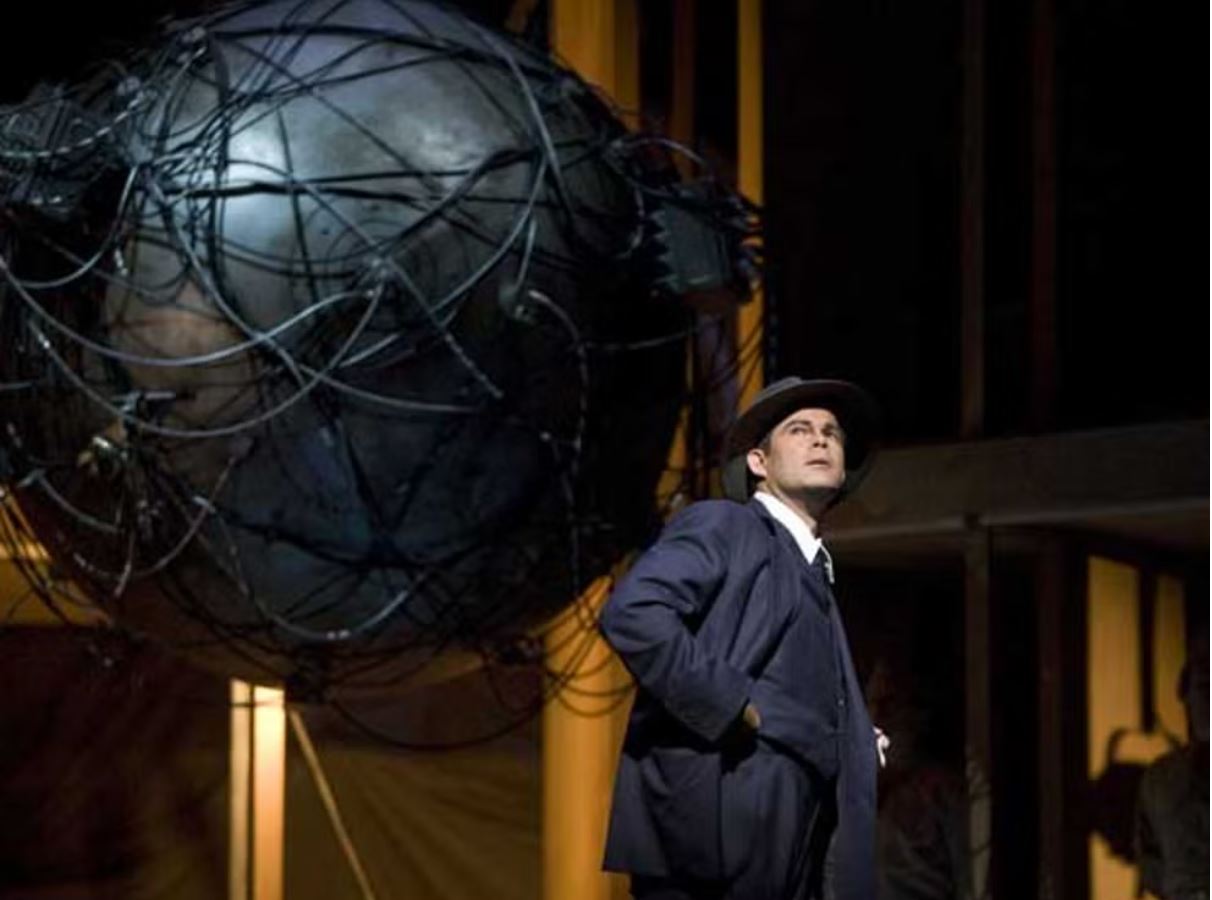
Free Doctor Atomic Opera Stream Before It’s Gone
Okay, so I’m a little late to the table. Following on the heels of yesterday’s post about classical music relating to the current Barbenheimer phenomenon (including works inspired by Oppenheimer and, believe it or not, Barbie), I learned that the Metropolitan Opera is streaming John Adams’ Oppenheimer opera, “Doctor Atomic” (2005), free through Thursday. Watch it here.
And if you missed yesterday’s post, an atomic dud apparently, here’s the link.
https://www.facebook.com/photo/?fbid=1138484557070606&set=a.883855802533484
More about Adams’ “Doctor Atomic”
https://www.metopera.org/discover/education/educator-guides/doctor-atomic/
-

Barbenheimer Meets Opera & Classical Music
“Barbenheimer” is real!
The unlikely grassroots fusion of “Barbie” and “Oppenheimer” has managed to blow the lid off a moribund box office, with Hollywood experiencing its fourth highest-grossing three-day weekend OF ALL TIME (not adjusted for inflation). It’s nice to know there will be something to lend the era some pop-cultural flavor, for a change, when VH1 goes to assemble its inevitable nostalgic retrospective about the 2020s.
I haven’t seen either movie, but the sudden prevalence of Oppenheimer, who made his home in Princeton, as director of the Institute for Advanced Study for nearly 20 years, brings to mind John Adams’ opera “Doctor Atomic,” from 2005. The opera examines the stresses and anxieties surrounding preparations for the Trinity test, with Oppenheimer, the “father of the atomic bomb,” a central figure.
In 2007, Adams fashioned some of the material into a “Doctor Atomic Symphony,” originally in four movements, at 45 minutes in length, introduced at the BBC Proms. He tightened it up into three movement, running some 25 minutes, presented without break, for its U.S. premiere and subsequent recording. I heard it for the first time on a concert of the Philadelphia Orchestra this past season.
The opera’s standout aria seems to be “Batter My Heart,” a setting of John Donne’s 14th Holy Sonnet. It’s intriguingly staged here:
Adams recalls the music for the final movement of his symphony, here complete in its revised form:
The symphony in its original four-movement version:
I can’t think of any Barbie operas off the top of my head. However, Michael Daugherty, who’s made a career out of composing music inspired by our pop-cultural detritus, wrote a cantata, “What’s That Spell?,” in 1995, for two “Barbie-sopranos” backed by rock and roll chamber orchestra.
In terms of the movie itself, I have learned that Richard Strauss’ iconic fanfare from “Also sprach Zarathustra” opens the film (in yet another nod to Kubrick), before its soundtrack finds a more expected groove in the employment of pop, rap, and dance music. There’s a spoiler-free article and clip of the opening scene here:
https://www.classicfm.com/discover-music/periods-genres/film-tv/barbie-strauss-2001-space-odyssey/
I guess on some level I must have known, but since it holds no interest for me, personally, and since I don’t have kids, it’s been at best like swatting off the occasional gnat, but there have been many other Barbie “movies,” presumably released straight-to-video. And, taking a page from the old Warner Bros. “Looney Tunes,” it looks like they employ a lot of classical music. (I guess it doesn’t hurt that the music is in the public domain.) One diehard fan actually made it a point to compile all of it.
Here’s hoping your summer of 2023 is a pop-culturally memorable one. What are you waiting for? Start assembling your “Barbenheimer” playlist now!
-
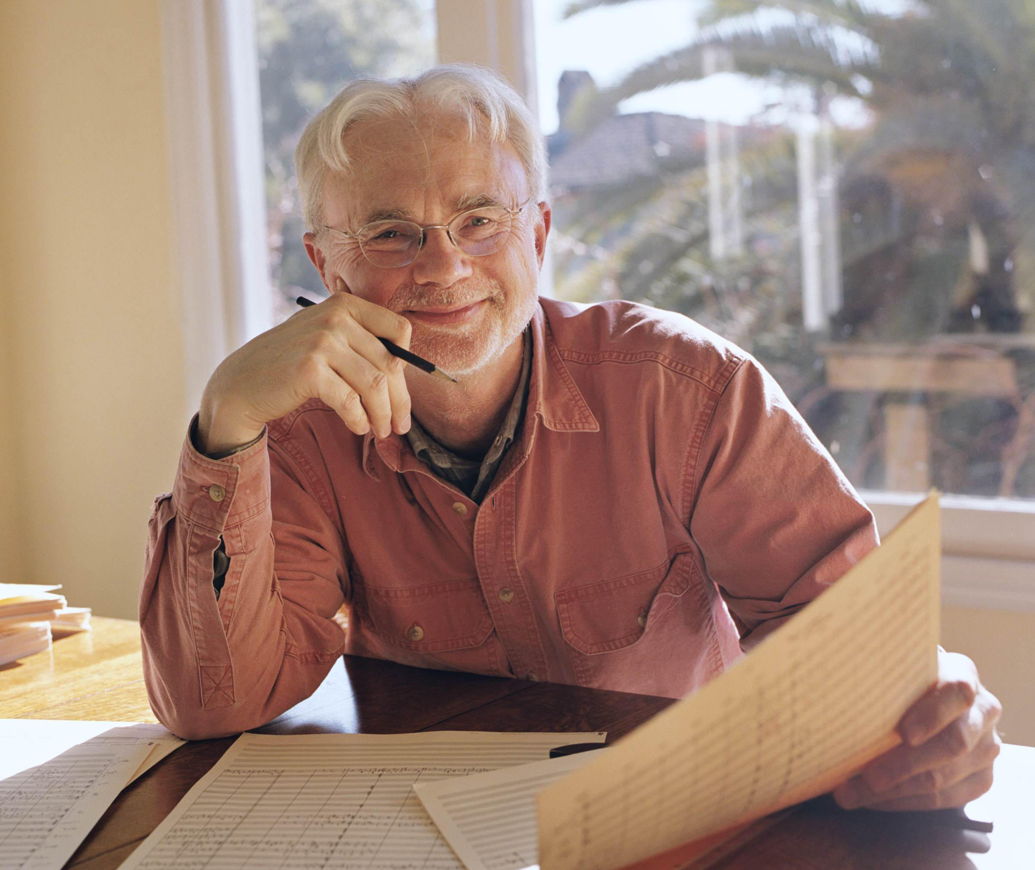
Happy 76th Birthday John Adams, Composer!
John Adams, the composer, may be no relation to John Adams, our second president, but today he is most definitely feeling the spirit of “76.” Adams was born on this date in 1947. Considered by some to be America’s preeminent living composer, he emerged from the haze of Minimalism to become the most versatile and substantial of early proponents of the style. In 2003, he was awarded the Pulitzer Prize for Music for his 9/11 memorial “On the Transmigration of Souls.”
Personally I’ve always been divided on Adams’ music. Some of it I find to be fun; some of it I find to be quite good; some of it I find to be boring, clumsy, or downright embarrassing. But what do I know? I’m just some dope posting on the internet.
My subjective evaluations do nothing to mar Adams’ influence or his standing. Happy birthday to John Adams on his 76th birthday, and congratulations on his long-term success!
FUN FACTS: Adams’ name may recall our second president, or perhaps his son, sixth president John Quincy Adams, but the composer’s middle name is actually Coolidge. Presidents John Adams and Calvin Coolidge were third cousins five times removed, through John and Priscilla (Mullins) Alden of the Mayflower fame. Admittedly, none of this has to do with the composer, beyond the fact that he was indeed named for Adams the president, who had no middle name.
A few of my Adams favorites:
“Short Ride in a Fast Machine”
“Shaker Loops”
“Nixon in China,” here introduced by Walter Cronkite
https://www.youtube.com/watch?v=DUlDKaKtRKo
John Adams on conducting
Tag Cloud
Aaron Copland (93) Beethoven (95) Composer (114) Film Music (144) Film Score (143) Film Scores (255) Halloween (94) John Williams (195) KWAX (229) Leonard Bernstein (104) Marlboro Music Festival (125) Movie Music (159) Mozart (90) Opera (212) Philadelphia Orchestra (89) Picture Perfect (174) Princeton Symphony Orchestra (109) Radio (88) Ross Amico (244) Roy's Tie-Dye Sci-Fi Corner (290) The Classical Network (101) The Lost Chord (269) Vaughan Williams (105) WPRB (397) WWFM (881)