Tag: John Antes

  • John Antes Moravian Composer

    John Antes Moravian Composer

    At a time when ants, for some inexplicable reason, begin to make their way indoors (isn’t it just getting nice outside?), I suppose it’s only appropriate that we acknowledge the anniversary of the birth of John Antes.* The Moravian composer was born in Frederick, Montgomery County, PA, on this date in 1740.

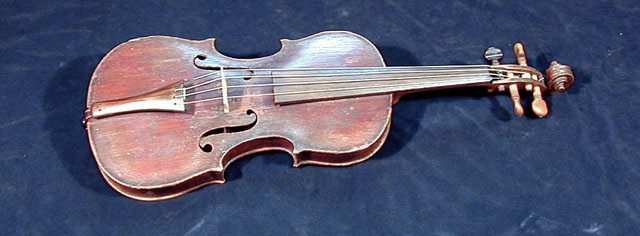
    Antes is credited with being one the first American composers to write chamber music. He was also the creator of the earliest surviving bowed string instrument made in America by someone actually born in the colonies. Antes’ violin, made in 1759, is housed in the Museum of the Moravian Historical Society in Nazareth, PA. A viola, made by Antes in 1764 (again believed to be the earliest surviving of American origin), is housed in the Lititz Moravian Congregation Collection in Lancaster County. Antes created at least seven such instruments.

    In 1752, Antes attended school in Bethlehem, PA. In 1760, he was admitted into the Single Brethren’s choir there. From Bethlehem, he travelled to Herrnhut, Germany, the international center of the Moravians, to prepare for a career as a missionary. In the meantime, he also took up watchmaking. He was ordained a minister in 1769, and then set out for Egypt. There, he served as a missionary to the Coptic Church in Grand Cairo. After a largely uneventful decade, he was captured and bastinadoed by followers of Osman Bey.

    During his convalescence, he occupied himself with the composition of three string trios. He also sent a copy of six quartets to Benjamin Franklin, whom he had known in America. The quartets are now lost (nice job, Ben), but the trios survive.

    Apparently, Antes also delved into making keyboard instruments (he completed a few for friends), but then the church elders reined him in. An Antes cello was discovered in somebody’s attic in 2018.

    https://apnews.com/article/e88096710de44cde9c4db7fae41b1760

    Video comparison of the three surviving Antes instruments:

    https://www.youtube.com/watch?v=-WhWs-3u-EI

    Selections from the String Trio No. 2 in D minor:

    Here’s a shout-out to all my peeps in the Lehigh Valley.


    *Pronounced “Anties.”
  • Lehigh Valley Celebrates John Antes

    Lehigh Valley Celebrates John Antes

    Here’s a shout-out to all my peeps in the Lehigh Valley.

    Today is the 280th birthday of Moravian composer John Antes.

    Antes, born in Frederick, Montgomery County, PA, in 1740, is credited with being one the first American composers to write chamber music. He was also the creator of the earliest surviving bowed string instrument made in America by someone actually born in the colonies. Antes’ violin, made in 1759, is housed in the Museum of the Moravian Historical Society in Nazareth, PA. A viola, made by Antes in 1764 (again believed to be the earliest surviving of American origin), is housed in the Lititz Moravian Congregation Collection in Lancaster County. Antes created at least seven such instruments.

    In 1752, Antes attended school in Bethlehem, PA. In 1760, he was admitted into the Single Brethren’s choir there. From Bethlehem, he travelled to Herrnhut, Germany, the international center of the Moravians, to prepare for a career as a missionary. In the meantime, he also took up watchmaking. He was ordained a minister in 1769, and then set out for Egypt. There, he served as a missionary to the Coptic Church in Grand Cairo. After a largely uneventful decade, he was captured and bastinadoed by followers of Osman Bey.

    During his convalescence, he occupied himself with the composition of three string trios. He also sent a copy of six quartets to Benjamin Franklin, who he had known in America. The quartets are now lost (nice job, Ben), but the trios survive.

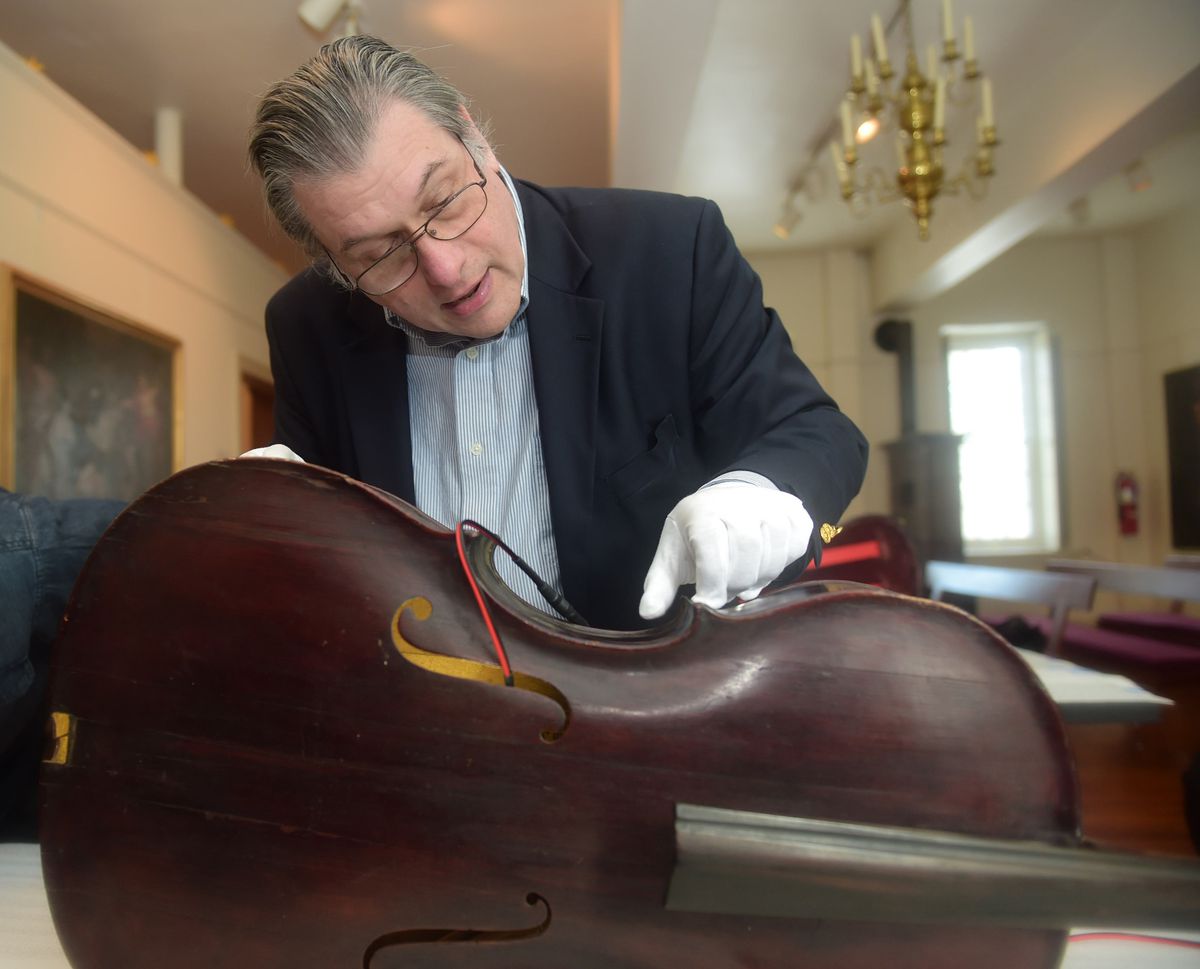
    Apparently, Antes also delved into making keyboard instruments (he completed a few for friends), but then the church elders reined him in. An Antes cello was discovered in somebody’s attic in 2018.

    https://apnews.com/e88096710de44cde9c4db7fae41b1760/Abandoned-cello-hits-a-high-note-in-Bethlehem

    Video comparison of the three surviving Antes instruments:

    https://www.youtube.com/watch?v=-WhWs-3u-EI

    Selections from the String Trio No. 2 in D minor:


    PHOTO: Philip J. Kass and the rediscovered Antes cello

  • Barber, Antes, & Copland from Marlboro

    Barber, Antes, & Copland from Marlboro

    How many times a summer do we hear Samuel Barber’s “Summer Music?”

    Well, I ask you, then – in whose tomb would you have Grant buried? What color should we paint the White House? It’s summer! Honor your appointment with the Barber, already.

    Barber wrote his wind quintet on a commission from the Chamber Music Society of the Detroit Institute for the Arts in 1953. Unusually, in lieu of a commissioning fee, the composer agreed to accept donations from the audience, with the Chamber Music Society guaranteeing the difference up to $2000. The work is set in one continuous movement, with three subsections discernible within the neoclassical whole.

    On this week’s “Music from Marlboro,” we’ll hear “Summer Music” performed at the 1981 Marlboro Music Festival, by flutist Susan Rotholz, oboist Elaine Douvas, clarinetist Joaquin Valdepeñas, bassoonist Stefanie Przybylska, and hornist Robin Graham.

    Then we’ll turn our attention to American Moravian composer John Antes. Antes, born in Frederick, Montgomery County, PA, in 1740, is credited with being one the first composers born on American soil to write chamber music, and as the creator of perhaps the earliest surviving bowed string instrument made in the American colonies. Antes’ violin, made in 1759, is housed in the Museum of the Moravian Historical Society in Nazareth, PA. A viola, made by Antes in 1764 (again believed to be the earliest surviving of American origin), is housed in the Lititz Moravian Congregation Collection in Lancaster County. Antes created at least seven such instruments.

    In 1752, Antes attended school in Bethlehem, PA. In 1760, he was admitted into the Single Brethren’s choir there. From Bethlehem, he traveled to Herrnhut, Germany, the international center of the Moravians, to prepare for a career as a missionary. In the meantime, he also took up watchmaking. He was ordained a minister in 1769, then set out for Egypt. There, he served as a missionary to the Coptic Church in Grand Cairo. After a largely uneventful decade, he was captured and tortured by followers of Osman Bey.

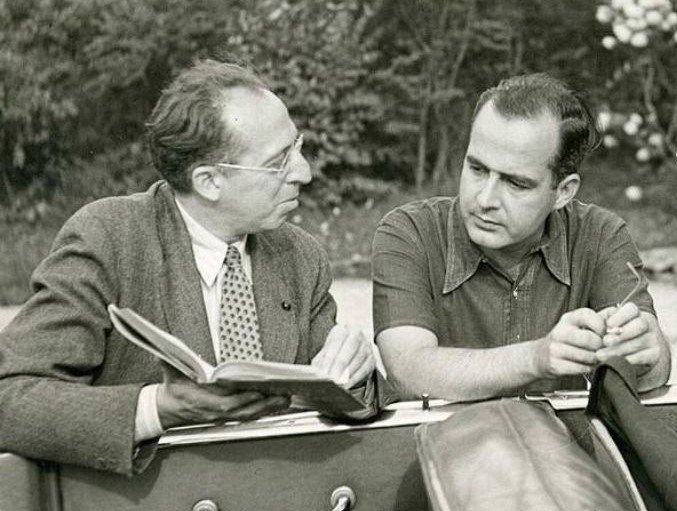
    During his convalescence, he occupied himself with the composition of three string trios. He also sent a copy of six quartets to Benjamin Franklin, whom he had known in America. The quartets are lost (nice job, Ben), but the trios survive. We’ll hear Antes’ Trio in D minor, from the 1976 Marlboro Music Festival, with violinists Isadore Cohen and Kathleen Lenski, and cellist Timothy Eddy performing.

    We’ll round out the hour with Aaron Copland’s beloved and evergreen Pulitzer Prize winning ballet “Appalachian Spring,” from 1944, in its rarely-heard original version for chamber orchestra, performed by 13 Marlboro musicians in 2006.

    “Appalachian Spring” will be heard this Saturday at 8 p.m., during the fourth weekend of this year’s Marlboro Music Festival – held, as always, on the campus of Marlboro College in Marlboro, VT – alongside works by Alban Berg, Benjamin Britten, and Pulitzer Prize winner Caroline Shaw. Beethoven, Britten, and Dvořák will be performed on Sunday at 2:30 p.m. For details, look online at marlboromusic.org.

    It’s American music for two seasons, and all seasons – with a Moravian palate cleanser from the 18th century – on this week’s “Music from Marlboro,” this Wednesday evening at 6:00 EDT, on WWFM – The Classical Network and wwfm.org.

    Marlboro School of Music and Festival: Official Page


    PHOTO: Music by Aaron Copland and Samuel Barber will be heard on this week’s “Music from Marlboro”

  • July 4th: American Music from Marlboro

    July 4th: American Music from Marlboro

    Somewhere between the pie-eating contests and the fireworks displays comes “Music from Marlboro.” We’ve got the perfect soundtrack for your Independence Day, with an all-American hour.

    At the heart of the program will be a work by Moravian composer John Antes (1740-1811). Antes, born in Frederick, Montgomery County, PA, is credited with being one the first composers born on American soil to write chamber music, and as the creator of perhaps the earliest surviving bowed string instrument made in the American colonies. Antes’ violin, made in 1759, is housed in the Museum of the Moravian Historical Society in Nazareth, PA. A viola, made by Antes in 1764 (again believed to be the earliest surviving of American origin), is housed in the Lititz Moravian Congregation Collection in Lancaster County. Antes created at least seven such instruments.

    In 1752, Antes attended school in Bethlehem, PA. In 1760, he was admitted into the Single Brethren’s choir there. From Bethlehem, he travelled to Herrnhut, Germany, the international center of the Moravians, to prepare for a career as a missionary. In the meantime, he also took up watchmaking. He was ordained a minister in 1769, then set out for Egypt. There, he served as a missionary to the Coptic Church in Grand Cairo. After a largely uneventful decade, he was captured and tortured by followers of Osman Bey.

    During his convalescence, he occupied himself with the composition of three string trios. He also sent a copy of six quartets to Benjamin Franklin, whom he had known in America. The quartets are lost (nice job, Ben), but the trios survive. We’ll hear Antes’ Trio in D minor, from the 1976 Marlboro Music Festival.

    To open the hour, from the 1977 festival, we’ll hear a Divertimento for Nine Instruments by two-time Pulitzer Prize winner Walter Piston. In addition to being an important teacher, Piston was regarded as one of our country’s great symphonists. Finally, we’ll have the suite from Aaron Copland’s beloved Pulitzer Prize decorated ballet “Appalachian Spring,” in its original version for 13 instruments, performed at Marlboro in 2006.

    Enjoy these musical fireworks with performances from the archives of the celebrated Marlboro Music Festival, this Wednesday evening at 6:00 EDT, on WWFM – The Classical Network and wwfm.org.

    Marlboro School of Music and Festival: Official Page

  • Thanksgiving American Music from Marlboro

    Thanksgiving American Music from Marlboro

    Happy Thanksgiving to you! On the busiest travel day of the year, we’ve got the perfect soundtrack for your journey over the river and through the woods, with an all-American hour on this week’s “Music from Marlboro.”

    At the heart of the program will be a work by Moravian composer John Antes (1740-1811). Antes, born in Frederick, Montgomery County, PA, is credited with being one the first composers born on American soil to write chamber music, and as the creator of perhaps the earliest surviving bowed string instrument made in the American colonies. Antes’ violin, made in 1759, is housed in the Museum of the Moravian Historical Society in Nazareth, PA. A viola, made by Antes in 1764 (again believed to be the earliest surviving of American origin), is housed in the Lititz Moravian Congregation Collection in Lancaster County. Antes created at least seven such instruments.

    In 1752, Antes attended school in Bethlehem, PA. In 1760, he was admitted into the Single Brethren’s choir there. From Bethlehem, he travelled to Herrnhut, Germany, the international center of the Moravians, to prepare for a career as a missionary. In the meantime, he also took up watchmaking. He was ordained a minister in 1769, then set out for Egypt. There, he served as a missionary to the Coptic Church in Grand Cairo. After a largely uneventful decade, he was captured and tortured by followers of Osman Bey.

    During his convalescence, he occupied himself with the composition of three string trios. He also sent a copy of six quartets to Benjamin Franklin, whom he had known in America. The quartets are lost (nice job, Ben), but the trios survive. We’ll hear Antes’ Trio in D minor, from the 1976 Marlboro Music Festival.

    To open the hour, from the 1977 festival, we’ll hear a Divertimento for Nine Instruments by two-time Pulitzer Prize winner Walter Piston. In addition to being an important teacher, Piston was regarded as one of our country’s great symphonists. Finally, we’ll have the suite from Aaron Copland’s beloved Pulitzer Prize decorated ballet “Appalachian Spring,” in its original version for 13 instruments, performed at Marlboro in 2006.

    Give thanks for performances of American music from the archives of the celebrated Marlboro Music Festival, this Wednesday evening at 6 EST, on WWFM – The Classical Network and wwfm.org.

    Marlboro School of Music and Festival: Official Page


    PHOTO: The Antes violin (which kind of sounds more like a creation of Salvador Dali), now in Nazareth, PA

Tag Cloud

Aaron Copland (93) Beethoven (95) Composer (114) Film Music (126) Film Score (143) Film Scores (255) Halloween (94) John Williams (189) KWAX (229) Leonard Bernstein (101) Marlboro Music Festival (125) Movie Music (141) Mozart (87) Opera (203) Philadelphia Orchestra (89) Picture Perfect (174) Princeton Symphony Orchestra (107) Radio (87) Ross Amico (244) Roy's Tie-Dye Sci-Fi Corner (290) The Classical Network (101) The Lost Chord (268) Vaughan Williams (103) WPRB (396) WWFM (881)

DON’T MISS A BEAT

Receive a weekly digest every Sunday at noon by signing up here


RECENT POSTS