Tag: John Foulds

  • Musical Memorials for the Fallen Composers

    Musical Memorials for the Fallen Composers

    War, what is it good for? Absolutely nothin’.

    Still, a great many brave soldiers laid down their lives in combat and numerous unfortunate civilians were collateral casualties. Join me this Thursday morning, in advance of Memorial Day, as we salute the musical dead of all countries.

    We’ll hear music by composers who died too young: George Butterworth, André Caplet, Cecil Coles, Enrique Granados, Ivor Gurney, Frederick Septimus Kelly, Alberic Magnard, Rudi Stephan, and Anton Webern. We’ll also hear elegies for the fallen by Romeo Cascarino, Aaron Copland, Bernard Herrmann, Gustav Holst, Charles Ives, Maurice Ravel, and Ralph Vaughan Williams.

    The morning’s highlight will be John Fould’s “A World Requiem,” scored for a mass of soloists, choristers, and orchestral musicians to rival those of Mahler’s “Symphony of a Thousand.” Composed between 1919 and 1921, the piece was conceived by Foulds as a memorial to the dead of all nations in the wake of the First World War. It was given its first performance at Royal Albert Hall on Armistice Night, November 11, 1923. It then lay in neglect for 80 years, until it was resurrected by Leon Botstein, who conducted the work’s revival at Royal Albert Hall on November 11, 2007. We’ll hear his recording, which was issued two months later on the Chandos label.

    I hope you’ll join me for pieces of war and prayers for peace, Thursday morning from 6 to 11 EDT, on WPRB 103.3 FM and wprb.com. Sleep is short, but memory is long, on Classic Ross Amico.


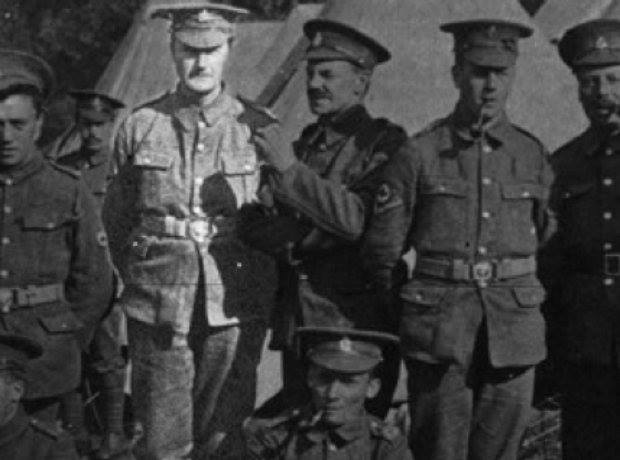
    PHOTO: Ralph Vaughan Williams in uniform. His protégé, George Butterworth, honored with the Military Cross for acts of valor on the Somme, was killed by a German sniper at the age of 31.
  • John Foulds’ World Requiem A WWI Masterpiece

    John Foulds’ World Requiem A WWI Masterpiece

    John Foulds composed his massive oratorio, “A World Requiem,” between 1919 and 1921 to honor the memory of all those – of whatever nation – who fell during WWI. The text, in English, was assembled by his wife, Maud MacCarthy, the work’s dedicatee, who compiled it from the Requiem Mass, sundry Biblical passages, selections from John Bunyan’s “The Pilgrim’s Progress,” a poem by Kabir, and her own original material.

    The oratorio falls into 20 movements (in two parts of ten each) for soloists, massed choirs (including children’s choirs), large orchestra, offstage instrumentalists, and organ. A progressive tonal framework is spiced with quarter tones, cluster chords and certain repetitive sequences.

    It was first performed on Armistice Night, November 11, 1923, in Royal Albert Hall, by up to 1,250 musicians. The work was embraced by the public, though critical reaction was mixed. Subsequent performances took place from 1924 to 1926 as part of a Festival of Remembrance. Then the work lay neglected for some 80 years until revived in 2007 by the forces in this recording, under the direction of the indefatigable Leon Botstein.

      Part I
    

    1 I Requiem – 8:44
    2 II Pronuntiatio – 4:05
    3 III Confessio – 5:46
    4 IV Jubilatio – 5:06
    5 V Audite – 7:04
    6 VI Pax – 3:53
    7 VII Consolatio – 5:08
    8 XIII Refutatio – 0:38
    9 IX Lux Veritatis – 1:19
    10 X Requiem 3:25

      45:08
    
      Part II 
    

    1 XI Laudamus – 6:30
    2 XII Elysium – 6:24
    3 XIII In Pace – 3:17
    4 Hymn of the Redeemed – 4:37
    5 XIV Angeli – 3:27
    6 XV Vox Dei – 3:07
    7 XVI Adventus – 4:01
    8 XVII Vigilate – 2:03
    9 XVIII Promissio et Invocatio – 7:30
    10 XIX Benedictio – 1:41
    11 XX Consummatus 2:06

      44:50
    
  • John Foulds’ Lost Indian Dream

    John Foulds’ Lost Indian Dream

    Though steeped in the comparatively conservative milieu of the English Musical Renaissance at the turn of last century, John Foulds (1880-1939) was fascinated with the cultures and music of the East. In particular, he gravitated toward India, first intellectually and spiritually, and at last physically. His second wife, the violinist Maude MacCarthy, was an authority on Indian culture, and the two were very much in sympathy with the tenets of Eastern spirituality.

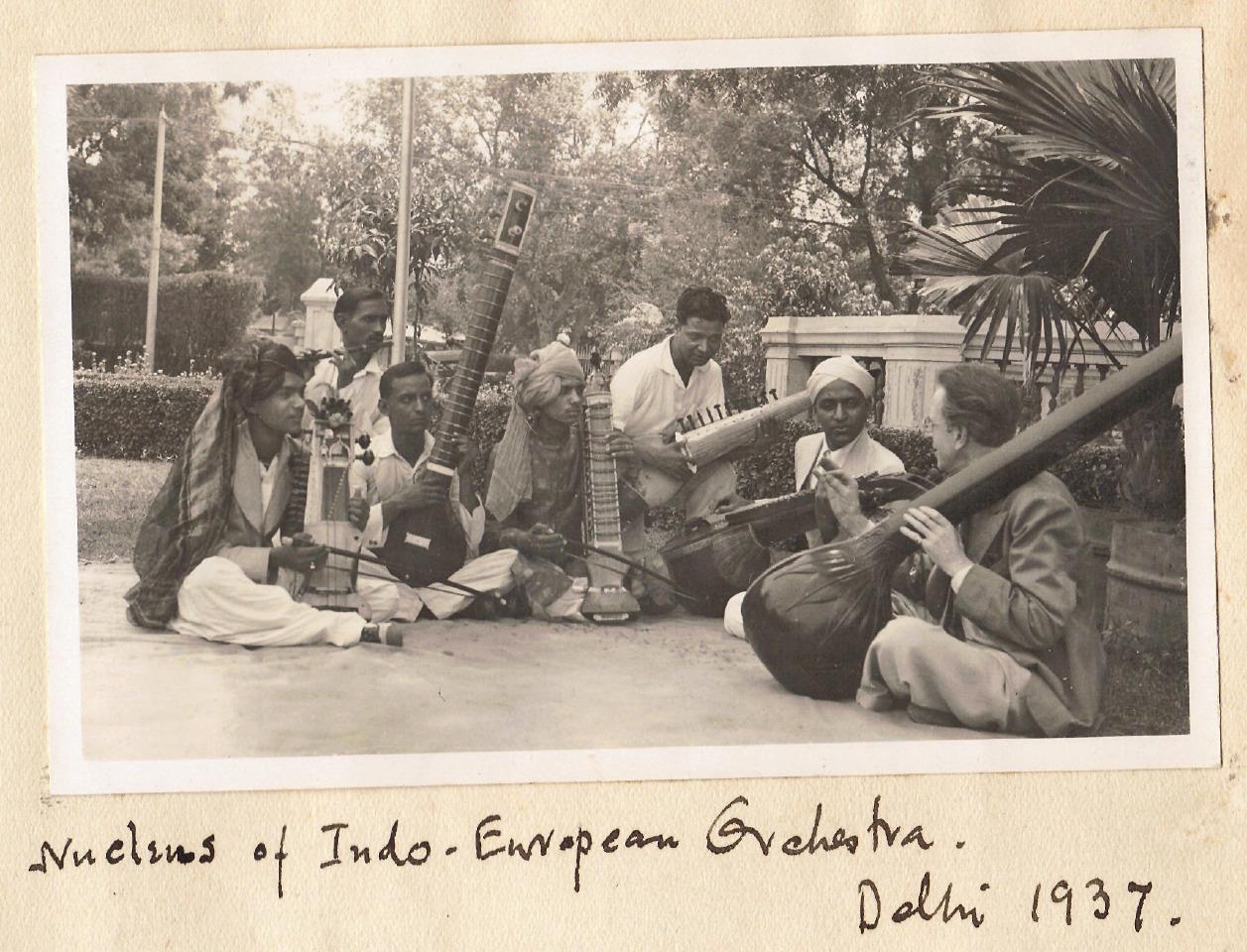
    Foulds moved to India in 1935. There, he collected native folk tunes. He became director of European music for All-India Radio in Delhi, created an orchestra from scratch, and labored tirelessly to fulfill his vision of a synthesis between Eastern and Western music. He also composed works for traditional Indian instruments. His efforts on behalf of the radio were so successful that he was asked to open a satellite branch in Calcutta. Unfortunately, he contracted cholera and died within a week of his arrival, at the age of 58.

    Because of the remote location and the fact that a number of the pieces of his maturity have been lost, or the manuscripts extensively compromised by vermin, Foulds’ slight reputation rested for the most part on his “light music.”

    But Foulds was definitely ahead of his time, as the gradual rediscovery of his works have revealed, with the composer’s fascination for quarter-tones and, occasionally, a tendency toward an almost proto-minimalism.

    Over the span of a decade, from 1919 to 1930, Foulds labored sporadically at a Sanskrit opera titled “Avatara.” The work would remain unfinished, but preludes from each of the acts were assembled into a concert work, “Three Mantras.”

    “Mantra I” is subtitled “Of Action and Vision of Terrestrial Avataras;” “Mantra II,” “Of Bliss and Visions of Celestial Avatras;” and “Mantra III,” “Of Will and Vision of Cosmic Avataras.”

    Here they are.

    Mantra I: https://www.youtube.com/watch?v=fLR21wbcSnU
    Mantra II: https://www.youtube.com/watch?v=PCXMNVoRk24
    Mantra III: https://www.youtube.com/watch?v=5hxWp5QBN4g

    Some enterprising music director could do worse than to program this piece on the first half of a concert featuring Holst’s “The Planets.” Not only are there striking affinities between the two pieces – the virtuosic writing, the colorful orchestration, and the atmospheric use of a wordless chorus – but Holst the man (and occasionally the composer) also happened to share Foulds’ fascinations with mysticism and Indian culture.

    Happy birthday, John Foulds!

    PHOTO: Foulds (right), sitting in on an Indian jam session

  • WWFM Anniversary & a Facebook Favor

    WWFM Anniversary & a Facebook Favor

    Thank you so much for all of your well-wishes yesterday, in terms of my Facebook anniversary. I really appreciate all of your support. I enjoy being able to put together a little something every day, knowing that you’re out there, reading.

    Sadly, today marks another anniversary: that of my last regular air shift at WWFM. As you may know, I anchored weekend mornings there for 18 ½ years. That was augmented with substitutions and, for a time, an expanded schedule. At its peak, I was pulling five shifts a week, Wednesday through Sunday, also writing and producing the Friday noon broadcast concerts.

    Then the budget cuts came, and out of necessity the station went with a syndicated service out of Minnesota. Thankfully, finances have improved somewhat and live announcers again pepper the schedule, though I personally have only been back for perhaps two or three pledge drives. I do, however, continue to record my weekly syndicated shows, “Picture Perfect” and “The Lost Chord,” for which I am grateful, and produce special programs like the Scheide tribute, when asked. (If you missed it, you can listen to it here: http://wwfm.org/webcasts.shtml.)

    I still do miss putting together the live shows. There’s really nothing quite like sharing music with an audience in real time. Also, a three- or four-hour shift allows plenty of opportunity to work on fun and/or illuminating themes and to share new discoveries. It leaves a bit of a hole in my life not to be able to do that. Hence, little diversions like the Facebook page, which I initiated last year on the eve of my last regular shift.

    Which brings me to the point: I had thought about pushing for this as 2014 was winding down, but I’m a fairly laid-back guy, and I’m not all that comfortable with self-promoting. However, I’m guessing there must be at least 20 of you reading this page who have not yet “liked” it. Actually, I know that to be the case, because I see the numbers, and some days I’m getting well over 80 hits.

    So I’m coming to you with hat in hand. Are there enough of you out there who would like to help me to get to 100? Sustain me through this melancholy anniversary, won’t you? Brother, can you spare a “like?”


    The last piece I ever played on a regular weekend morning air shift: John Foulds’ “Keltic Lament”:

    https://www.youtube.com/watch?v=RJHM2NUPH1w

Tag Cloud

Aaron Copland (92) Beethoven (95) Composer (114) Film Music (120) Film Score (143) Film Scores (255) Halloween (94) John Williams (185) KWAX (229) Leonard Bernstein (100) Marlboro Music Festival (125) Movie Music (135) Opera (198) Philadelphia Orchestra (88) Picture Perfect (174) Princeton Symphony Orchestra (106) Radio (87) Ralph Vaughan Williams (85) Ross Amico (244) Roy's Tie-Dye Sci-Fi Corner (290) The Classical Network (101) The Lost Chord (268) Vaughan Williams (103) WPRB (396) WWFM (881)

DON’T MISS A BEAT

Receive a weekly digest every Sunday at noon by signing up here


RECENT POSTS