Tag: John Luther Adams

  • Fiery Beethoven Ignites Princeton Symphony

    Fiery Beethoven Ignites Princeton Symphony

    It’s easy to be complacent about early Beethoven, but last night the Princeton Symphony Orchestra offered a performance of the Piano Concerto No. 1 that was both engaging and, in its outer movements, an unanticipatedly fiery affair.

    Although in style the concerto is very far away from Beethoven’s Ninth Symphony (preceding it by a good quarter century), there was no shortage of Joy in evidence as soloist Sara Davis Buechner launched into the last movement with a playful accelerando. It was one of many inspired, seemingly irrepressible touches, as the pianist played throughout, even when she wasn’t necessarily supposed to, spontaneously, during the louder tutti passages! In a performance that was full of surprises, she astounded even by offering her own cadenza. Her enthusiasm was infectious, and the audience responded to the fresh approach.

    Kudos to timpanist Jeremy Levine, as always lending visceral support with his percussive contributions. He supplied plenty of lift and imbued the piece with moments of awesome temperament. All the love usually goes to Concertos 3, 4 and 5, but the orchestra and soloist made the strongest possible case for 1 being a neglected gem.

    On the second half, music director Rossen Milanov led Schumann’s Symphony No. 4 with great authority, the musicians hanging on his every gesture, as he guided them with the kind of expressive freedom one would expect more from a solo piano recital. But here, the 50 or so musicians followed him as one. Very impressive indeed. In the most thrilling performances (I’m thinking of the classic Furtwängler recording or an underrated one by Adrian Boult), the propulsive fourth movement can build to such intensity that you feel as if you want to leap out of your seat. Last night’s performance, while not wanting for rhythmic drive, was most magnetic in the contrasting lyrical passages, which came across as enchantingly as the most transporting music by the composer’s close personal friend, Felix Mendelssohn.

    The concert opened with “Become River,” a hypnotic quarter of an hour crafted by the environmentally-focused John Luther Adams. Adams, not to be confused with the other John “Nixon in China” Adams, was awarded the Pulitzer Prize for Music in 2014 for “Become Ocean,” the first of what has turned out to be a cycle of “Become” pieces. The title is taken from a poem by John Cage. But don’t expect the music to sound anything like Cage. The concept echoes more Smetana’s “Moldau,” tracing a river on its course, only without the Romantic nationalist underpinnings. This is the 21st century, so execution-wise, you’d be better off imagining what it would be like if Arvo Pärt had written the opening of “Das Rheingold.”

    The strings played so high at the start, in support of percussionist Greg Giannascoli, who elicited equally stratospheric tones by running a bow across a set of crotales, or antique cymbals, that they likely set dogs howling in Bucks County. But like water itself, the music soon expanded to find its way into every corner of the orchestra to create a meditative space, disturbed only by inappropriate sotto voce whispers, a dropped cell phone, and chair kicking on the part of those in my vicinity.

    Hell may be other people, but the Princeton Symphony Orchestra did everything it could to allow one to conceive of a better world.

    The program will be repeated this afternoon at 4:00 at Richardson Auditorium in Alexander Hall on the campus of Princeton University. For tickets and information, visit princetonsymphony.org.
  • Alaska Purchase & the Music of Space

    Alaska Purchase & the Music of Space

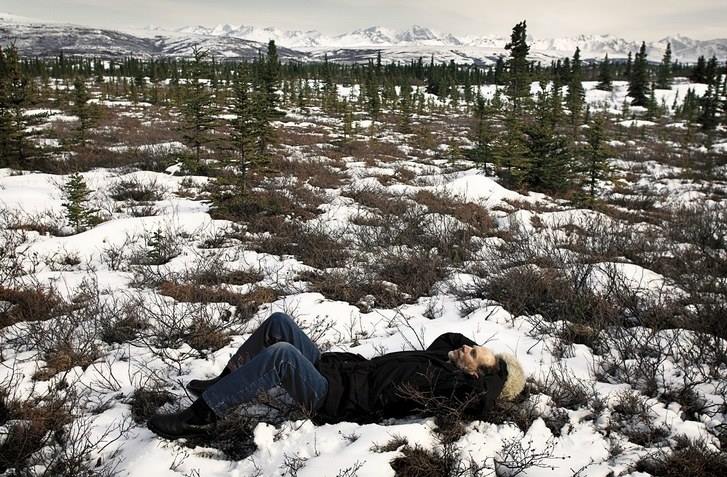
    On this date in 1867, the United States bought Alaska from Russia for $7,200,000 – two cents an acre. Celebrate “Seward’s Folly” with music by John Luther Adams. Adams, who lived most of his adult life in interior Alaska – about 100 miles south of the Arctic Circle – was awarded the Pulitzer Prize for Music in 2014.

    Here is Adams on his composition “In a Treeless Place, Only Snow” (1999):

    White is not the absence of colour. It is the fullness of light.

    Silence is not the absence of sound. It is the presence of stillness.

    As the Inuit have known for centuries, and as painters from Malevich to Ryman have shown us more recently, whiteness embraces many hues, textures and nuances.

    As John Cage reminded us, silence does not literally exist. Still, in a worlds going deaf with human noise, silence endures as a deep and resonant metaphor.

    In his “Poetics of Music,” Stravinsky speaks of music as a form of philosophical speculation. But music can also be a form of contemplation: the sensual reaching for the spiritual.

    I aspire to music which is both rigorous in thought and sensuous in sound.

    For many years now, I’ve worked with an ideal of “sonic geography” – music as place, and place as music. The treeless, windswept expanses of the Arctic are enduring creative touchstones for my work, and “In A Treeless Place” is an attempt to evoke an enveloping musical presence equivalent to that of a vast tundra landscape.

    But I want to go beyond landscape painting with tones, beyond language, metaphor and the extra-musical image.

    I no longer want to be outside the music, listening to it as an object apart. I want to INHABIT the music, to be fully present and listening in that immeasurable space which Malevich called “a desert of pure feeling.”

    Listen to the music here:

    On a much more ambitious scale, here is a selection from Adams’ “Inuksuit” (2009), as filmed by Paul Moon.

    FUN FACT: When I was in second grade, I played Seward in a school play!

  • Arctic Adventure Radio Journey

    Arctic Adventure Radio Journey

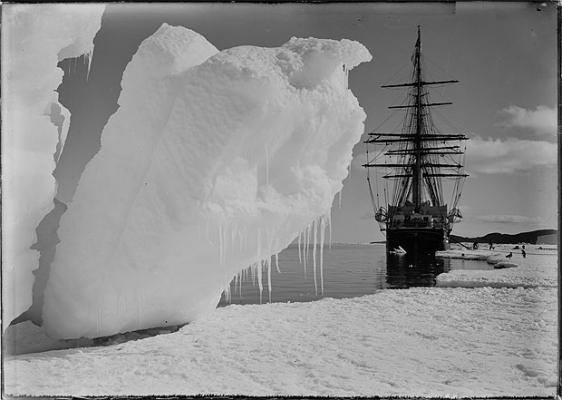
    Once upon a time, a trip to the Pole required dog sleds, pack animals, and an unimaginable surplus of grit. Now all you need is a radio.

    I hope you’ll join me this morning on WPRB as we armchair travel to the Arctic, subarctic, and Antarctic, with musical evocations by John Luther Adams, Wilhelm Peterson-Berger, Paul Moravec, Einar Englund, Nigel Westlake, George Lloyd, Ralph Vaughan Williams, Uuno Klami, Geirr Tveitt, and perhaps even Billy Mayerl. Our itinerary includes stops in Alaska, Lapland, Antarctica, Siberia, and the Arctic Ocean.

    We strike camp at dawn. Grab a thermos and some mukluks, and tune in from 6 to 11 EDT on WPRB 103.3 FM and at wprb.com. Expect a chilly reception, on Classic Ross Amico.

Tag Cloud

Aaron Copland (92) Beethoven (95) Composer (114) Film Music (119) Film Score (143) Film Scores (255) Halloween (94) John Williams (185) KWAX (229) Leonard Bernstein (99) Marlboro Music Festival (125) Movie Music (134) Opera (198) Philadelphia Orchestra (87) Picture Perfect (174) Princeton Symphony Orchestra (106) Radio (87) Ralph Vaughan Williams (85) Ross Amico (244) Roy's Tie-Dye Sci-Fi Corner (290) The Classical Network (101) The Lost Chord (268) Vaughan Williams (102) WPRB (396) WWFM (881)

DON’T MISS A BEAT

Receive a weekly digest every Sunday at noon by signing up here


RECENT POSTS