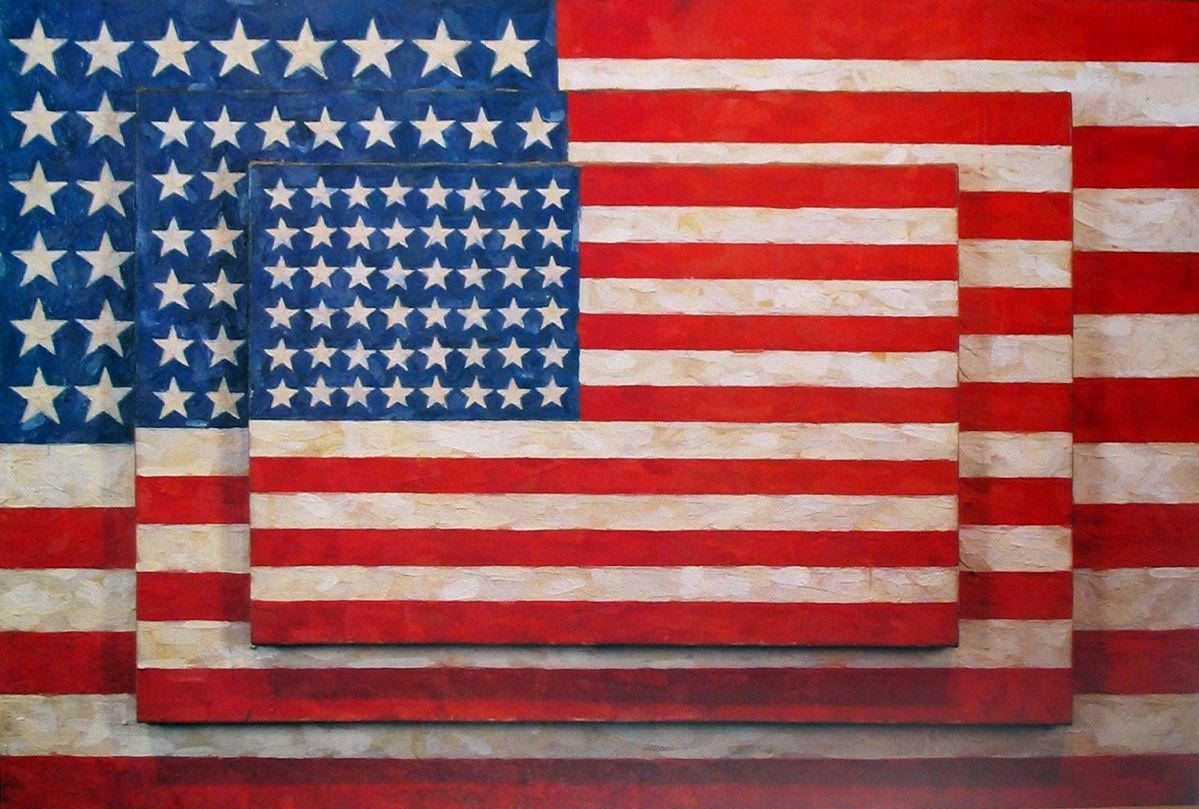
For Flag Day, two works inspired by Old Glory – one, one of the most famous pieces of American music ever, and the other, virtually forgotten:
On Christmas Day, 1896, John Philip Sousa received the bolt of inspiration that would become “The Stars and Stripes Forever.” He knocked off his quintessential march in a New York hotel room in a matter of hours. Sousa’s magnum opus was first performed in Philadelphia on May 14, 1897.
Though the piece was enthusiastically received, it wasn’t until the Spanish-American War in 1898 that sales went through the roof. This was precipitated in part by the composer having organized a spectacle involving hundreds of performers, complete with flag-bearing soldiers and a ravishing beauty decked out in red, white and blue. With a dash of canny showmanship, “The Stars and Stripes Forever” surfed a wave of wartime patriotism to world-wide and lasting renown.
The same year, the respected Czech composer Antonin Dvořák put the finishing touches on his cantata “The American Flag.” The work had been planned to celebrate the composer’s arrival in the U.S., in 1892, to take up the directorship of the National Conservatory of Music in New York. But the text, by Joseph Rodman Drake, arrived too late, and the cantata didn’t receive its first performance until 1894. Though he submitted the vocal score for publication in 1895, Dvořák did not consider the work complete until three years later.
Scored for tenor, baritone, chorus and orchestra, the cantata falls into eight sections:
I. The Colors of the Flag
II. First Hymn to the Eagle
III. Second Hymn to the Eagle
IV. Orchestral Interlude: March
V. First Address to the Flag (The Foot-Soldier)
VI. Second Address to the Flag (The Cavalryman)
VII. Third Address to the Flag (The Sailor)
VIII. Apotheosis (Prophetic)
Part of the reason the work remains such an obscurity is likely the fact that it doesn’t sound particularly American. This is not the Dvořák of the “New World Symphony” or the “American” String Quartet.
It was Henry T. “Harry” Burleigh, the composer’s African-American assistant at the conservatory, who introduced Dvořák to the Negro spiritual. Travels to the Midwest would get him thinking about Native American folk music. Dvořák was thrilled to learn of these untapped musical resources. He set about exhorting his American colleagues, who had been churning out largely forgettable scores on European models, to embrace these overlooked treasures and, in doing so, forge a distinctive national sound.
Mindful of their invaluable contributions, Dvořák lobbied to waive tuition to the conservatory for talented African American and Indigenous composers who could not afford the fee. His perceptivity, his enthusiastic support for, and his elevation of sounds that really were in the American ear all along earn Dvořák his place as the honorary Grandfather of American Art Music.
Here is his neglected cantata, “The American Flag”:
November 11. On the 11th hour of the 11th day of the 11th month in 1918 (Paris time), the Armistice went into effect that formalized Allied victory and the end of WWI.
In 1954, at the urging of U.S. veterans, Armistice Day was renamed Veterans Day. Though the intent of the holiday is frequently confused with that of Memorial Day, Veterans Day is a time to honor ALL military veterans, not just those who died in service to their country.
Last year I put together a photo gallery of American composers who served in the U.S. armed forces. Some of you suggested a few more, which I have now added. Thank you!
It’s easier to turn up photos of European composers who served (Vaughan Williams, Maurice Ravel, and Arnold Schoenberg, to name a few), and there are certainly plenty of lists of popular singers, but not so many of American composers, which is a shame, since a good number of them also served.
Thank you, veterans. Hoping for peace in these turbulent times.
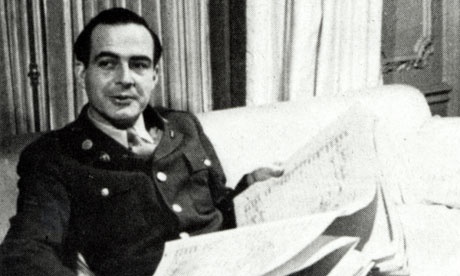
PHOTOS: (counterclockwise from top) Corporal Samuel Barber, U.S. Army Air Force; John Philip Sousa in his Marine Band uniform; Sergeant Romeo Cascarino conducting an Army orchestra; and William Grant Still, U.S. Navy. More, when you click through the gallery…
I hope everyone had a good night’s sleep after this year’s maximum food, minimal exercise, isolation Easter.
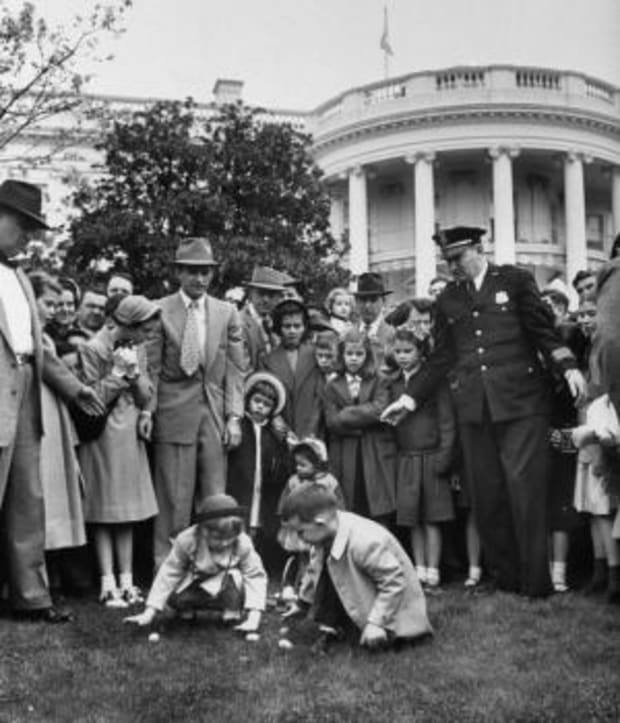
Ordinarily, I make it a practice never to mention the White House here, if I can help it, but in the interest of music, let us consider the longstanding tradition of Easter Monday and the White House Egg Roll.
In this case, “Egg Roll” has nothing at all to do with the deep-fried Chinese appetizer (that’s so, so good with hot mustard sauce), but rather the custom, officially instituted by Rutherford B. Hayes in 1878, of springtime celebrations held on the west grounds of the U.S. Capitol. It’s said that similar parties had been held, informally, during the time of the Lincoln administration. Such gatherings were banned, however, under Ulysses S. Grant, because of their destructive impact on the landscaping.
Children began showing up at the White House gate, and it’s said that President Hayes allowed them in on Easter Monday to continue their deleterious capers. It was Benjamin Harrison who enlisted the participation of the United States Marine Band. Except for two world wars and restoration efforts, which temporarily suspended festivities on the White House lawn, the tradition has continued down to the present day.
It hardly need be said, even if it weren’t for the torrential rain this morning, this year’s Easter Monday Egg Roll has been cancelled on account of worldwide COVID-19 concerns. Here’s hoping that next year we can again get back to this most ludicrous custom.
For now, we can still enjoy the music. Here is John Philip Sousa’s “Easter Monday on the White House Lawn,” performed by the United States Marine Band:
Another piece of music appropriate for the day is Thomas Kerr’s “Easter Monday Swagger.” Kerr, who was born in Baltimore, studied at Howard University (he would have preferred the Peabody Conservatory, but black students were not admitted at that time), then the Eastman School of Music in Rochester, NY. Kerr later taught at Knoxville University, before returning to Howard, where he served for more than 30 years, until his retirement in 1976.
“Easter Monday Swagger” was recorded by Natalie Hinderas, professor of music at Temple University from 1966 to 1987. In 1971, Hinderas became the first black woman to appear as an instrumental soloist on a regular subscription series of a major symphony orchestra – the Philadelphia Orchestra – when she performed Alberto Ginastera’s Piano Concerto No. 1. This opened the floodgates. After that she received offers from the New York Philharmonic, the Cleveland Orchestra, the Los Angeles Philharmonic, the Atlanta Symphony, the Chicago Symphony, the San Francisco Symphony, and the Pittsburgh Symphony Orchestra.
Her landmark two-record set, “Natalie Hinderas Plays Music by Black Composers,” was released around the time of her Philadelphia Orchestra debut.
If you’re going to have a music birthday, today would be a very good day for it. There’s not a lot of competition!
Franz Lachner, born on this date in 1803, was the most successful composer of Franz Schubert’s circle, his reputation extending far beyond the walls of Vienna. He was one of Schubert’s younger friends. Even so, it’s sobering to reflect that Lachner died in 1890. How much Schubert might have accomplished had he lived! Though his star has certainly faded over the years, Lachner remains something of a missing link between Schubert and Schumann. We’ll be able to sample of some of his music this afternoon.
We’ll also celebrate Easter Monday with a work inspired by the traditional White House “egg roll,” by John Philip Sousa, and assume an Easter Monday swagger, courtesy of Thomas Kerr. Maybe we’ll even have some music suggestive of some overworked hens.
In addition, there will be a concerto by Stephen Dodgson – composer (a descendant of Lewis Carroll) and some music-making by his wife, Jane Clark Dodgson, in honor of her 90th birthday. We’ll also welcome April with John Foulds’ “April – England.” (April Foulds, a day late.)
There will be “a bit of this and a bit of that,” as we get back to work on this Easter Monday. Enjoy some musical crocuses, from 4 to 7 p.m. EDT, on WWFM – The Classical Network and wwfm.org.