Tag: John Vincent

  • Ormandy’s Lost American Gems Barber Persichetti Vincent

    Ormandy’s Lost American Gems Barber Persichetti Vincent

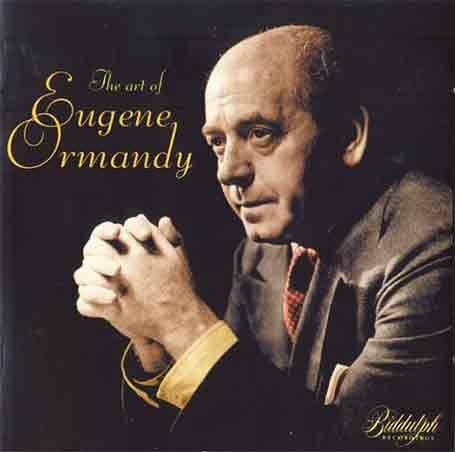
    It’s not so much that I am out of ideas, but it is mighty convenient that I had so much material left over from last week’s show, consisting of rarely-heard recordings of American music performed by Eugene Ormandy and the Philadelphia Orchestra.

    This Sunday night on “The Lost Chord,” I reach for the already conveniently stacked CDs to cue up three more gems.

    Samuel Barber was born in West Chester, Pa., not far from Philly, in 1910. He attended Philadelphia’s Curtis Institute of Music and had his first orchestral work, the “School for Scandal Overture,” performed by the Philadelphia Orchestra in 1931, when he was 21 years-old.

    His “First Essay for Orchestra” was sent to Arturo Toscanini in the same mail as his “Adagio for Strings.” Toscanini performed both works with the NBC Symphony in 1938, but it was Eugene Ormandy who made the first recording of the “Essay,” with the Philadelphians, in 1940.

    Vincent Persichetti was born in Philadelphia in 1915, and he died there in 1987. In between, he attended Combs College of Music, the Curtis Institute (where he studied conducting with Fritz Reiner) and the Philadelphia Conservatory. He taught at Combs and the Philly Conservatory. Then he received an invitation from William Schuman (some of whose music we heard last week) to take up a professorship at Juilliard.

    Persichetti was one of our great composers, but to this day he remains underappreciated, more respected than loved. His Symphony No 4 of 1951 must be one of his most immediately attractive works.

    Finally, John Vincent may be the most undeservedly neglected composer in Ormandy’s entire discography. Ormandy described his recording of Vincent’s Symphony in D (“A Festival Piece in One Movement”) as “one of the best we have ever done,” and the piece itself as “one of the finest compositions created by an American composer in the past decade.” The 1954 work sounds at times like Sibelius gone to the rodeo, but my, is it good stuff!

    I hope you’ll join me for “All-American Ormandy II,” rarely-heard recordings of Barber, Persichetti and Vincent, on “The Lost Chord,” this Sunday night at 10 ET, with a repeat Wednesday evening at 6; or that you’ll listen to it later as a webcast at wwfm.org.

    To help get you in the mood, here’s an in-depth interview with Persichetti by Bruce Duffie:

    http://www.bruceduffie.com/persichetti.html

  • Ormandy’s Lost American Music

    Ormandy’s Lost American Music

    It’s not so much that I am out of ideas, but it is mighty convenient that I had so much material left over from last week’s show, consisting of rarely-heard recordings of American music performed by Eugene Ormandy and the Philadelphia Orchestra.

    This Sunday night on “The Lost Chord,” I reach for the already conveniently stacked CDs to cue up three more gems.

    Samuel Barber was born in West Chester, Pa., not far from Philly, in 1910. He attended Philadelphia’s Curtis Institute of Music and had his first orchestral work, the “School for Scandal Overture,” performed by the Philadelphia Orchestra in 1931, when he was 21 years-old.

    His “First Essay for Orchestra” was sent to Arturo Toscanini in the same mail as his “Adagio for Strings.” Toscanini performed both works with the NBC Symphony in 1938, but it was Eugene Ormandy who made the first recording of the “Essay,” with the Philadelphians, in 1940.

    Vincent Persichetti was born in Philadelphia in 1915, and he died there in 1987. In between, he attended Combs College of Music, the Curtis Institute (where he studied conducting with Fritz Reiner) and the Philadelphia Conservatory. He taught at Combs and the Philly Conservatory. Then he received an invitation from William Schuman (some of whose music we heard last week) to take up a professorship at Juilliard.

    Persichetti was one of our great composers, but to this day he remains underappreciated, more respected than loved. His Symphony No 4 of 1951 must be one of his most immediately attractive works.

    Finally, John Vincent may be the most undeservedly neglected composer in Ormandy’s entire discography. Ormandy described his recording of Vincent’s Symphony in D (“A Festival Piece in One Movement”) as “one of the best we have ever done,” and the piece itself as “one of the finest compositions created by an American composer in the past decade.” The 1954 work sounds at times like Sibelius gone to the rodeo, but my, is it good stuff!

    I hope you’ll join me for “All-American Ormandy II,” rarely-heard recordings of Barber, Persichetti and Vincent, on “The Lost Chord,” this Sunday night at 10 ET, with a repeat Wednesday evening at 6; or that you’ll listen to it later as a webcast at wwfm.org.

    To help get you in the mood, here’s an in-depth interview with Persichetti by Bruce Duffie:

    http://www.bruceduffie.com/persichetti.html

Tag Cloud

Aaron Copland (92) Beethoven (94) Composer (114) Film Music (117) Film Score (143) Film Scores (255) Halloween (94) John Williams (185) KWAX (228) Leonard Bernstein (99) Marlboro Music Festival (125) Movie Music (132) Opera (197) Philadelphia Orchestra (86) Picture Perfect (174) Princeton Symphony Orchestra (106) Radio (86) Ralph Vaughan Williams (85) Ross Amico (244) Roy's Tie-Dye Sci-Fi Corner (290) The Classical Network (101) The Lost Chord (268) Vaughan Williams (99) WPRB (396) WWFM (881)

DON’T MISS A BEAT

Receive a weekly digest every Sunday at noon by signing up here


RECENT POSTS