Tag: John Williams

  • Grammy’s Classical Music Surprise John Williams Wins

    Grammy’s Classical Music Surprise John Williams Wins

    Classical music is so marginalized at the Grammy Awards, I don’t even bother watching. In fact, most years I don’t even pay attention to the nominees, except maybe, if I think of it, in the film score category.

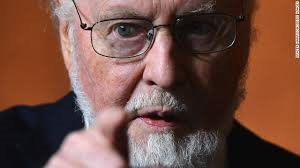
    Imagine my surprise when I scrolled through the list of winners this morning to find John Williams collected another statuette for his mantle (on his birthday, no less), for “Best Instrumental Composition,” for his score to “The Book Thief.” I can never quite grasp the timeline for the Grammys. “The Book Thief” was released in 2013.

    Williams beat out Stanley Clarke (“Last Train to Sanity”), Gordon Goodwin (“Life in the Bubble”), Rufus Reid (“Recognition”) and Edgar Meyer and Chris Thile (“Tarnatian”).

    Here are the other film and classical music winners:

    Best Compilation Soundtrack for Visual Media
    Frozen

    Best Score Soundtrack for Visual Media
    The Grand Budapest Hotel

    Best Song Written for Visual Media
    “Let It Go”

    Best Engineered Album, Classical
    Vaughan Williams: Dona Nobis Pacem; Symphony No. 4; The Lark Ascending

    Classical Producer of the Year
    Judith Sherman

    Best Orchestral Performance
    “Adams, John: City Noir,” David Robertson, conductor (St. Louis Symphony)

    Best Opera Recording
    “Charpentier: La Descente D’Orphée Aux Enfers,” Paul O’Dette & Stephen Stubbs, conductors; Aaron Sheehan; Renate Wolter-Seevers, producer (Boston Early Music Festival Chamber Ensemble; Boston Early Music Festival Vocal Ensemble)

    Best Choral Performance
    “The Sacred Spirit Of Russia,” Craig Hella Johnson, conductor (Conspirare)

    Best Chamber Music/Small Ensemble Performance
    “In 27 Pieces — The Hilary Hahn Encores,” Hilary Hahn & Cory Smythe

    Best Classical Instrumental Solo
    “Play,” Jason Vieaux

    Best Classical Solo Vocal Album
    Douce France

    Best Classical Compendium
    Partch: Plectra & Percussion Dances

    Best Contemporary Classical Composition
    “Adams, John Luther: Become Ocean,” John Luther Adams


    John Williams’ music for “The Book Thief”
    https://www.youtube.com/watch?v=2hufmaYJNKY

  • John Williams Iconic Movie Opening

    John Williams Iconic Movie Opening

    Still one of the most bravura openings of any movie:

    Happy birthday, John Williams (born 1932).

  • Princeton Symphony Salutes the Silver Screen

    Princeton Symphony Salutes the Silver Screen

    Lights! Camera! Music?

    The Princeton Symphony Orchestra will present “A Silver Screen Salute” on February 7 at 8 p.m.

    The concert, which will take place at Princeton University’s Richardson Auditorium, will include some of film’s most evocative music, including themes from “Gone with the Wind,” “The Magnificent Seven,” “Lawrence of Arabia” and “Star Wars.”

    Also featured will be Academy Award winning music by Franz Waxman for “Sunset Boulevard,” Bernard Herrmann’s score for Alfred Hitchcock’s “Vertigo,” Ennio Morricone’s poignant melodies for “Cinema Paradiso,” and John Williams’ Indiana Jones march from “Raiders of the Lost Ark.”

    The PSO will be joined by The American Boychoir for selections from Williams’ “Empire of the Sun,” “Amistad,” and “Saving Private Ryan,” as well as Herbert Stothart’s score for “The Wizard of Oz,” on themes of Harold Arlen.

    NPR arts commentator Bob Mondello will host the event. Read more about it in my article in today’s Trenton Times.

    http://www.nj.com/times-entertainment/index.ssf/2015/01/princeton_symphony_orchestra_p.html

    PHOTO: PSO Music Director Rossen Milanov, ready for his close-up

  • Why I (Sometimes) Hate Mozart

    Why I (Sometimes) Hate Mozart

    Dear Wolfgang,

    Sorry for being such an idiot. I confess to feeling total disappointment when your music is listed on a concert program or announced on the radio, yet when I actually listen to it, it almost always yields rewards.

    You wrote my favorite opera of all time (“The Marriage of Figaro”). You wrote the favorite opera of my youth (“The Magic Flute”). You wrote a piece I could not stop listening to when I was in high school (“Eine kleine Nachtmusik”). There are pieces you wrote that I adore. So why do I bear so much prejudice against you?

    Maybe it’s for the same reason some people hate John Williams or Stephen King. If it’s popular, it can’t be good, right? Right?

    (Please note: I adore John Williams.)

    Happy birthday, Wolfgang Amadeus Mozart (1756-1791).

    With a shout-out to poor Edouard Lalo (1823-1892)!

    Very truly yours,

    R

  • John Williams’ Lost Western Film Scores

    John Williams’ Lost Western Film Scores

    Looking back on the cinematic western, by the mid-1970s it was definitely time to water the horses. For much of the preceding decade, most of the important statements in the genre had gone elegiac, revisionist, spaghetti, or some combination of the three.

    With the release of “Star Wars” in 1977, elements of the western survived, but beyond a handful of exceptions, the western, like the swashbuckler, had moved to outer space.

    Though John Williams became inextricably linked with the intergalactic spectacle, it is little known that he, like most of his contemporaries, scored a number of actual, old school westerns. This week on “Picture Perfect,” we’ll listen to music from four of them.

    Westerns don’t become much more primal than when revenge is concerned. Mark Rydell’s “The Cowboys” (1972), one of the better of John Wayne’s later films, draws blood when Bruce Dern commits an unspeakable crime against the American West. If you’re a collector of Boston Pops records, you may be familiar with the rousing overture Williams assembled from his score.

    Before his career devolved into an excuse to bring together his celebrity friends to goof off in front of the camera and then cash the paycheck, Burt Reynolds made a number of effective dramatic films. In “The Man Who Loved Cat Dancing” (1973), Reynolds plays a laconic train robber haunted by something in his past, who finds a second chance with Sarah Miles, the wife of one of his pursuers, who rides along with his gang. Williams provided a really groovy opening number for this one.

    Despite the how-could-it-possibly-miss teaming of Marlon Brando and Jack Nicholson – with “Bonnie and Clyde” director Arthur Penn at the helm – “The Missouri Breaks” (1976) bombed with both critics and audiences. (If you ever wanted to see Brando in drag, then this is the film for you.) Williams took a different approach with this one, providing a more intimate, if off-kilter score, tinged with jazz and pop elements, and featuring guitar, banjo, harmonica, honky tonk piano, electric harpsichord, etc.

    “The Rare Breed” (1966), on the other hand, is straight-down-the-middle, with James Stewart and Maureen O’Hara introducing Hereford cattle to the American west. Brian Keith, as Stewart’s rival, sports a red beard and a Scottish burr, for some reason. Williams, however, is wholly himself, providing an uplifting, wide-open main theme. Would that film composers still wrote like this…

    Join me for an hour of Williams Westerns this week, on “Picture Perfect,” this Friday evening at 6; or listen to it later as a webcast, at http://www.wwfm.org.

    PHOTOS: (clockwise from left) Reynolds loves Cat Dancing; Brando in touch with his feminine side; the Duke; and an unrecognizable Brian Keith

Tag Cloud

Aaron Copland (93) Beethoven (95) Composer (114) Film Music (141) Film Score (143) Film Scores (255) Halloween (94) John Williams (195) KWAX (229) Leonard Bernstein (103) Marlboro Music Festival (125) Movie Music (156) Mozart (89) Opera (212) Philadelphia Orchestra (89) Picture Perfect (174) Princeton Symphony Orchestra (108) Radio (88) Ross Amico (244) Roy's Tie-Dye Sci-Fi Corner (290) The Classical Network (101) The Lost Chord (268) Vaughan Williams (103) WPRB (396) WWFM (881)

DON’T MISS A BEAT

Receive a weekly digest every Sunday at noon by signing up here


RECENT POSTS