Tag: Karl Muck

  • Karl Muck and Anti-German Hysteria in WWI

    Karl Muck and Anti-German Hysteria in WWI

    In the last few months, any illusions that we’ve progressed as a nation and as a people have evaporated. Take the case of Karl Muck, who was arrested as an enemy alien on this date, all the way back in 1918.

    Muck served as music director of the Boston Symphony Orchestra during the first two decades of the 20th century. He, more than any other, was responsible for establishing the orchestra as a world-class ensemble.

    By happenstance, the conductor was born in Darmstadt, but his family had lived in Switzerland since 1867. Muck himself held Swiss citizenship since 1880. Nevertheless, during World War I, he was hounded by jingoistic factions of Boston society, a press that fomented anti-German sentiment, and overzealous federal agents who weren’t about to let him off the hook (despite the fact that he had earlier been cleared of any wrongdoing by the FBI).

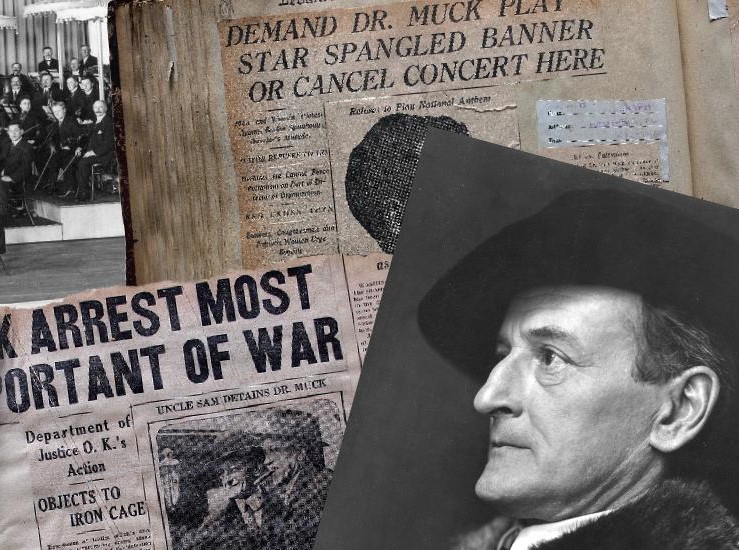
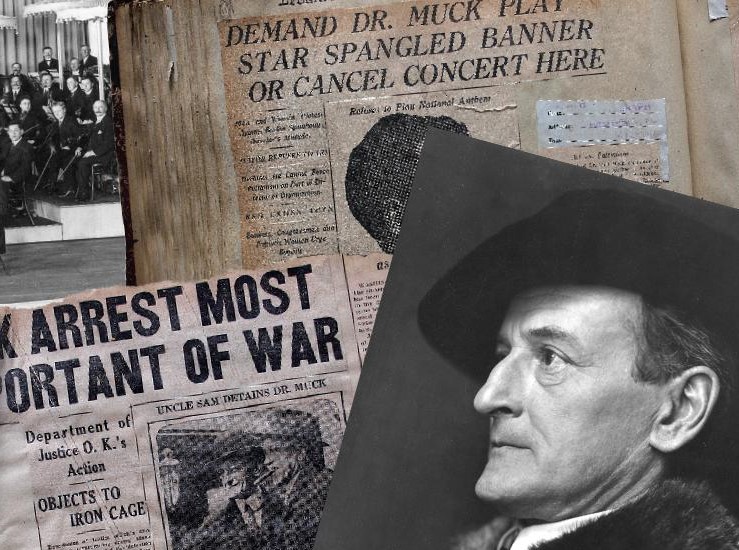
    Tensions mounted after Muck allegedly refused to conduct the “Star-Spangled Banner” at the request of some women’s associations before a concert. The truth is, the request had never been communicated to the conductor by BSO founder Henry Lee Higginson, who personally declined a last-minute change in the program. When Muck found out about it, he was mortified and made sure to include the anthem on subsequent concerts.

    Unfortunately, the damage had already been done. Muck was arrested without a warrant and ended his American years in an internment camp in Georgia, set up for those suspected of being dangerous alien enemies of the United States. 29 other Boston musicians were also targeted, fired and imprisoned, because of their German or Austrian origins. Muck and his associates were among the lucky ones. In some areas of the country, suspects were actually lynched in the streets.

    Muck’s house and bank account were seized by the U.S. government. In 1928, nine years after his delayed release and deportation, he received a partial return of his assets.

    Ironically, before any of his troubles, Muck had actually offered to resign his post after war had been declared, concerned about the BSO’s image and his personal safety, given the rise of anti-German sentiment. It was Higginson who allayed his fears.

    Later, in 1933, Muck would face another political test. As chief conductor of the Hamburg Philharmonic since 1922, he actually did resign, in 1933, having become increasingly uncomfortable with Nazi ideology.

    Despite his treatment in the U.S., Muck looked back on his years in Boston as among the happiest and most fruitful of his career. Obviously, he meant from an artistic standpoint.

    Needless to say, his experiences here are eerily resonant in a way they would not have been only a few months ago. We should be looking back with wisdom, and a touch of revulsion, on a less-enlightened time when legal rights and due process were suspended in order to preserve an illusion of national security. As is all too often the case, the true enemies of the people were those who pushed “The Star-Spangled Banner” at the expense of facts and basic human decency.

  • Wagner’s Birthday Broadcast Vintage Recordings

    Wagner’s Birthday Broadcast Vintage Recordings

    Time to get out the crazy party hats. You know, the ones with the horns and feathers. May 22 is the birthday of Richard Wagner (1813-1883). This Sunday night on “The Lost Chord,” we’ll honor the composer with an handful of vintage recordings.

    American baritone Lawrence Tibbett never actually sang the role of Wotan on stage, in the context of a “Ring” cycle. However, he did record “Wotan’s Farewell and Magic Fire Music,” magnificently, in 1934, with the Philadelphia Orchestra and Leopold Stokowski.

    Karl Muck was a casualty of anti-German sentiment during his time as music director of the Boston Symphony Orchestra, which, unfortunately, happened to coincide with the First World War. Be that as it may, he was held in the highest regard by fellow musicians and thought by many to be one of Wagner’s finest interpreters. We’ll hear a fascinating 1927 recording of the Transformation Music and the beginning of the Grail Scene from Act I of “Parsifal,” made at the Festspielhaus in Bayreuth.

    The recording employs the original bells designed by Wagner, which would be melted down by the Nazis for ammunition during the Second World War. So this will be a rare opportunity to experience the “Parsifal” Wagner actually knew. Muck was principal conductor of the Bayreuth Festival since 1903. He conducted “Parsifal” at Bayreuth 14 times between 1901 and 1930.

    Incidentally, it was on this date 150 years ago – Wagner’s 59th birthday – that the composer laid the cornerstone for his Bayreuth Festival Theater.

    Finally, we’ll return to “Die Walküre” to wrap things up on a buoyant note with Siegmund and Sieglinde’s love music from Act I, which concludes with the lovers fleeing together into the welcoming spring. Nine months later, Sieglinde gives birth to Siegfried, the saga’s hero-without-fear. Lotte Lehmann strikes sparks with legendary Danish heldentenor Lauritz Melchoir in a 1935 recording with Bruno Walter and the Vienna Philharmonic.

    The power of these performances remains undiminished by the passage of time. It’s a Wagner power hour on “Vintage Wagner,” this Sunday night at 10:00 EDT, on WWFM – The Classical Network and wwfm.org.


    PHOTOS: Lotte Lehmann as Sieglinde and Lauritz Melchior as Siegmund

  • Wagner’s Parsifal Good Friday Soundtracks

    Wagner’s Parsifal Good Friday Soundtracks

    I mean no disrespect in saying that, for me, Good Friday is made better by Wagner’s “Parsifal.” I try to listen to it every year, whether I need it or not.

    Here’s my annual posting of Leopold Stokowski’s transcendent Houston recording of the “Good Friday Spell” from Act III.

    Also, a fascinating 1927 recording of the Transformation Music and Grail Scene from Act I, set down at the Bayreuth Festspielhaus. The recording employs the original bells designed by Wagner, which were later melted down by the Nazis for ammunition during World War II. A rare opportunity to experience “Parsifal” as Wagner actually knew it. (The bells begin at 5:57.)

    The conductor, Karl Muck, was associated with the Bayreuth Festival since 1892. He became its principal conductor in 1903. Between 1901 and 1930, he conducted “Parsifal” at Bayreuth 14 times.

    Another conductor who was a pillar at Bayreuth was Hans Knappertsbusch. Of Kna’s 95 appearances there, 55 were conducting “Parsifal,” for which he was especially renowned.

    I was going to post a link to one of his performances of the Prelude to Act I , but then I couldn’t help it. Here’s the whole blessed thing – all four hours of it – from 1962. The live recording is regarded as the benchmark by many, rivaled only by Kna’s performances from the 1950s.

    Sacrifice, compassion, healing, and rebirth. Every Friday is good, but Good Friday with “Parsifal” is subime.


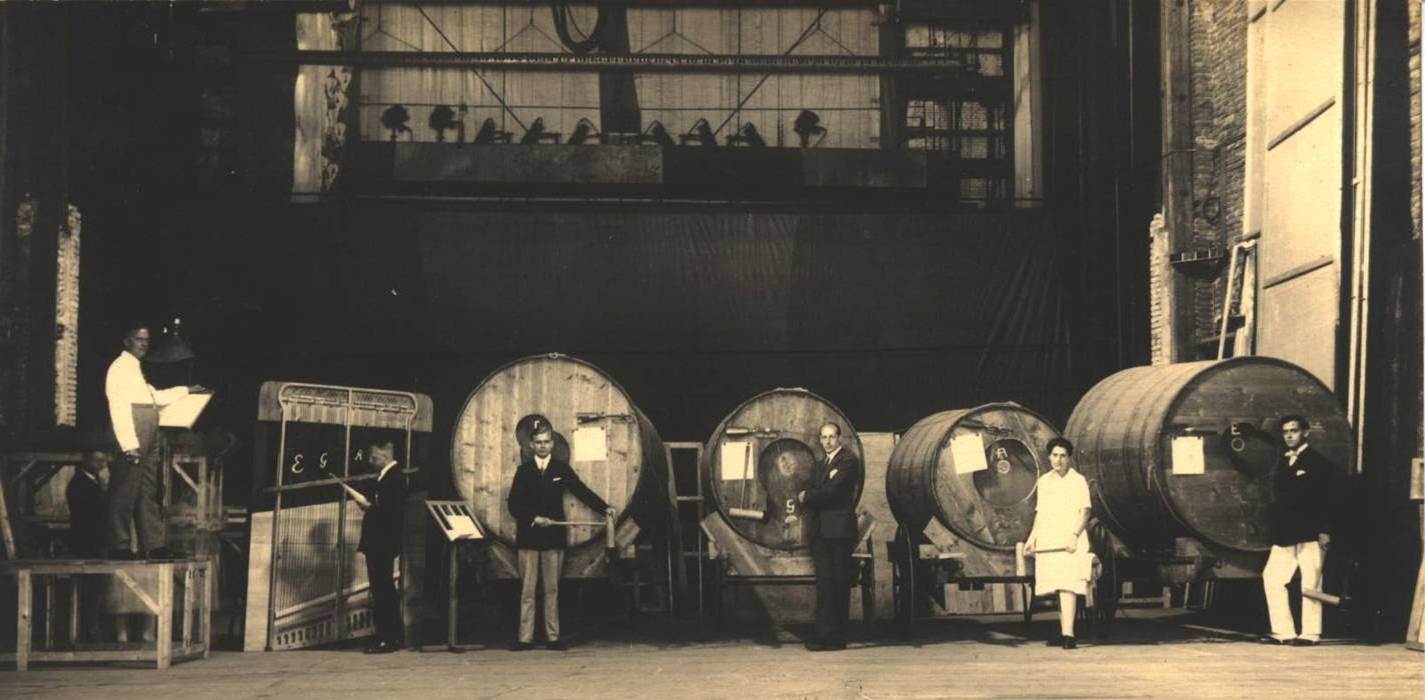
    The metal canisters used to produce Bayreuth bell sounds from the 1880s to about 1929:

    https://www.monsalvat.no/parsifal-bells.htm

    IMAGE: Set design by Paul von Joukowsky for the 1882 Bayreuth debut of “Parsifal”

  • Karl Muck Patriotism Gone Wrong in Boston

    Karl Muck Patriotism Gone Wrong in Boston

    Here’s a fascinating article about exacting conductor Karl Muck, which I posted in the comments section as an afterthought to one of my posts yesterday, about Muck’s Bayreuth recording of selections from Wagner’s “Parsifal.”

    Muck served as music director of the Boston Symphony Orchestra during the first two decades of the 20th century. He, more than any other, was responsible for establishing the orchestra as a world-class ensemble.

    By happenstance, Muck was born in Darmstadt, but his family lived in Switzerland since 1867. Muck himself held Swiss citizenship since 1880. Nonetheless, he was hounded by jingoistic factions of Boston society, a press that fomented anti-German sentiment, and overzealous federal agents who weren’t about to let him off the hook (despite the fact that he had earlier been cleared of any wrongdoing by the FBI).

    Muck ended his American years in an internment camp in Georgia, set up for those suspected of being dangerous alien enemies to the United States. Other Boston musicians were fired because of their German or Austrian origins. Muck was one of the lucky ones. In some areas of the country, suspects were actually being lynched in the streets.

    Muck’s house and bank account were seized by the U.S. government. In 1928, nine years after his delayed release and deportation, he received a partial return of his assets.

    The article is a sobering look at a time when legal rights and due process were suspended in order to preserve an illusion of national security. As is all too often the case, the true enemies of the people were those who pushed “The Star-Spangled Banner” at the expense of facts and basic human decency.
    https://www3.bostonglobe.com/magazine/2017/11/02/the-muck-affair/QczxAVe0i2EJZpLPGEKR9H/story.html?arc404=true

  • Karl Muck Parsifal Bells

    Karl Muck Parsifal Bells

    Karl Muck was the target of anti-German sentiment during his time as music director of the Boston Symphony Orchestra, which, unfortunately, happened to coincide with the First World War. Be that as it may, he was held in the highest regard by fellow musicians and thought by many to be one of Wagner’s finest interpreters.

    Here’s a fascinating 1927 recording of the Transformation Music and Grail Scene from Act III of “Parsifal,” made at the Festspielhaus in Bayreuth. The recording employs the original bells designed by Wagner, which would be melted down by the Nazis for ammunition during World War II. So this is a rare opportunity to experience “Parsifal” as Wagner actually knew it. (The bells begin at 5:57.)

    Muck had been associated with the Bayreuth Festival since 1892. He became its principal conductor in 1903. Between 1901 and 1930, he conducted “Parsifal” at Bayreuth 14 times.


    PHOTO: Metal canisters used to produce Bayreuth bell sounds from the 1880s to about 1929.

    https://www.monsalvat.no/parsifal-bells.htm

Tag Cloud

Aaron Copland (92) Beethoven (95) Composer (114) Film Music (120) Film Score (143) Film Scores (255) Halloween (94) John Williams (185) KWAX (229) Leonard Bernstein (100) Marlboro Music Festival (125) Movie Music (135) Opera (198) Philadelphia Orchestra (88) Picture Perfect (174) Princeton Symphony Orchestra (106) Radio (87) Ralph Vaughan Williams (85) Ross Amico (244) Roy's Tie-Dye Sci-Fi Corner (290) The Classical Network (101) The Lost Chord (268) Vaughan Williams (103) WPRB (396) WWFM (881)

DON’T MISS A BEAT

Receive a weekly digest every Sunday at noon by signing up here


RECENT POSTS