Tag: Karlowicz

  • Karlowicz & Mlynarski: Polish Romanticism

    Karlowicz & Mlynarski: Polish Romanticism

    This week on “The Lost Chord,” you might say it’s Poland spring. We’ll polish up on our Polish music with works by Mieczyslaw Karlowicz and Emil Mlynarski.

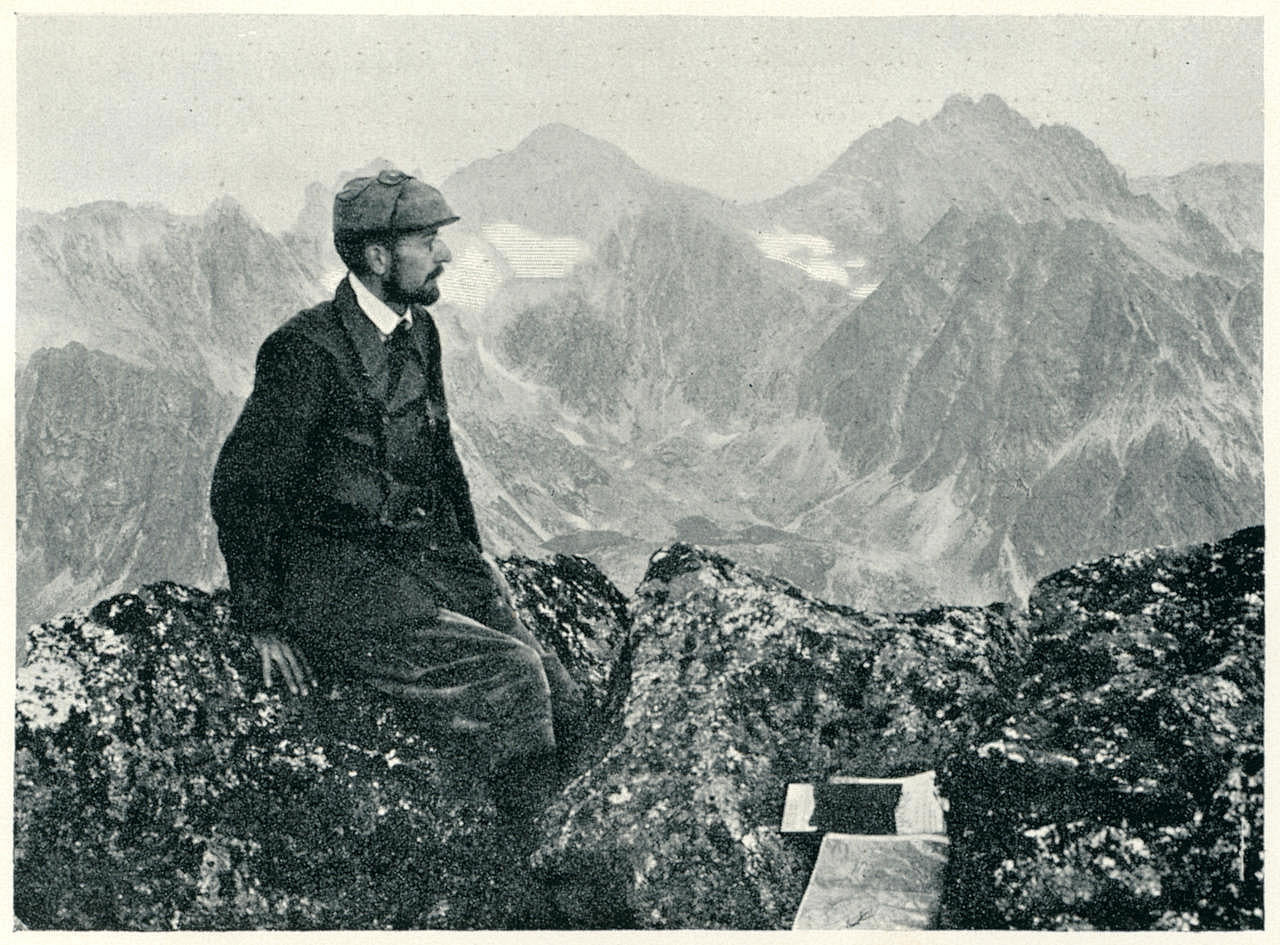
    Karlowicz, by all accounts one of the gloomiest of composers, embraced an outlook and philosophy that might well be described as pessimism leavened with pantheism. In this melancholy world, all love is unfulfilled or doomed, all existence leads to tragedy and destruction. The only place the composer seemed to find solace was in his beloved Tatras. He once noted, “Atop a high mountain, I become one with the surrounding space. I cease to feel individual. I can feel the mighty, everlasting breath of eternal being.”

    It is perhaps a kind of poetic justice that a life spent cultivating suicidal despair, and raising it to a level of high art, would be cut short, when Karlowicz was killed in an avalanche in 1909, aged only 32 years – a most fitting end for an orophile with fatalistic tendencies.

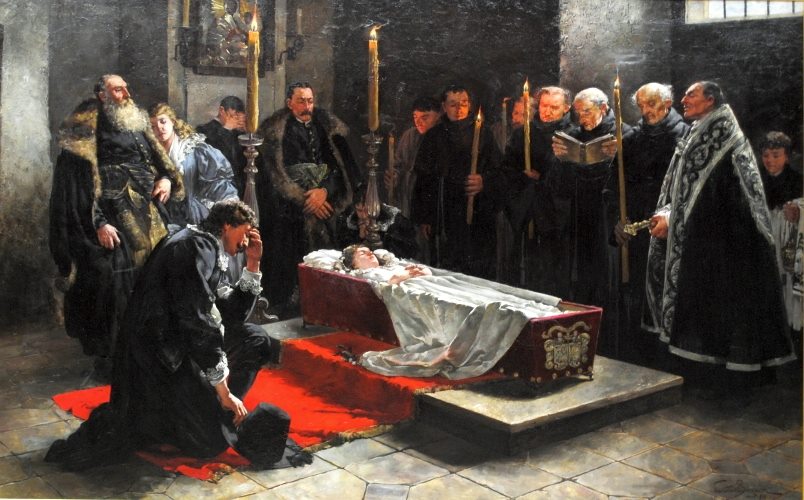
    We’ll hear one of the six symphonic poems upon which Karlowicz’s reputation, in large part, is based. “Stanislaw and Anna Oswiecim,” inspired by a painting of Stanislaw Bergmann, evokes a tale of forbidden love between brother and sister, ending in inevitable tragedy.

    Then it’s romance of different sort, with a violin concerto by Mlynarski. Mlynarski was recognized both at home and abroad as a staunch champion of Polish musical causes. He directed the Warsaw Opera and spearheaded the drive to build Warsaw Philharmonic Hall. He conducted festivals of Polish music in Paris, commissioned Sir Edward Elgar to write “Polonia” for a wartime Polish Relief Concert, and conducted the world premiere of Karol Szymanowski’s opera “King Roger.” He was, in fact, voted Poland’s most popular conductor. (Parenthetically, he also became the father-in-law of Artur Rubinstein.)

    Among his other achievements, he toured with the London Symphony Orchestra, became permanent conductor of the Scottish National Orchestra, shared concerts with Sir Thomas Beecham, and for a time was dean of the Curtis Institute of Music in Philadelphia.

    He was also an outstanding violinist. He studied with Leopold Auer, toured widely, and won a major composition award with his First Violin Concerto.

    Violinist Nigel Kennedy first encountered his music when he was handed a tape of Mlynarski’s Violin Concerto No. 2 by an anonymous Polish fan following a concert. Kennedy went on to make his own recording of the work. I think you’ll agree, it’s a very beautiful discovery.

    It will be a bird’s-eye view as we clear the bar, with an hour of Polish music, on “Pole Vault,” on “The Lost Chord,” now in syndication on KWAX, the radio station of the University of Oregon!


    Clip and save the start times for all three of my recorded shows:

    PICTURE PERFECT, the movie music show – Friday at 8:00 PM EDT/5:00 PM PDT

    SWEETNESS AND LIGHT, the light music program – Saturday at 11:00 AM EDT/8:00 AM PDT

    THE LOST CHORD, unusual and neglected rep – Saturday at 7:00 PM EDT/4:00 PM PDT

    Stream them, wherever you are, at the link!

    https://kwax.uoregon.edu/


    PHOTO: Mieczyslaw Karlowicz, man of destiny
  • Doomed Love Anthems to Avoid Valentine’s Day

    Doomed Love Anthems to Avoid Valentine’s Day

    Nearly as much as New Year’s Eve, Valentine’s Day rankles me. I resent the Hallmark cards and the convenience store chocolates and the commerce-driven peer pressure. I feel much more at home with Mieczyslaw Karlowicz.

    Karlowicz was born in 1876. By all accounts one of the gloomiest of composers, his outlook and philosophy might well be described as pessimism leavened with pantheism. In Karlowicz’s melancholy world, all love is unfulfilled or doomed; all existence leads to tragedy and destruction. In high romantic fashion, he contemplated suicide. The only place he seemed to find solace was in his beloved Tatras. He once noted, “Atop a high mountain, I become one with the surrounding space. I cease to feel individual. I can feel the mighty, everlasting breath of eternal being.”

    It is perhaps a kind of poetic justice that a life spent cultivating suicidal despair, and raising it to a level of high art, would be cut short, when Karlowicz was killed in an avalanche in 1909, aged only 32 years – a most fitting end for this pantheist with fatalistic tendencies.

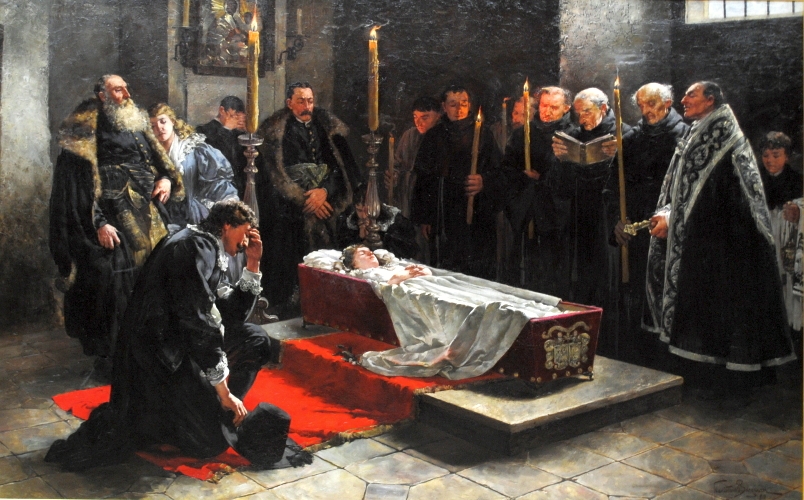
    This week on “The Lost Chord,” we’ll hear one of the six symphonic poems upon which Karlowicz’s reputation, in large part, is based. “Stanislaw and Anna Oswiecim,” inspired by a painting of Stanislaw Bergmann, evokes a tale of forbidden love between brother and sister, ending in inevitable tragedy.

    We’ll follow that with what has been cited as the most performed concerto of the 20th century. Yet, despite its multiple recordings, it is still far from being universally recognized in the West. “The Butterfly Lovers,” for violin and orchestra, is based on an ancient Chinese tale, about the young daughter of a rich landlord, who disguises herself as a boy in order to get an education. Her secret is discovered by a classmate. The two fall in love. However, the girl’s parents have promised her in marriage to a wealthy man. The lovelorn boy dies of grief. On the day of her wedding, the girl passes the boy’s tomb, which opens to receive her. She hurls herself inside, and the lovers emerge as butterflies fluttering freely in the air. The tale has been described as a Chinese “Romeo and Juliet.”

    The concerto was an enormous success at its premiere, in 1959. However, due to the vagaries of totalitarianism, the work was reviled during the Cultural Revolution, condemned for its western influences and evocations of feudal China. Within five years, everyone associated with the work was in prison. The music was branded “bourgeois,” and the composers publicly accused of crimes worse than murder. One of the creators, Chen Gang, spent two years in prison, then several more years under house arrest at the Shanghai Conservatory, with manual labor in the mornings and self-criticism sessions in the afternoons. The soloist in the concerto’s first performance, He Zhanhao, is given co-credit for the work’s composition.

    It was after the Cultural Revolution that “The Butterfly Lovers” really took flight (if you’ll pardon the expression). It has been called the “Tchaikovsky Violin Concerto of the East.”

    I hope you’ll join me for an hour of musical expressions of doomed love, this week – “Valentines, Nay!” – now in syndication on KWAX, the radio station of the University of Oregon!


    Remember, KWAX is on the West Coast, so there’s a three-hour difference for those of you listening in the East. Here are the respective air-times for all three of my recorded shows (with East Coast conversions in parentheses):

    PICTURE PERFECT, the movie music show – Friday on KWAX at 5:00 PM PACIFIC TIME (8:00 PM EST)

    SWEETNESS AND LIGHT, the light music program – ALL NEW! – Saturday on KWAX at 8:00 AM PACIFIC TIME (11:00 AM EST)

    THE LOST CHORD, unusual and neglected rep – Saturday on KWAX at 4:00 PM PACIFIC TIME (7:00 PM EST)

    Stream all three, at the times indicated, by following the link!

    https://kwax.uoregon.edu/


    PHOTO: “Stanislaw Oswiecim at the Body of Anna Oswiecimowna” (1888) by Stanislaw Bergmann

  • Doomed Love: Karlowicz & Butterfly Lovers

    Doomed Love: Karlowicz & Butterfly Lovers

    Nearly as much as New Year’s Eve, Valentine’s Day rankles me. I resent the Hallmark cards and the convenience store chocolates and the commerce-driven peer pressure. I feel much more at home with Mieczyslaw Karlowicz.

    Karlowicz was born in 1876. By all accounts one of the gloomiest of composers, his outlook and philosophy might well be described as pessimism leavened with pantheism. In Karlowicz’s melancholy world, all love is unfulfilled or doomed; all existence leads to tragedy and destruction. In high romantic fashion, he contemplated suicide. The only place he seemed to find solace was in his beloved Tatras. He once noted, “Atop a high mountain, I become one with the surrounding space. I cease to feel individual. I can feel the mighty, everlasting breath of eternal being.”

    It is perhaps a kind of poetic justice that a life spent cultivating suicidal despair, and raising it to a level of high art, would be cut short, when Karlowicz was killed in an avalanche in 1909, aged only 32 years – a most fitting end for this pantheist with fatalistic tendencies.

    This Sunday night on “The Lost Chord,” we hear one of the six symphonic poems upon which Karlowicz’s reputation, in large part, is based. “Stanislaw and Anna Oswiecim,” inspired by a painting of Stanislaw Bergmann, evokes a tale of forbidden love between brother and sister, ending in inevitable tragedy.

    We’ll follow that with what has been cited as the most performed concerto of the 20th century. Yet, despite its multiple recordings, it is still far from being universally recognized in the West. “The Butterfly Lovers,” for violin and orchestra, is based on an ancient Chinese tale, about the young daughter of a rich landlord, who disguises herself as a boy in order to get an education. Her secret is discovered by a classmate. The two fall in love. However, the girl’s parents have promised her in marriage to a wealthy man. The lovelorn boy dies of grief. On the day of her wedding, the girl passes the boy’s tomb, which opens to receive her. She hurls herself inside, and the lovers emerge as butterflies fluttering freely in the air. The tale has been described as a Chinese “Romeo and Juliet.”

    The concerto was an enormous success at its premiere, in 1959. However, due to the vagaries of totalitarianism, the work was reviled during the Cultural Revolution, condemned for its western influences and evocations of feudal China. Within five years, everyone associated with the work was in prison. The music was branded “bourgeois,” and the composers publicly accused of crimes worse than murder. One of the creators, Gang Chen, spent two years in prison, then several more years under house arrest at the Shanghai Conservatory, with manual labor in the mornings and self-criticism sessions in the afternoons. The soloist in the concerto’s first performance, Zhanhao He, is given co-credit for the work’s composition.

    It was after the Cultural Revolution that “The Butterfly Lovers” really took flight (if you’ll pardon the expression). It has been called the “Tchaikovsky Violin Concerto of the East.”

    I hope you’ll join me for an hour of musical expressions of doomed love, this week – “Valentines, Nay!” – this Sunday night at 10 ET, with a repeat Wednesday evening at 6; or that you’ll listen to it later as a webcast at wwfm.org.


    PHOTO: “Stanislaw Oswiecim at the Body of Anna Oswiecimowna” (1888) by Stanislaw Bergmann

Tag Cloud

Aaron Copland (92) Beethoven (95) Composer (114) Film Music (119) Film Score (143) Film Scores (255) Halloween (94) John Williams (185) KWAX (229) Leonard Bernstein (99) Marlboro Music Festival (125) Movie Music (134) Opera (198) Philadelphia Orchestra (86) Picture Perfect (174) Princeton Symphony Orchestra (106) Radio (87) Ralph Vaughan Williams (85) Ross Amico (244) Roy's Tie-Dye Sci-Fi Corner (290) The Classical Network (101) The Lost Chord (268) Vaughan Williams (102) WPRB (396) WWFM (881)

DON’T MISS A BEAT

Receive a weekly digest every Sunday at noon by signing up here


RECENT POSTS